
Letter recognition Easy Worksheets for Ages 6-9
12 filtered results
Difficulty Level
Grade
Age
-
From - To
Subject
Activity
Standards
Enhance your child's early reading skills with our "Letter Recognition Easy Worksheets for Ages 6-9!" Tailored specifically for young learners, these fun and engaging worksheets help children identify, distinguish, and remember letters effortlessly. Perfect for use at home or in the classroom, our printable activities provide a variety of exercises to maintain interest and build foundational skills. You'll find matching games, coloring activities, and letter-tracing exercises designed to promote confident reading and writing. Boost your child's literacy with enjoyable and educational worksheets from Kids Academy – where learning meets fun!
Favorites
With answer key
Interactive
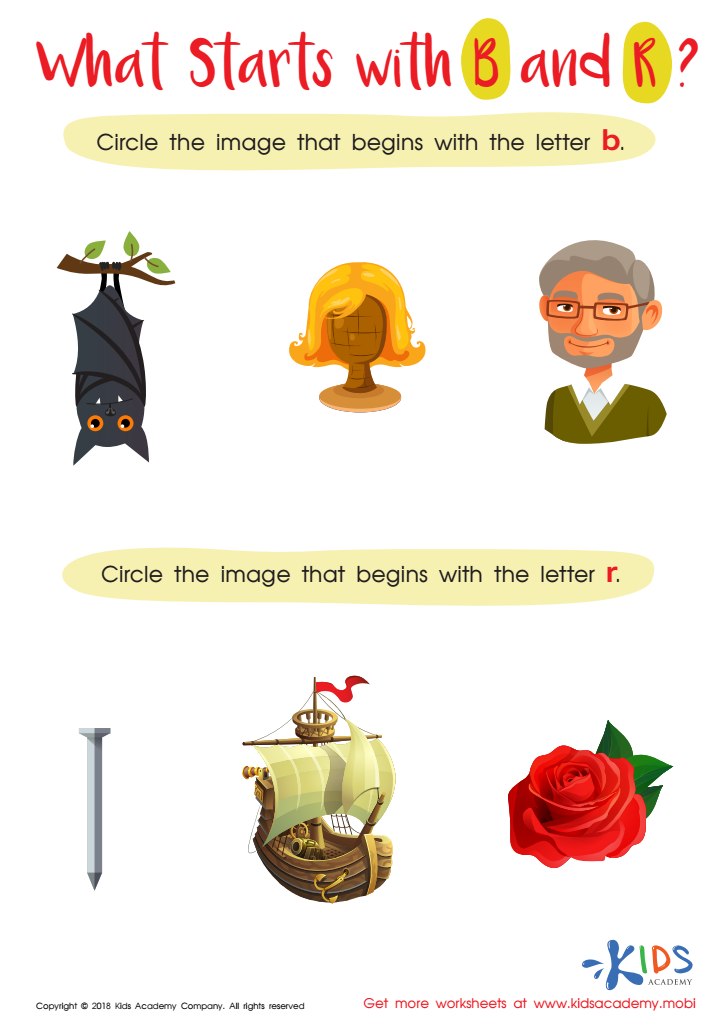
What Starts with B and R? Worksheet
Download this worksheet to help young readers practice visual and motor skills! They'll enjoy matching pictures with "B" and "R" letters while tracing the images. Bright and colorful, this engaging activity will help kids differentiate between words and have fun doing it.
What Starts with B and R? Worksheet
Worksheet
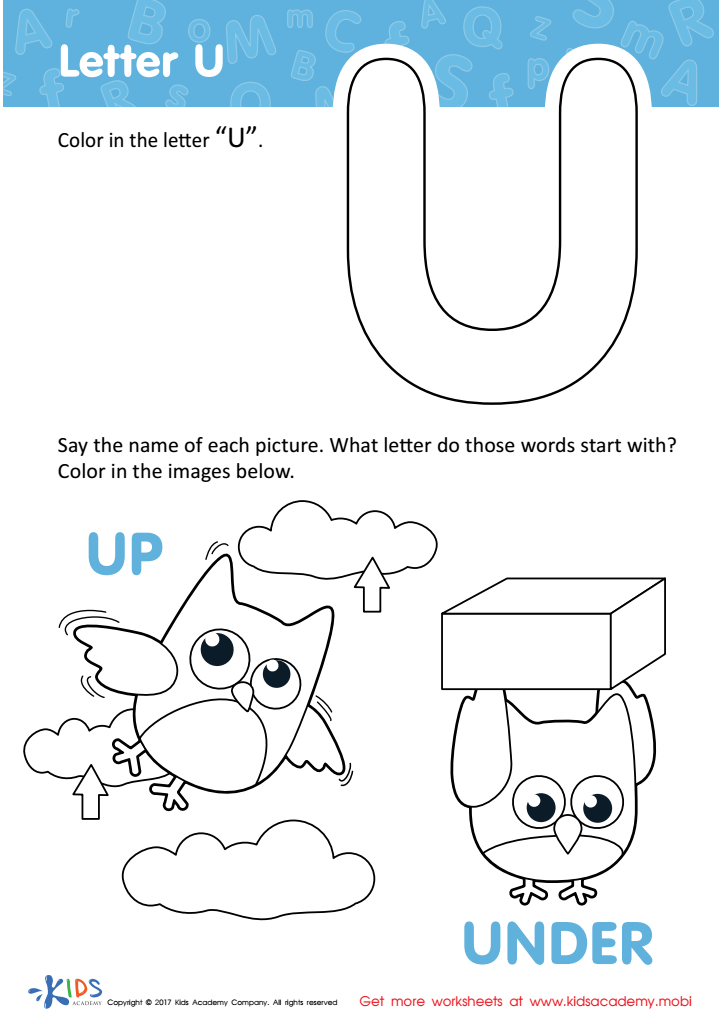
Letter U Coloring Sheet
This letter "U" coloring page helps your child learn two things at once - the letter "U" and positional words! An adorable owl character aids in understanding up and under. In a few strokes of a crayon, your child can master these concepts.
Download (PDF)
 Assign to My Students
Assign to My Students
Letter U Coloring Sheet
Worksheet
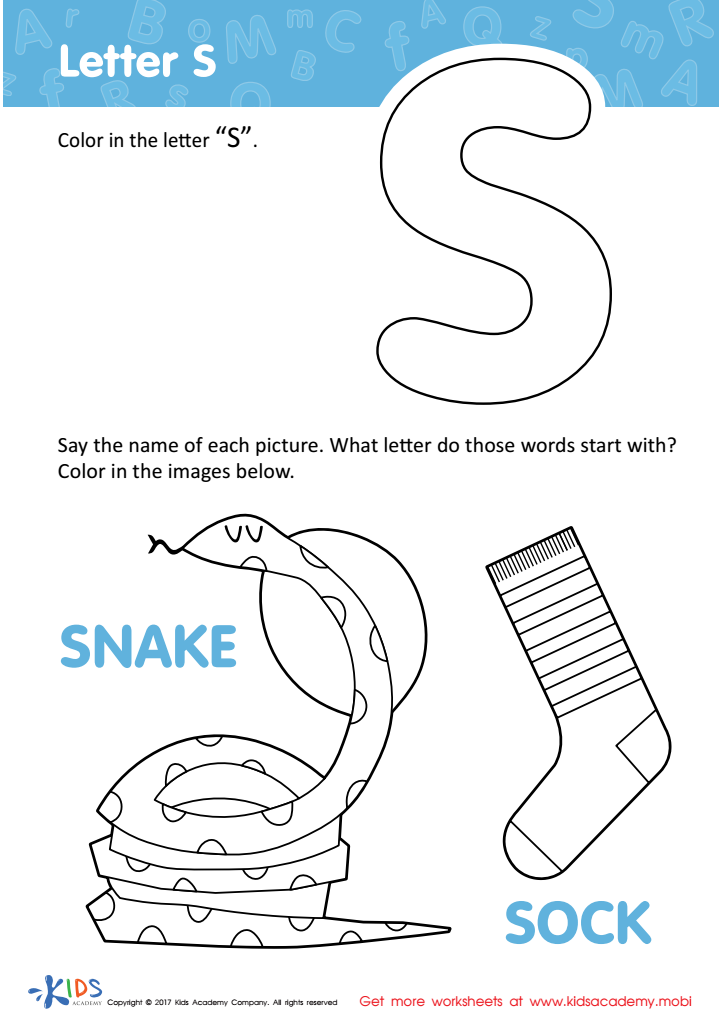
Letter S Coloring Sheet
Help your child practice recognizing the letter "S" and the sound it makes with this fun coloring page. It features a slippery snake, smelly sock and more! Give them extra practice by coming up with more "S" sounds and words.
Download (PDF)
Assign to My Students
Assign to My Students
Letter S Coloring Sheet
Worksheet
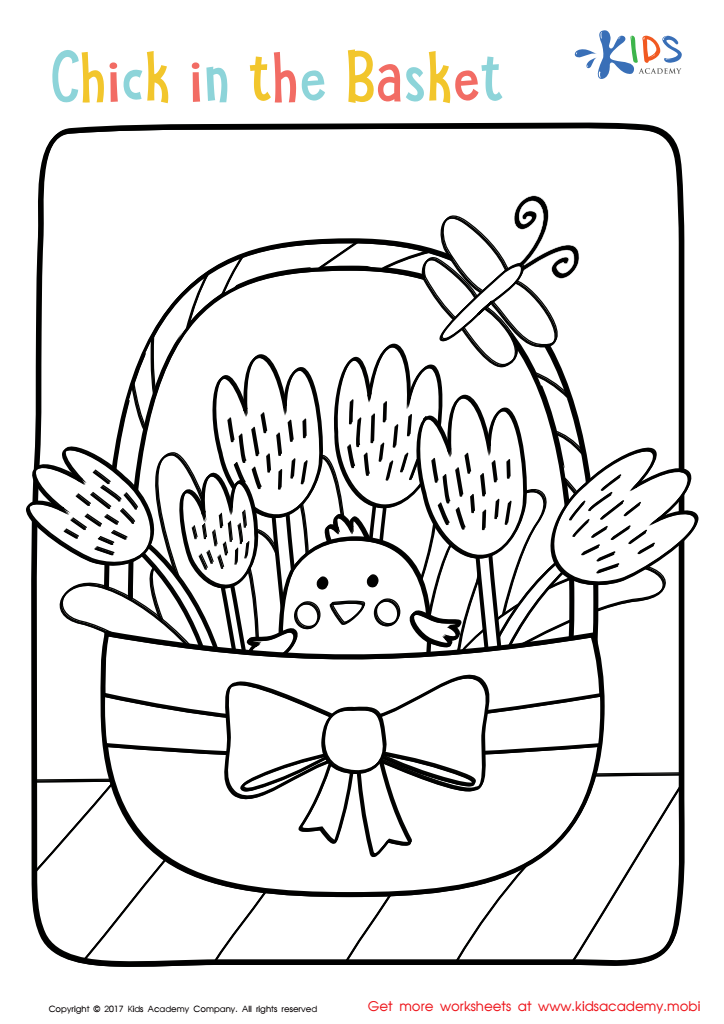
Easter: Chick in the Basket Worksheet
Kids love Easter morning when they wake up to a basket full of goodies! Let them get creative and learn something new with this Easter chick coloring page! It's perfect to use while they wait for the Easter bunny, and talk about the symbolism of chicks and baskets. They'll have fun learning and creating a wonderful image to decorate!
Download (PDF)
Assign to My Students
Assign to My Students
Easter: Chick in the Basket Worksheet
Worksheet
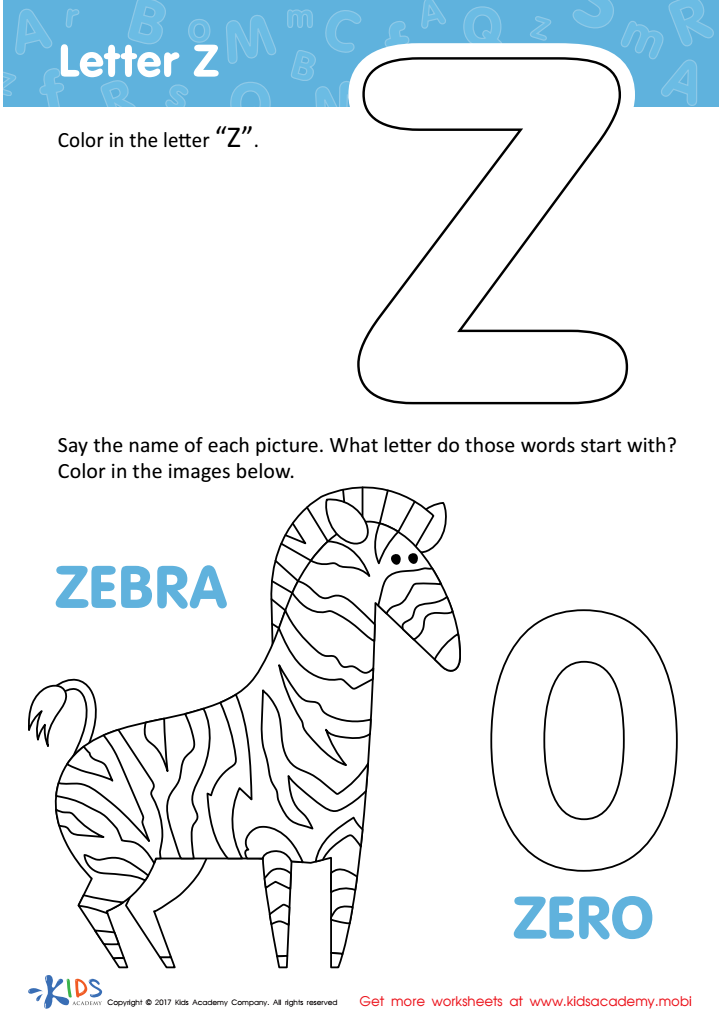
Letter Z Coloring Sheet
This coloring page featuring the letter "Z" is perfect for your child to practice letter recognition! Help them learn the unique sound it makes as they color. It'll be a fun and easy activity they won't have trouble with!
Download (PDF)
Assign to My Students
Assign to My Students
Letter Z Coloring Sheet
Worksheet
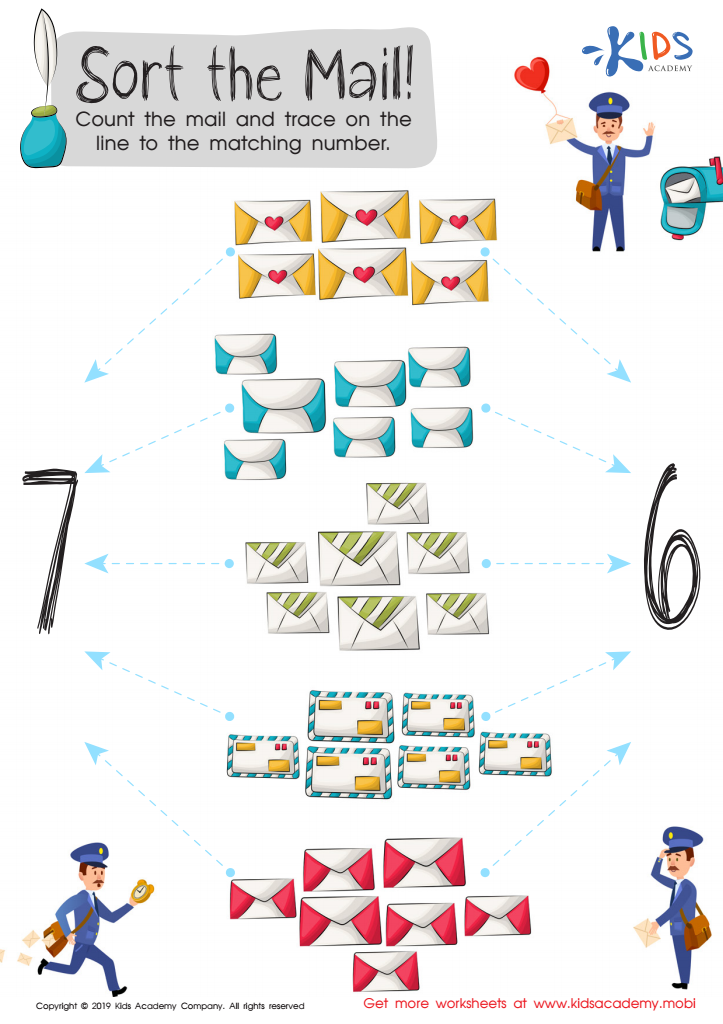
Sort the Mail Worksheet
Kids can learn number sense with one-to-one representation! This worksheet helps them connect groups of letters with the correct numbers by tracing the lines. They'll count and decide whether each group has 6 or 7 envelopes. This exercise gives children a better understanding of numerical representation.
Sort the Mail Worksheet
Worksheet
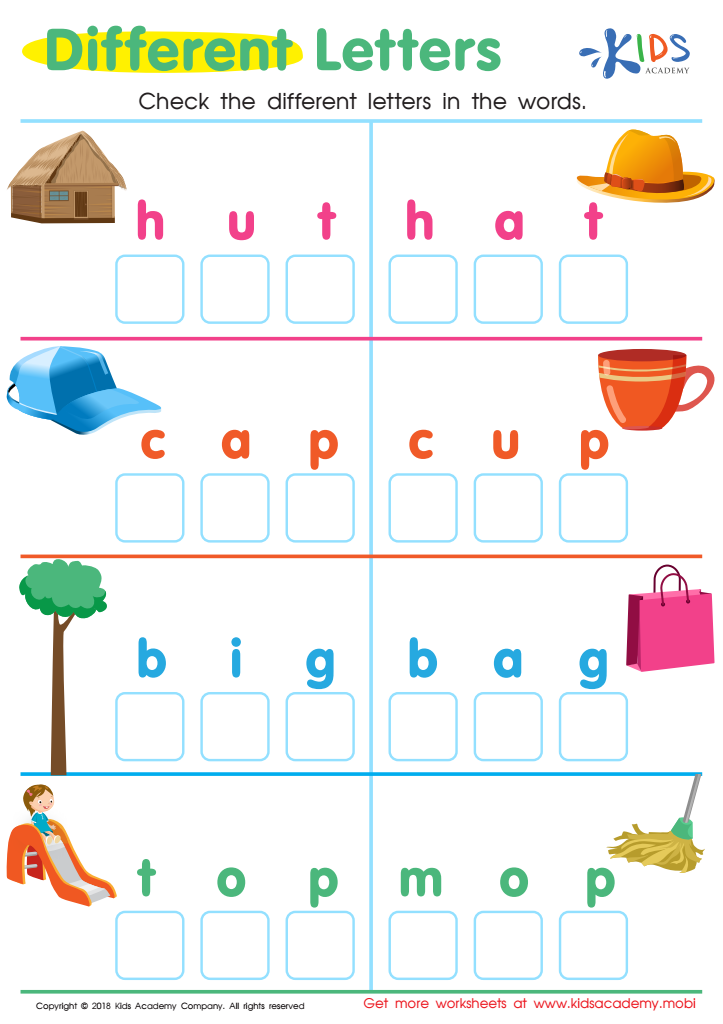
Different Letters Reading Worksheet
Download our phonics worksheet to help kids understand letter sounds. Have them sound out letters and join them to form words. Colorful pictures assist in recognition, making it perfect for kindergarteners. A great intro to phonics!
Different Letters Reading Worksheet
Worksheet
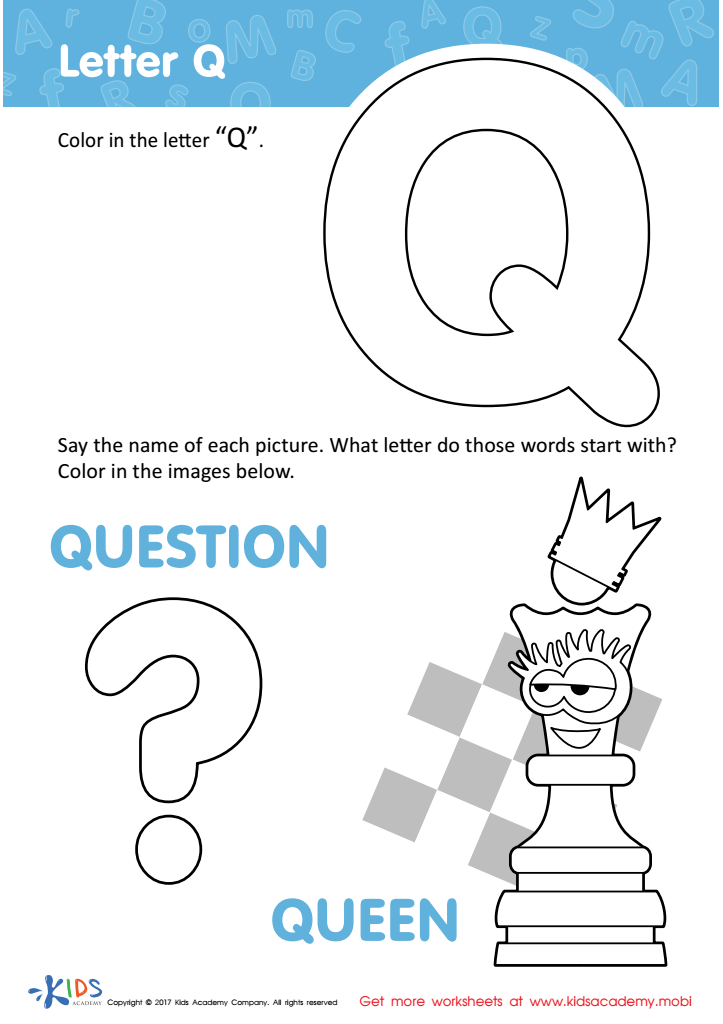
Letter Q Coloring Sheet
Kids need practice with letters not seen often. Give your child a boost with this letter "Q" coloring page! Have them color in the queen and question mark, while learning the sound "Q" makes. Fun and educational!
Download (PDF)
Assign to My Students
Assign to My Students
Letter Q Coloring Sheet
Worksheet
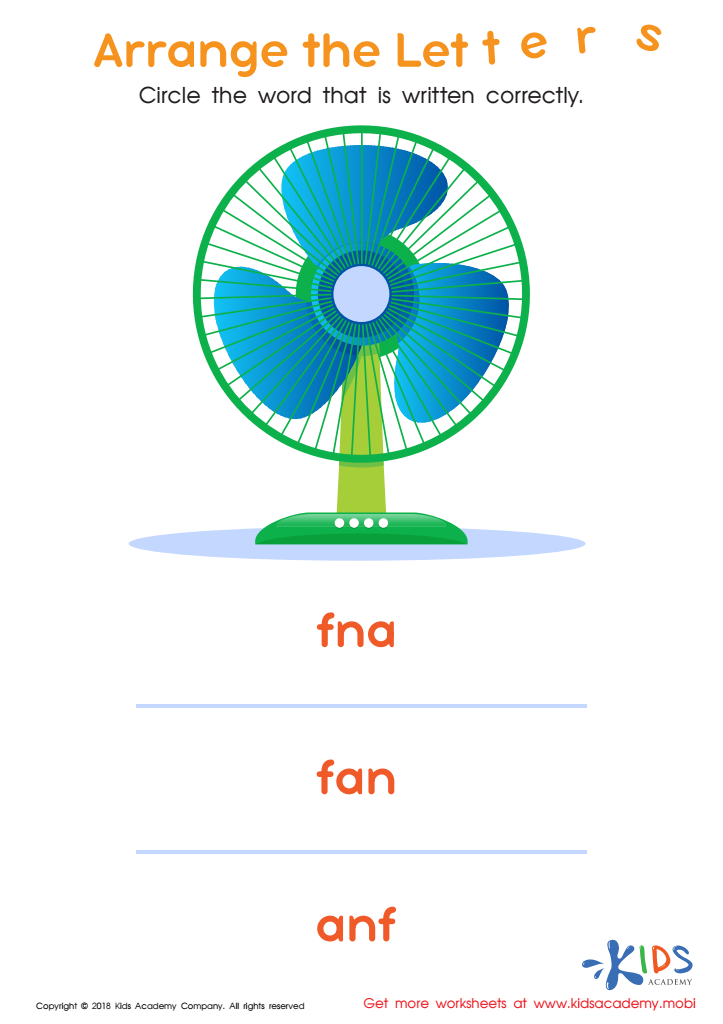
Arrange the Letters Worksheet
Test your kids' spelling skills with this worksheet! Show them the picture and ask what it stands for. Then, have them choose the correct spelling from the options given. Check their answer by circling the right one.
Arrange the Letters Worksheet
Worksheet
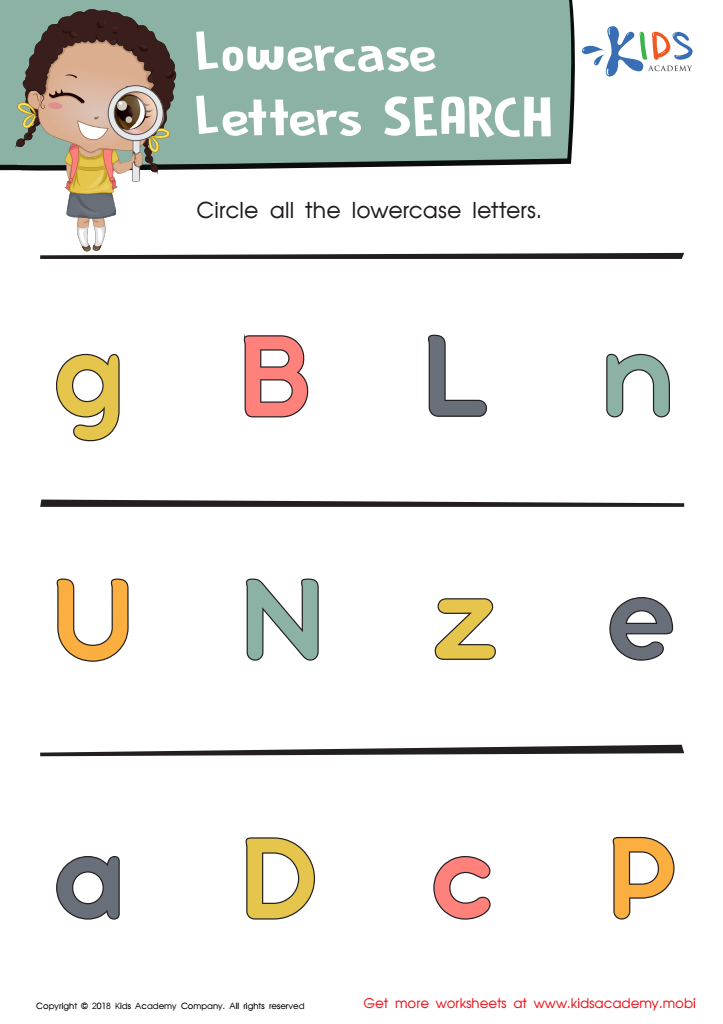
Lowercase Letters Search: Assessment Worksheet
Circle all the lowercase letters in this worksheet. Identify them among a mix of uppercase and lowercase letters. Your child will have fun with this exercise thanks to its bright primary colors. Enjoyment and learning go hand-in-hand!
Lowercase Letters Search: Assessment Worksheet
Worksheet
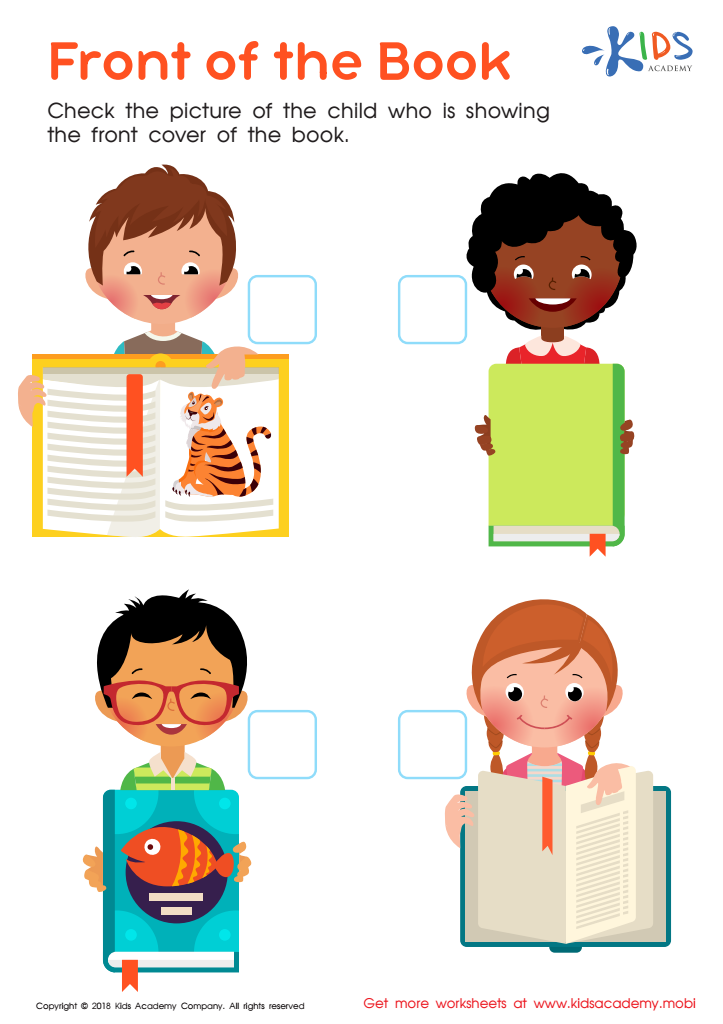
Front of the Book Worksheet
Help your child become a reader with this free worksheet! It's full of fun new friends and is designed to help kids understand concepts about the front of a book. They'll look at each picture and decide which friend is holding the book with the front cover, and check off the correct answer in the given boxes. Get your little one ready to be a reader!
Front of the Book Worksheet
Worksheet
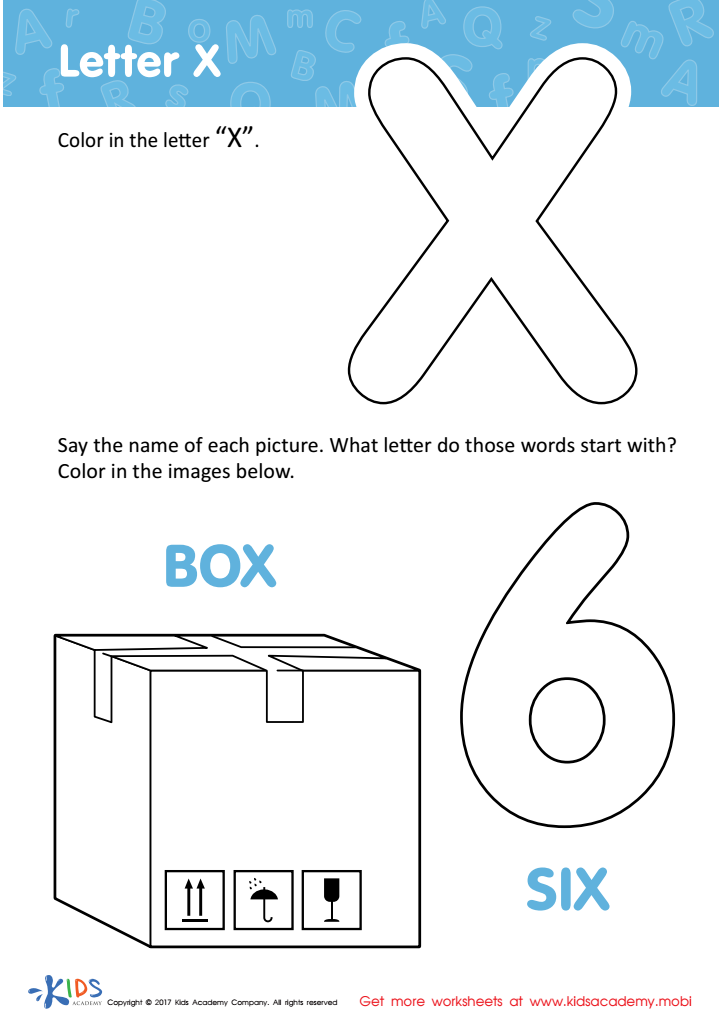
Letter X Coloring Sheet
Help your little learner find the letter "X" with this coloring page. Go over the sounds it makes and how to find it at the end of words. Unlock the mystery of this unique letter - it's one of the most challenging but rewarding letters to learn!
Download (PDF)
Assign to My Students
Assign to My Students
Letter X Coloring Sheet
Worksheet
Join Kids Academy for Free
Who is primarily going to use this learning content?


.jpg)





Letter recognition is a crucial foundational skill for children aged 6-9, as it significantly impacts their ability to learn and succeed in reading and writing. Strong letter recognition skills make it easier for children to understand the alphabetic principle—the idea that letters represent sounds, which form words. This understanding directly influences their phonics skills, enabling them to decode new words and read more fluently.
For parents and teachers, encouraging letter recognition is essential because it opens the door to academic achievement. Children who can quickly and accurately recognize letters are more likely to develop robust vocabulary and reading comprehension skills. Early reading success often correlates with better performance in other academic areas.
Moreover, mastering letter recognition can boost a child's confidence and foster a positive attitude toward learning. It provides them with the tools needed for independent reading, which enhances their ability to learn about the world and cultivates a lifelong love of reading.
In classrooms, teachers can more effectively implement reading programs and interventions when their students have solid letter recognition skills. This efficiency saves time and allows for more individualized attention to students who may need extra support. Overall, prioritizing letter recognition is a vital step in fulfilling children's educational needs and setting them up for long-term academic and personal success.








