
Pattern recognition Easy Worksheets for Ages 6-9
4 filtered results
Difficulty Level
Grade
Age
-
From - To
Subject
Activity
Standards
Discover our engaging "Pattern Recognition Easy Worksheets" designed specifically for children ages 6-9. These worksheets promote critical thinking and cognitive skills by helping young learners identify and complete patterns in a fun and interactive way. Featuring colorful illustrations and age-appropriate challenges, our resources make learning enjoyable while strengthening essential early math skills. With a variety of exercises, from simple shapes to advanced sequences, your child will gain confidence in their ability to recognize patterns in everyday life. Perfect for both classroom settings and at-home practice, these worksheets stimulate curiosity and foster a love for learning. Download now and watch your child thrive!
Favorites
With answer key
Interactive
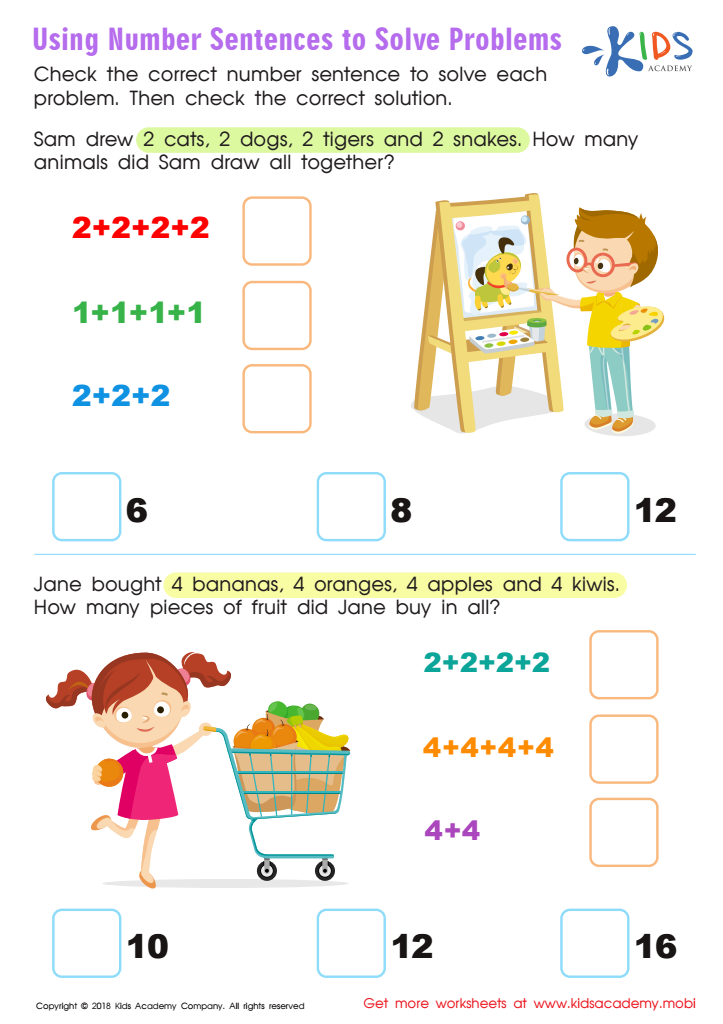
Using Number Sentences to Solve Problems Worksheet
Solving math problems requires an efficient strategy. Picture representation can help young mathematicians with basic addition problems, especially when it involves repeated addends. As they gain confidence, they'll be able to apply their number sentence solving abilities to more complex equations.
 Assign to My Students
Using Number Sentences to Solve Problems Worksheet
Worksheet
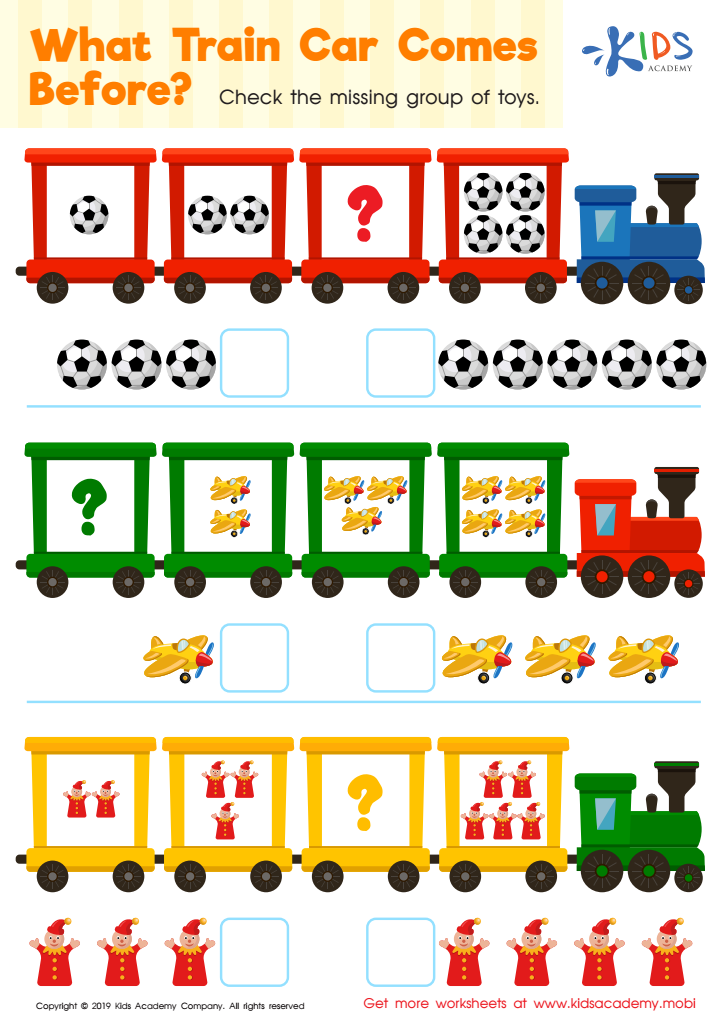
What Train Car Comes Before? Worksheet
Download this worksheet with your kids and have them identify the colorful objects pictured. Count the toys in the three trains together, then check the missing group of toys from the options provided. Have fun! (80 words)
What Train Car Comes Before? Worksheet
Worksheet
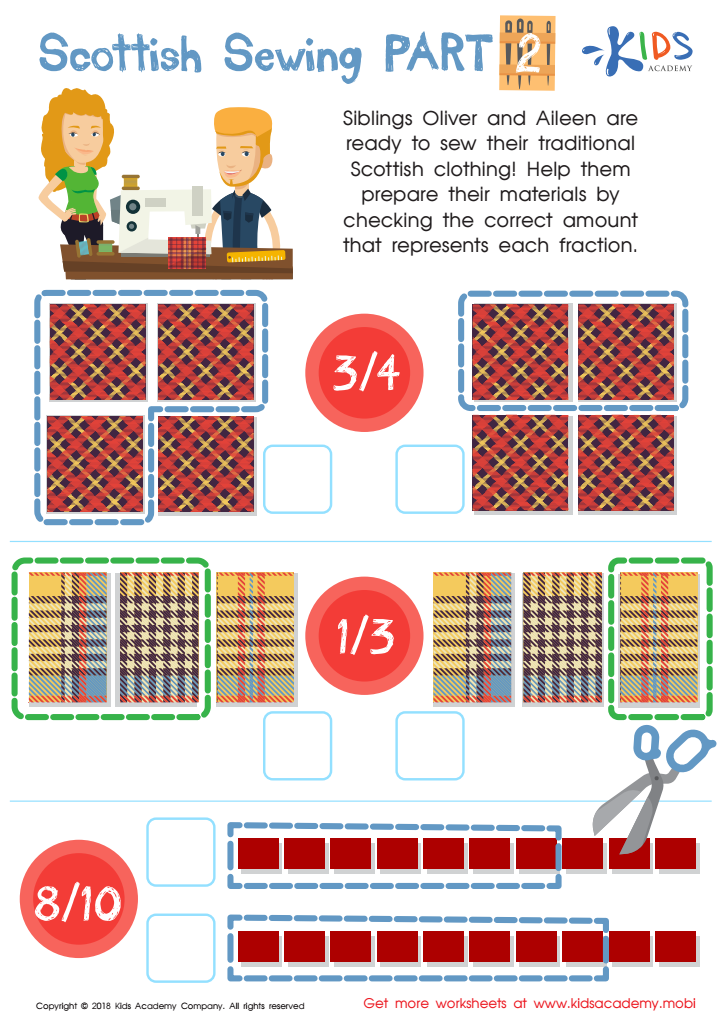
Scottish Sewing Part 2 Worksheet
Oliver and Alleen are sewing traditional Scottish attire. Help your kids count the cloth and check the correct fraction to support them. Have your kids check the correct amount that represents each fraction to help the brother-sister duo prepare their material.
Scottish Sewing Part 2 Worksheet
Worksheet
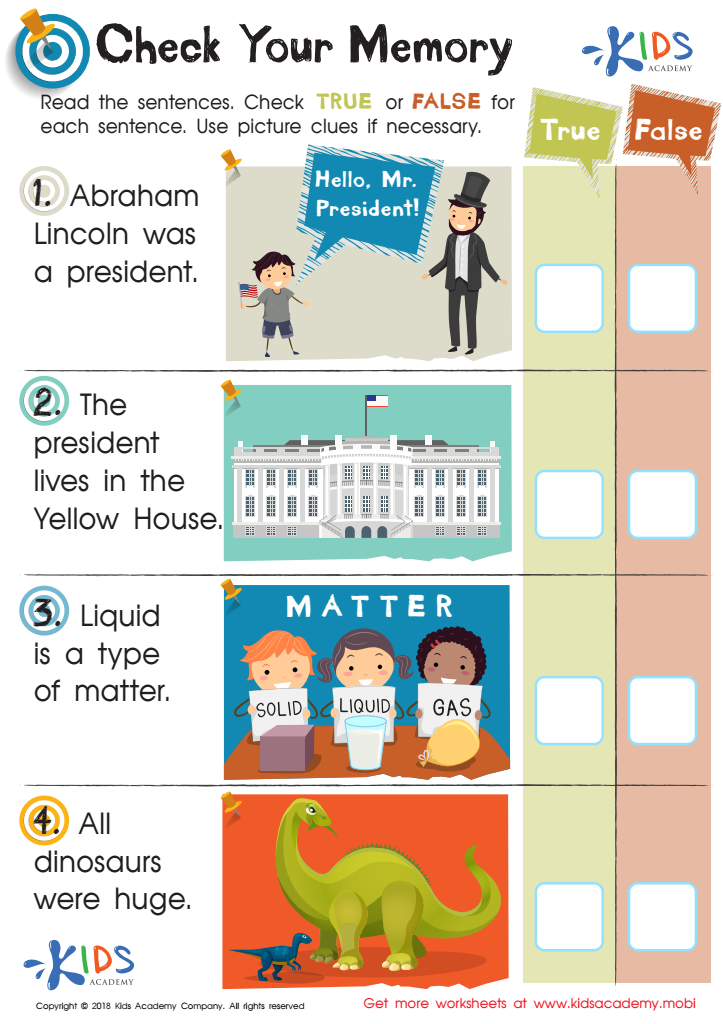
Check Memory Worksheet
Assisting your kids with their homework and using worksheets is a great way for them to learn. The vibrant visuals in this printout can help stimulate the mind and motivate your child. Have them read the sentences and then point to the associated images. Afterwards, ask them to state True or False for each sentence. If they are still uncertain, offer them the picture clues to assist further.
Check Memory Worksheet
Worksheet
Join Kids Academy for Free
Who is primarily going to use this learning content?







Pattern recognition is a fundamental skill that greatly benefits children aged 6 to 9. It develops critical thinking, enhances problem-solving abilities, and fosters a deeper understanding of mathematical concepts. When children recognize patterns, they learn to anticipate what comes next, which is essential for various subjects, from math to reading. This skill not only helps in identifying sequences in numbers but also improves comprehension in storytelling where patterns of language and structure exist.
Parents and teachers should care about this skill because it lays the groundwork for future learning. Recognizing patterns is integral to subjects like science, coding, and even art, where children can appreciate symmetry and design. Moreover, enhancing pattern recognition can boost a child's confidence and engagement, making learning enjoyable. Engaging in activities like playing games, sorting objects, or solving puzzles encourages this skill and allows for creative exploration.
In a world where analytical skills and innovative thinking are increasingly valued, fostering pattern recognition in young learners will prepare them for future academic challenges and everyday problem-solving. By incorporating pattern recognition into early education, both parents and teachers can contribute significantly to a child's cognitive development and love for learning.








