Subtraction practice Easy Worksheets for Ages 6-9 - Page 2
27 filtered results
-
From - To
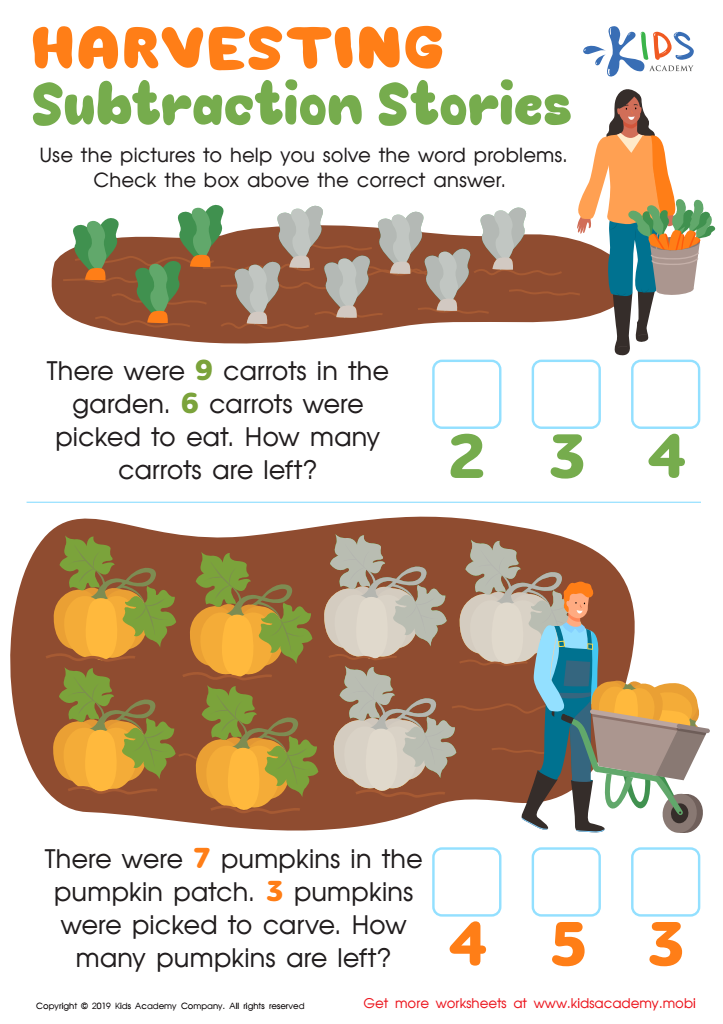
Harvesting Subtraction Stories Worksheet
 Assign to My Students
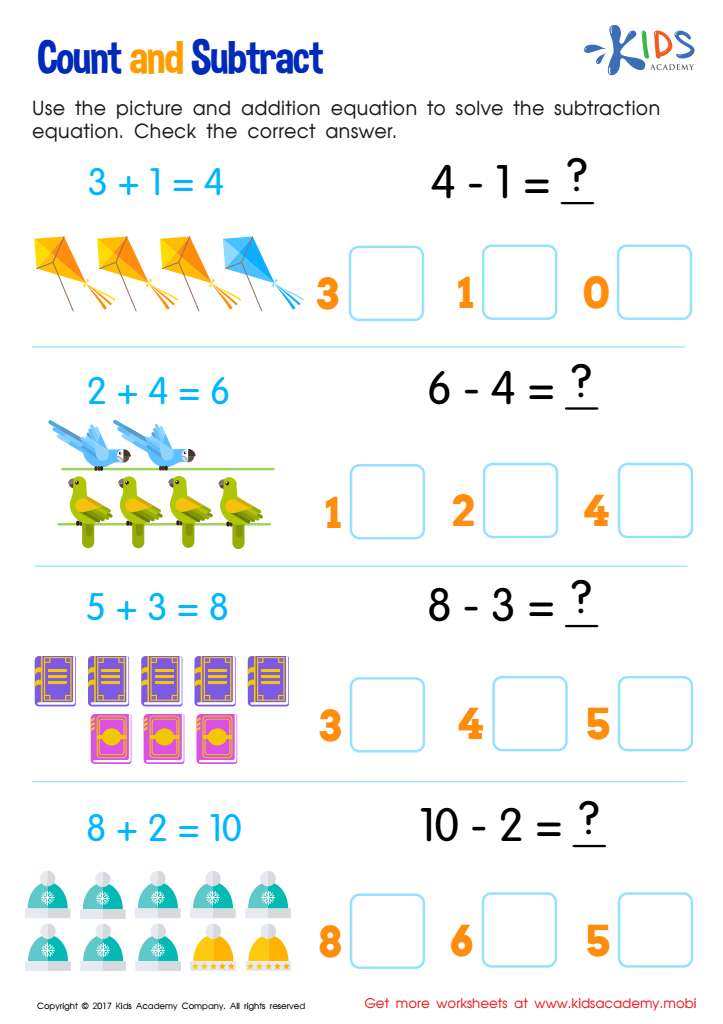
Count and Subtract Worksheet
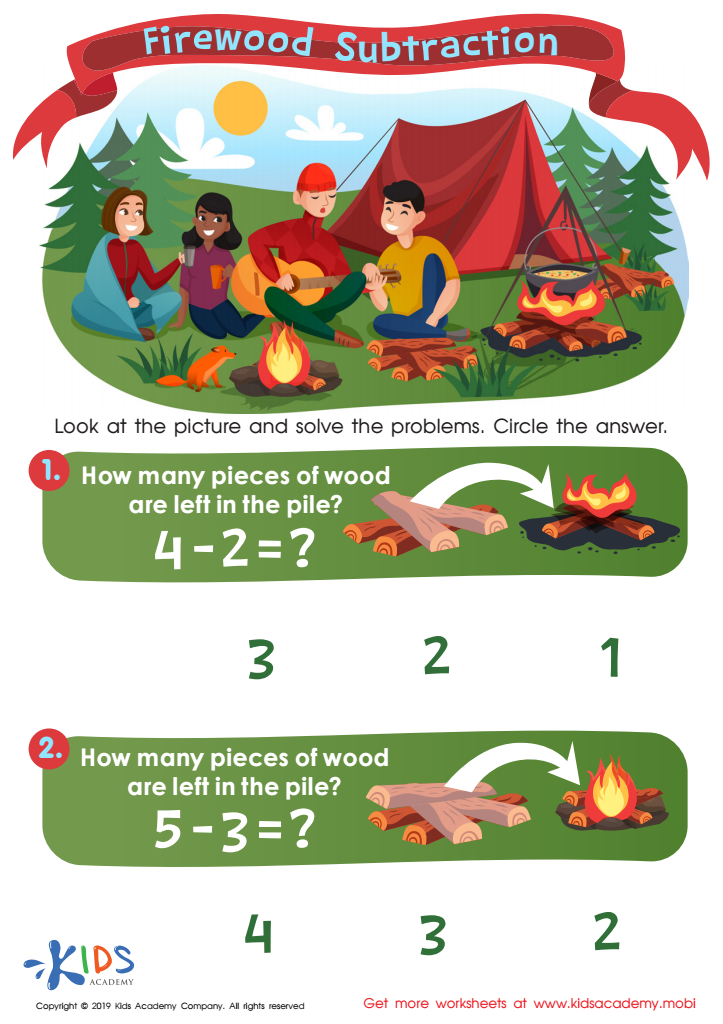
Firewood Subtraction Worksheet








Subtraction practice is crucial for children aged 6-9 as it lays the foundation for their mathematical understanding and overall academic success. During this developmental stage, children’s cognitive abilities expand, and they transition from concrete understanding to more abstract thinking. Mastery of subtraction not only enhances their problem-solving skills but also builds confidence in their ability to tackle math-related tasks, an important aspect when preparing them for advanced concepts in mathematics.
Engaging in easy subtraction exercises reinforces numerical fluency, enabling children to perform basic operations with ease. This practice helps strengthen their ability to think critically and logically. Moreover, subtraction is often tied to real-life scenarios, such as managing money, measuring, and reasoning through everyday problems.
By prioritizing subtraction practice, parents and teachers create an enriching environment that encourages exploration and discovery. This engagement fosters a positive attitude towards math, reducing anxiety about the subject as children progress. Initiating discussions surrounding subtraction—through fun activities, games, or real-world applications—can turn practice into an enjoyable experience, making math a subject children feel motivated to learn. As strong foundational skills are cultivated, kids are more likely to achieve greater academic success and develop an enduring appreciation for learning.








