Understanding tally marks Easy Worksheets for Ages 6-9
4 filtered results
-
From - To
Introduce your child to the basics of counting and data recording with our "Understanding Tally Marks Easy Worksheets for Ages 6-9." Specially designed to make learning fun and engaging, these worksheets guide children through the process of using tally marks to count different items and understand simple data recording. Perfect for young learners, these activities enhance counting skills and introduce early math concepts, all while keeping it delightful! Whether in the classroom or at home, our worksheets provide a hands-on, interactive approach to mastering tally marks that kids will love. Give your child a head start in math today!
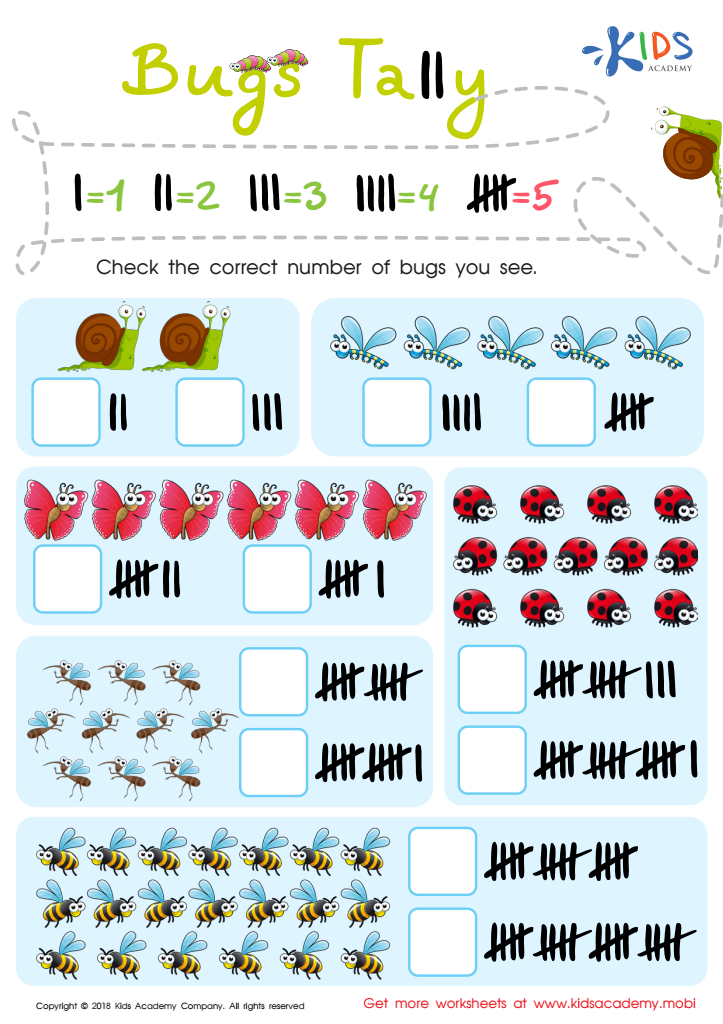
Bugs Tally Worksheet
 Assign to My Students
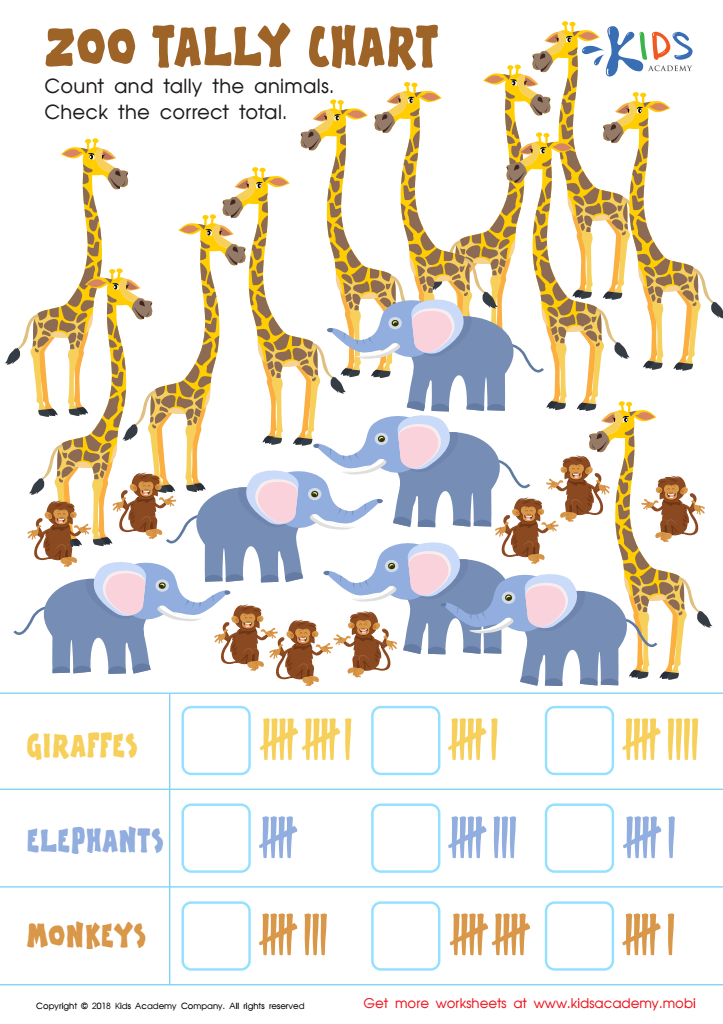
Zoo Tally Chart Worksheet
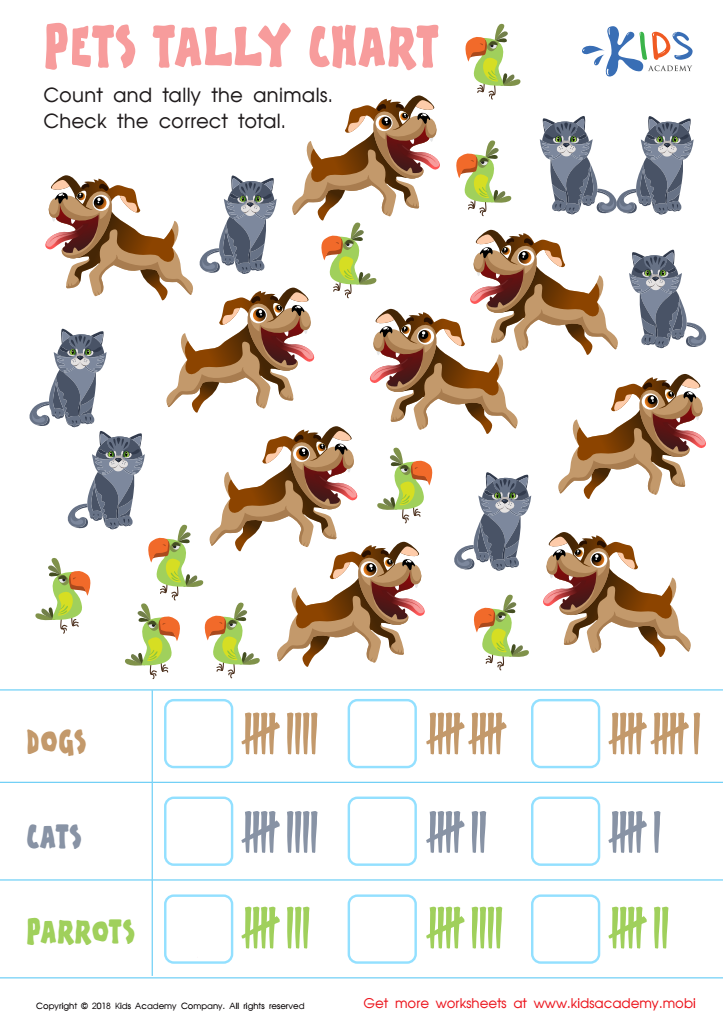
Pets Tally Chart Worksheet
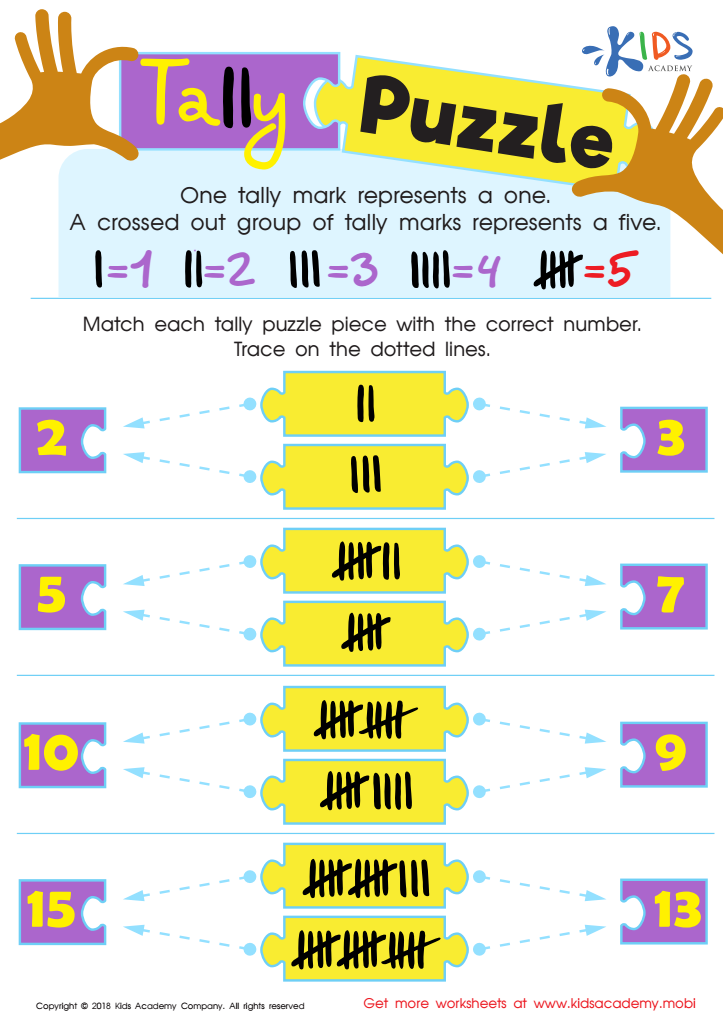
Tally Puzzle Worksheet








Understanding tally marks is a fundamental skill that significantly benefits children aged 6-9 both academically and practically. Parents and teachers should care about making this concept easily understandable because it lays the groundwork for essential math skills. Tally marks provide a visual and tangible way to count, making abstract numerical concepts more concrete for young learners. This visual aid can enhance a child's ability to memorize and understand numbers, contributing to improved numeracy skills.
Additionally, tally marks teach important principles such as grouping and place value. They help children see how numbers accumulate in groups of five, introducing them to multiplication and skip counting. These foundational skills are crucial for more advanced mathematical concepts they will encounter later.
Moreover, understanding tally marks is beneficial beyond the classroom. It teaches children to organize information efficiently, a skill that's valuable in daily activities and future academic endeavors. For instance, kids might use tally marks to keep score in games, track chores, or monitor daily tasks, thereby fostering a sense of independence and responsibility.
In summary, making tally marks easy to understand equips children with basic math skills, enhances cognitive development, and promotes practical life skills, making it a valuable focus for early education.








