Understanding fractions Easy Fractions of Shapes Worksheets for Ages 6-9
13 filtered results
-
From - To
Explore the world of fractions with our "Understanding Fractions Easy Fractions of Shapes Worksheets," specially designed for kids aged 6-9. These engaging worksheets focus on helping young learners grasp the concept of fractions through interactive and fun activities involving shapes. As children practice identifying and shading fractions, they build essential skills in visualization and equivalence. Our easy-to-follow format encourages independent learning while reinforcing classroom lessons. Perfect for at-home practice or classroom use, these worksheets make learning fractions enjoyable and effective. Unlock your child's mathematical potential and confidence with these thoughtfully crafted resources! Start their journey to fraction mastery today!
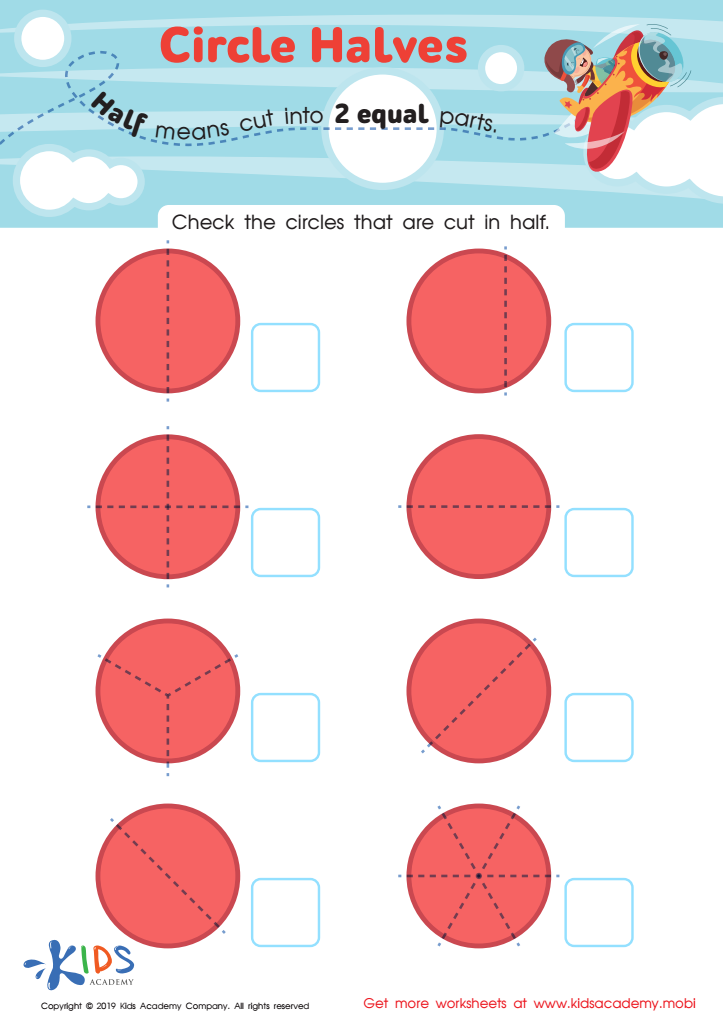
Circle Halves Worksheet
 Assign to My Students
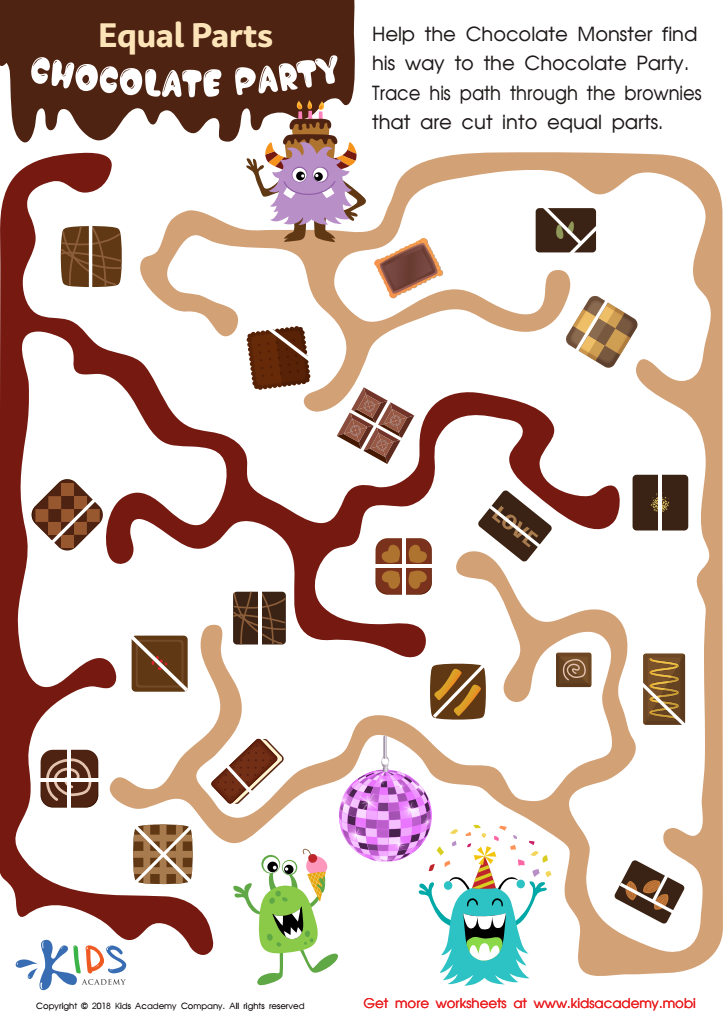
Equal Parts: Chocolate Party Worksheet
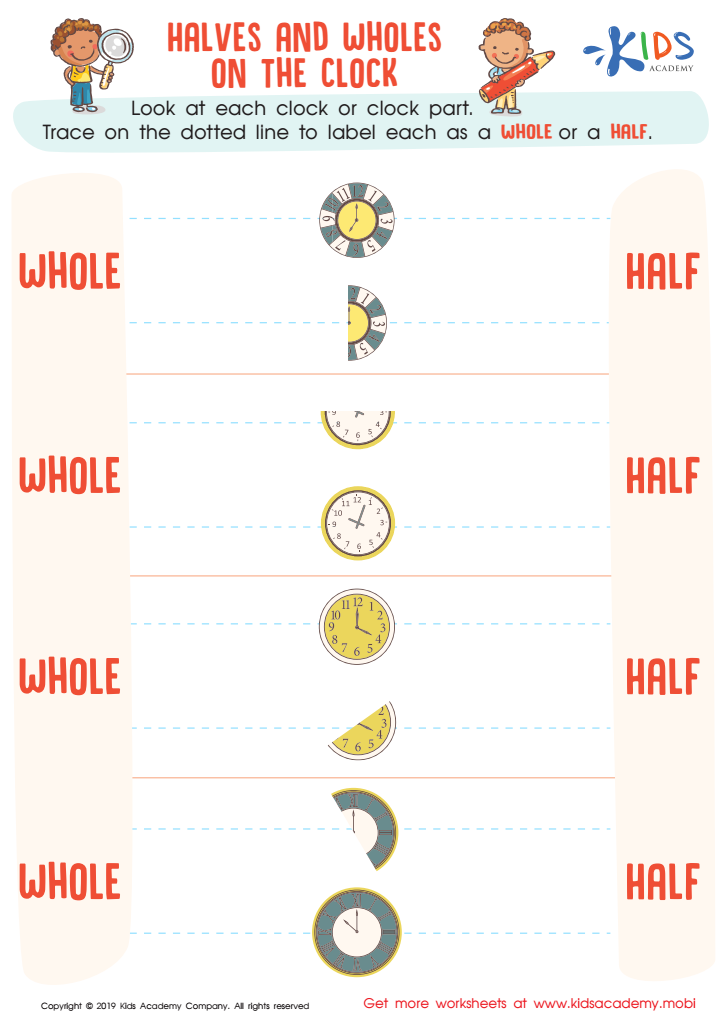
Halves and Wholes on the Clock Worksheet
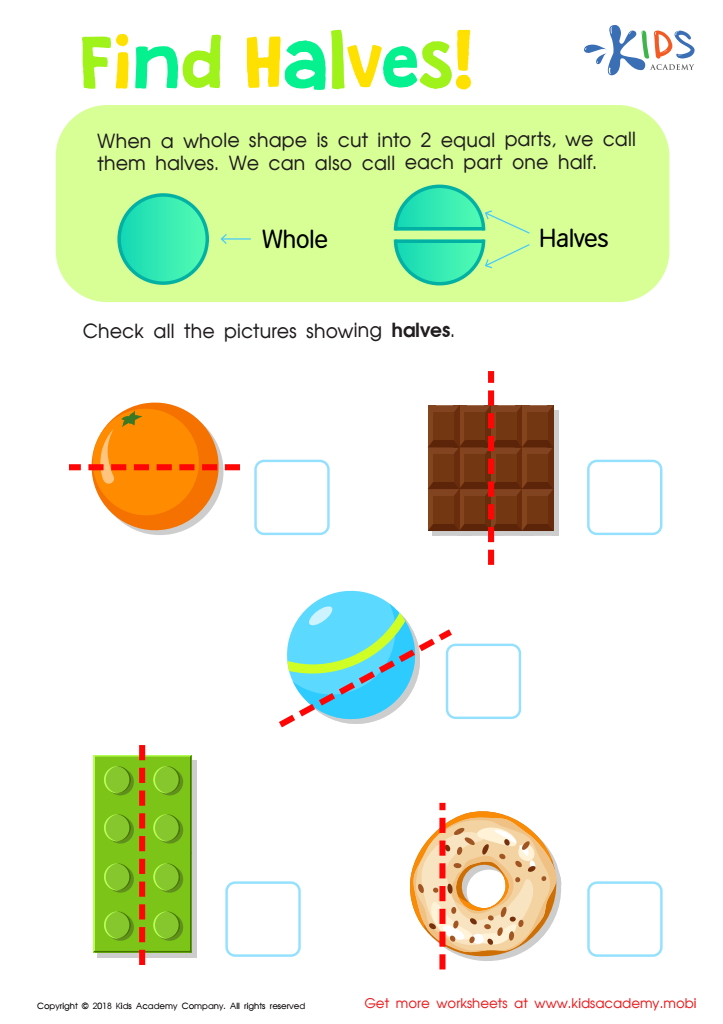
Find Halves Worksheet
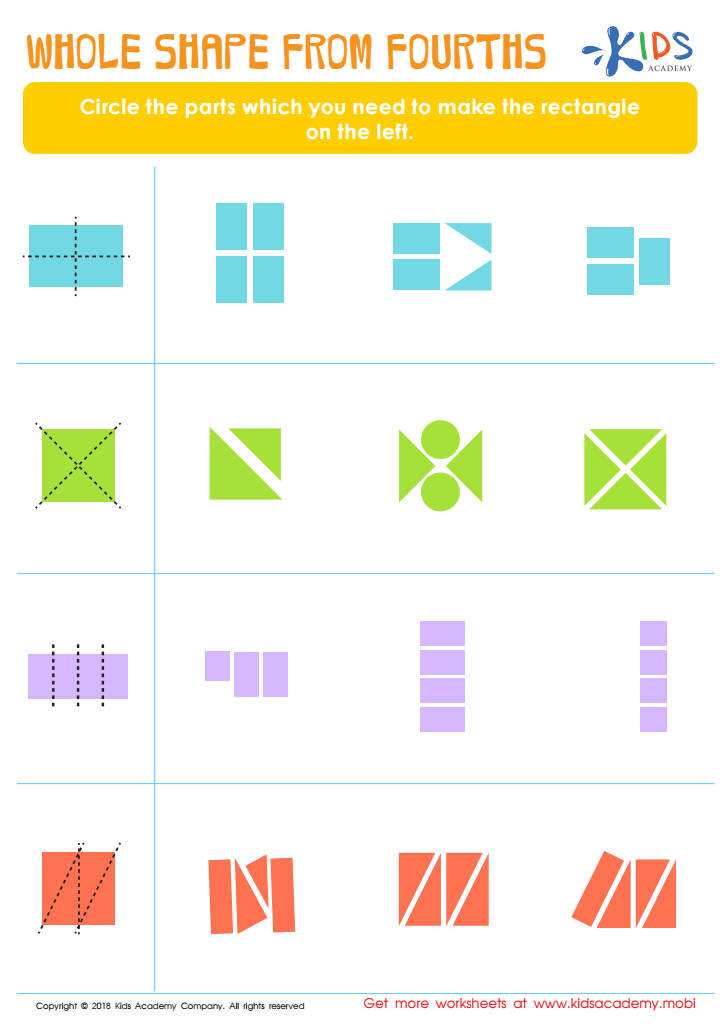
Whole Shape from Fourths Worksheet
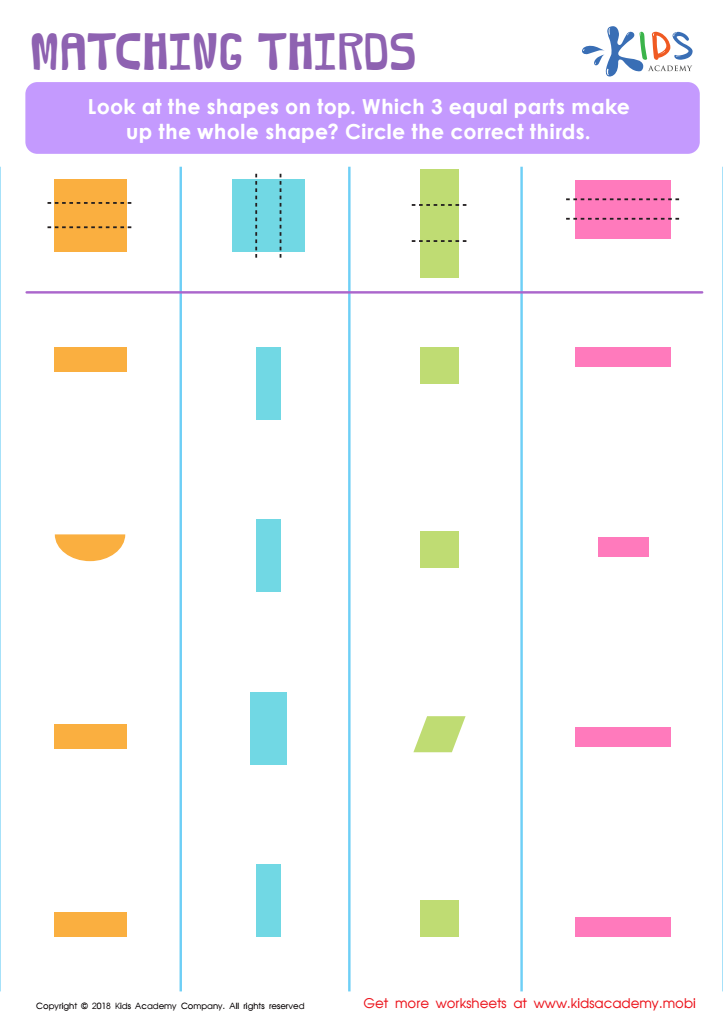
Matching Thirds Worksheet
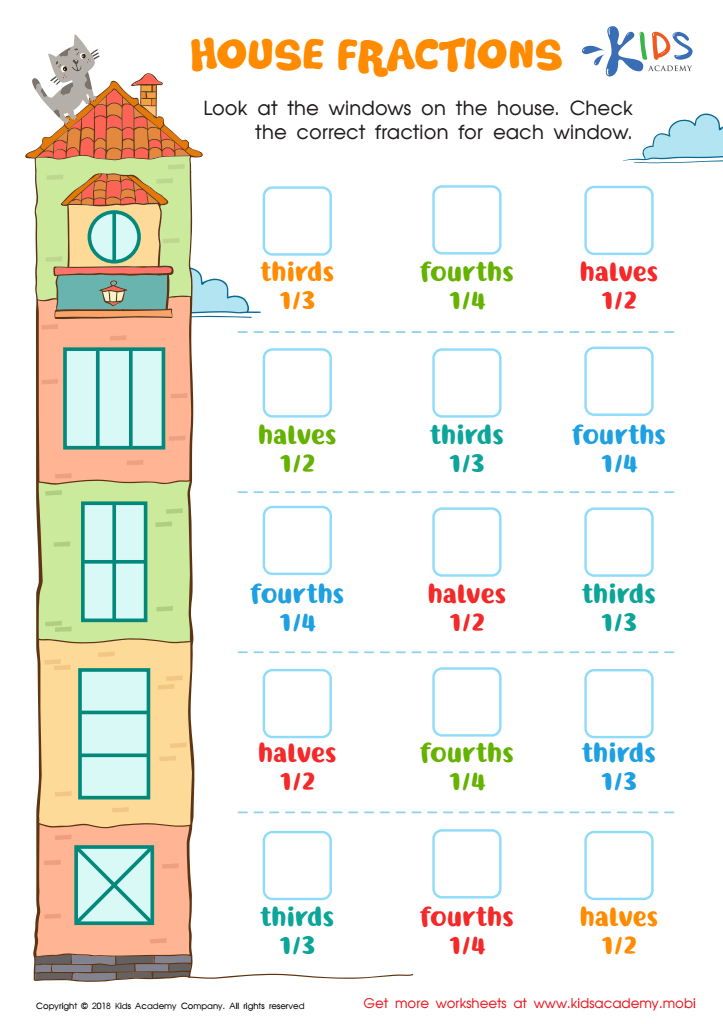
House Fractions Worksheet
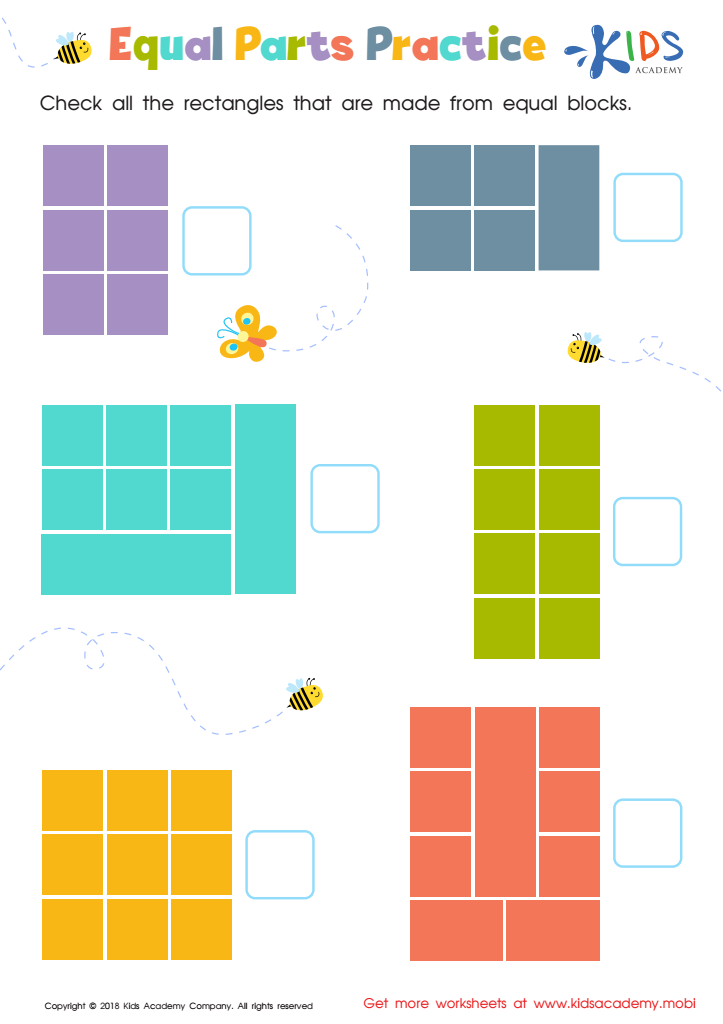
Equal Parts Practice Worksheet
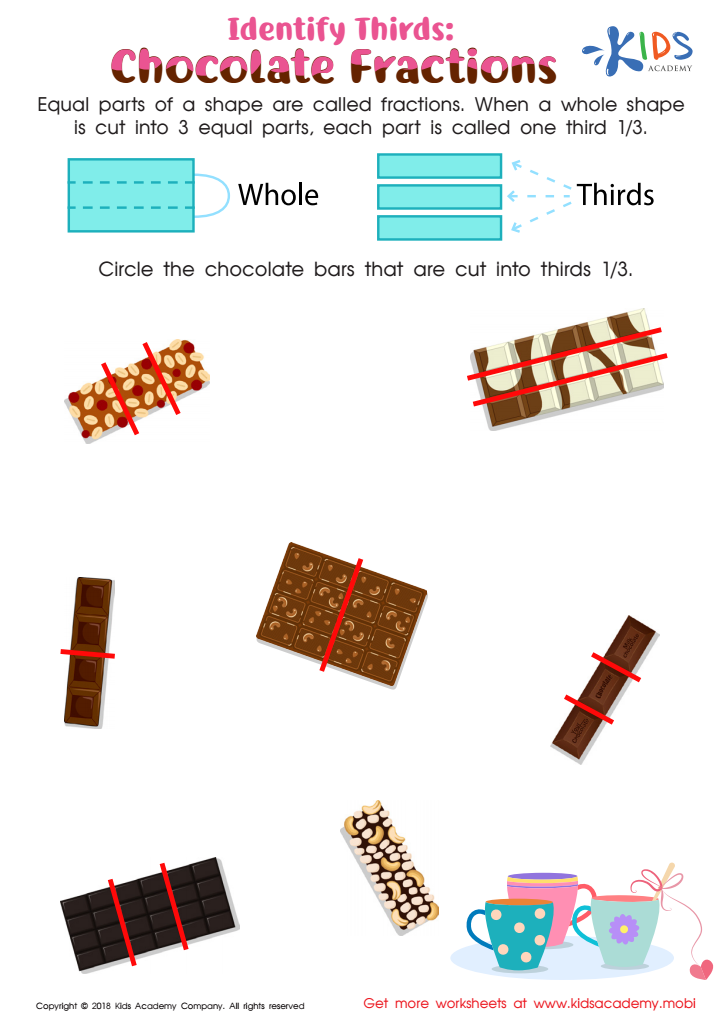
Identify Thirds: Chocolate Fractions Worksheet
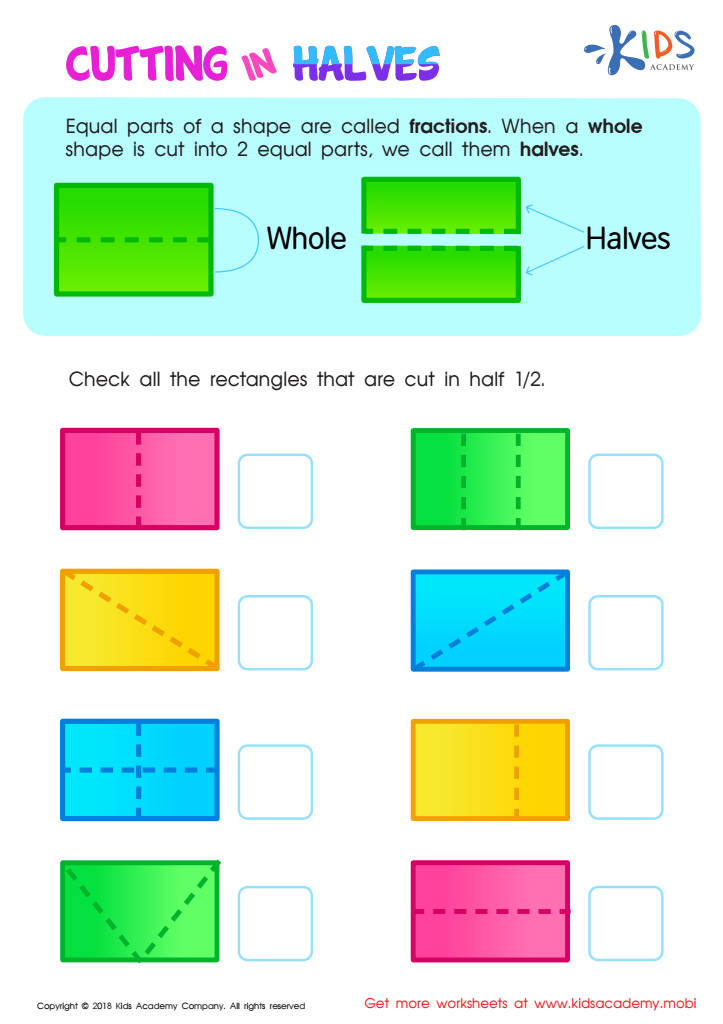
Cutting in Halves Worksheet
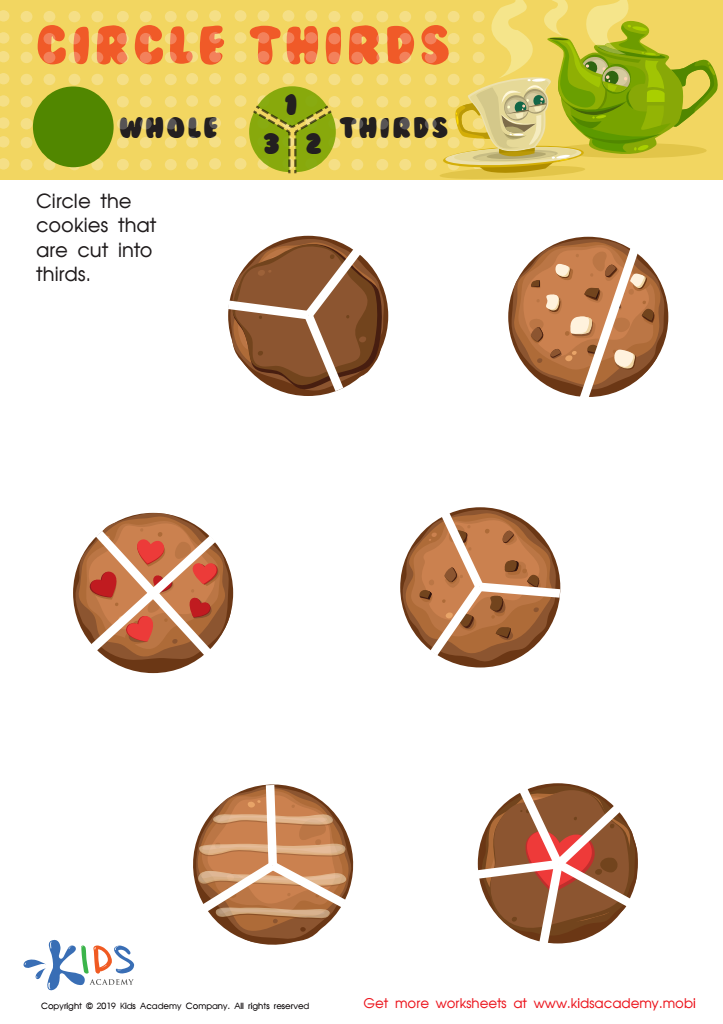
Circle Thirds Worksheet
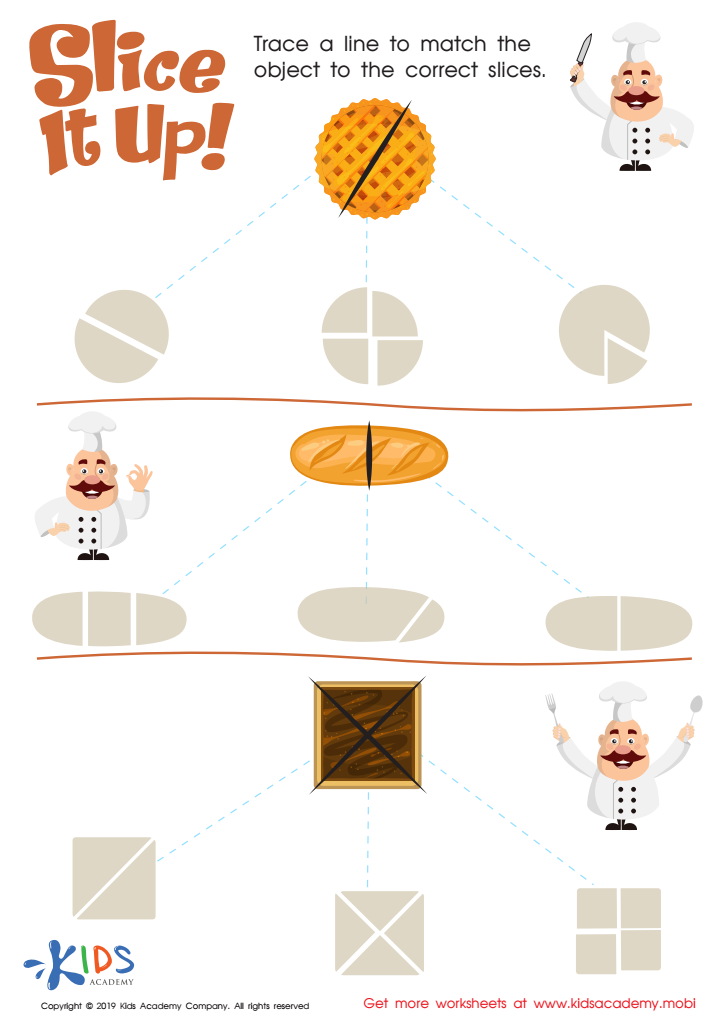
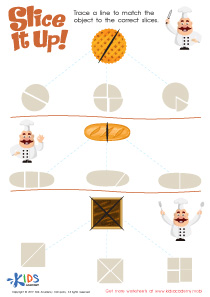
Slice It Up Worksheet
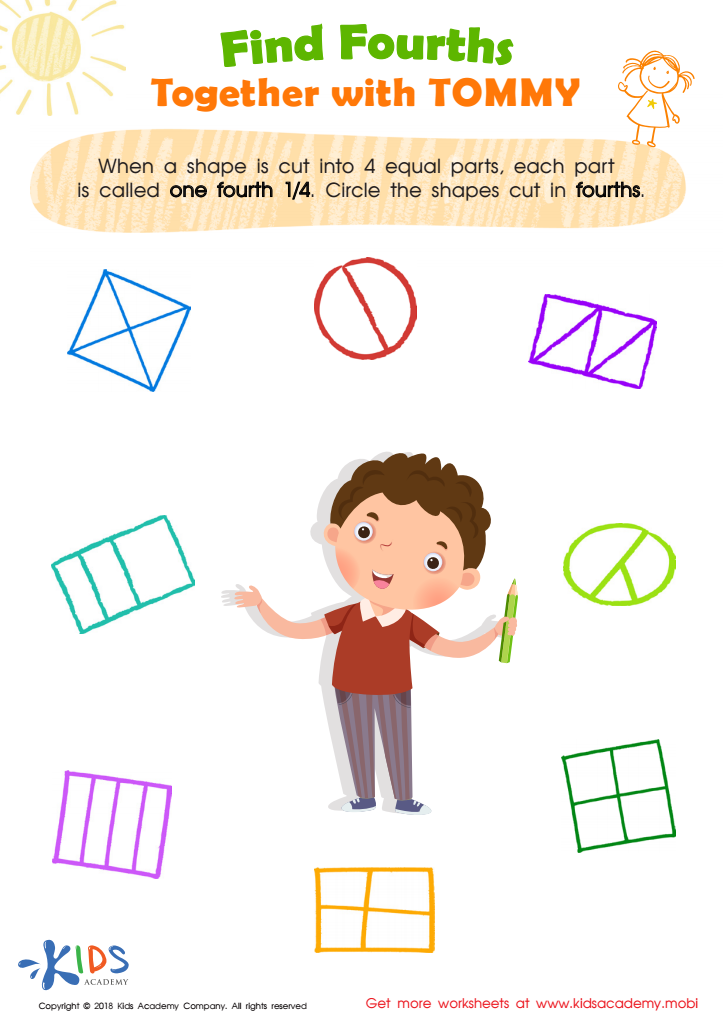
Find Fourths Together with Tommy Worksheet








Understanding fractions, especially through visual aids like shapes, is crucial for children aged 6-9 as it lays the foundation for later mathematical concepts. At this age, children are developing their reasoning and problem-solving skills, making it important for parents and teachers to engage them in hands-on learning experiences with fractions. Easy fractions of shapes provide a concrete method for children to grasp the concept of parts of a whole, enhancing their visual-spatial skills.
Moreover, learning about fractions in a fun and engaging way can foster a positive attitude towards math. When children see fractions as a way to describe real-world scenarios—like sharing a pizza or dividing a chocolate bar—they become more motivated to learn. Understanding fractions also promotes critical thinking; as children manipulate shapes, they learn to compare, categorize, and understand relationships between numbers and quantities.
Additionally, this foundational knowledge is critical for future math topics, including decimals, percentages, and ratios. Supporting children through this learning process ensures they are not only prepared for more complex math but also equipped with essential skills for everyday problem-solving, highlighting the importance of parental and educator involvement in their educational journey.