Pattern recognition Easy Numbers Worksheets for Ages 6-9
3 filtered results
-
From - To
Discover our engaging Pattern Recognition Easy Numbers Worksheets designed specifically for children aged 6-9! These worksheets provide an interactive way for young learners to develop essential math skills by identifying and completing number patterns. Each worksheet is crafted to promote critical thinking and problem-solving abilities while keeping the learning experience fun and enjoyable. With colorful illustrations and age-appropriate challenges, your child will strengthen their understanding of numerical relationships through hands-on practice. Perfect for home or classroom use, our worksheets ensure that students build a solid foundation in math while fostering a love for learning. Explore our collection today!
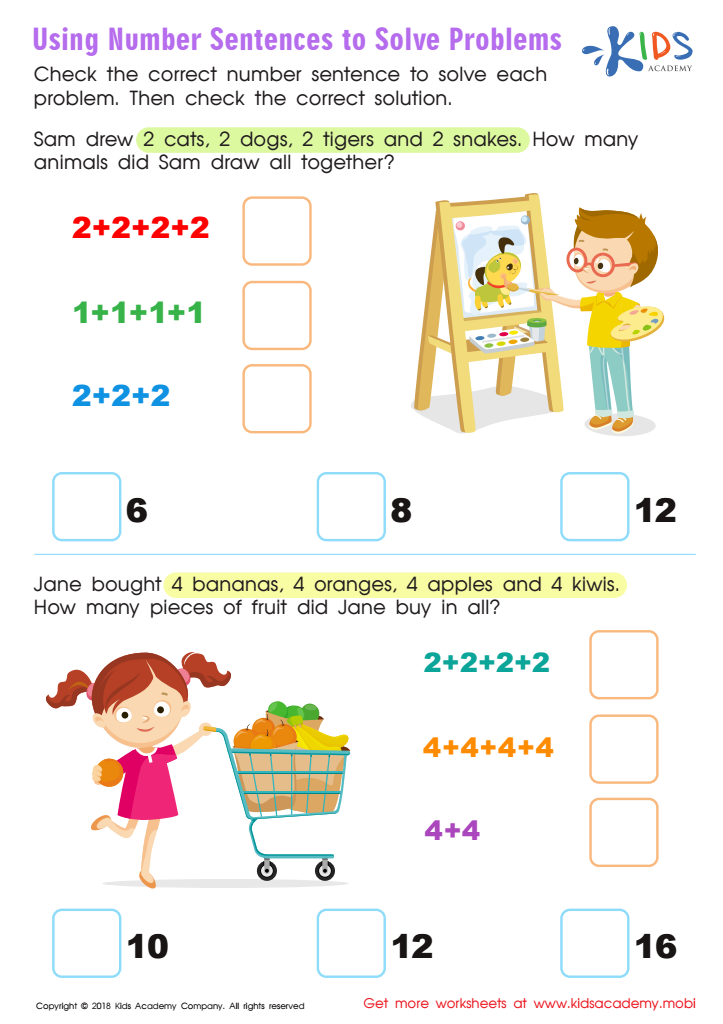
Using Number Sentences to Solve Problems Worksheet
 Assign to My Students
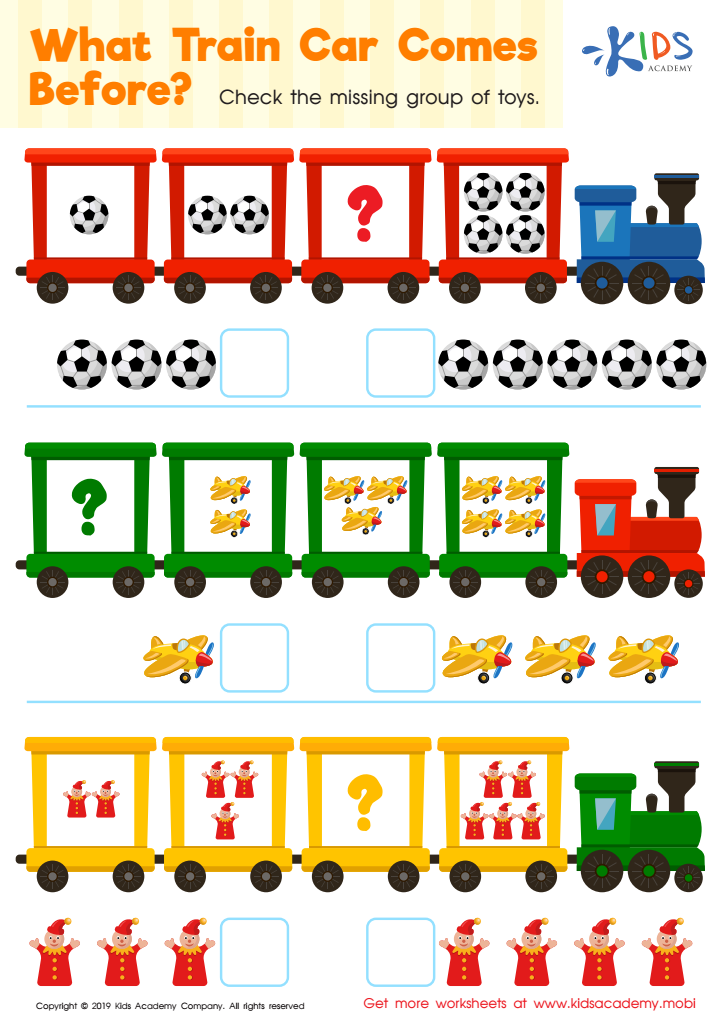
What Train Car Comes Before? Worksheet
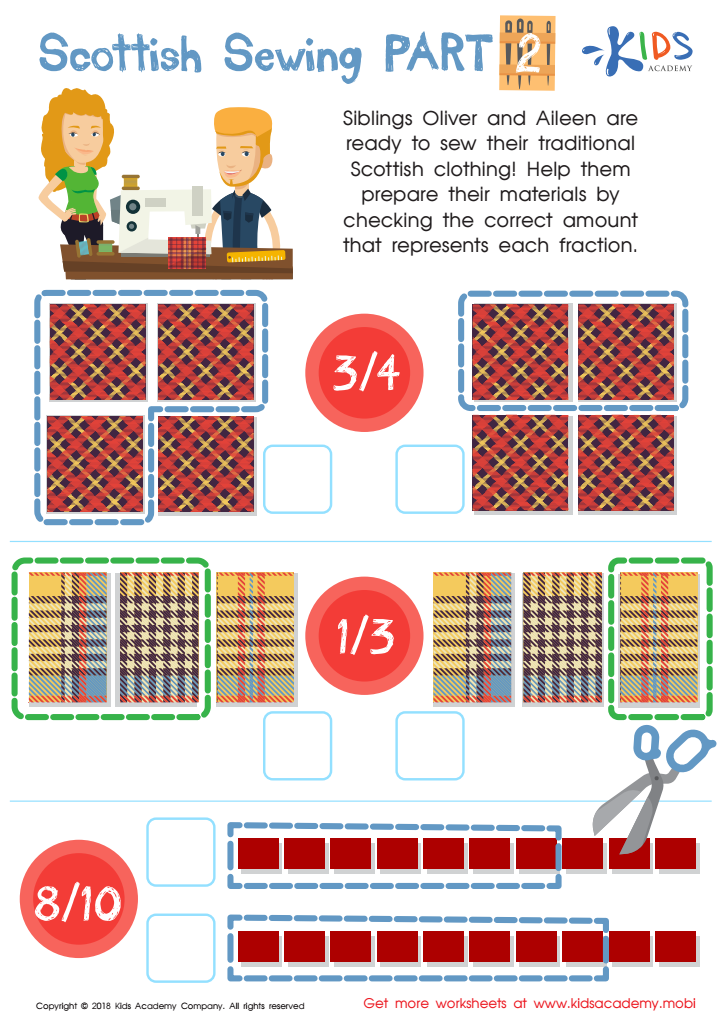
Scottish Sewing Part 2 Worksheet








Pattern recognition is a critical cognitive skill for children aged 6-9, serving as a foundational element in their mathematical and analytical development. For parents and teachers, fostering this skill is vital as it enhances children's understanding of numbers and concepts related to mathematics. Recognizing patterns helps students make connections, identify relationships, and predict outcomes, which are essential for problem-solving.
Engaging with "Easy Numbers" activities can cultivate students’ ability to see numerical patterns, such as sequences and repetitions, in a fun and interactive way. This experience promotes logical thinking, encourages creativity, and nurtures curiosity, making learning enjoyable.
Moreover, pattern recognition plays a crucial role in everyday life, aiding children in areas such as reading, scientific reasoning, and even social interactions. By recognizing patterns in language, they bolster their literacy skills, while in science, they become adept at discerning trends or principles.
For parents and teachers, emphasizing pattern recognition not only enhances academic success but also prepares students for future learning challenges. Building a strong foundation in these skills can lead to greater confidence in mathematics and analytical tasks, shaping well-rounded individuals who are better prepared for complex problem solving down the line.








