Animal recognition Easy Math Worksheets for Ages 6-9
6 filtered results
-
From - To
Discover our engaging Animal Recognition Easy Math Worksheets designed specifically for children aged 6-9! These delightful printables combine basic math skills with exciting animal recognition activities, keeping young learners entertained and motivated. Each worksheet offers a variety of math problems, such as addition, subtraction, and counting, paired with fun animal illustrations and facts. Perfect for use at home or in the classroom, these worksheets help improve kids' numerical abilities while also enhancing their knowledge of the animal kingdom. Start your child's learning adventure today with these captivating and educational resources!
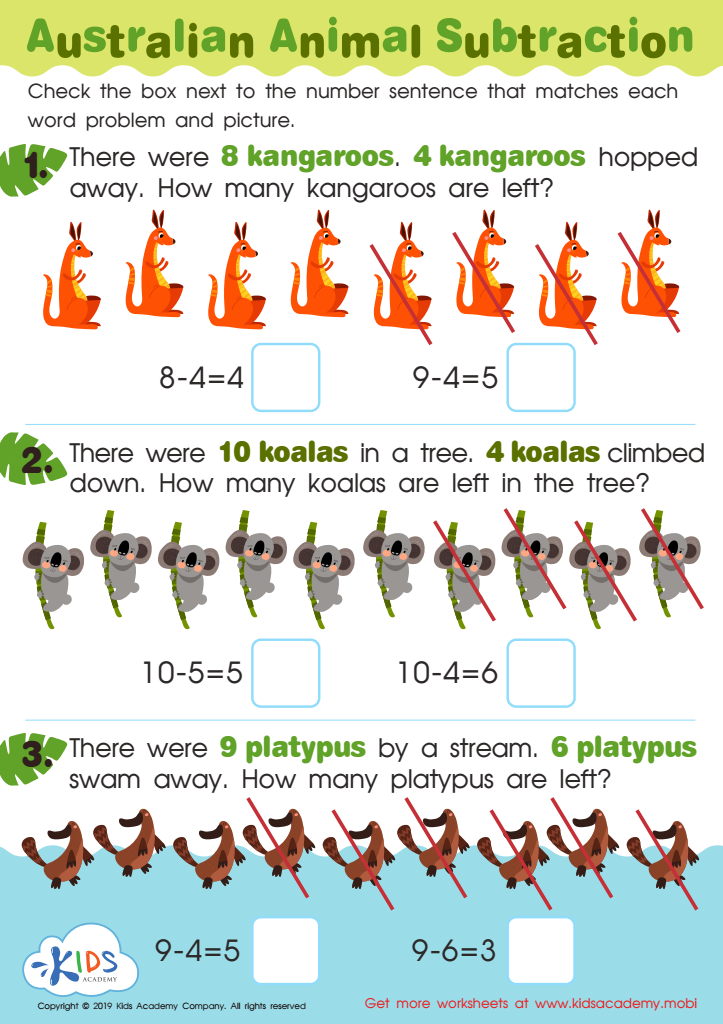
Australian Animal Subtraction Worksheet
 Assign to My Students
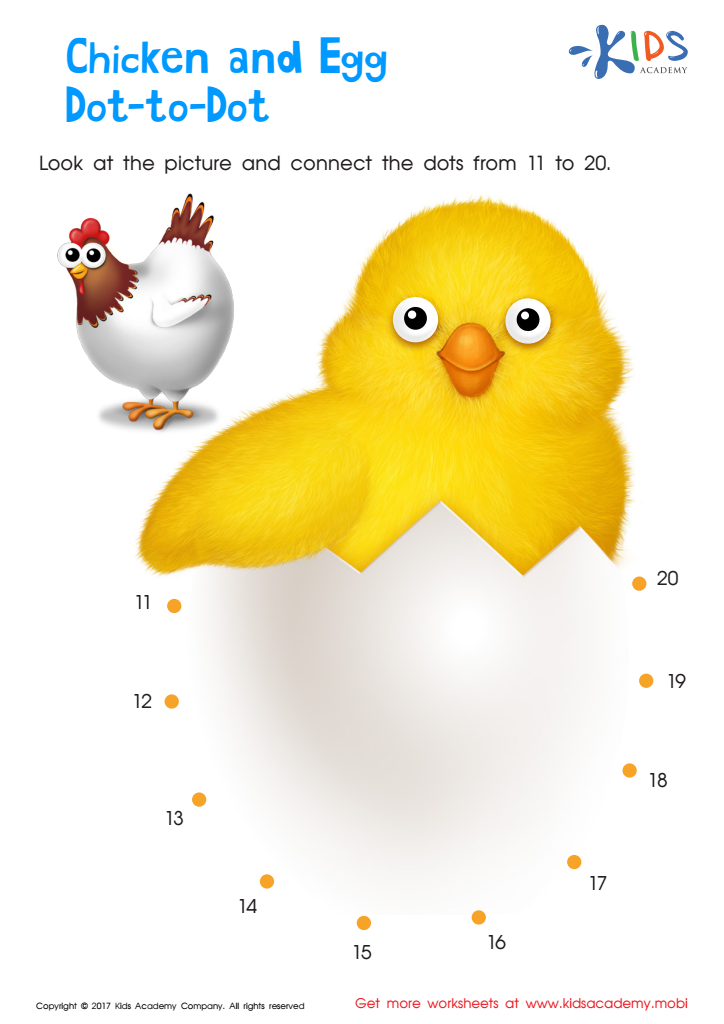
Ordering 11–20: Chicken & Egg Dot–to–dot Worksheet
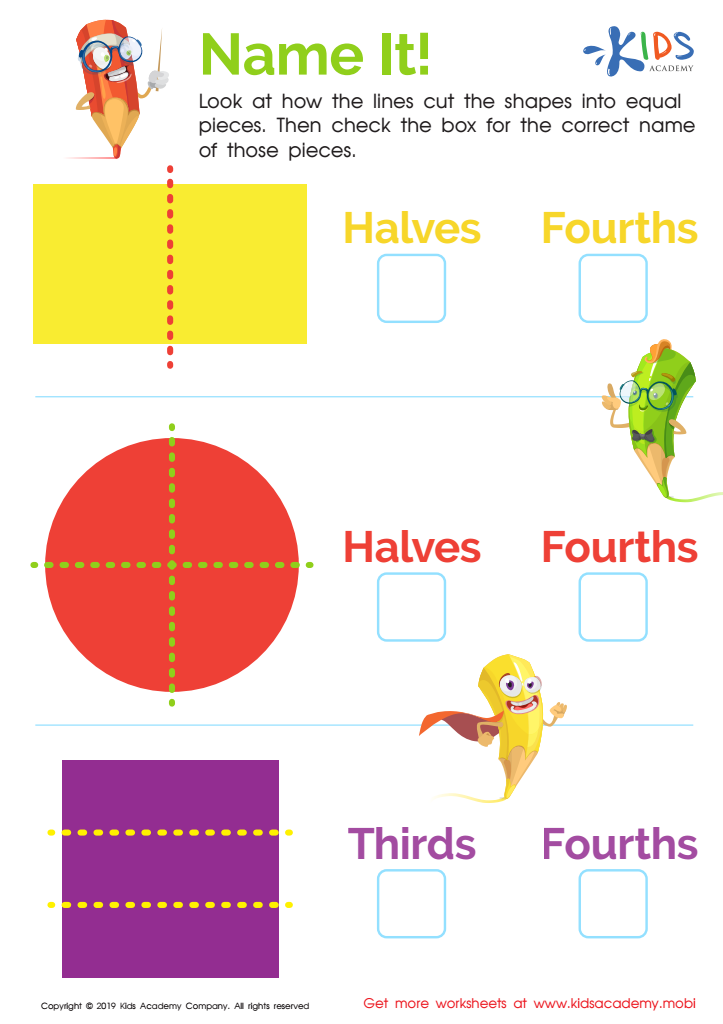
Name It! Worksheet
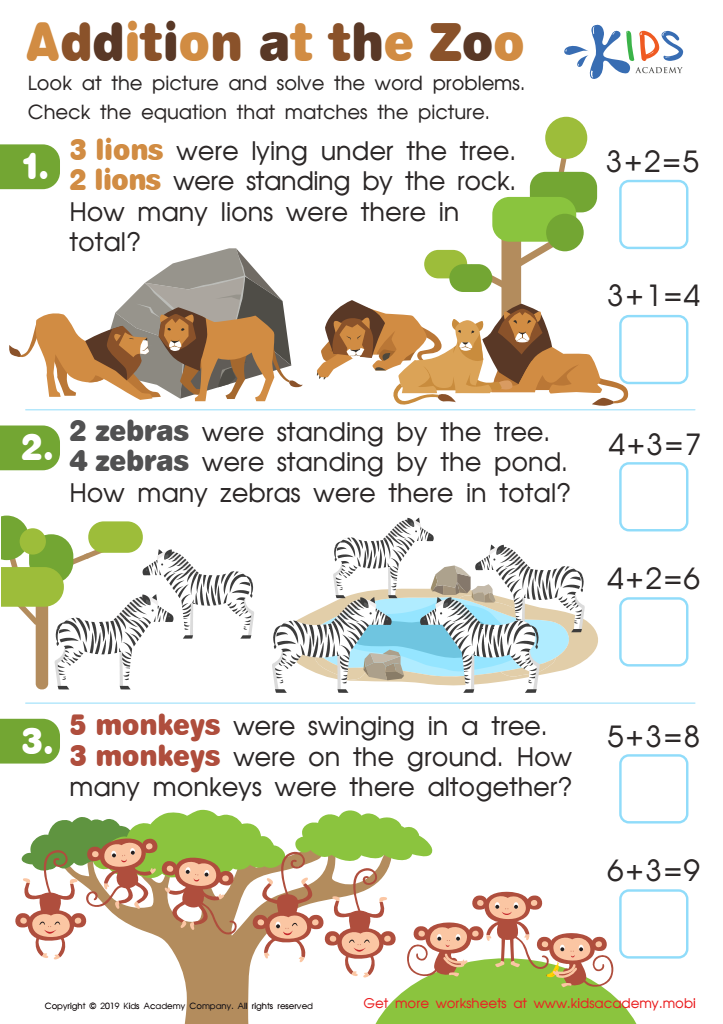
Addition at the Zoo Worksheet
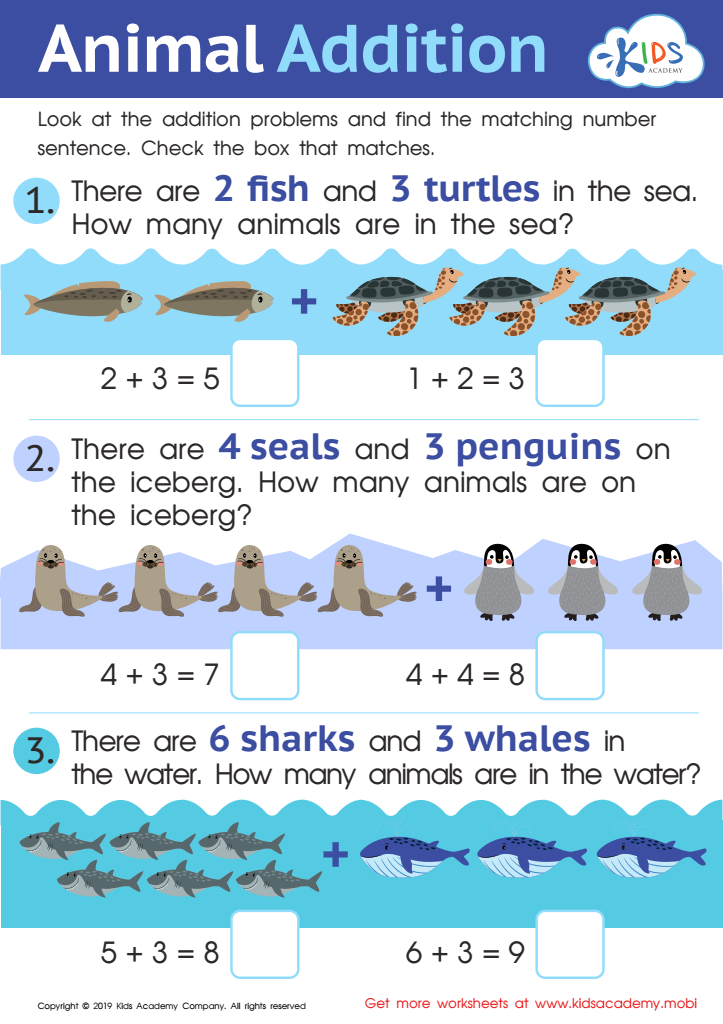
Animal Addition Worksheet
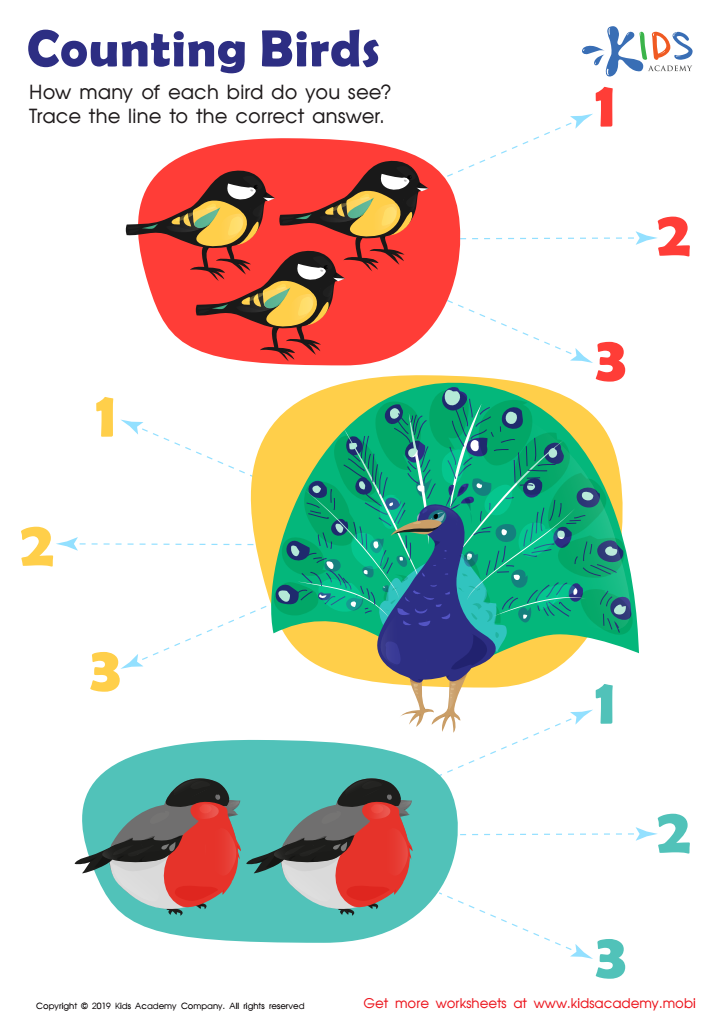
Counting Birds Worksheet








Understanding animal recognition and basic math concepts at an early age can significantly aid a child's cognitive and educational development. For ages 6-9, integrating animal recognition into easy math lessons can make learning both engaging and effective.
First, children are naturally drawn to animals, which can spark their curiosity and interest. Using animal themes in math problems can help them stay focused and motivated, transforming what might otherwise be mundane exercises into playful activities. This engagement is crucial for maintaining enthusiasm in a child’s early learning stages.
Secondly, incorporating familiar, identifiable subjects such as animals can aid in concretizing abstract math concepts. For instance, asking a child to count the number of spots on a leopard or the number of legs on various animals provides tangible examples that make addition, subtraction, and even basic multiplication and division more relatable.
Moreover, this multidimensional approach addresses different learning styles. Visual learners benefit from pictorial representations, while hands-on learners enjoy counting physical or illustrated objects. Such methodologies can foster a deeper understanding of numbers, patterns, and relationships.
Lastly, bridging knowledge domains promotes a well-rounded intellect. Children learn not just in isolated subjects but in integrated thematic units that reflect real-world complexities, preparing them for higher cognitive tasks. Thus, blending animal recognition with easy math profoundly supports holistic brain development and foundational education.








