
Color recognition Easy Math Worksheets for Ages 6-9
6 filtered results
Difficulty Level
Grade
Age
-
From - To
Subject
Activity
Standards
Discover engaging Color Recognition Easy Math Worksheets for ages 6-9 at Kids Academy! Our expertly designed worksheets combine fun and learning by helping young minds master color identification through entertaining math activities. Each worksheet features vibrant images and challenges that develop essential skills, such as counting, pattern recognition, and basic arithmetic. Aimed at fostering both creativity and cognitive growth, these worksheets provide a comprehensive approach to early math education. Perfect for teachers and parents, Kids Academy ensures every child can achieve math success while enjoying the learning process. Visit us today and unlock your child’s potential!
Favorites
With answer key
Interactive
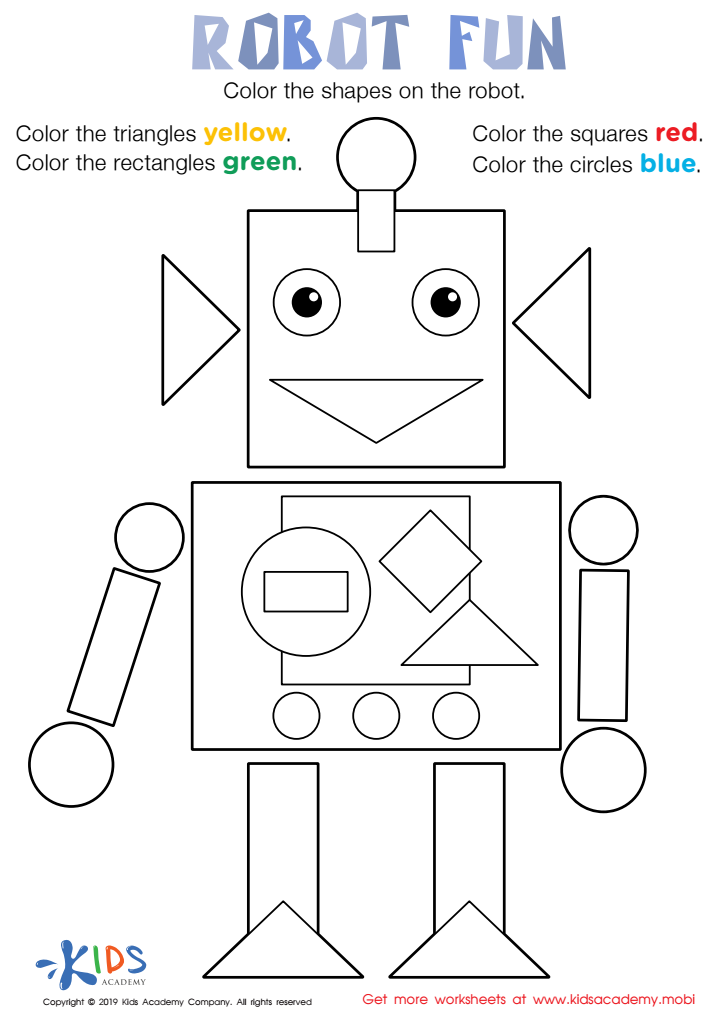
Robot Fun Worksheet
Help your child learn about basic shapes with this fun robot worksheet! Kids practice identifying circles, squares, rectangles and triangles, then color each shape according to directions. Make math practice enjoyable with this coloring page that teaches all four basic shapes - it's an important math skill!
Download (PDF)
 Assign to My Students
Assign to My Students
Robot Fun Worksheet
Worksheet
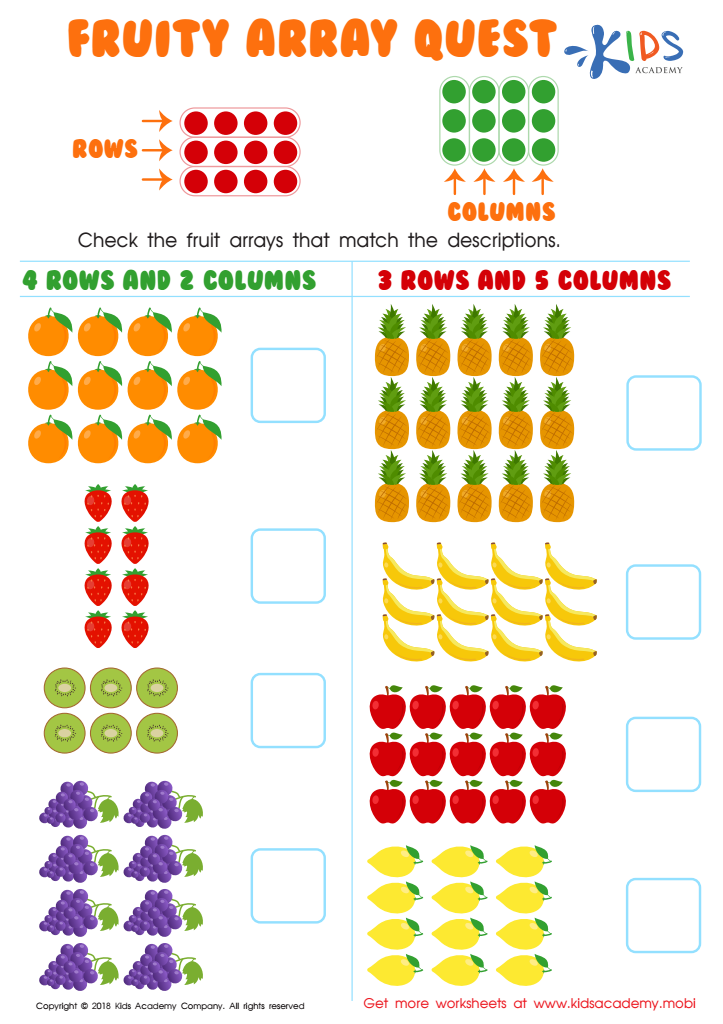
Fruity Array Quest Worksheet
Explain rows (horizontal) and columns (vertical) to your child before starting the worksheet. Show them the picture and the arrows indicating direction. Your child should be able to answer the questions easily after that. Help them match the fruit arrays that match the descriptions.
Fruity Array Quest Worksheet
Worksheet
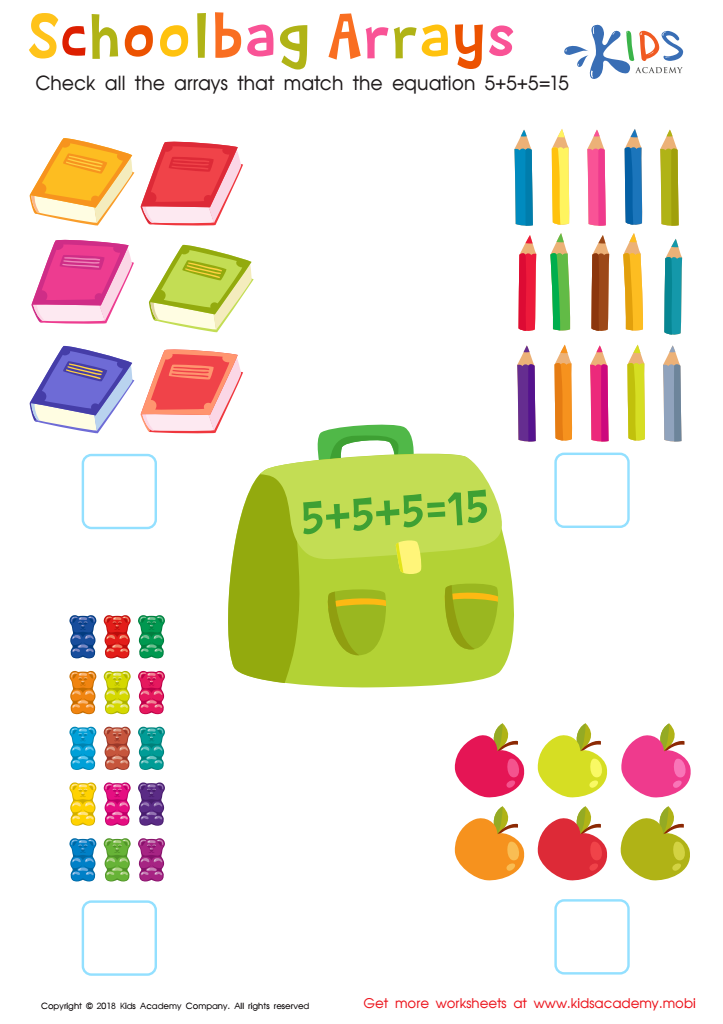
Schoolbag Arrays Worksheet
Help your child spot the correct arrays in this worksheet: having them count the items in each and check the boxes for the ones with 15 objects. Ask them to differentiate between rows and columns and explain which ones match the equation 5+5+5=15.
Schoolbag Arrays Worksheet
Worksheet
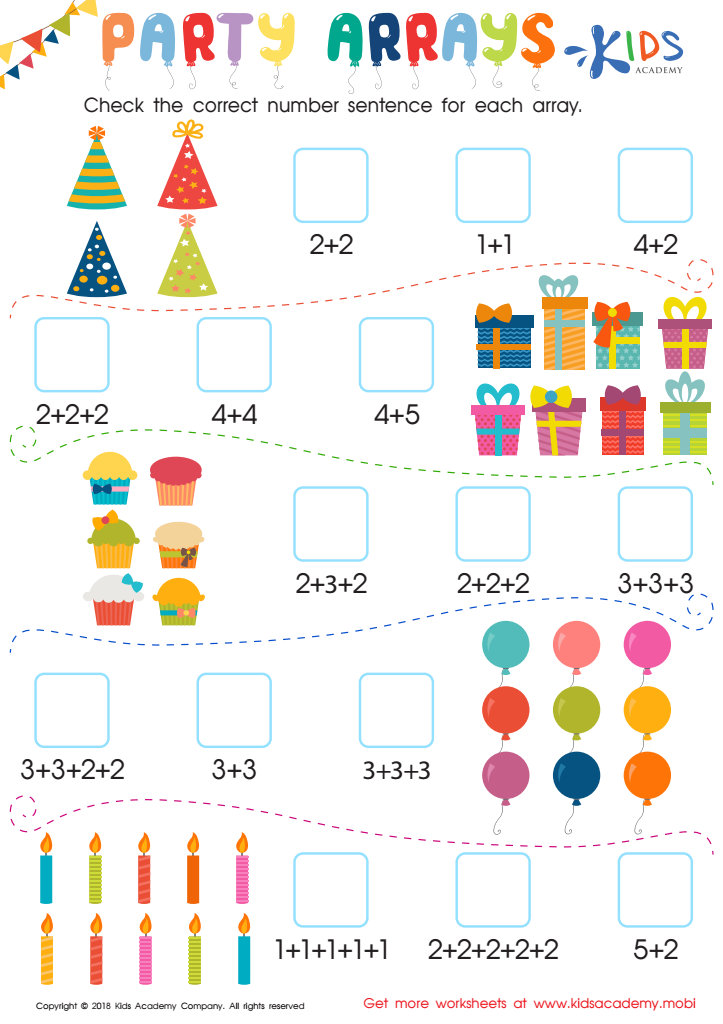
Party Arrays Worksheet
Help your child count the objects in each of the five arrays, then check the correct number sentence for each. This exercise will test their math skills and understanding of number sentences. Guide them to select the appropriate boxes.
Party Arrays Worksheet
Worksheet
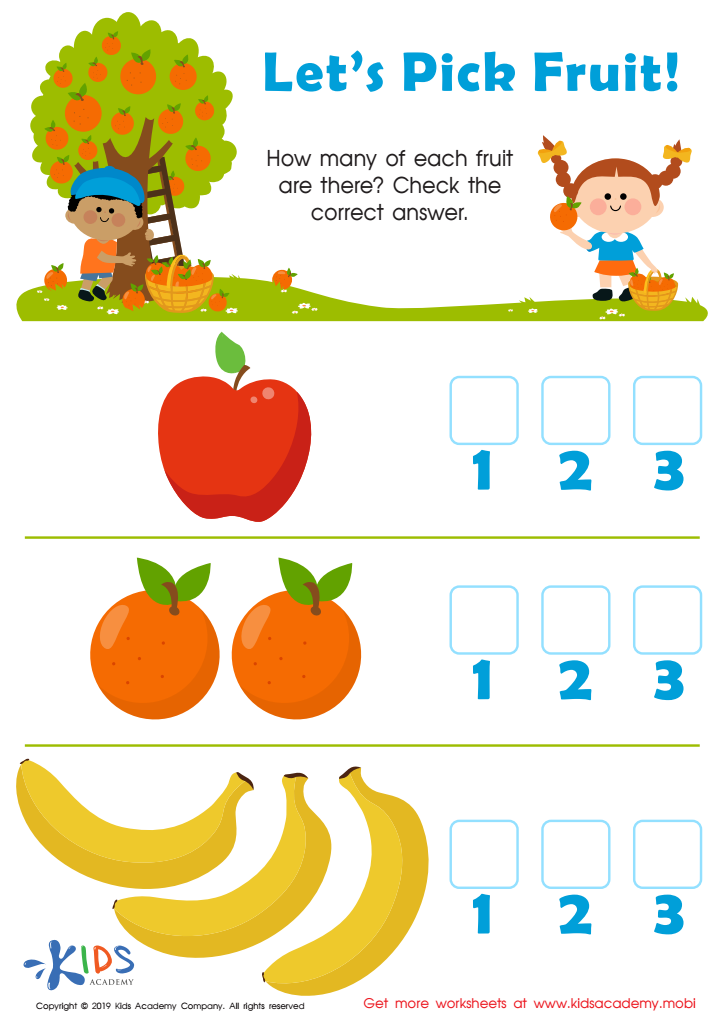
Let's Pick Fruit Worksheet
Picking fruit is fun - and counting it is even better! This free worksheet is perfect for young math learners. They'll use picture representation to count the fruit in each problem and then select the correct answer from the multiple-choice boxes. It's a great way to teach number sense in an easy, fun way!
Let's Pick Fruit Worksheet
Worksheet
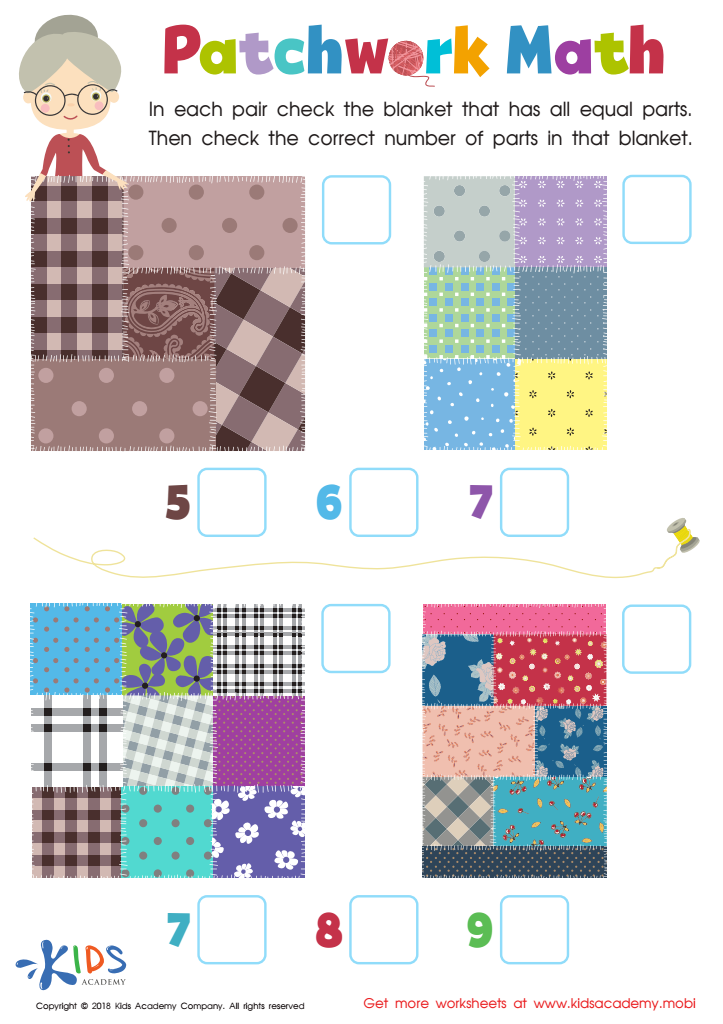
Patchwork Math Worksheet
Test your children's knowledge with this colorful worksheet. They'll need to identify which of the blanket pairs have been cut in equal parts and count the number of parts. Check the provided options to ensure the correct answer.
Patchwork Math Worksheet
Worksheet
Join Kids Academy for Free
Who is primarily going to use this learning content?







Color recognition and easy math are foundational skills that significantly impact a child's cognitive development and academic success for ages 6-9. Parents and teachers should prioritize these areas for several key reasons.
First, understanding colors is an essential aspect of science and art education. Learning to identify and differentiate colors helps children with pattern recognition, a skill that extends to reading readiness and early math skills, such as sorting and classifying objects.
Easy math, which includes basic arithmetic such as addition, subtraction, and recognizing shapes and patterns, develops crucial problem-solving abilities. These foundational skills provide the building blocks for more complex mathematical concepts.
Integrating color recognition into math activities can make learning more engaging and intuitive. For example, using colored blocks to visualize basic arithmetic problems can help children understand abstract concepts more concretely.
Moreover, developing these skills at an early age fosters a positive attitude towards learning. When children achieve success in understanding colors and basic math, their confidence grows. This positive reinforcement encourages them to tackle more challenging subjects with enthusiasm.
Incorporating fun, multi-sensory activities involving color and easy math boosts motor skills, creativity, and independent thinking. Therefore, nurturing these skills equips children with the essential tools they need for continued academic achievement and holistic development.








