Filters

6 filtered results

Clear all filters
Favorites
With answer key
Interactive

6 filtered results

Difficulty Level

Grade


Unlock the world of colors with our "Color Recognition Easy Building Vocabulary Worksheets" designed specifically for children ages 6-9. These engaging and interactive worksheets offer a fun way for young learners to identify and name colors, enhancing their vocabulary and comprehension skills. Through vibrant illustrations and exciting activities, kids will enjoy identifying shades and hues while developing critical thinking and language abilities. Perfect for independent practice or classroom use, our resources are tailored to reinforce foundational skills and inspire a love for learning. Get started today and watch your child's color recognition and vocabulary flourish!

Check out this FREE Trial Lesson on Building Vocabulary for age 6-9!

Body Parts

Favorites
With answer key
Interactive
  • 6-9
  • Color recognition
  • Building Vocabulary
  • Easy
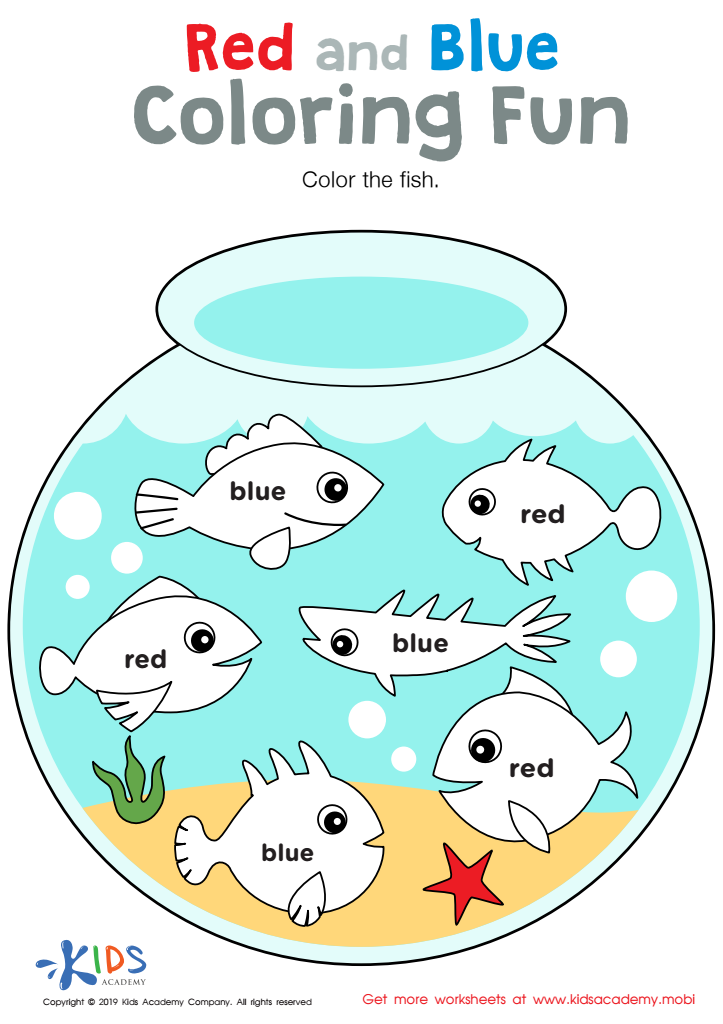
Red and Blue Coloring Fun Worksheet

Red and Blue Coloring Fun Worksheet

Kids know colors like red and blue. But can they read these words? Give them practice with this fun fish bowl coloring sheet. They'll look at the fish, then color them the corresponding hue. Home or classroom, they'll be sure to get a kick out of learning colors in this creative way!
Download (PDF)
Assign to My Students
Red and Blue Coloring Fun Worksheet
Worksheet
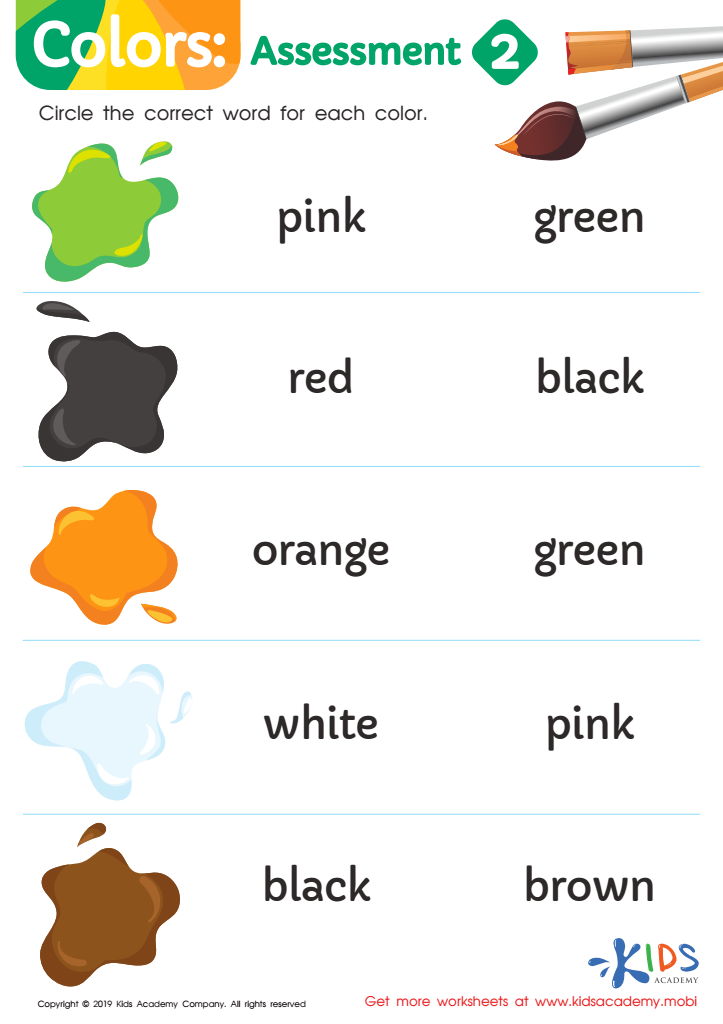
Colors: Assessment 2 Worksheet

Colors: Assessment 2 Worksheet

Teach color words to young students to build fluency and confidence. Check knowledge with an assessment worksheet. Have students look at paint samples and circle the correct color word. This assessment helps parents and teachers measure a child’s accuracy when reading color words.
Colors: Assessment 2 Worksheet
Worksheet
Colors: Assessment 1 Worksheet

Colors: Assessment 1 Worksheet

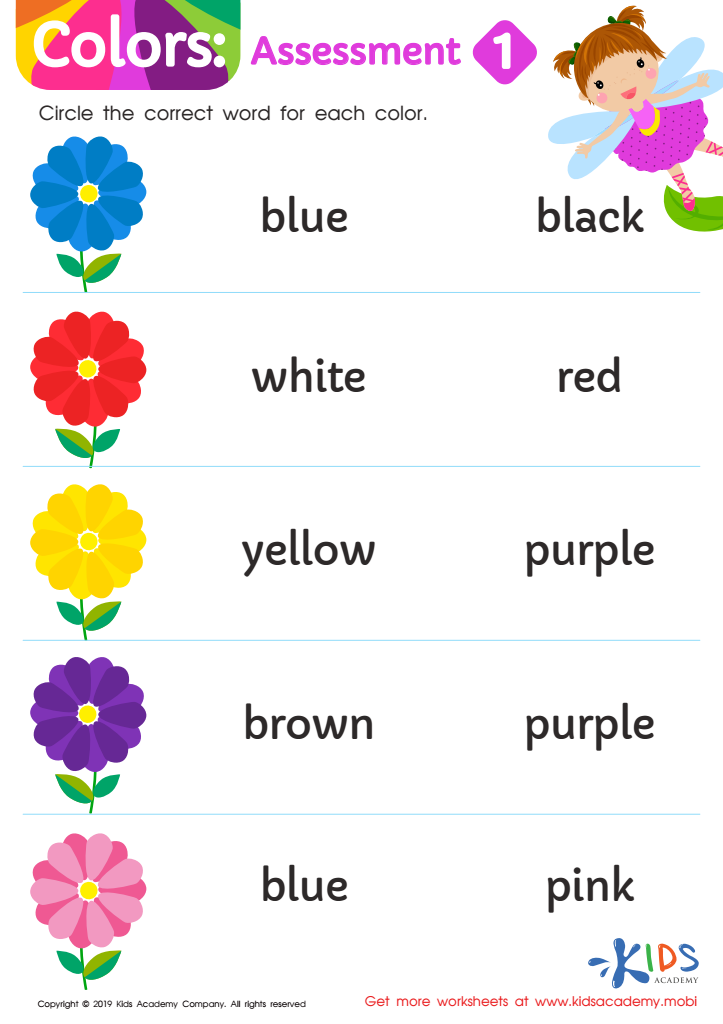
Children can decode unfamiliar words by sounding them out or by recognizing sight words. Color words are an important part of sight word knowledge, so add them to your child's list! This color word worksheet is an effective assessment tool for teachers to use with preschool and kindergarten students. It checks their knowledge of five color words - they simply look at the flower and circle the appropriate color word!
Colors: Assessment 1 Worksheet
Worksheet
Boy and Girl Words Coloring Worksheet

Boy and Girl Words Coloring Worksheet

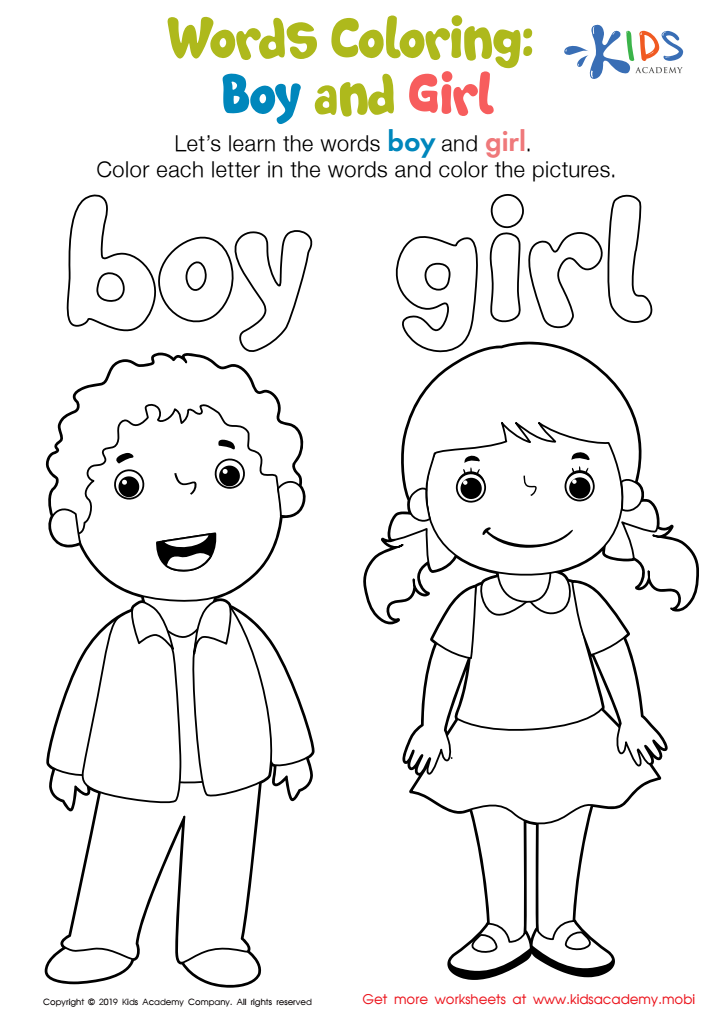
Help your students build their sight word vocabulary! Early readers may not be able to sound out all words, so this worksheet teaches them to read two important sight words: boy and girl. They will color the letters and a picture of each, making it a fun and educational way to learn. Download the PDF now.
Download (PDF)
Assign to My Students
Boy and Girl Words Coloring Worksheet
Worksheet
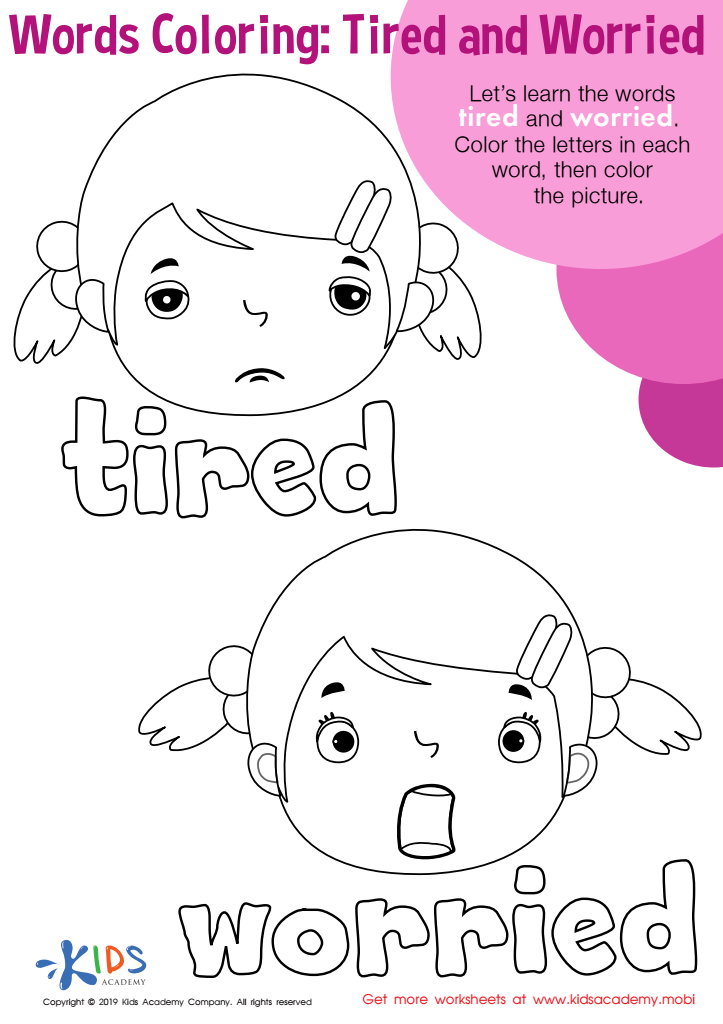
Tired and Worried Words Coloring Worksheet

Tired and Worried Words Coloring Worksheet

Teach your students about "tired" and "worried" with this worksheet. Have them read and color the emotion words, then color the pictures of a tired girl and a worried girl. Discuss what makes them tired and worried. Expand their vocabulary with this fun coloring activity!
Download (PDF)
Assign to My Students
Tired and Worried Words Coloring Worksheet
Worksheet
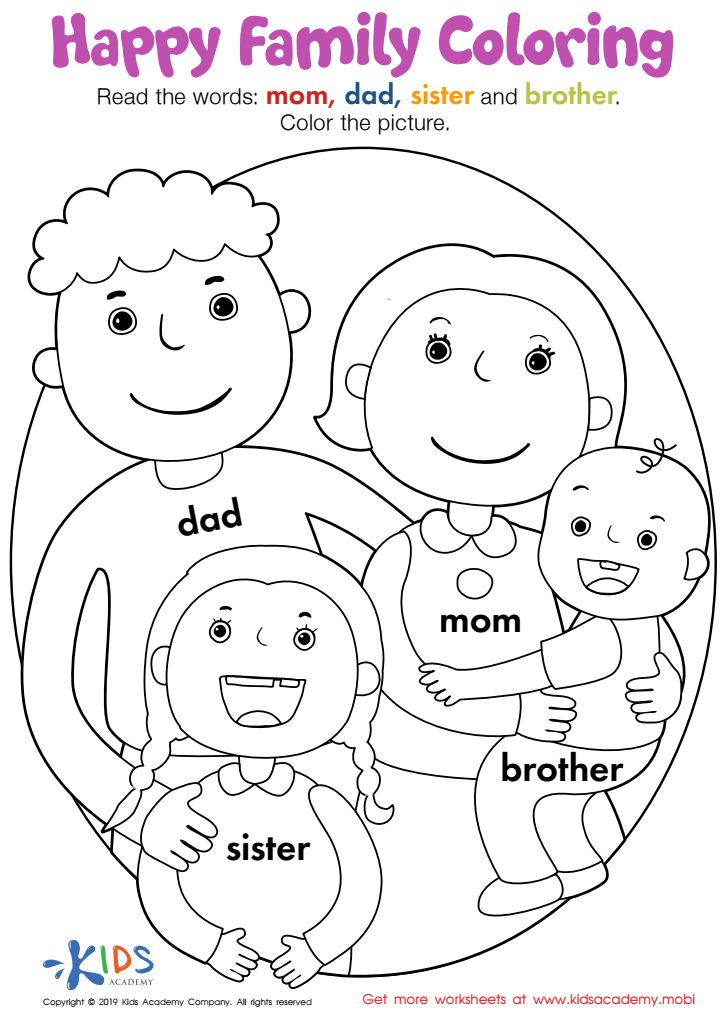
Happy Family Coloring Worksheet

Happy Family Coloring Worksheet

Help your students gain confidence in family vocabulary with this worksheet. Labelled images of a family (dad, mom, sister, brother) are featured, along with an accompanying activity to colour in the picture. Your students will feel a sense of accomplishment after reading and completing the printable.
Download (PDF)
Assign to My Students
Happy Family Coloring Worksheet
Worksheet


Color recognition and building vocabulary in young children, especially those aged 6-9, are crucial developmental milestones that significantly impact their learning and social interactions. Understanding colors helps children make sense of their surroundings and enhances their observational skills. For instance, recognizing colors aids in differentiating objects, understanding categorization, and developing critical thinking.

Furthermore, vocabulary development during these formative years lays the groundwork for strong communication skills. A rich vocabulary enables children to articulate thoughts, engage in discussions, and express emotions, which are essential for their social and academic success. Themes associated with colors can also introduce related words and concepts, thus enriching a child’s language acquisition.

Additionally, fostering an early interest in colors and vocabulary can stimulate creativity and imagination through art and storytelling. Engaging parents and teachers in activities that emphasize color recognition and vocabulary—such as interactive games, storytelling, or art projects—creates an enriching learning environment.

Ultimately, prioritizing color recognition and vocabulary development not only aids in cognitive growth but also instills confidence in children. In doing so, parents and teachers contribute to well-rounded, articulate individuals who can navigate their world with curiosity and self-expression.