Filters

6 filtered results

Clear all filters
Favorites
With answer key
Interactive

6 filtered results

Difficulty Level

Grade


Boost your child's learning with our Fine Motor Skills Easy Reading Comprehension Worksheets designed for ages 6-9. These engaging worksheets blend reading practice with activities that enhance fine motor skills, such as cutting, tracing, and coloring. Perfect for young learners, each worksheet features simple texts that capture their imagination, followed by questions and exercises to reinforce comprehension. Ideal for classroom use or at-home practice, these worksheets support your child's educational journey, helping them to improve their reading abilities while refining crucial fine motor skills. Make learning fun and effective with our expertly crafted resources!

Check out this FREE Trial Lesson on Reading Comprehension for age 6-9!

Key Details in a Text

Favorites
With answer key
Interactive
  • 6-9
  • Fine Motor Skills
  • Reading Comprehension
  • Easy
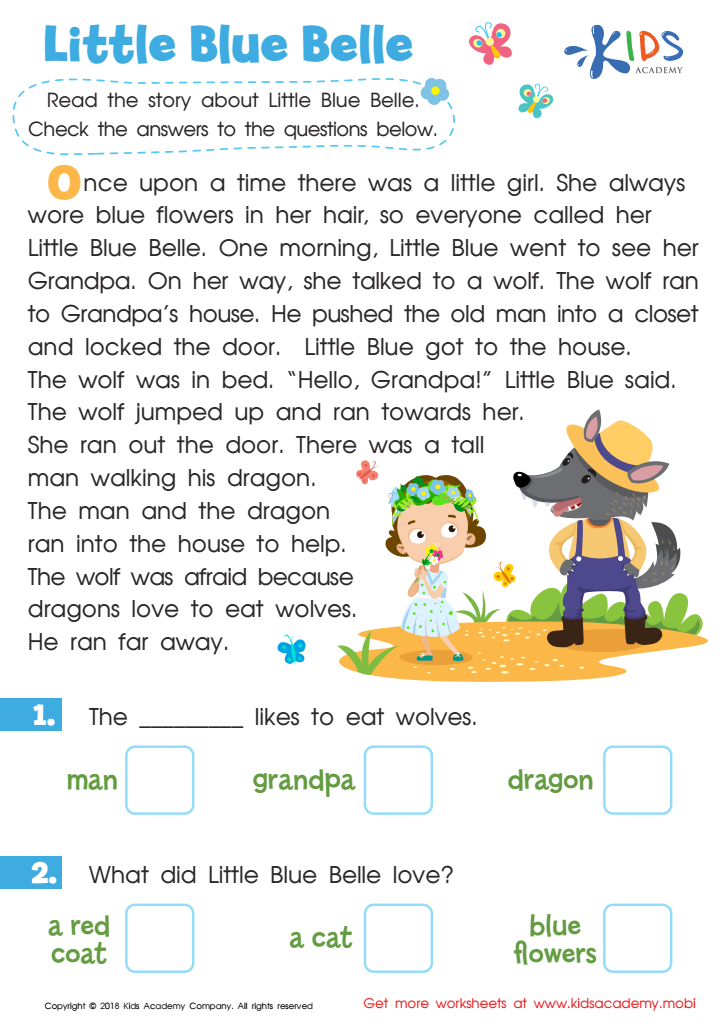
Little Blue Belle Worksheet

Little Blue Belle Worksheet

Check comprehension of fiction read in class by asking questions. Some students may struggle, so provide extra practice with a reading worksheet. Students read a story and answer questions at the bottom. A handy resource for reading classrooms!
Little Blue Belle Worksheet
Worksheet
More Octopus Facts Worksheet

More Octopus Facts Worksheet

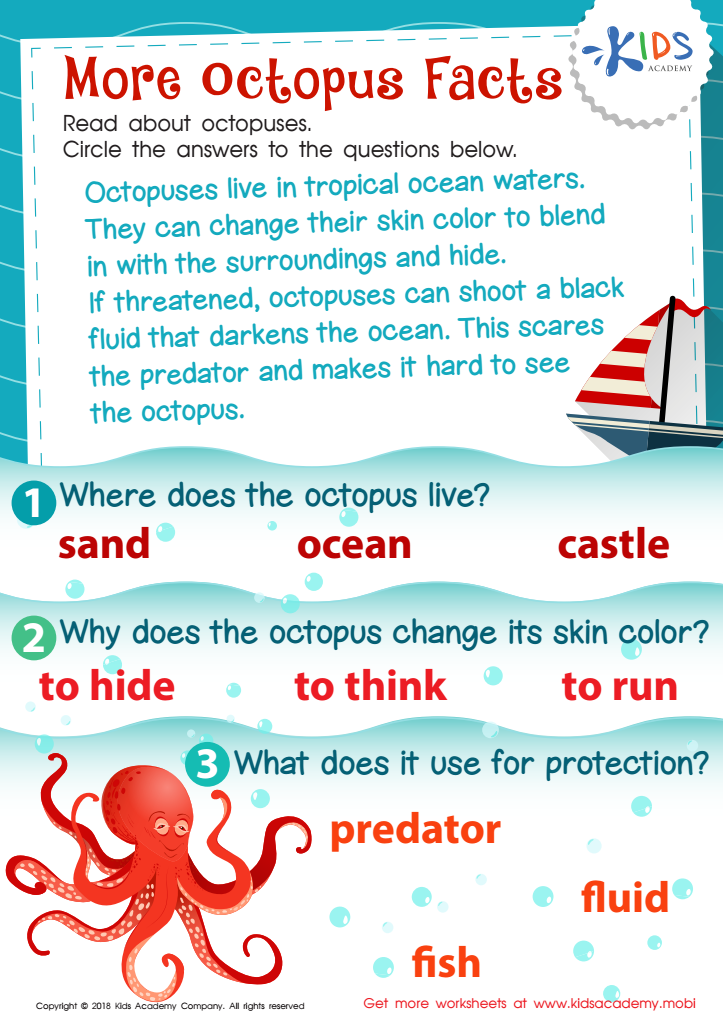
This worksheet will help your kids learn about the Octopus. Read the text carefully and have kids read with you. Now, ask them questions based on it and help them answer them by circling the right choices. Teaching your kids facts about animals will help them in the long run.
More Octopus Facts Worksheet
Worksheet
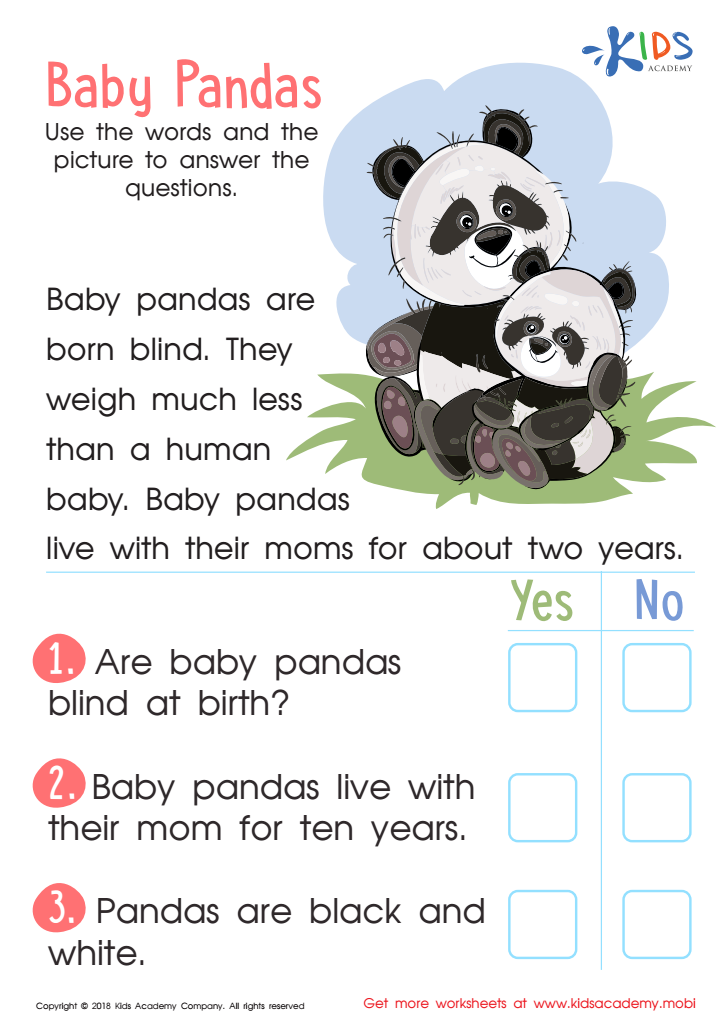
Baby Pandas Worksheet

Baby Pandas Worksheet

Kids can't usually see pandas in person, but they can learn more about them with this fun worksheet! It includes a passage and picture, plus questions at the end to check kids' reading comprehension. Just ask them to read the text, check the "yes" and "no" boxes, and enjoy the fascinating facts about baby pandas!
Baby Pandas Worksheet
Worksheet
Horses Worksheet
Horses Worksheet

Horses Worksheet

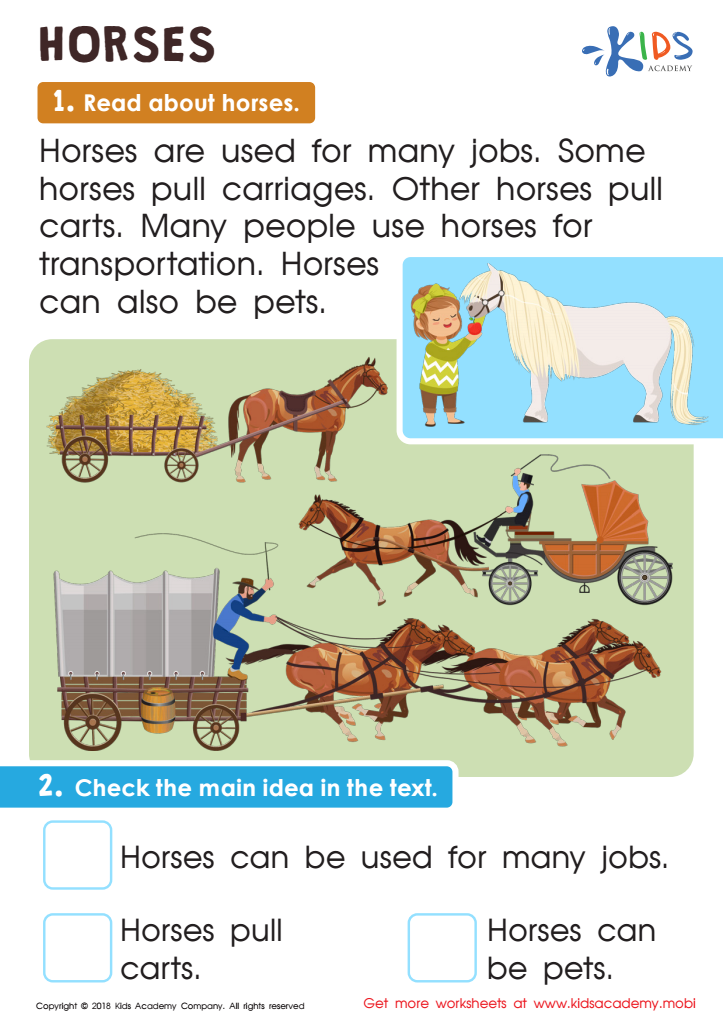
Help your little reader differentiate between details and the main idea with this fun worksheet about horses. Kids will be excited to learn about the different roles horses play. To ensure they understand the overall concept, discuss it before having them choose the right statement at the end.
Horses Worksheet
Worksheet
Printable Coloring Page: Hickory Dickory Dock

Hickory Dickory Dock Coloring Page

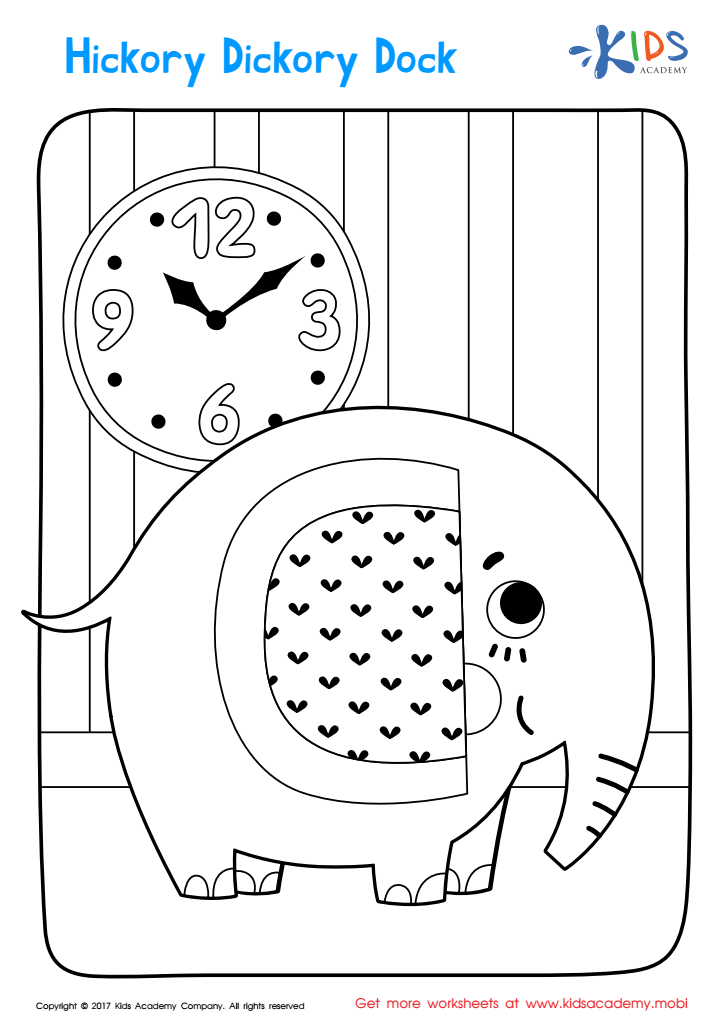
Sing and color with your child! Enjoy the classic nursery rhyme Hickory Dickory Dock as they color this fun printable. Watch the elephant climb and crash down the clock in the final part of the song. It's sure to bring smiles and giggles!
Download (PDF)
Assign to My Students
Hickory Dickory Dock Coloring Page
Worksheet
How to Draw House Worksheet

How to Draw House Worksheet

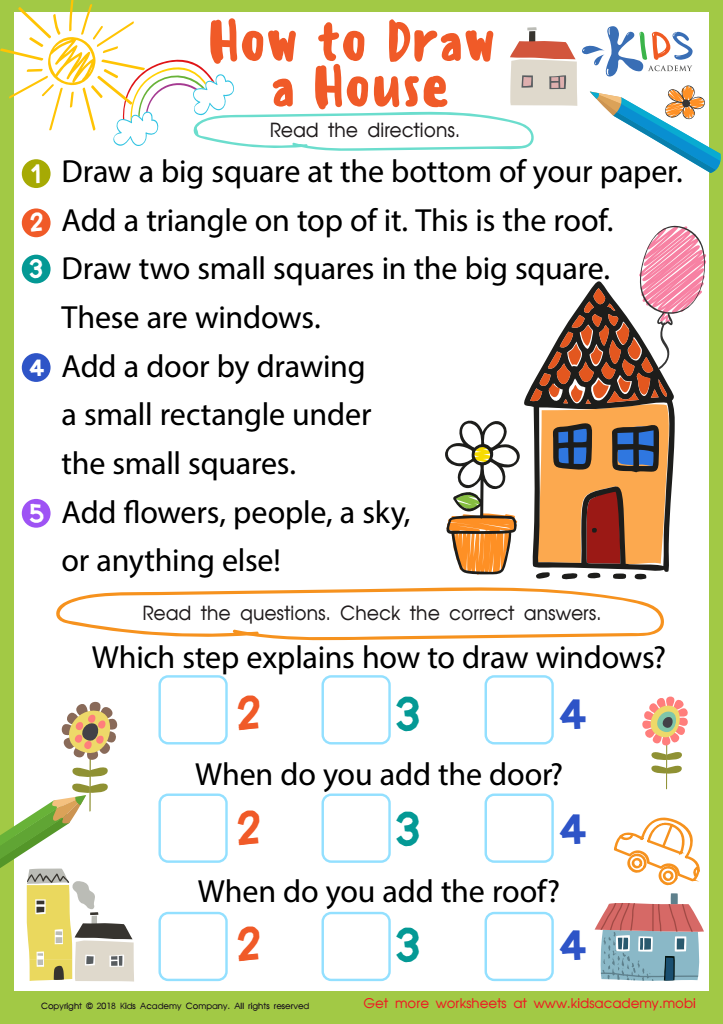
Does your child love to draw? Why not try teaching them some easy tricks? Get them to follow directions on this worksheet and learn how to draw a house. Read the questions at the end and ensure they get the answers right. Your kids will surely love it!
How to Draw House Worksheet
Worksheet


Parents and teachers should prioritize developing fine motor skills because they are essential for children's overall learning and development, directly influencing their reading skills and comprehension. At ages 6-9, children are in a critical phase where they transition from learning to read to reading to learn. Fine motor skills, which involve the coordination of small muscles in movements—usually involving synchronization of hands and fingers with the eyes—are integral to tasks like holding a pencil, turning pages, and writing legibly.

When children have well-developed fine motor skills, they can focus more on understanding and enjoying reading rather than struggling with the physical aspects of writing and page-turning. This ease allows them to build vocabulary, enhance focus, and improve cognitive skills, crucial components of reading comprehension. Moreover, activities that foster these skills, such as drawing, playdough modeling, and puzzles, also reinforce hand-eye coordination and spatial awareness, which are fundamental for recognizing and forming letters and words.

Neglecting fine motor skill development can lead to frustration and decreased motivation, hindering academic progress. Therefore, by supporting fine motor skills, parents and teachers help kids become confident readers and effective learners, laying a firm foundation for future academic success.