Alphabet Recognition Easy English for Beginners Worksheets for 6-Year-Olds
6 filtered results
-
From - To
Discover our engaging Alphabet Recognition worksheets designed specifically for 6-year-olds learning English as a second language. These easy-to-follow activities help young learners identify letters, associate them with sounds, and boost their vocabulary skills. With fun illustrations and interactive exercises, children will enjoy exploring the alphabet while developing early literacy skills. Perfect for classroom settings or home practice, these worksheets make learning enjoyable and effective. Reinforce your child's understanding of letter recognition and foster a love for reading with our educational resources. Start their journey to literacy today with our Alphabet Recognition worksheets tailored for beginners!
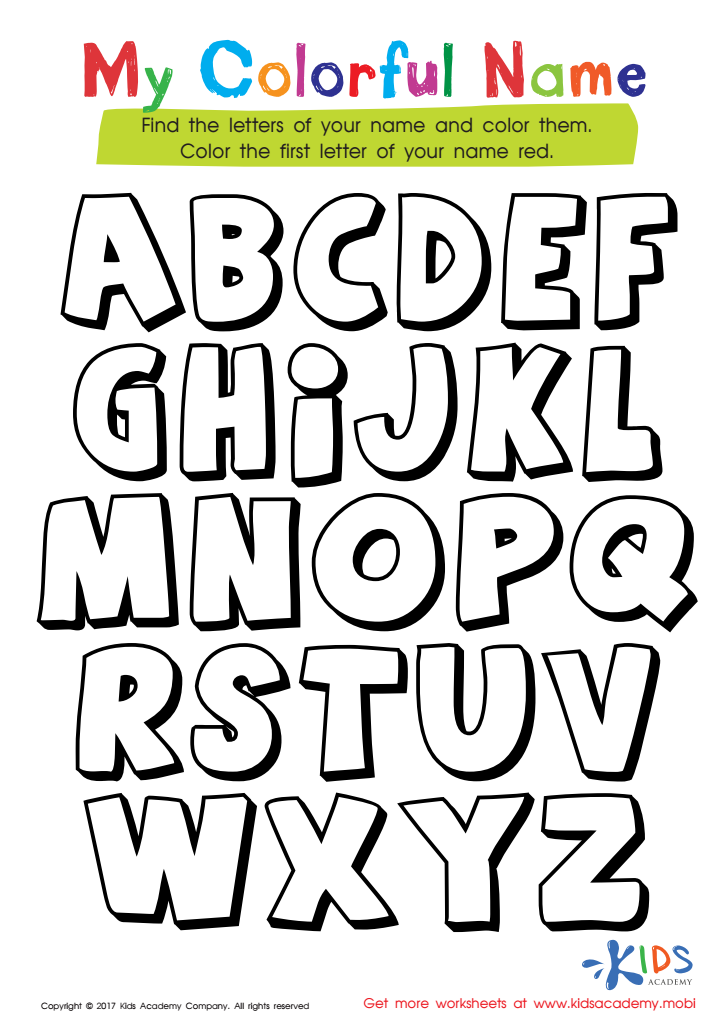
My Colorful Name Worksheet
 Assign to My Students
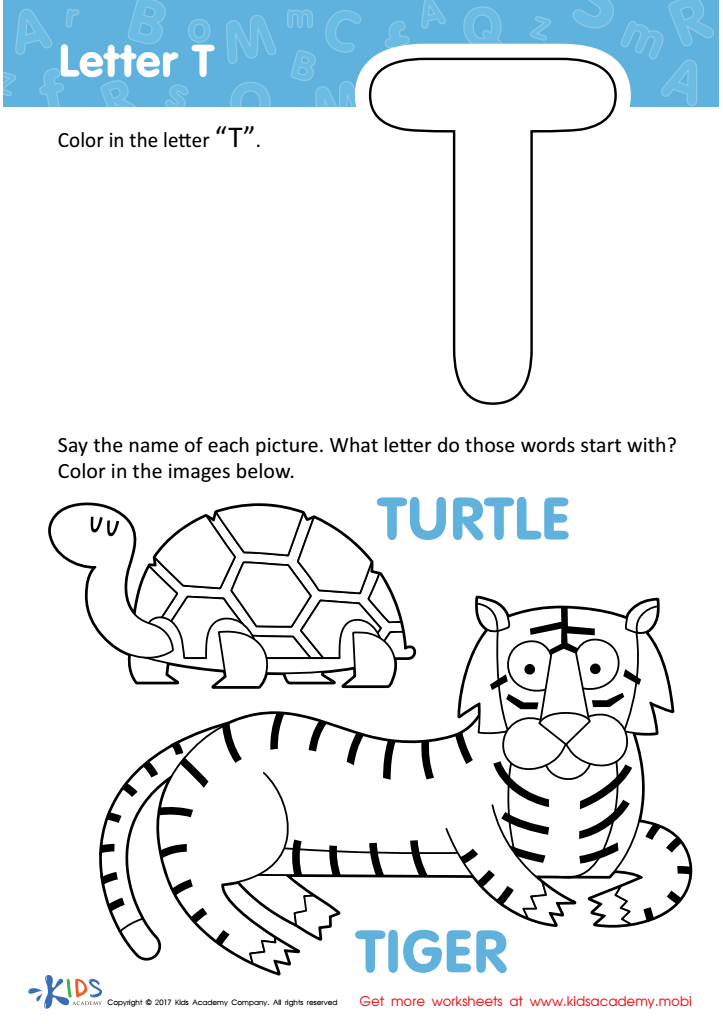
Letter T Coloring Sheet
Assign to My Students
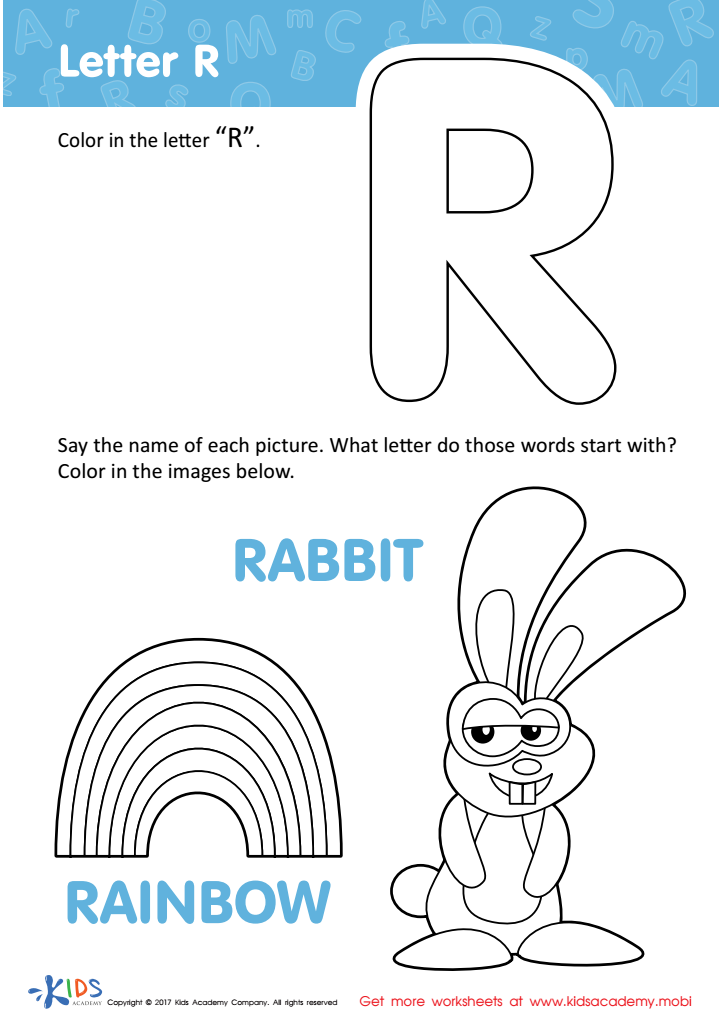
Letter R Coloring Sheet
Assign to My Students
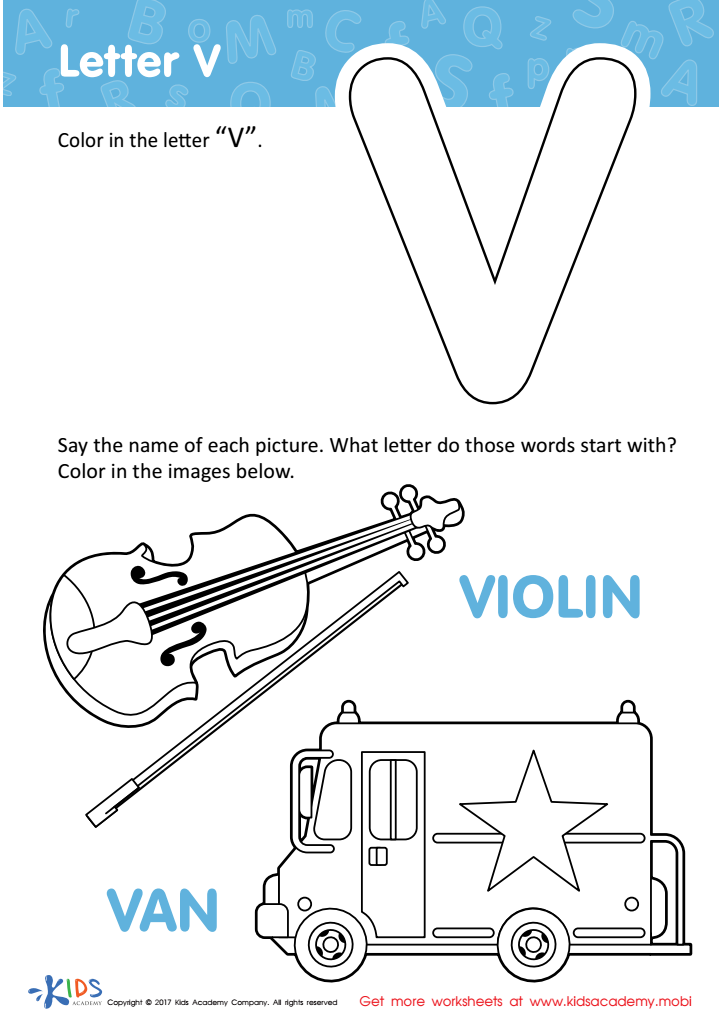
Letter V Coloring Sheet
Assign to My Students
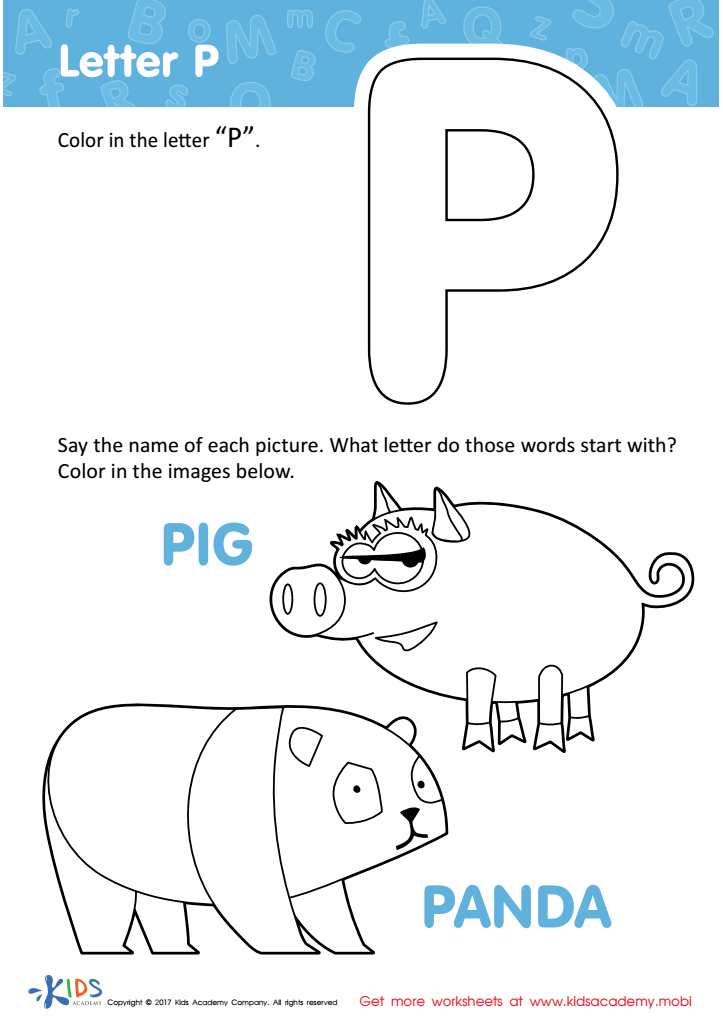
Letter P Coloring Sheet
Assign to My Students
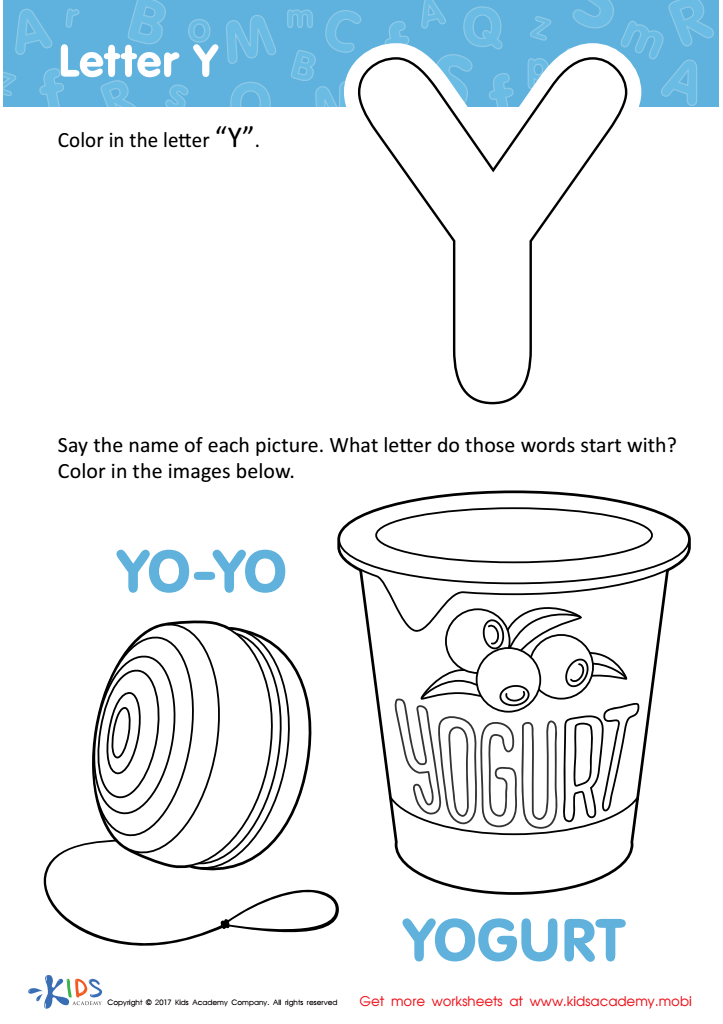
Letter Y Coloring Sheet
Assign to My Students




Alphabet recognition is a foundational skill in a child's literacy development, making it essential for parents and teachers to focus on resources like "Alphabet Recognition Easy English for Beginners" for 6-year-olds. At this age, children are naturally curious and eager to learn, making it the perfect time to introduce them to letters and their sounds. Mastering alphabet recognition helps children develop essential reading skills, paving the way for future literacy success.
Easy and engaging materials can enhance motivation and make learning enjoyable. When children interact with colorful visual aids, stories, and hands-on activities, they are more likely to retain information and develop a love for reading. Moreover, recognizing letters helps with important skills like spelling, writing, and phonics, which are crucial for achieving proficiency in the English language.
Parents and teachers must provide support and encouragement during this learning process. By incorporating such resources into their teaching strategies, they can help children build confidence as they make connections between letters and sounds, ultimately fostering a lifelong passion for reading. Stimulating alphabet recognition in young children is a critical investment in their education, laying the groundwork for a successful academic journey.