
Shape identification Easy Worksheets for 6-Year-Olds
5 filtered results
Difficulty Level
Grade
Age
-
From - To
Subject
Activity
Standards
Unlock your child's geometry skills with our "Shape Identification Easy Worksheets for 6-Year-Olds"! These engaging activities are designed to make learning fun and interactive. Perfectly tailored for young learners, these worksheets help children recognize and name basic shapes while developing critical thinking and fine motor skills. From identifying circles, squares, and triangles, to drawing and coloring shapes, your child will gain confidence and a solid visual understanding of geometry. Ideal for classroom use or at-home practice, these printable worksheets offer a stimulating way to enhance early learning and shape recognition with ease.
Favorites
With answer key
Interactive
Number 2 Printable
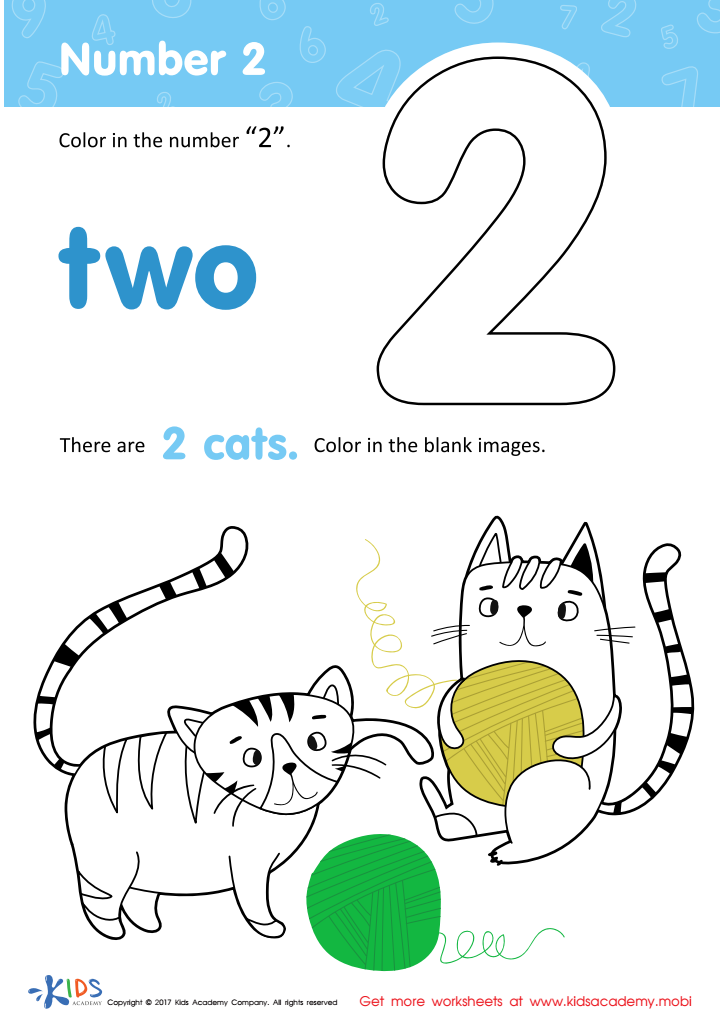
Help your child learn to recognize the number two with these cats and their yarn balls. Print this coloring page – it's great for counting and coloring fun! Your child will develop basic numeracy skills as they visually see numbers in action.
Download (PDF)
 Assign to My Students
Assign to My Students
Number 2 Printable
Worksheet
Bicycle Shapes Worksheet
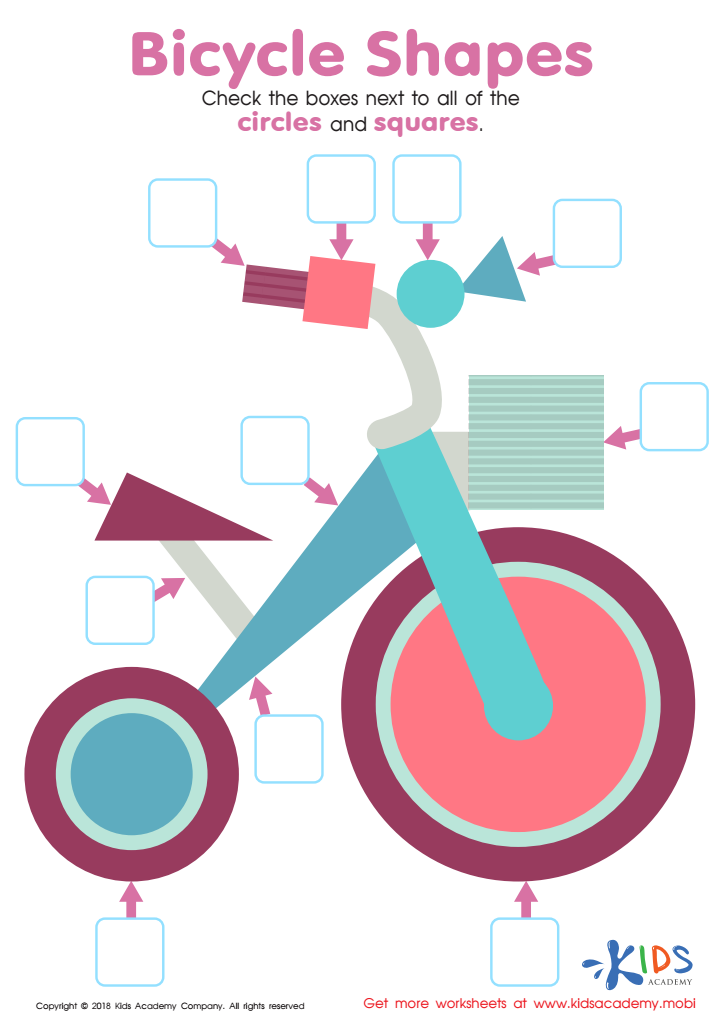
This fun geometry worksheet for preschoolers asks the child to spot hidden shapes (circles, squares) in a colorful bicycle. Each shape varies in size and the child checks the box when it's found. It's a visual way to teach shapes.
Bicycle Shapes Worksheet
Worksheet
Compare and Describe: Part 1 Worksheet
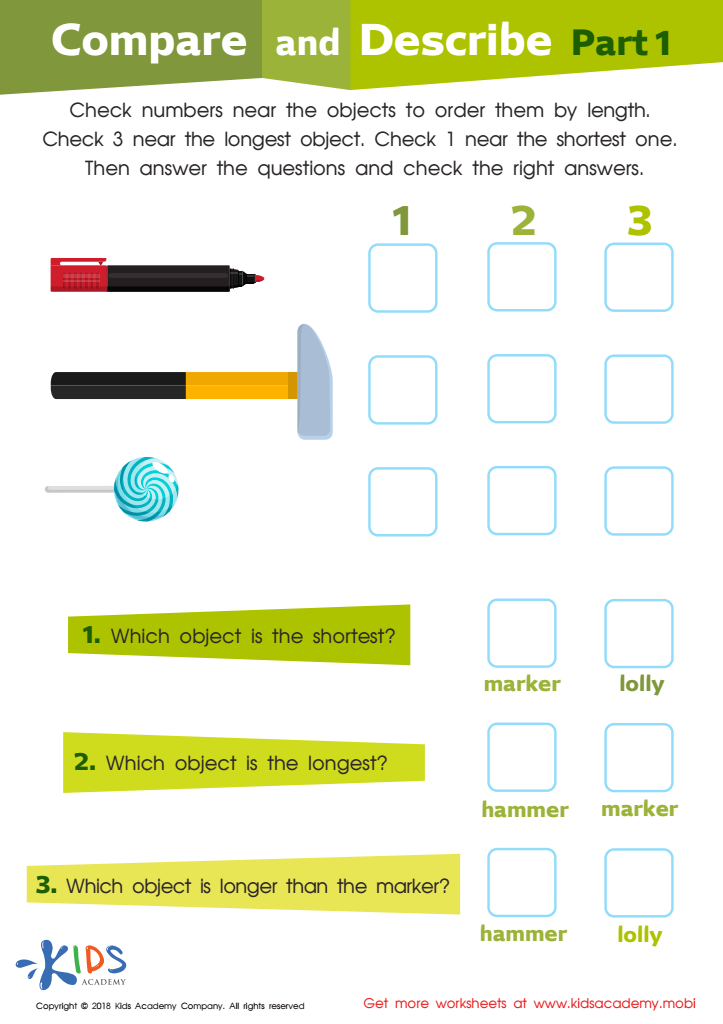
In this worksheet from Kids Academy, kids can start learning measurement in stages. Observe the images, then compare their length - which one is shortest? Which one is longest? Answer the questions at the bottom to complete the sheet. It's an easy way to help kids understand measurement basics.
Compare and Describe: Part 1 Worksheet
Worksheet
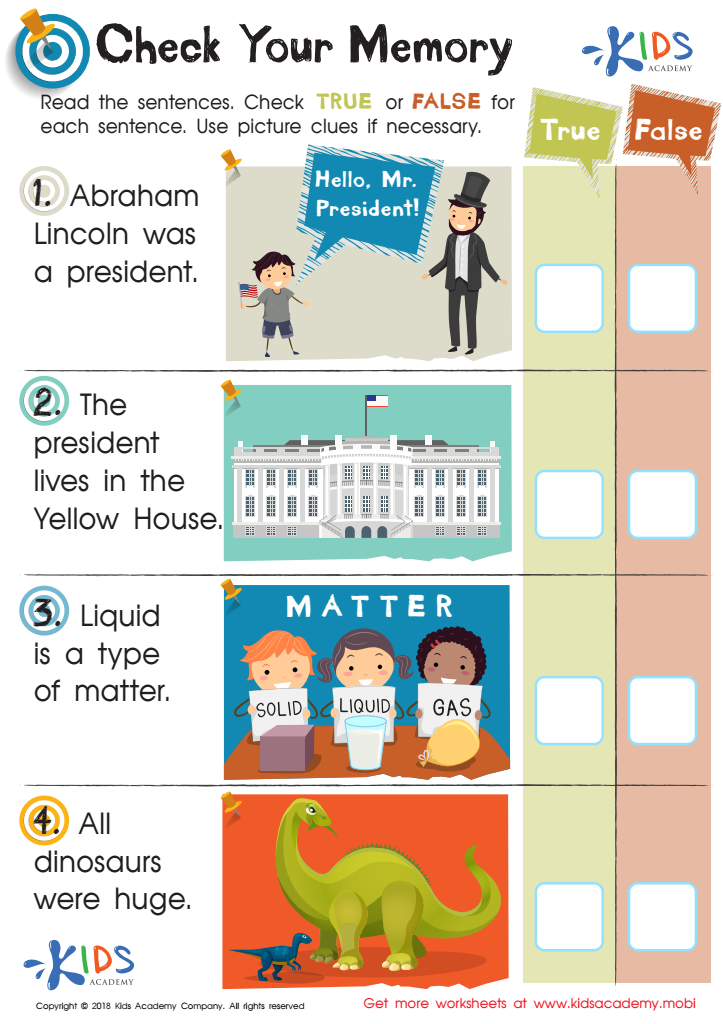
Check Memory Worksheet
Assisting your kids with their homework and using worksheets is a great way for them to learn. The vibrant visuals in this printout can help stimulate the mind and motivate your child. Have them read the sentences and then point to the associated images. Afterwards, ask them to state True or False for each sentence. If they are still uncertain, offer them the picture clues to assist further.
Check Memory Worksheet
Worksheet
Join Kids Academy for Free
Who is primarily going to use this learning content?







Shape identification is a fundamental skill for 6-year-olds, serving as a building block for more complex cognitive and academic abilities. Parents and teachers should emphasize this aspect of learning for several important reasons.
Firstly, recognizing shapes is crucial for early mathematical reasoning. Understanding shapes aids in grasping geometric concepts, which lays the foundation for more advanced math skills. It introduces children to abstract thinking by helping them discern differences and similarities, patterns, and classifications.
Secondly, shape identification enhances visual perception and spatial awareness. These skills are valuable not only in academics but in daily life tasks like navigating spaces, solving puzzles, and understanding maps. Improved spatial awareness can also boost a child's ability in different subjects such as reading and writing, thanks to a better grasp of letter shapes and their positions.
Additionally, early shape recognition fosters problem-solving and critical thinking. When children can identify and compare shapes, they engage in mental processes that improve their analytic skills. This becomes especially important as they progress through school and face more complex subjects.
Lastly, knowing shapes is vital for language development. As children learn the names and attributes of different shapes, they also expand their vocabulary and language comprehension.
In essence, focusing on shape identification at an early age equips children with crucial skills for their overall growth and future academic success.








