Understanding opposites Easy Worksheets for 6-Year-Olds
4 filtered results
-
From - To
Discover the joy of learning with our "Understanding Opposites Easy Worksheets for 6-Year-Olds." Specifically designed for young learners, these engaging worksheets help children grasp the concept of opposites through fun and interactive activities. Perfect for at-home learning or classroom use, they foster crucial cognitive development and language skills. Each worksheet features colorful illustrations and simple exercises that make learning enjoyable and effective. Your child will delight in identifying opposite pairs and enhancing their vocabulary. Boost their understanding and confidence with our expertly crafted resources. Visit us and unlock a world of early learning adventure.
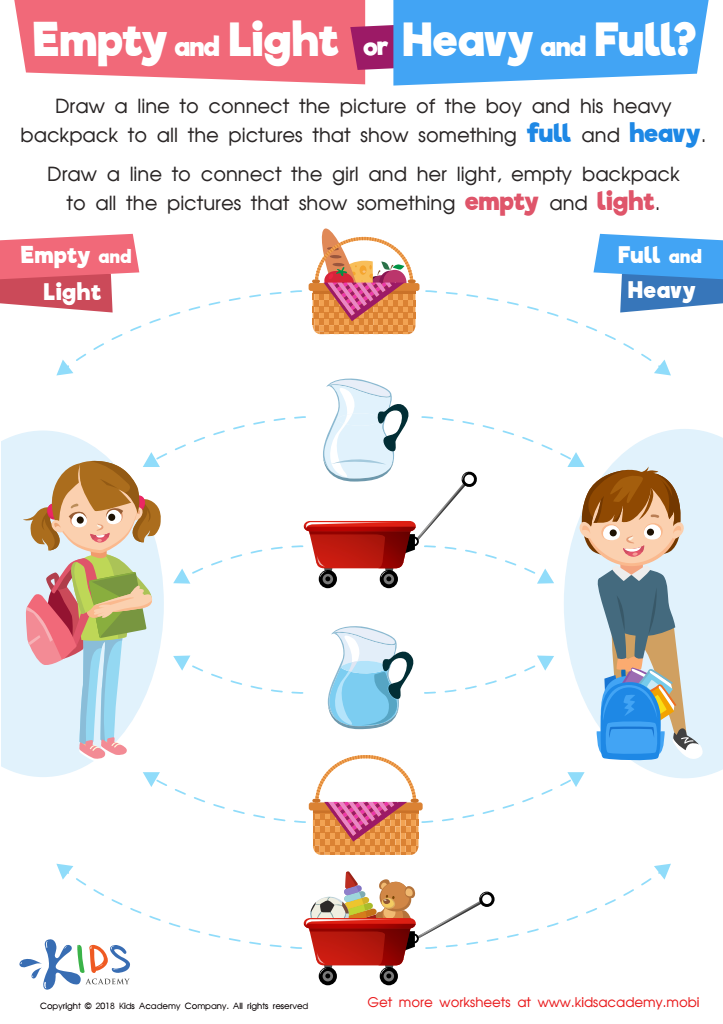
Empty and Light or Heavy and Full? Worksheet
 Assign to My Students
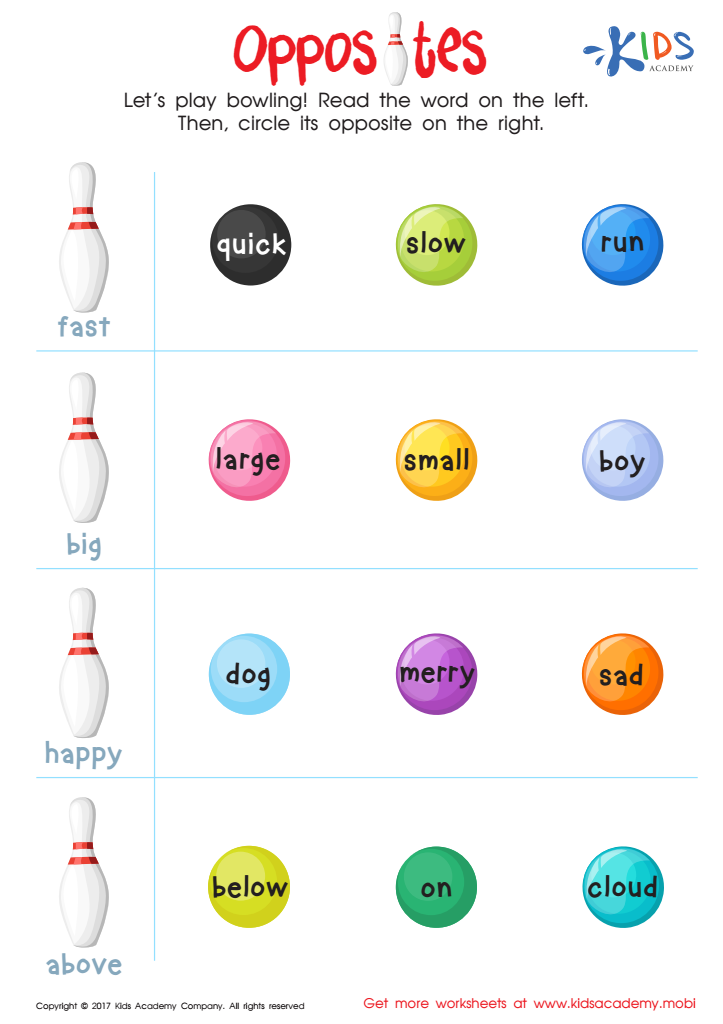
Opposites Worksheet
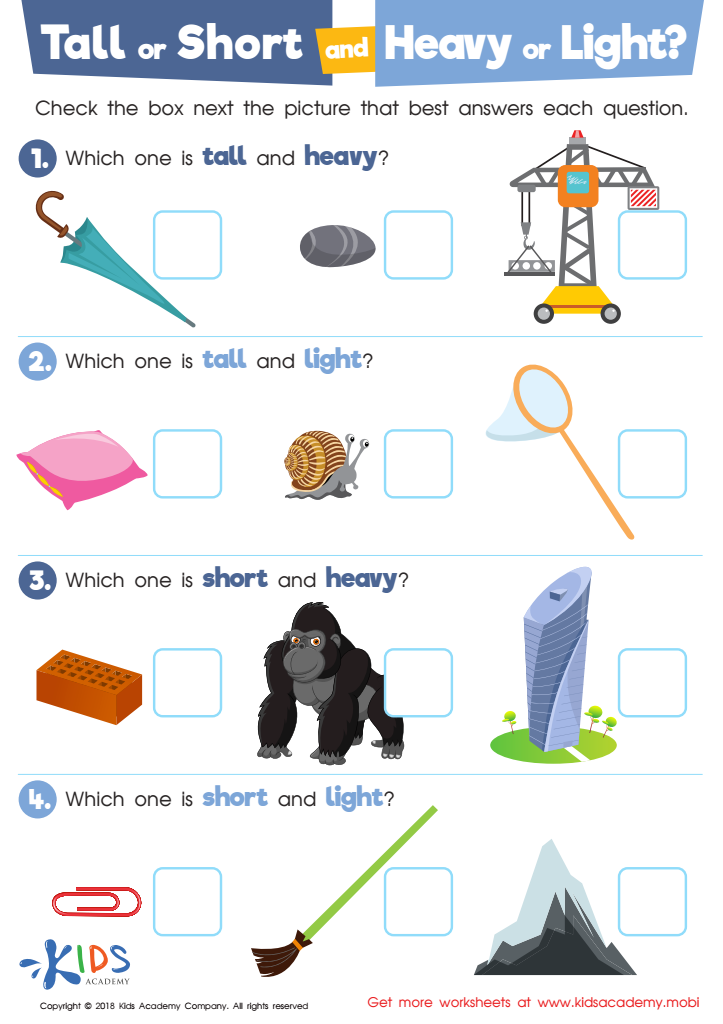
Tall or Short and Heavy or Light? Worksheet
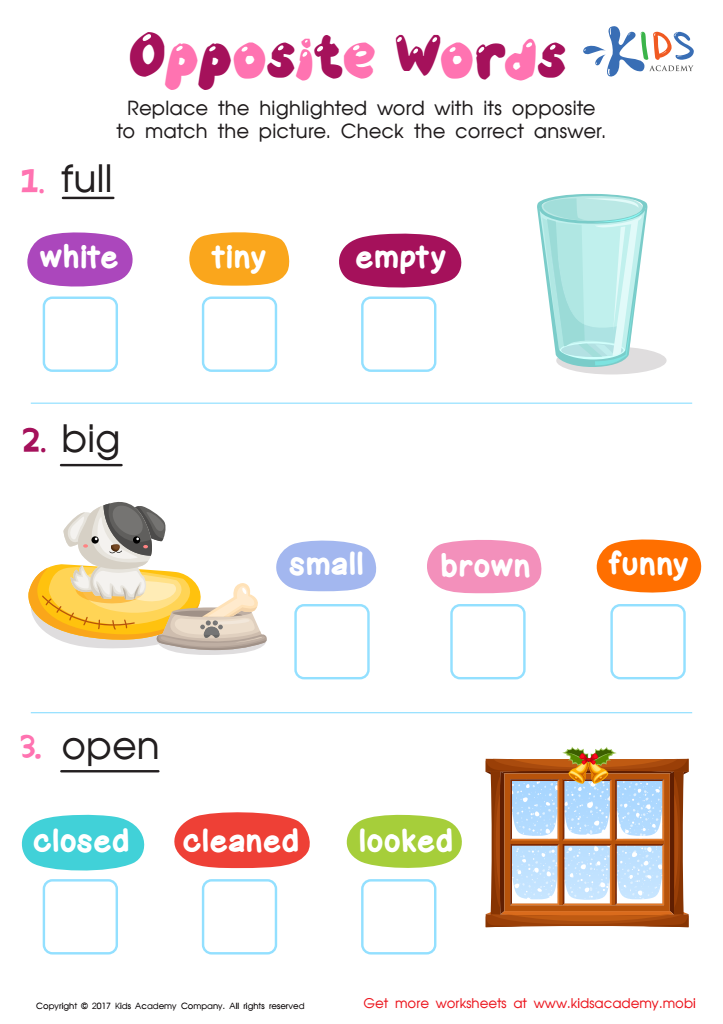
Opposite Words Worksheet



.jpg)

Understanding opposites is vital for six-year-olds as it forms a fundamental aspect of their cognitive and linguistic development. First, grasping opposites enhances vocabulary and comprehension. When children learn pairs of opposite words, such as "hot" and "cold" or "big" and "small," they expand their language skills, enabling them to express themselves more clearly and understand the nuances of these words in various contexts.
Additionally, opposites foster critical thinking and problem-solving abilities. By recognizing the contrasting features of objects or concepts, children develop the ability to categorize and differentiate, which are essential skills for all areas of learning, including math and science. For instance, understanding "full" versus "empty" aids in grasping basic math concepts of quantity and volume.
Moreover, learning about opposites can enhance social and emotional intelligence. Through these concepts, children better understand the world around them and the diversity within it. This understanding helps them navigate social interactions by recognizing that different situations and emotions can be opposite but equally valid.
In essence, mastering opposites creates a foundation for advanced learning and empathetic interaction, making it a crucial topic for parents and teachers to emphasize in early childhood education.








