Understanding time Easy Worksheets for 6-Year-Olds
3 filtered results
-
From - To
Explore our engaging "Understanding Time Easy Worksheets" designed specifically for 6-year-olds! These fun and interactive worksheets help children grasp essential time concepts, such as telling time, recognizing clocks, and distinguishing morning, afternoon, and evening. With vibrant illustrations and age-appropriate activities, kids will enjoy practicing their timing skills while building a foundational understanding of how we measure time. Perfect for home or classroom use, these resources promote learning through play. With our worksheets, your little one will confidently navigate their daily schedule, enhancing their understanding of time in a simple and enjoyable way. Get started today and spark your child's curiosity!
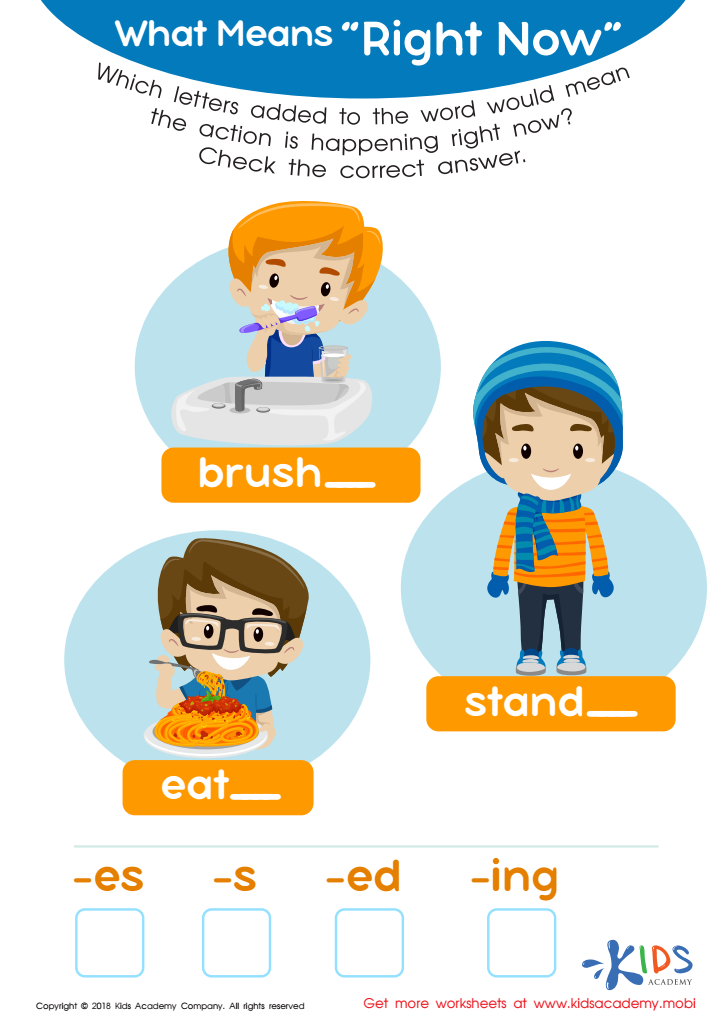
What Means "Right Now" Worksheet
 Assign to My Students
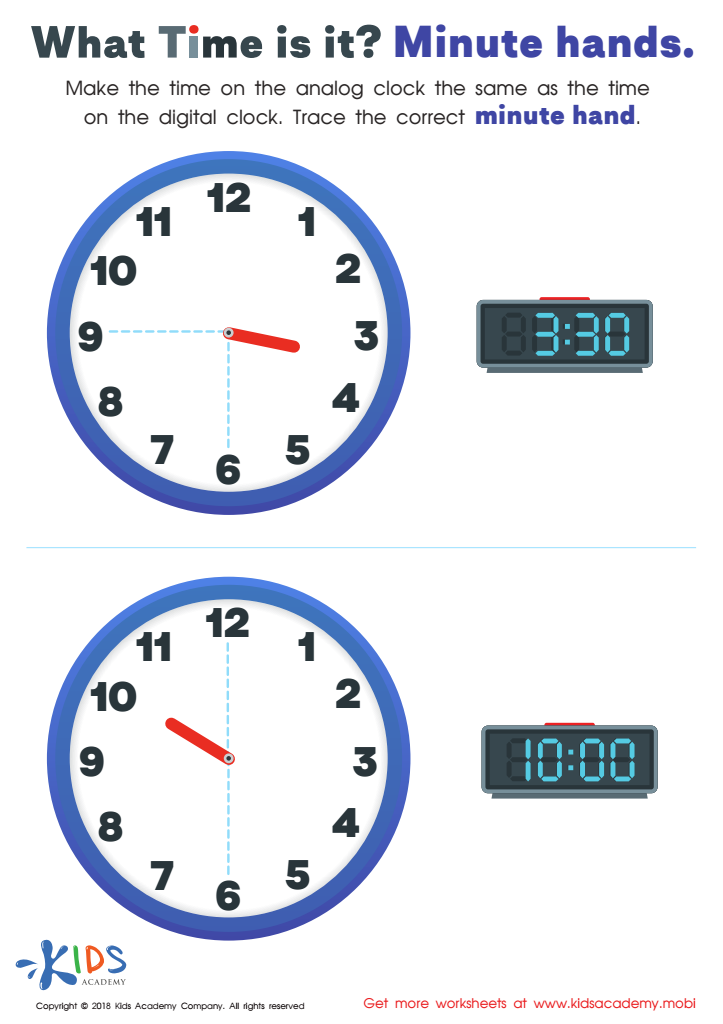
What Time Is it? Minute Hands Worksheet
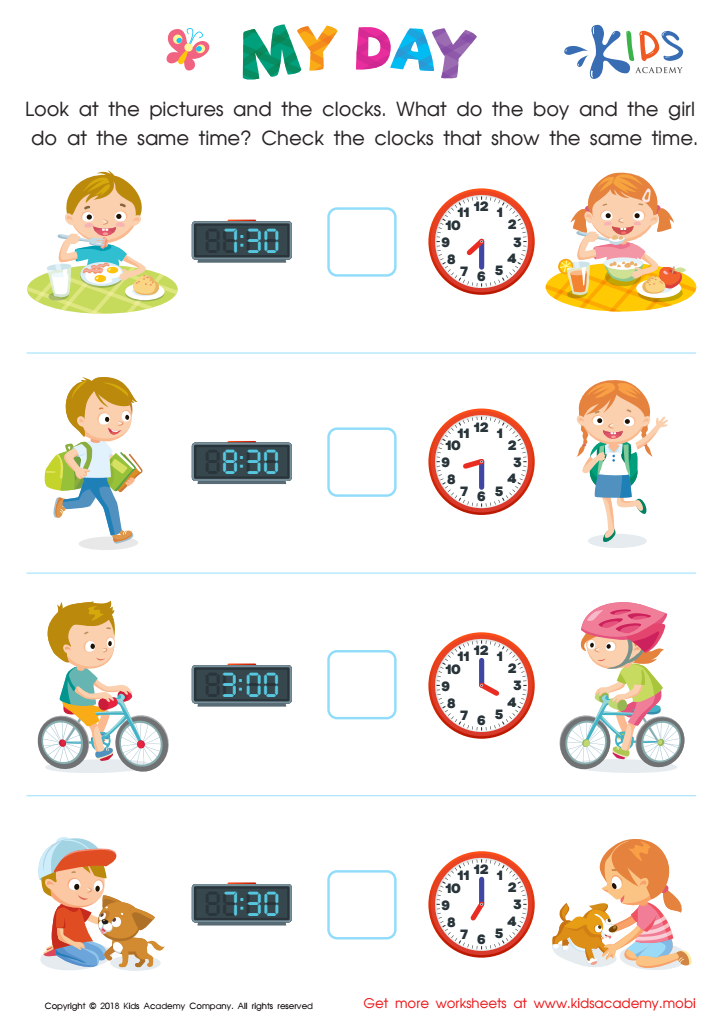
My Day Worksheet








Understanding time is a crucial skill for 6-year-olds, as it helps them navigate their daily routines and develop independence. When parents or teachers prioritize teaching time concepts, they empower children to manage their schedules, anticipate changes, and make informed choices. This understanding supports essential life skills like responsibility and planning.
Additionally, comprehending time fosters critical thinking. Children learn to sequence events, recognize patterns, and anticipate outcomes—all foundational skills in mathematics and analytical reasoning. For example, knowing how to read a clock transitions smoothly into grasping more complex mathematical concepts as they progress in their education.
Furthermore, understanding time enhances social skills. When children can express when they’re available or need to be somewhere, they learn to communicate effectively with peers and adults, promoting friendships and teamwork.
By fostering these skills, parents and teachers cultivate confident learners who can engage meaningfully in their world. Overall, teaching young children about time lays the groundwork for future academic success, personal growth, and a well-rounded understanding of their environment.








