Shape Recognition Easy 2D Shapes Worksheets for 6-Year-Olds
5 filtered results
-
From - To
Unlock the world of geometry with our "Shape Recognition Easy 2D Shapes Worksheets for 6-Year-Olds." Specially designed to make learning fun, these worksheets help children identify and understand basic 2D shapes such as circles, squares, triangles, and rectangles. Through engaging activities like matching, tracing, and coloring, your child will strengthen their shape recognition skills and spatial awareness. Ideal for home or classroom use, these worksheets foster confidence and foundational math skills, ensuring that learning becomes a joyous and rewarding experience. Perfect for young minds ready to explore and excel in the exciting world of shapes!
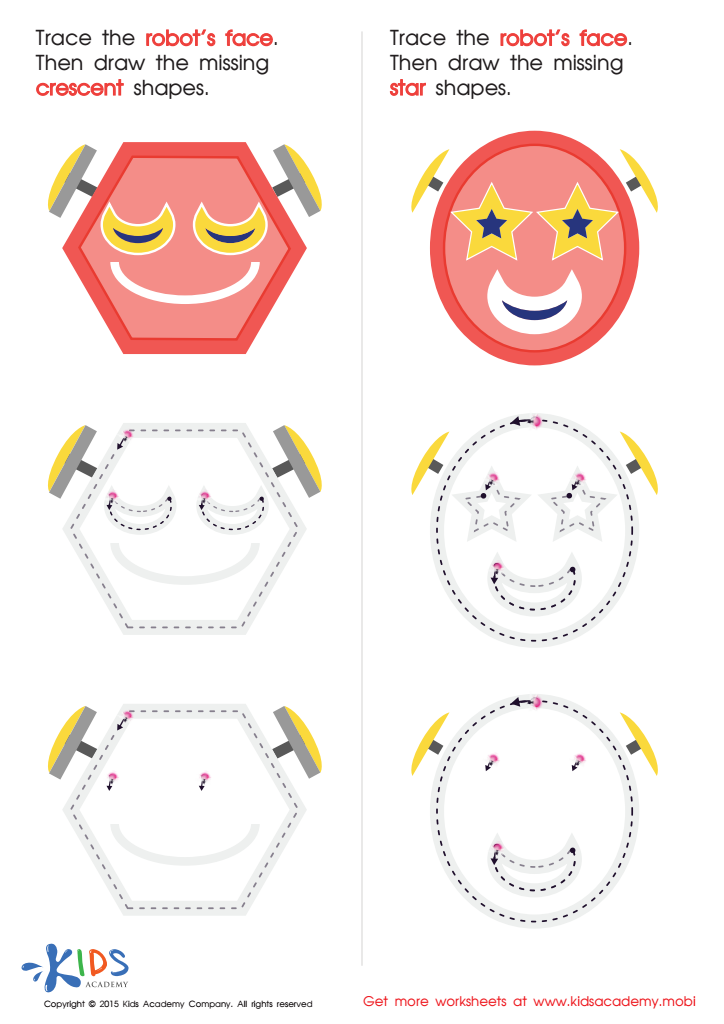
Composing a Robot's Face of Crescents And Stars Worksheet
 Assign to My Students

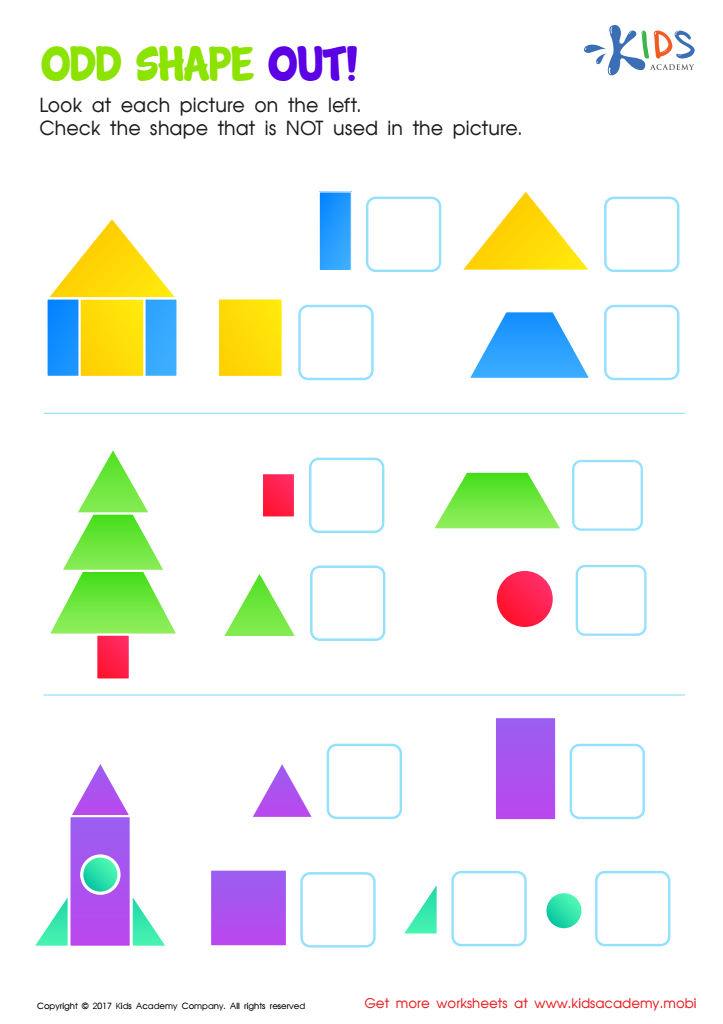
Odd Shape Out Worksheet for Grade 1
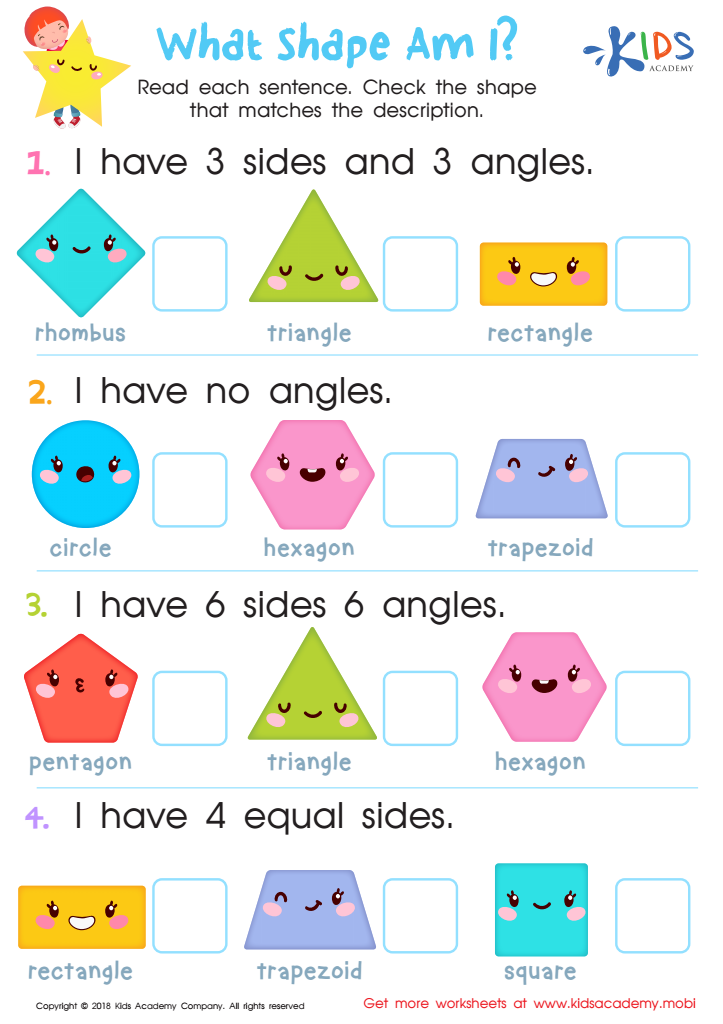
What Shape Am I? Worksheet
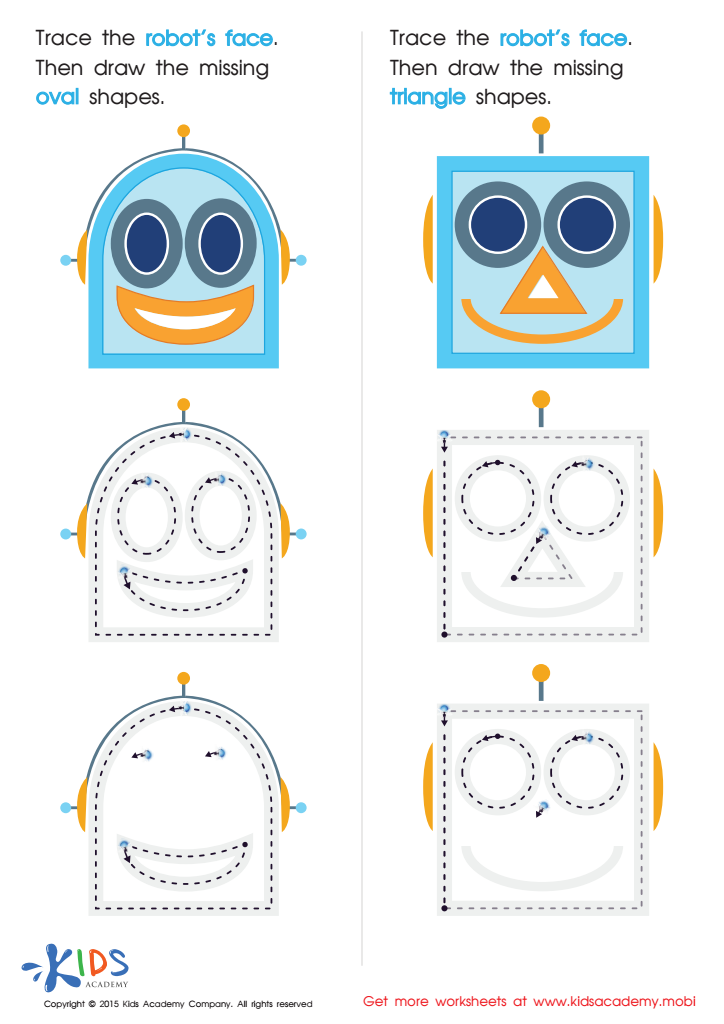
Drawing Ovals And Triangles with Fun Printable
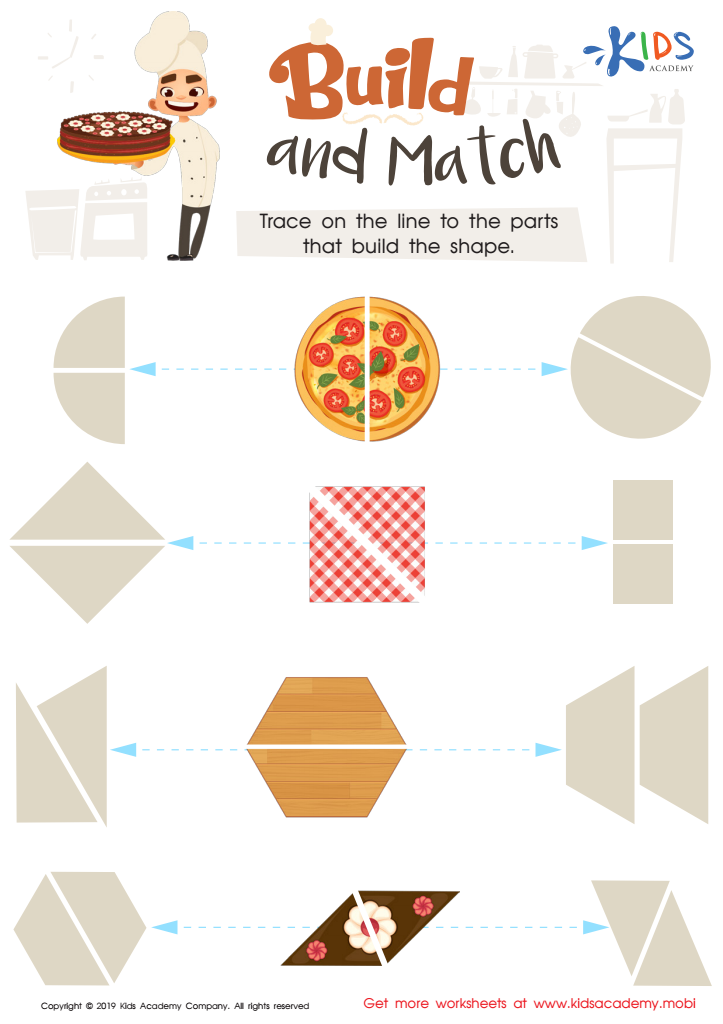
Build and Match Worksheet








Shape recognition is an essential foundational skill for young children, particularly those around six years old. Parents and teachers should prioritize this educational milestone due to its numerous developmental benefits. Firstly, understanding basic 2D shapes helps children improve their spatial awareness, which is crucial for interpreting the world around them. Recognizing and categorizing shapes enables children to better understand and navigate their environments, whether they are playing with toys, solving puzzles, or drawing.
Moreover, shape recognition lays the groundwork for future math skills. Many foundational mathematical concepts involve shapes, including geometry, symmetry, and pattern recognition. When children can identify and work with shapes, they build a solid understanding of these concepts, which can ease their transition into more advanced topics such as fractions or complex problem-solving.
In addition, shape recognition can enhance children’s literacy skills. Both letters and numbers are composed of different shapes, so a strong capacity for recognizing various shapes helps in learning to read and write. It also boosts fine motor skills through activities like tracing or constructing shapes, adding another layer of developmental growth.
Overall, parents and teachers who focus on shape recognition for 6-year-olds set the stage for academic achievement and critical thinking, keeping learning both engaging and beneficial.