Data interpretation Easy Numbers Worksheets for 6-Year-Olds
3 filtered results
-
From - To
Our "Data Interpretation Easy Numbers Worksheets for 6-Year-Olds" provide engaging and educational activities specifically designed to help young learners understand and navigate data effectively. Through fun and interactive exercises featuring colorful illustrations and simple problems, students will build foundational math skills, learning to read charts, graphs, and simple data sets with ease. These worksheets are perfect for fostering critical thinking, improving number literacy, and preparing kids for more advanced math concepts. Ideal for both classroom and at-home learning, our worksheets make data interpretation accessible and enjoyable for young minds. Explore a world of numbers and data today!
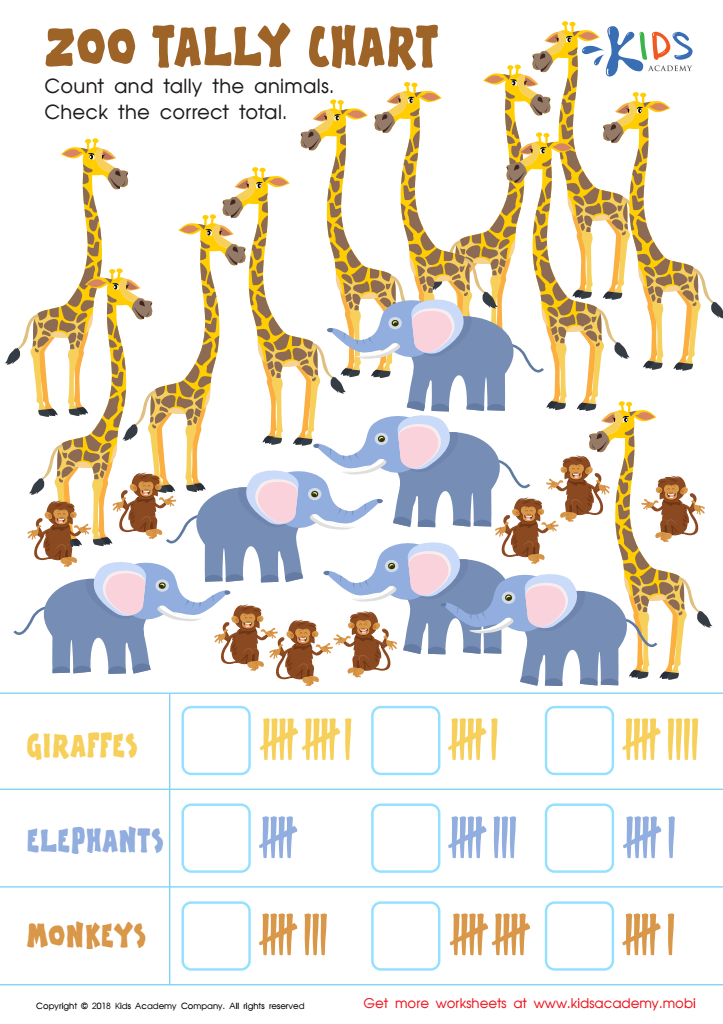
Zoo Tally Chart Worksheet
 Assign to My Students
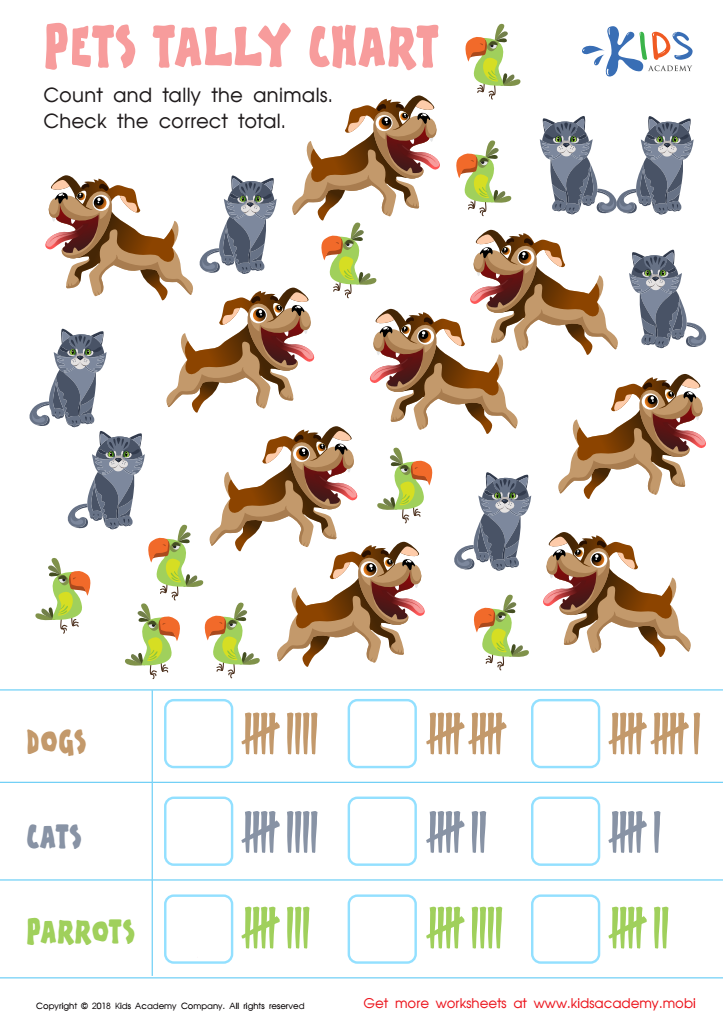
Pets Tally Chart Worksheet
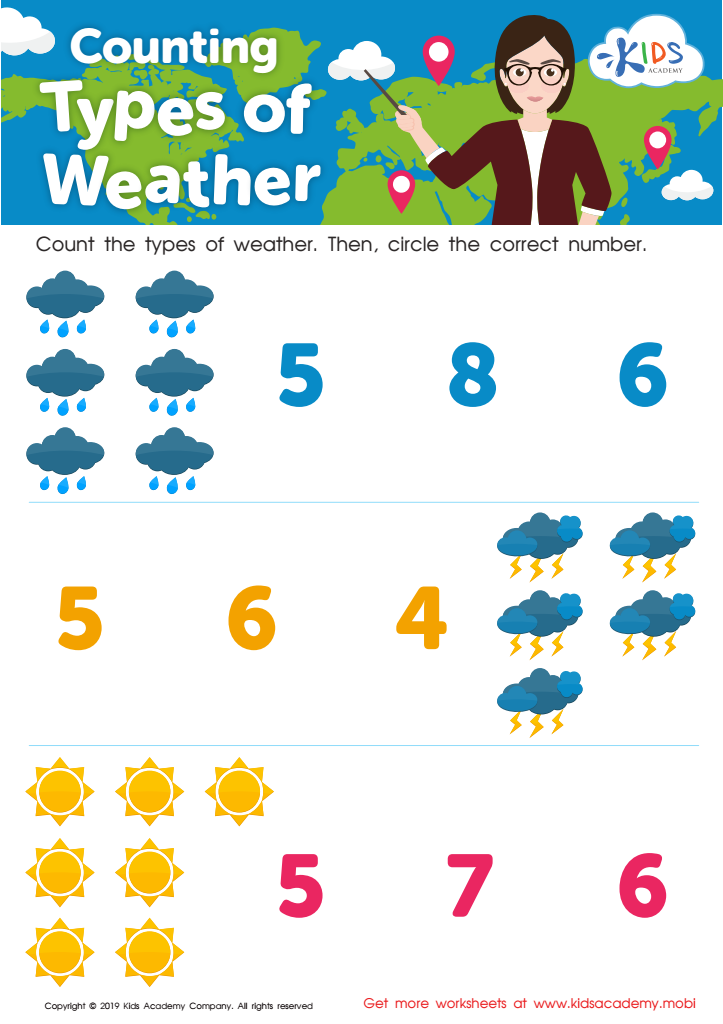
Counting Types of Weather Worksheet








Caring about data interpretation, particularly through easy numbers for 6-year-olds, is crucial because it lays the foundation for essential cognitive and problem-solving skills. At this formative age, children are highly receptive to new concepts, making it the optimal time to introduce basics that will support their academic growth.
When young children learn to interpret data, even in its simplest forms, they begin to understand logical thinking and patterns. This can manifest through recognizing quantities, basic graphs, and simple comparisons, all of which are integral skills in mathematics. These exercises not only help with immediate schooling needs but also set the stage for more advanced learning in their academic future.
Moreover, early data interpretation helps in everyday decision-making and critical thinking. For example, children can learn to organize and analyze information creatively, like sorting toys or recognizing daily routines. These activities enhance their ability to approach problems systematically, boosting their confidence and competency.
Furthermore, engaging with data interpretation can make learning fun and interactive. Using colorful charts, playful graphs, and hands-on activities nurtures a positive attitude towards learning and encourages curiosity.
Involvement in developing these skills allows parents and teachers to track progress and adapt teaching methods effectively, ensuring that each child receives personalized support and encouragement in their educational journey.








