Fine Motor Skills Easy Numbers Worksheets for 6-Year-Olds - Page 2
26 filtered results
-
From - To
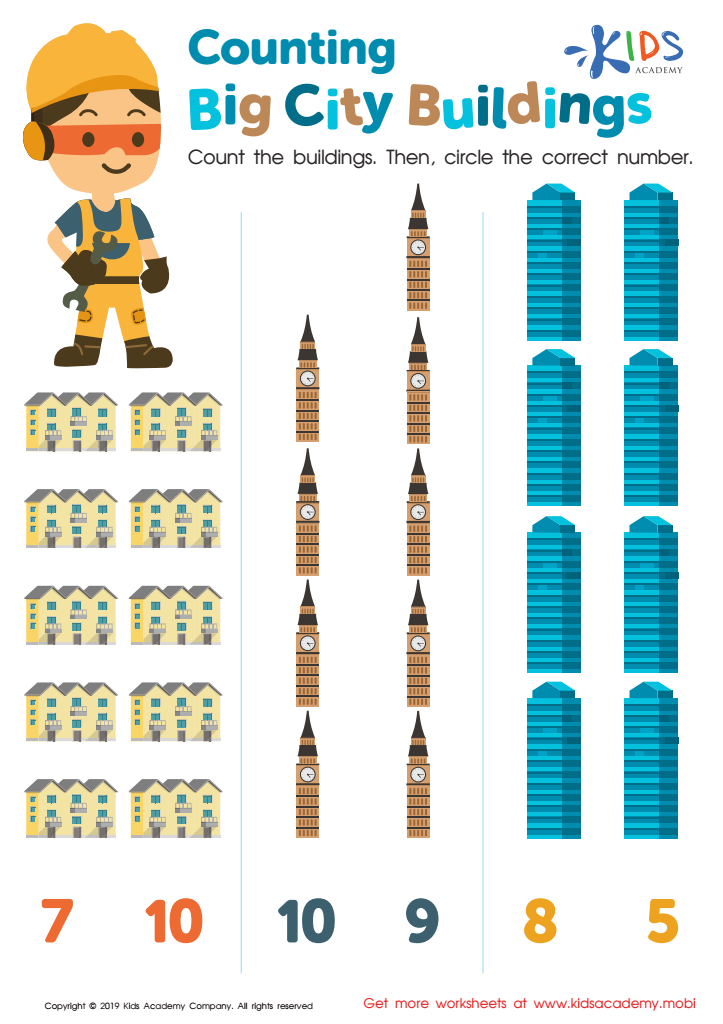
Counting Big City Buildings Worksheet
 Assign to My Students

Night Sky Numbers Worksheet








Fine motor skills are essential for the overall development of 6-year-olds, as these abilities help children perform crucial everyday tasks and lay the foundation for future academic success. Parents and teachers should understand the importance of fostering these skills through activities like "Easy Numbers," which involve tracing, drawing, and writing numbers. These tasks enhance hand-eye coordination, dexterity, and muscle control in young children’s hands and fingers.
Practicing fine motor activities related to numbers also aids cognitive development. When children work on writing numbers, they simultaneously learn to recognize and understand numeric values and patterns, concepts vital for math competency. Engaging in these activities supports the integration of fine-tuned motor skills with cognitive skills, ensuring a holistic learning experience.
Moreover, strong fine motor skills contribute to a child’s independence and self-confidence. When kids can efficiently handle tasks such as holding a pencil, buttoning shirts, or tying shoelaces, they feel more capable and ready to tackle challenges. Therefore, parents and teachers should prioritize fine motor skill activities, such as Easy Numbers, to provide children with the foundational abilities they need to thrive both academically and in everyday life.








