Understanding tally marks Easy Math Worksheets for 6-Year-Olds
4 filtered results
-
From - To
Help your 6-year-old master basic counting and recording skills with our "Understanding Tally Marks" easy math worksheets by Kids Academy. These fun, engaging activities are perfect for young learners, helping them to visualize and organize their counting through simple tally marks. Designed to align with early grade math objectives, each worksheet encourages hands-on learning and strengthens foundational math skills. Easy-to-follow instructions and playful themes keep kids motivated as they practice counting in groups of five, enhancing their ability to comprehend and process numbers effectively. Download and print today to make math practice an enjoyable experience for your child!
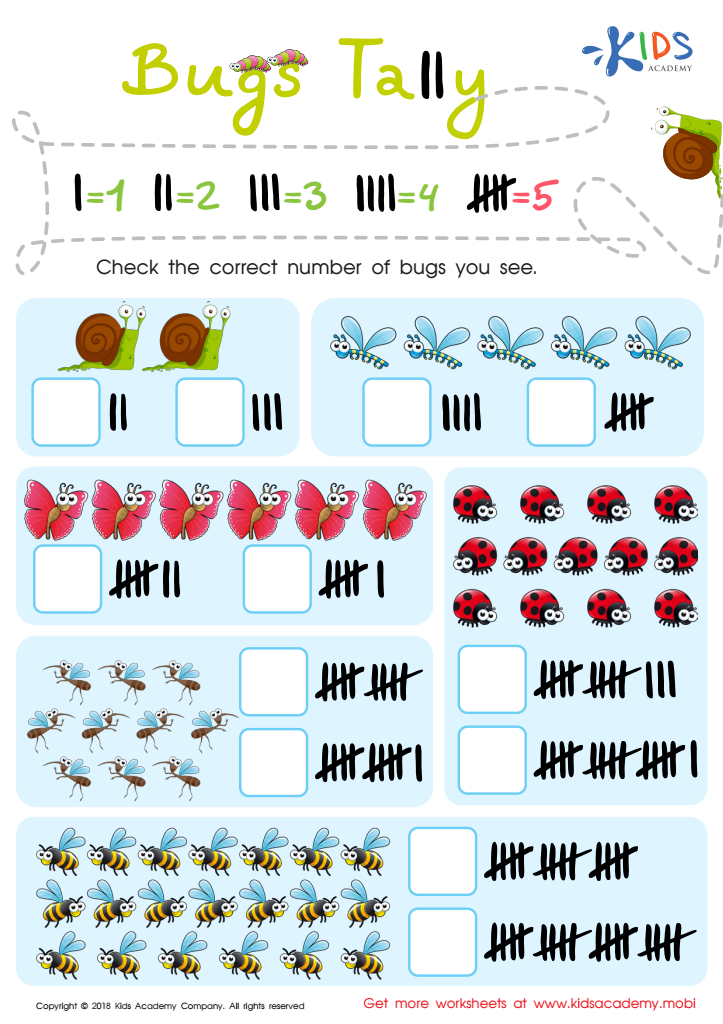
Bugs Tally Worksheet
 Assign to My Students
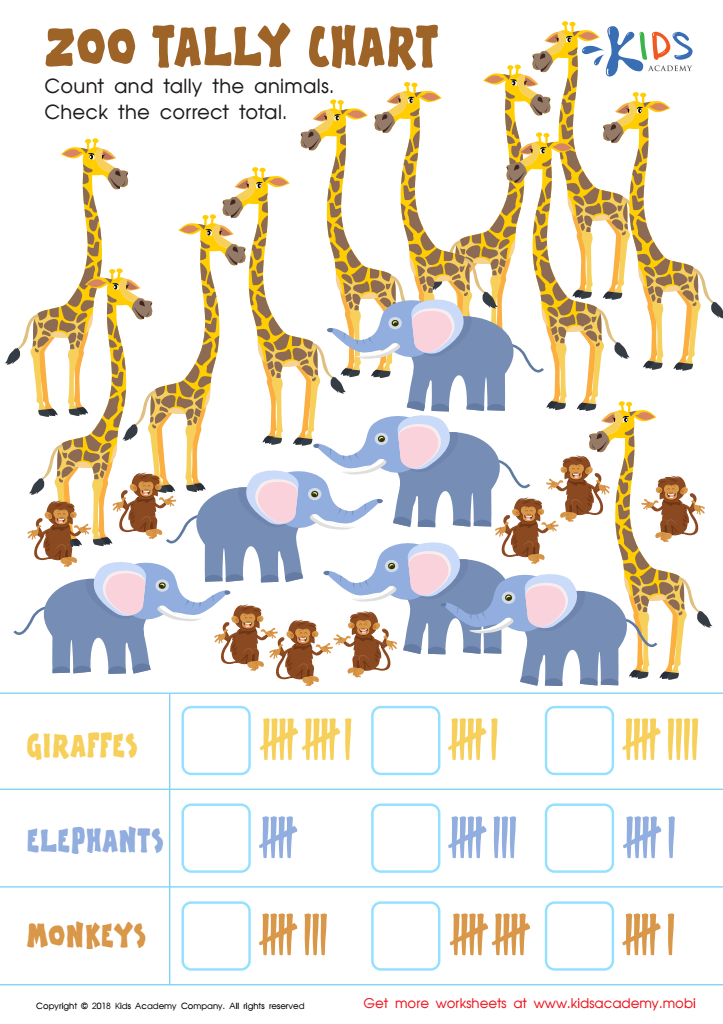
Zoo Tally Chart Worksheet
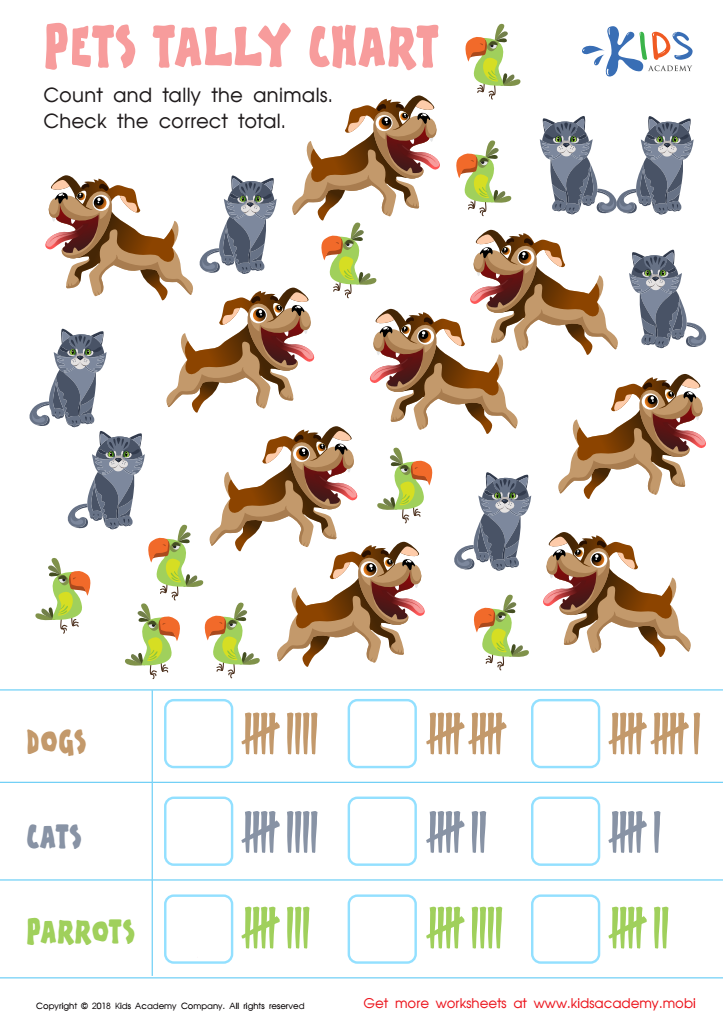
Pets Tally Chart Worksheet
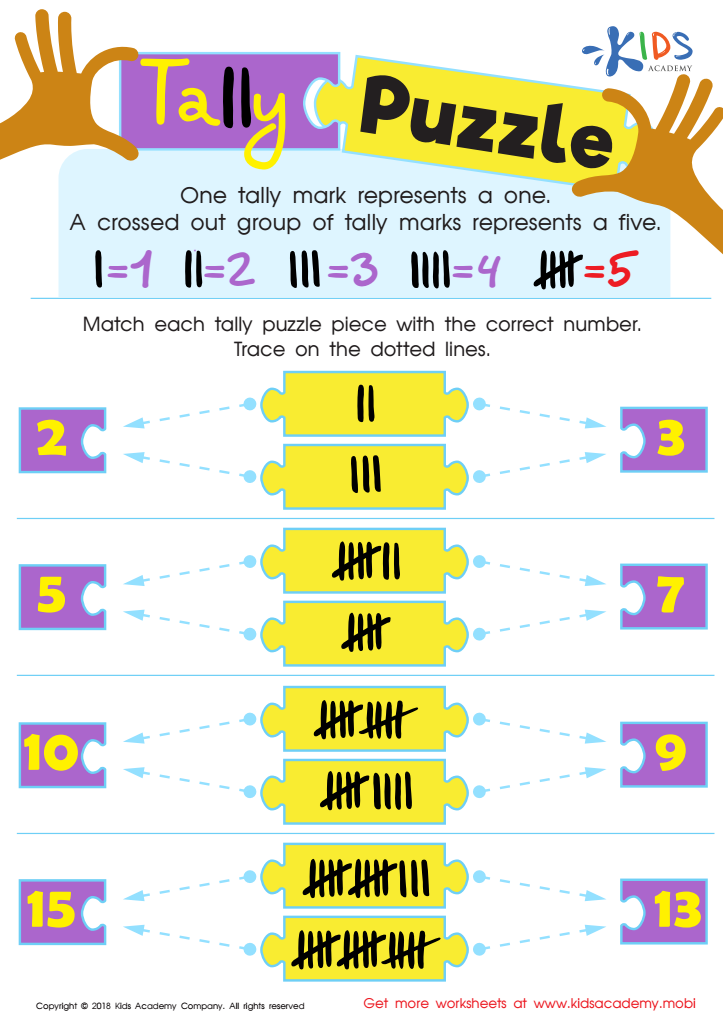
Tally Puzzle Worksheet








Understanding tally marks is a foundational math skill that significantly benefits 6-year-olds. Parents and teachers should prioritize it because it introduces children to basic counting and data representation in an accessible and visual manner. Tally marks break down the abstract concept of numbers into tangible, easy-to-grasp symbols, making it simpler for young minds to understand numerical relationships and simple arithmetic operations like addition.
At this age, children are learning to bridge the gap between recognizing numbers and performing mathematical operations. Tally marks offer a straightforward way to group and count in fives, promoting efficient counting practices. This method ties in with the development of number sense—an essential component of early math proficiency.
Moreover, tally marks boost fine motor skills as children draw and cross out lines, integrating physical activity with cognitive learning. They foster pattern recognition, an important aspect of higher-level math, and help kids organize information systematically. For example, children can quickly see that two sets of tally-marks equal ten, reinforcing grouping and place value concepts.
Furthermore, tally marks are often the first step toward understanding more complex data representations like charts and graphs. By mastering this simple tool, children are better prepared for future math challenges, fostering a positive attitude toward the subject from an early age.








