Chess strategy understanding Easy Chess Worksheets for Ages 7-8
3 filtered results
-
From - To
Explore our engaging "Chess Strategy Understanding" worksheets designed specifically for kids ages 7-8! These easy-to-follow resources help young learners grasp fundamental chess strategies while having fun. Each worksheet emphasizes essential concepts such as piece movement, tactical thinking, and the importance of planning ahead, fostering critical thinking skills in a playful way. Perfect for both classroom and at-home learning, our worksheets encourage kids to develop strategic thinking, problem-solving abilities, and patience. Whether your child is a beginner or looking to enhance their chess skills, these worksheets offer a fantastic introduction to the game of chess. Start your strategic journey today!
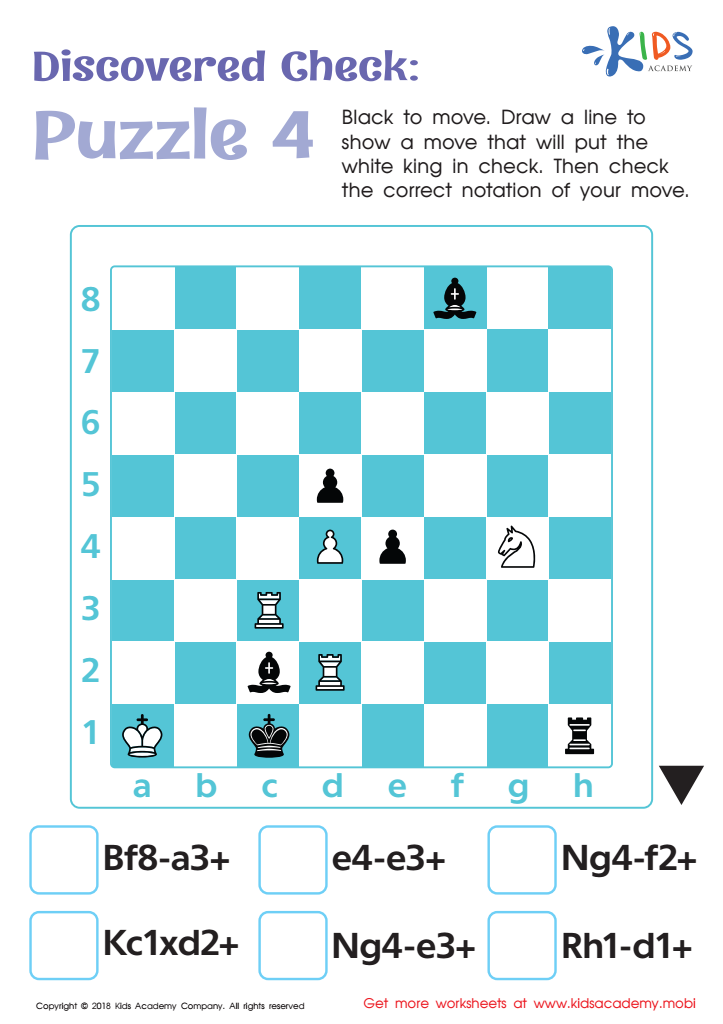
Discovered Check: Puzzle 4 Worksheet

Discovered Check: Puzzle 2 Worksheet
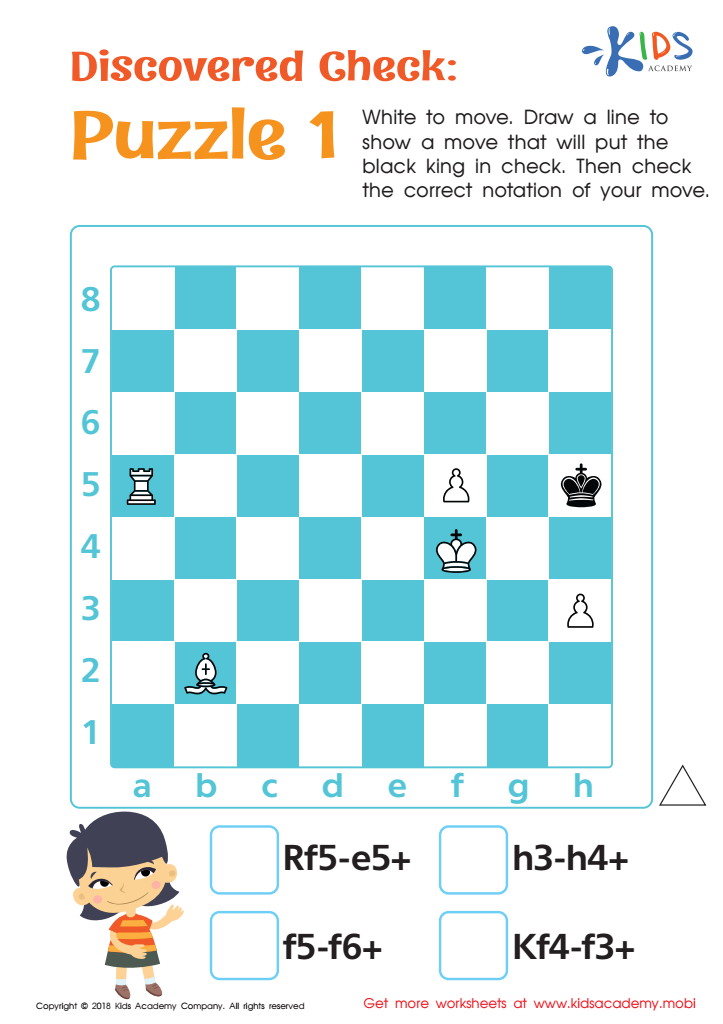
Discovered Check: Puzzle 1 Worksheet







Teaching chess strategy to children aged 7-8 can have numerous benefits that extend beyond the chessboard. At this age, children are developing critical thinking and problem-solving skills. Understanding chess strategy helps nurture these abilities as they learn to evaluate options, anticipate consequences, and think several moves ahead. This type of strategic thinking can aid in their overall academic performance, particularly in subjects like math and sciences where logical reasoning is essential.
Moreover, chess encourages patience and concentration, qualities that are vital for young learners. As children engage in the game, they must focus on their opponent’s moves and strategize their next steps, fostering an environment of mindfulness. Chess also teaches important life skills such as sportsmanship, as children learn to win graciously and cope with losses in a healthy way.
From a social perspective, chess fosters community and collaboration, whether in classrooms or chess clubs. It creates opportunities for children to engage with peers, bond over a shared interest, and develop friendships. Understanding and appreciating chess strategy thus equips children with valuable cognitive, emotional, and social skills, making it a worthy investment for parents and teachers in their children’s development.