Time reading skills Easy Worksheets for Ages 7-8
4 filtered results
-
From - To
Enhance your child's time-reading skills with our Easy Worksheets for Ages 7-8! Kids Academy offers engaging and printable worksheets designed to make learning to tell time fun and easy. Our comprehensive collection includes exercises on both analog and digital clocks, helping young learners grasp hours, minutes, and seconds seamlessly. Perfect for building confidence, each worksheet is crafted to suit early grade levels and Common Core standards. Unlock your child's potential and watch them master telling time with ease. Visit us at Kids Academy and make time-reading an enjoyable adventure for your little one!
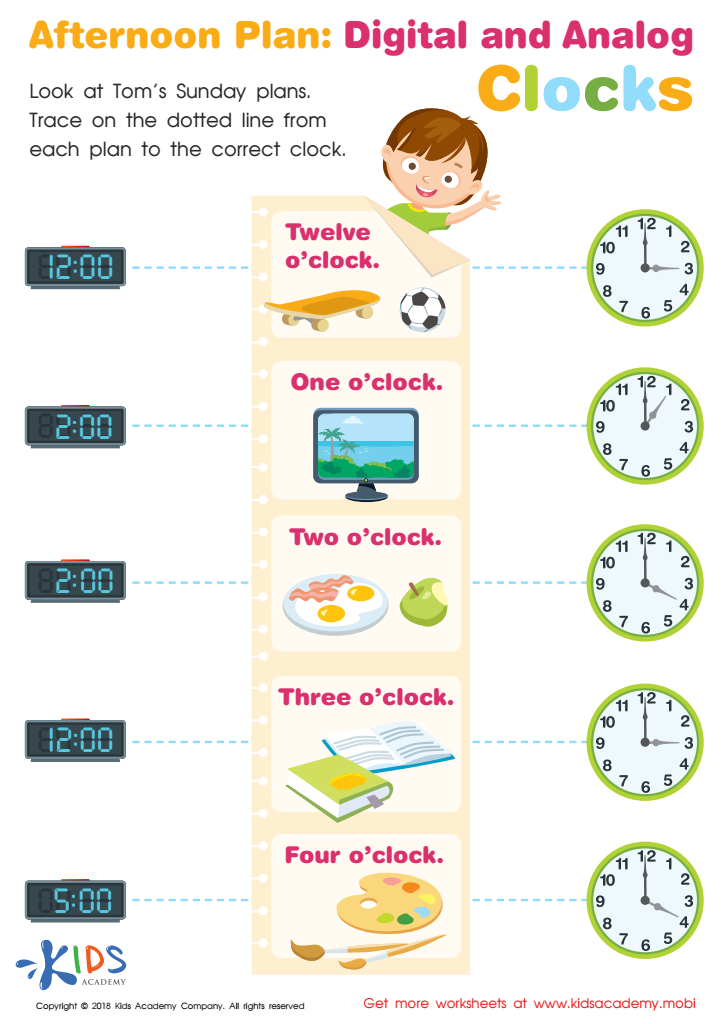
Afternoon Plan: Digital and Analog Clocks Worksheet
 Assign to My Students
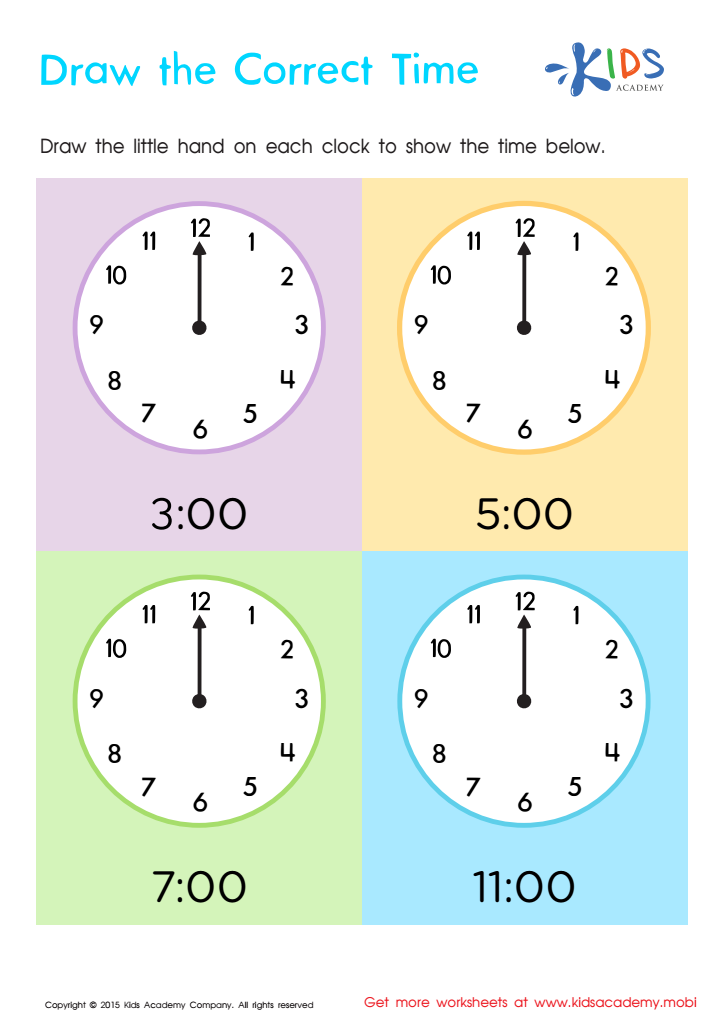
Telling The Time Worksheet: Part 1
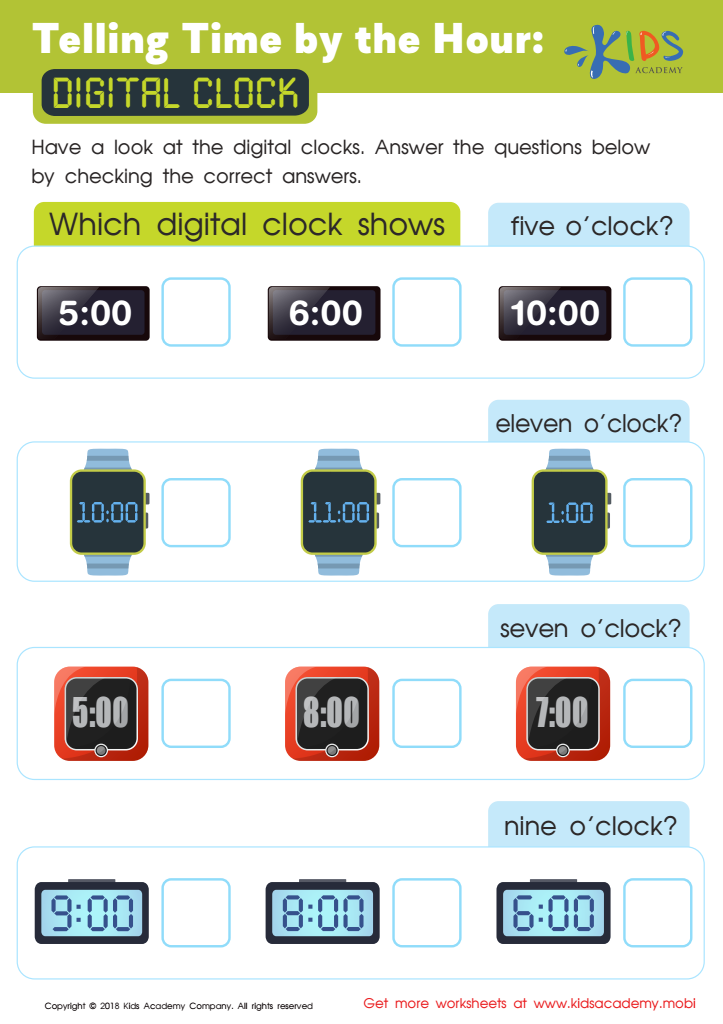
Telling Time by the Hour: Digital Clock Worksheet
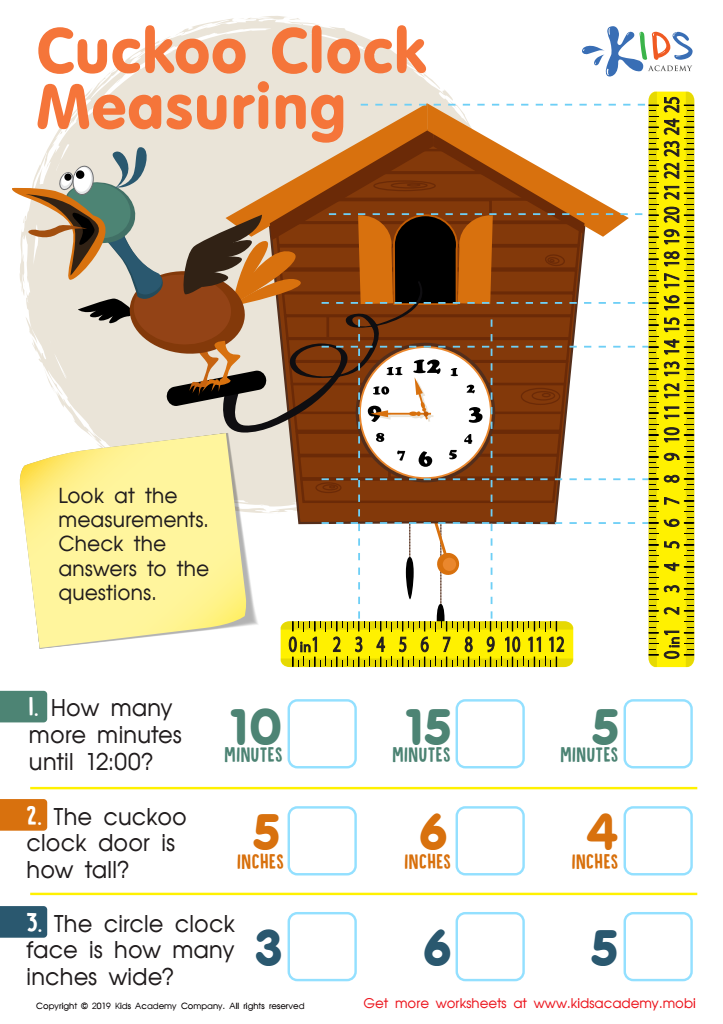
Cuckoo Clock Measuring Worksheet



.jpg)




Parents and teachers should deeply care about developing time reading skills in children aged 7-8 because it forms a vital aspect of their overall cognitive development and day-to-day life management. At this stage, children are navigating the transition from recognizing numbers to understanding more complex concepts of time, including the significance of hours, minutes, and seconds, as well as the correlation between digital and analog clocks.
Mastering time reading helps enhance mathematical reasoning, a key skill that influences their performance in various academic areas. For example, calculating durations enhances their subtraction and addition capabilities. Furthermore, understanding time fosters essential life skills such as time management and punctuality, critical for personal and practical application in school routines, such as getting ready for school, participating in class activities, and adequately managing leisure and homework time.
Moreover, learning to read time promotes independence and self-regulation. Children begin to rely less on adults to tell them when it is time for different activities and can take more responsibility for managing their own schedules. Lastly, it enriches the child’s ability to form a concept of sequences and future planning, laying the groundwork for successful, organized, and disciplined lives. Therefore, integrating and emphasizing these skills should be a priority in early education.








