Understanding time Easy Worksheets for Ages 7-8
3 filtered results
-
From - To
Dive into the world of time-telling with our "Understanding Time Easy Worksheets for Ages 7-8"! Designed to simplify complex concepts, these worksheets engage young learners with fun, interactive activities that build their confidence and skills. From recognizing the hands of the clock to mastering the hours and minutes, each worksheet is tailored to develop essential time-telling abilities. Perfect for classroom use or at-home practice, our worksheets focus on hands-on learning, ensuring kids grasp the fundamentals of reading both analog and digital clocks. Empower your child to master time with our expertly crafted resources today!
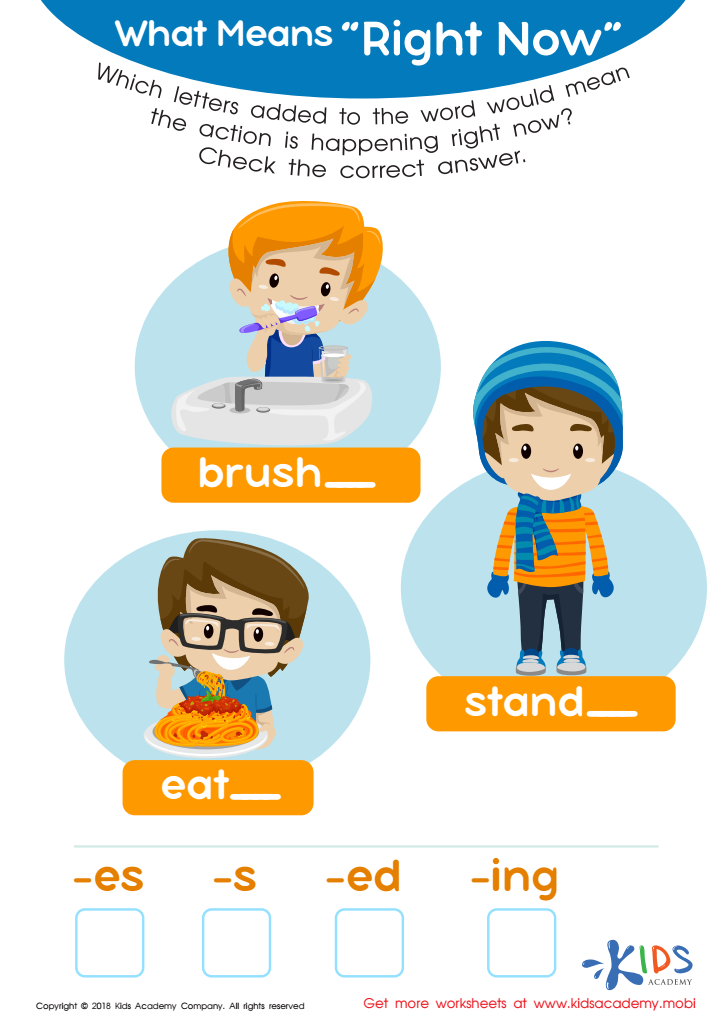
What Means "Right Now" Worksheet
 Assign to My Students
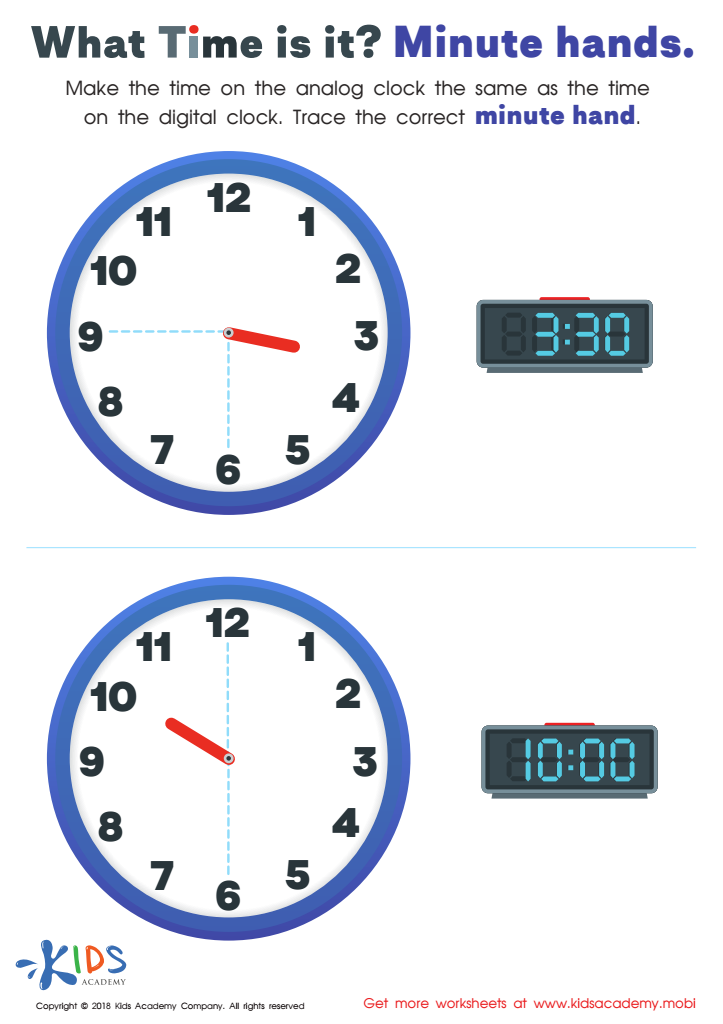
What Time Is it? Minute Hands Worksheet
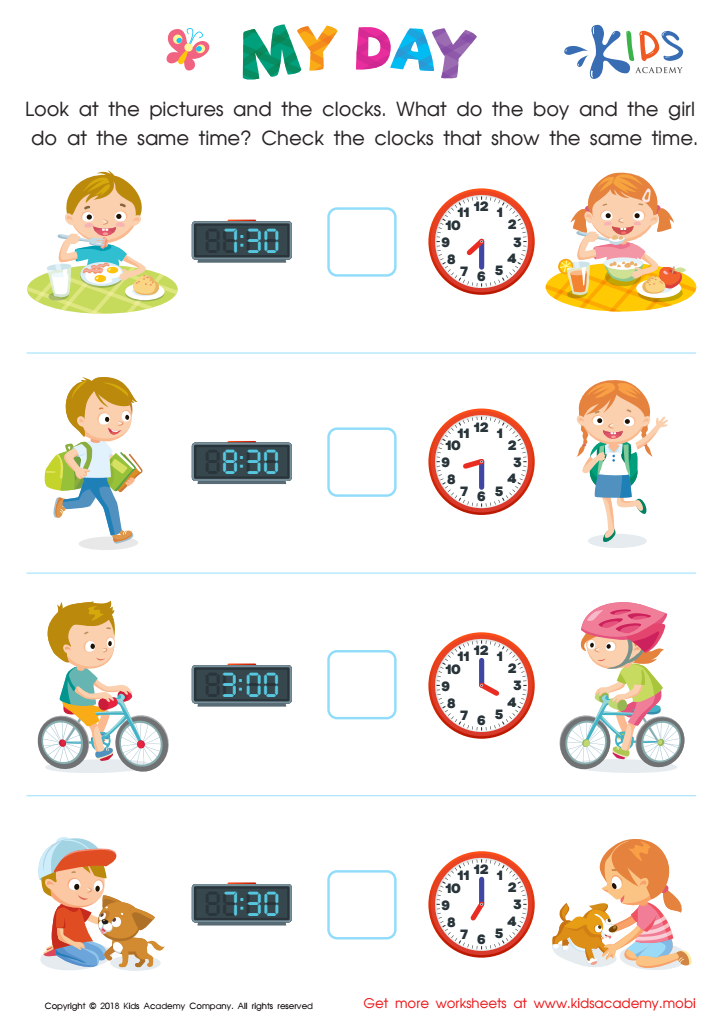
My Day Worksheet







Understanding the concept of time is essential for young children as it plays a crucial role in their daily routines and their overall cognitive development. For children aged 7-8, learning to tell time helps them develop important life skills like time management, organizational abilities, and self-discipline. When parents and teachers focus on teaching time in an easy and understandable manner, it promotes a sense of responsibility and independence in kids.
Firstly, understanding time helps children follow a structured routine. For example, knowing when it's time for school, homework, and play can make their day more predictable and less stressful. This structure enhances their capability to complete tasks timely, leading to improved academic performance.
Secondly, being time-aware fosters a sense of punctuality and respect for others' time, which are important social skills. This can help them in social situations and future work environments. For instance, arriving on time for playdates, school events, or family gatherings demonstrates reliability.
Finally, grasping the concept of time supports mathematical and logical-thinking skills. Skills like reading clocks, calculating time intervals, and understanding days and weeks engage their minds analytically. These activities lay the groundwork for future learning in subjects like mathematics and science.
Hence, making time understanding easy and enjoyable for children is vital, as it lays the foundation for their personal organization, social etiquette, and cognitive skills.








