Vocabulary expansion Easy Reading Comprehension Worksheets for Ages 7-8
6 filtered results
Difficulty Level
Grade
Age
-
From - To
Subject
Activity
Standards
Boost your child's reading skills with our "Vocabulary Expansion Easy Reading Comprehension Worksheets" designed for ages 7-8! These engaging worksheets focus on enhancing vocabulary and comprehension through fun, interactive activities. Crafted by educational experts, each worksheet combines age-appropriate texts with questions that encourage critical thinking and word understanding. Perfect for classroom use or at-home learning, these resources support foundational language development and improve reading confidence. Watch your 7-8-year-olds explore new words and sharpen their comprehension skills with Kids Academy's expertly designed worksheets that make learning enjoyable and effective. Ignite a love for reading today!
Favorites
With answer key
Interactive
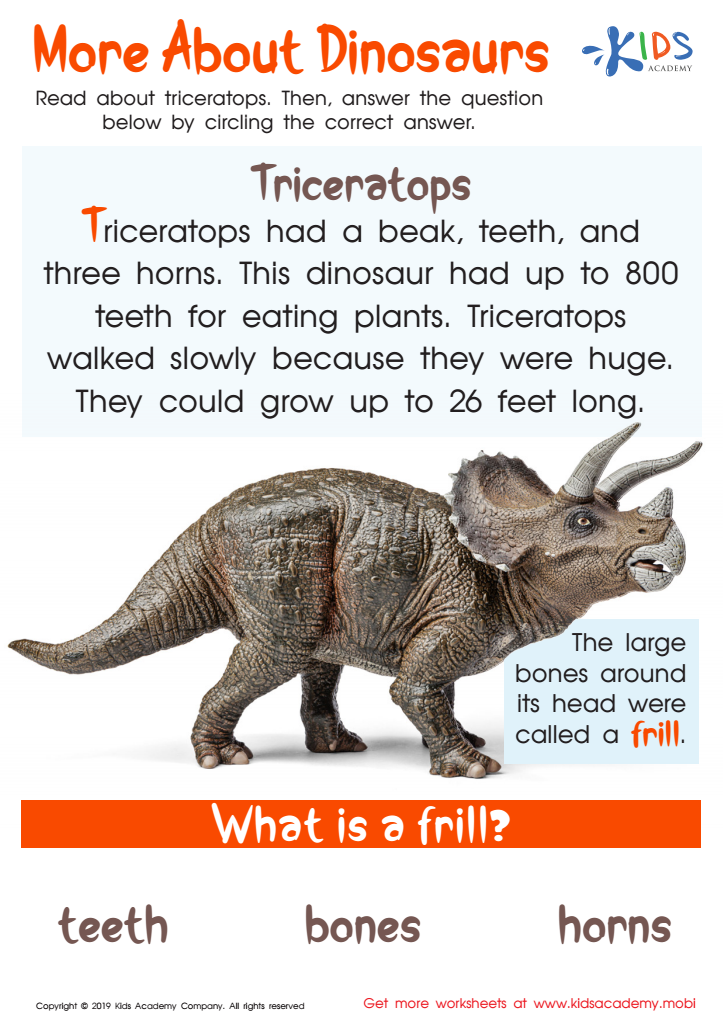
More About Dinosaurs Worksheet
Let your little archaeologist have a blast with this Kids Academy worksheet! They’ll explore the past and learn more about the triceratops while practicing their informational text skills. Be sure to highlight the textbox and show them how the frill is explained. Finish the worksheet by answering the question!
 Assign to My Students
More About Dinosaurs Worksheet
Worksheet
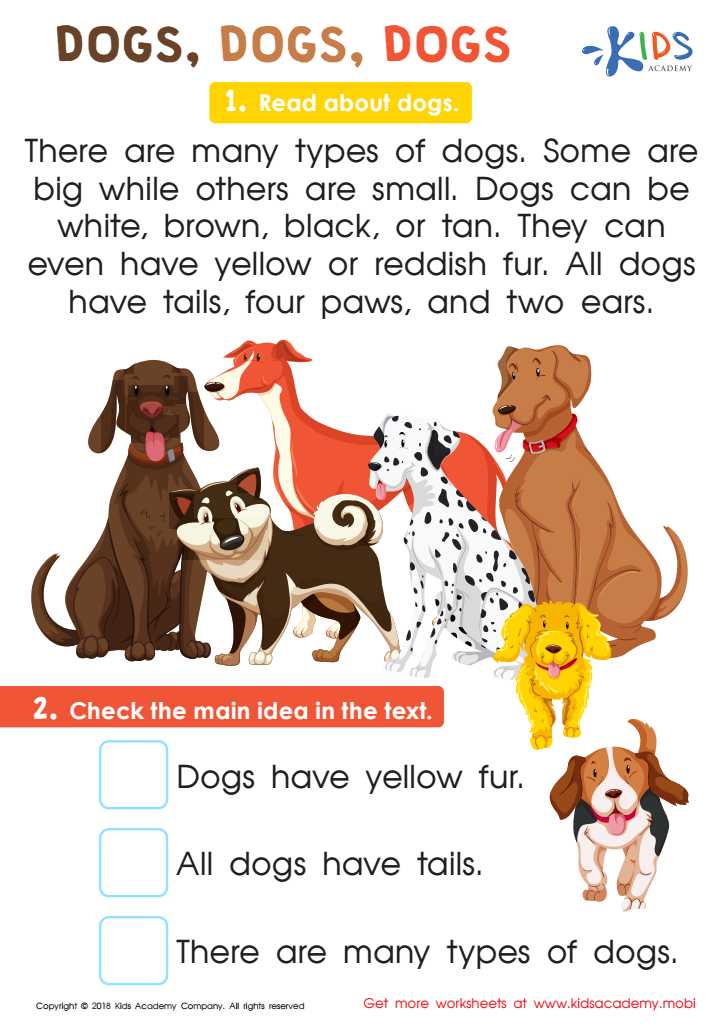
Dogs, Dogs Worksheet
Help your child understand main ideas with this fun doggy worksheet from Kids Academy! Have them read the passage and then discuss the main idea. After that, have them read the answer choices and pick the right one. This will help your kiddo hone their critical reading comprehension skills!
Dogs, Dogs Worksheet
Worksheet
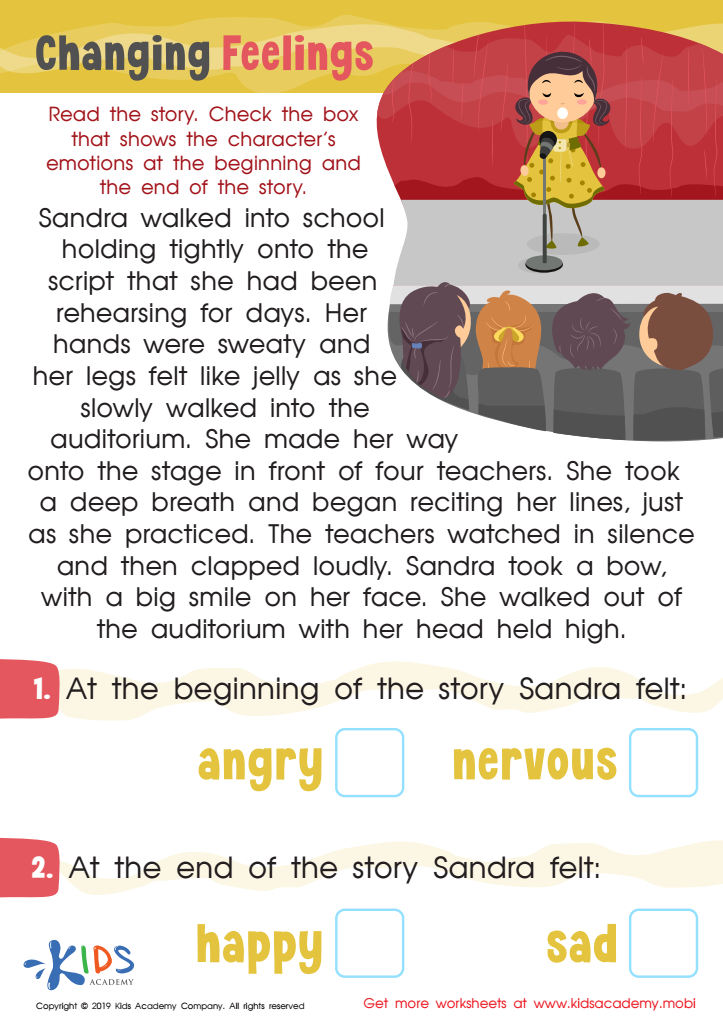
Changing Feelings Worksheet
Help your kids practice reading skills with this exercise. Ask them to read the short passage, then check the boxes showing the character's emotions at the start and end. This will help them improve their reading and understanding.
Changing Feelings Worksheet
Worksheet
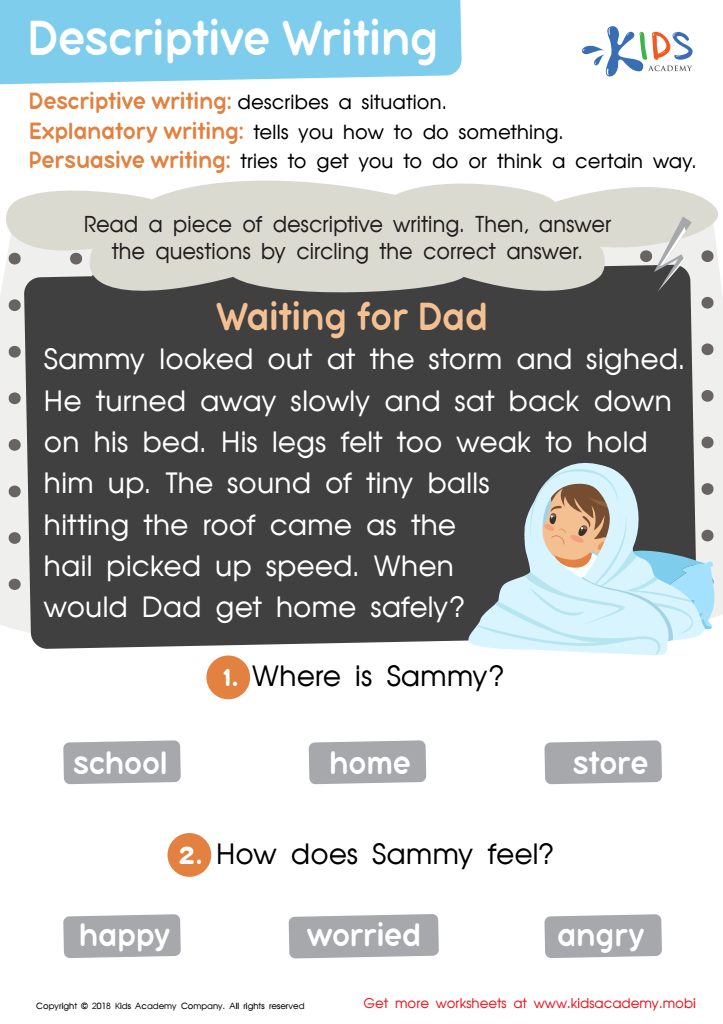
Descriptive Writing Worksheet: Part 2
In this worksheet, your kids will explore writing styles like descriptive, explanatory and persuasive. Read them the descriptive text, then have them answer the questions. Writing is an art – it's a way to express emotions, tell stories and share information.
Descriptive Writing Worksheet: Part 2
Worksheet
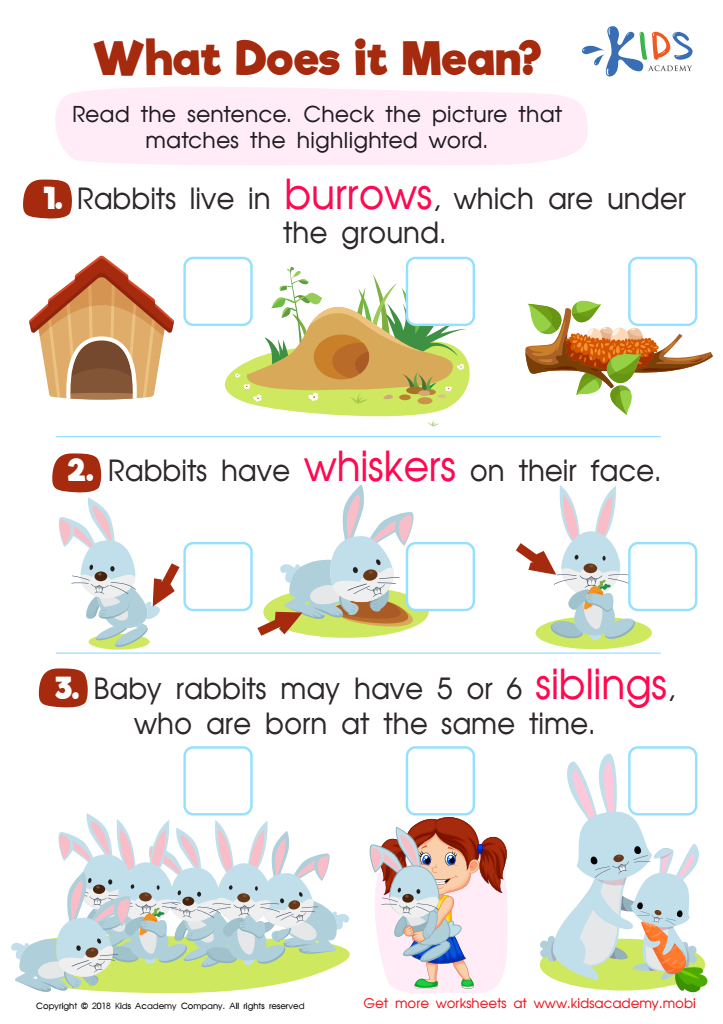
What Does It Mean? Worksheet
Teach your child to use context clues with this engaging Kids Academy worksheet. Read the sentences and find the pink-highlighted word. Use the other words in the sentence to figure out the meaning, then check the box next to the picture that represents it.
What Does It Mean? Worksheet
Worksheet
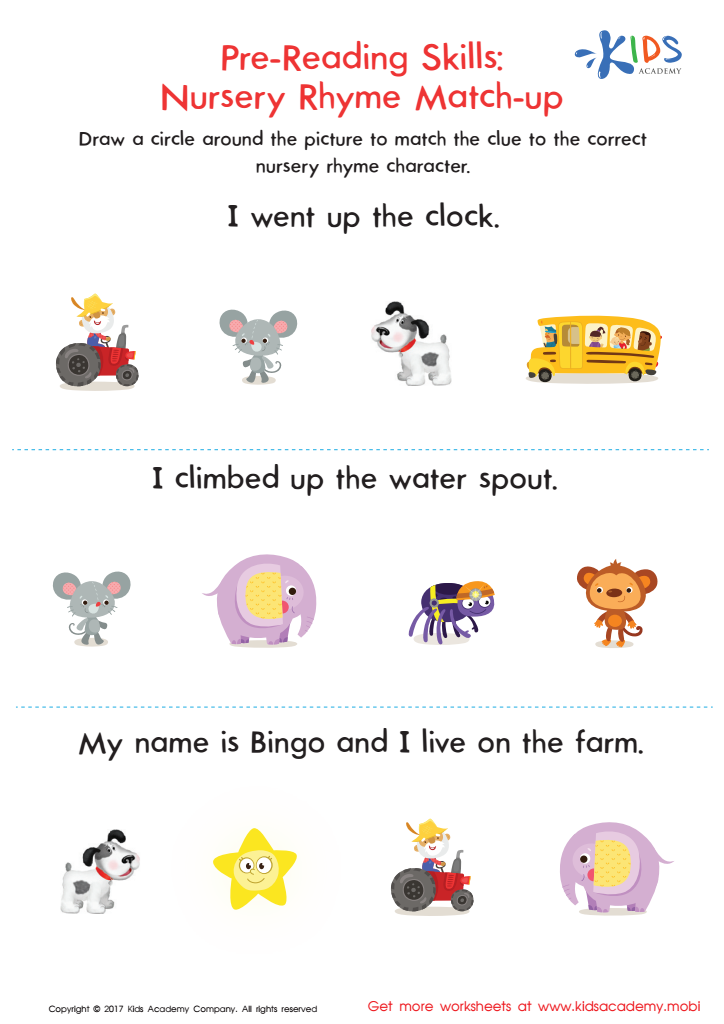
Nursery Rhyme Match–Up Worksheet
This worksheet helps kids build pre-reading skills using stories they know and love! By connecting with prior knowledge, kids can develop ideas about characters and set the stage for reading strategies.
Nursery Rhyme Match–Up Worksheet
Worksheet
Join Kids Academy for Free
Who is primarily going to use this learning content?


.jpg)





Vocabulary expansion and reading comprehension are critical components of a child’s early education, especially for ages 7-8. At this stage, children transition from "learning to read" to "reading to learn," which lays the foundation for their future academic success and lifelong love for learning.
Firstly, a rich vocabulary enables children to understand new concepts and follow increasingly complex instructions. When kids know more words, they can better comprehend texts, recount stories with greater detail, and engage more deeply in discussions. This cognitive flexibility translates to improved performance across all subjects, as understanding vocabulary is universally vital, whether in solving math problems or grasping scientific concepts.
Secondly, strong reading comprehension skills are linked to higher literacy. If children understand what they read, they are more likely to develop critical thinking and inferencing skills. They can make connections between different ideas, leading to insightful, independent thought.
Parents and teachers should also understand the socio-emotional advantages. Enhancing a child's vocabulary and comprehension encourages self-expression and confidence. Kids adept at expressing feelings and thoughts are better at managing social interactions and conflicts, fostering better peer relationships.
Investing time in vocabulary building and reading comprehension not only prepares children academically but also nurtures essential life skills. It's a vital part of growing well-rounded, insightful individuals.