Shape Recognition Easy 2D Shapes Worksheets for Ages 7-9
7 filtered results
-
From - To
Discover the ultimate Shape Recognition 2D Shapes Worksheets, designed for ages 7-9 by Kids Academy! These engaging and easy-to-understand worksheets will help your child quickly recognize and understand common 2D shapes, fostering essential math skills. Perfect for young learners, each sheet features fun and innovative exercises that keep kids entertained while they learn. From squares to triangles to circles, your child will gain confidence and mastery in shape identification. Ideal for both classroom and at-home learning, these worksheets provide an effective foundation for future geometric concepts and spatial awareness. Download now and watch your child excel in math!
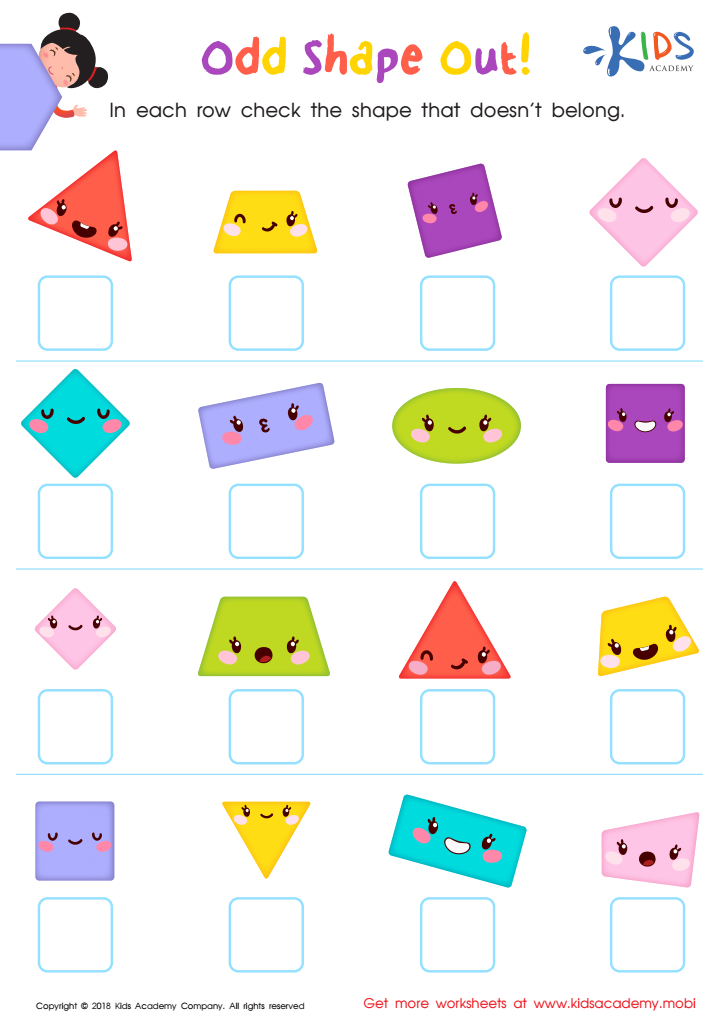
Odd Shape Out Worksheet for Grade 3
 Assign to My Students


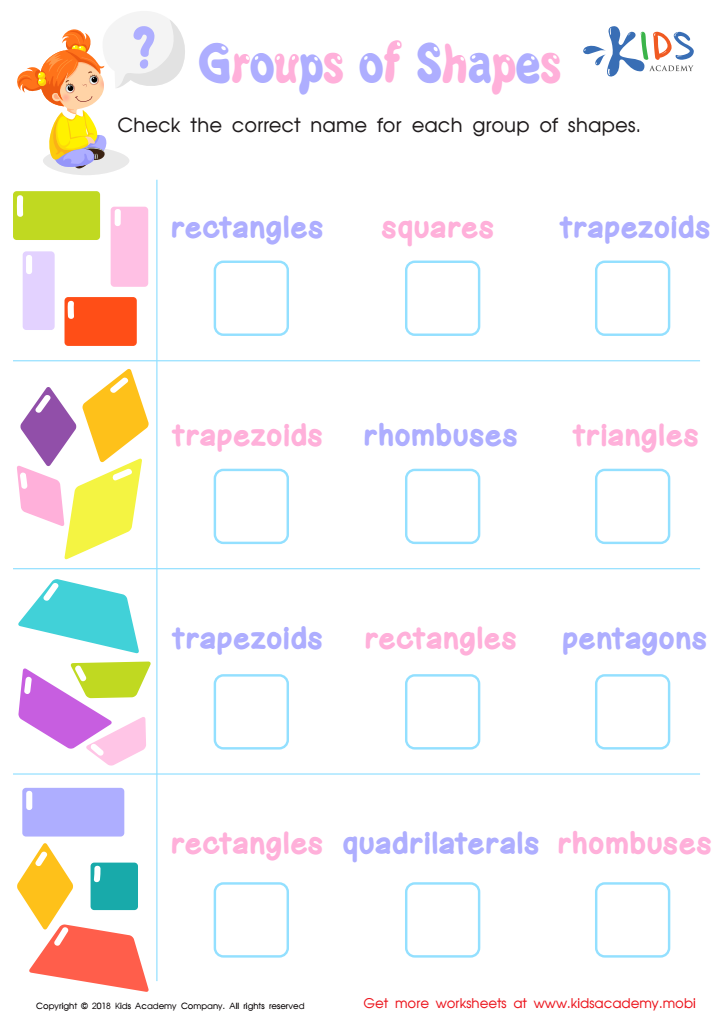
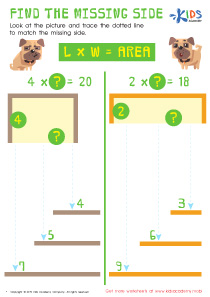
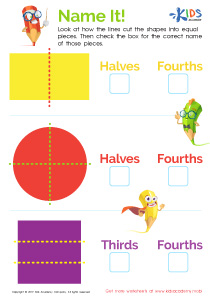
Groups of Shapes Worksheet
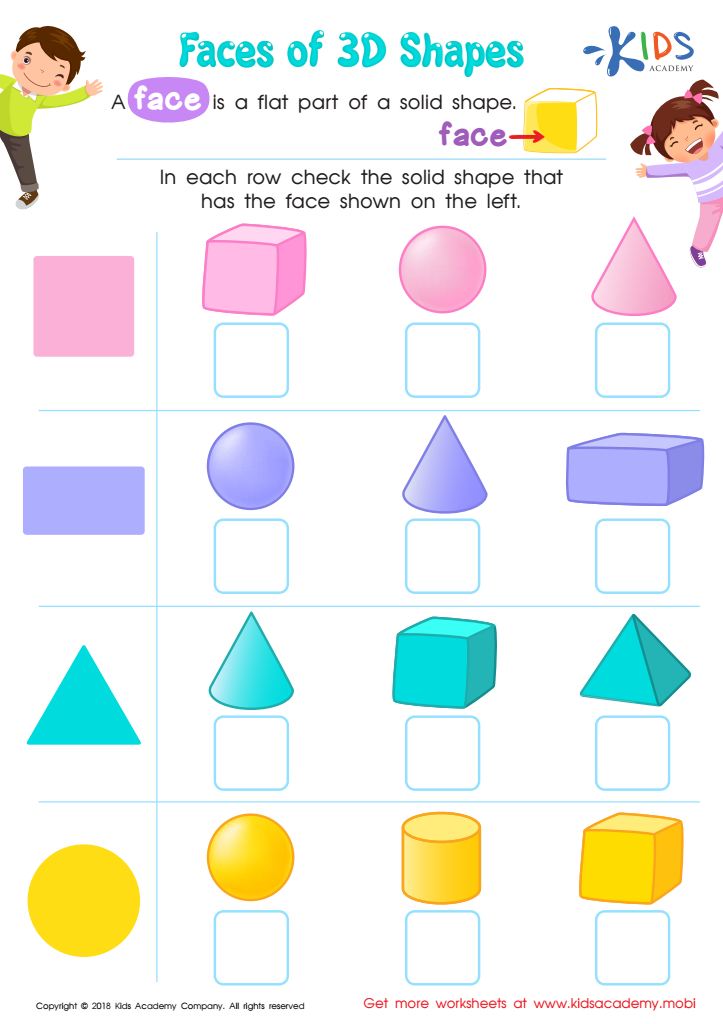
Faces of 3D Shapes Worksheet
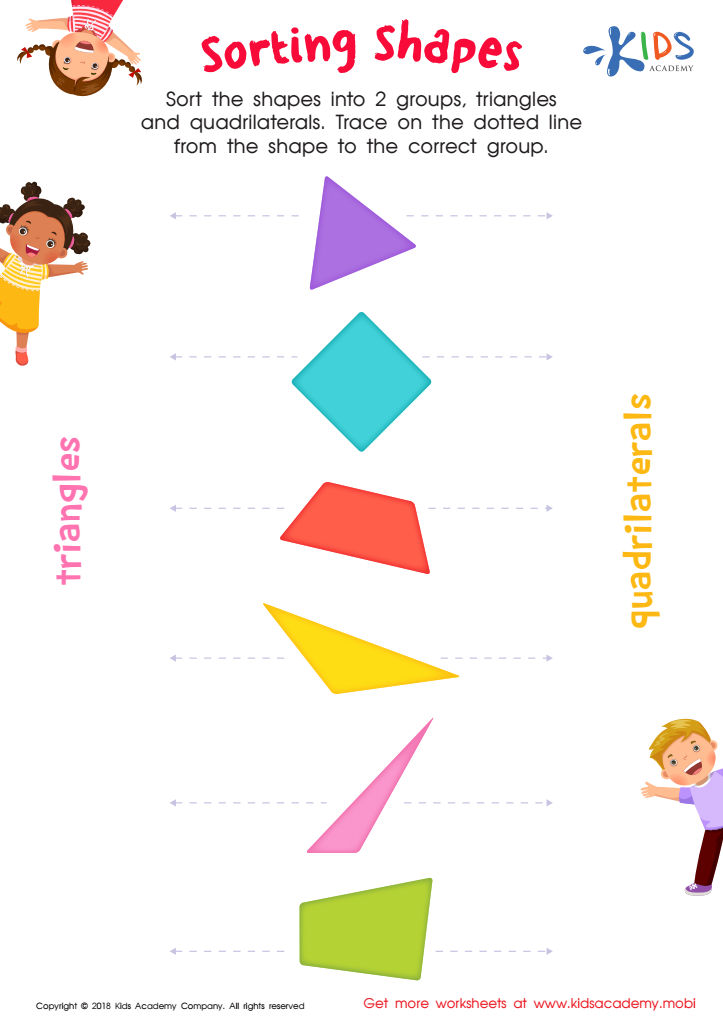
Sorting Shapes Worksheet
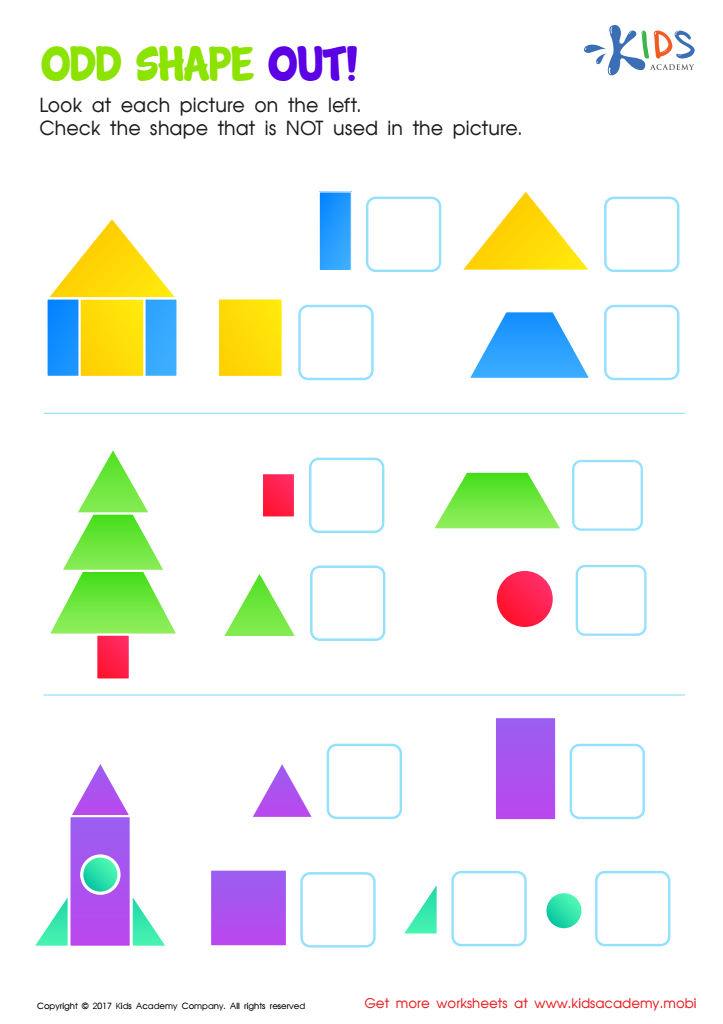
Odd Shape Out Worksheet for Grade 1
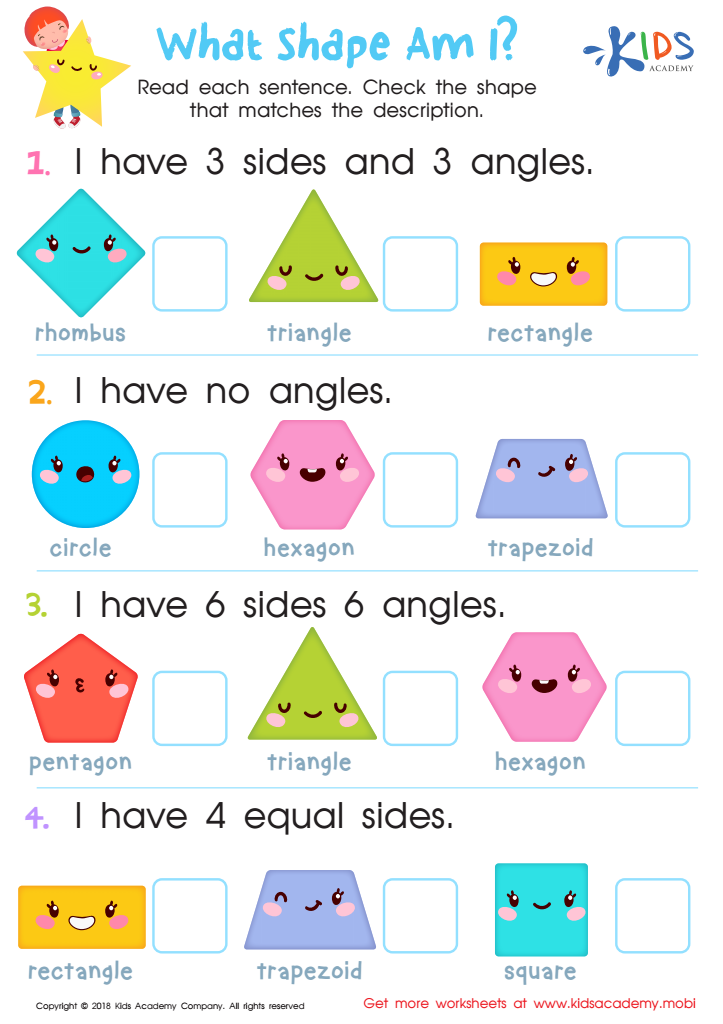
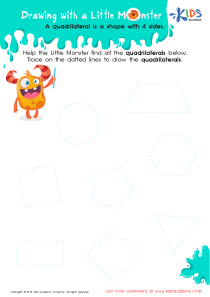
What Shape Am I? Worksheet
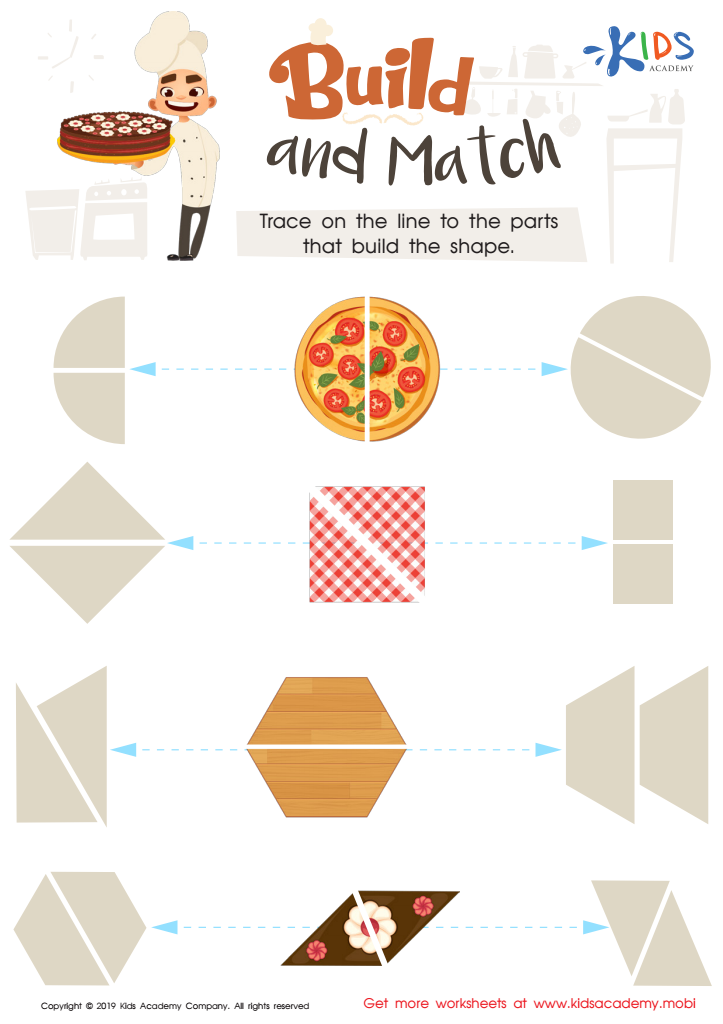
Build and Match Worksheet








Shape recognition is a fundamental cognitive skill crucial for a child's development. By ages 7-9, children transition from basic recognition to understanding more complex attributes and relationships of 2D shapes. Mastery of shape recognition supports numerous educational domains and fosters holistic development.
Firstly, geometry is intrinsic to everyday life. Recognizing and understanding shapes aids in visual-spatial awareness, a crucial skill for activities ranging from navigating a space to understanding architectural designs.
Secondly, math concepts become more abstract as students progress, and recognizing shapes is foundational for understanding more complex concepts such as area, perimeter, symmetry, and transformations.
Additionally, language and reading skills improve through shape recognition. Describing shapes enhances vocabulary and comprehension, while identifying patterns develops decoding skills essential for reading.
Furthermore, shape recognition strengthens problem-solving abilities and critical thinking. Children learn to categorize, compare, and analyze different properties, skill sets beneficial for logical reasoning and mathematical proofs.
Lastly, non-cognitive traits, including perseverance and attention to detail, are honed when children engage in activities involving shapes. These attributes are indispensable for academic and personal success.
Therefore, parents and teachers need to prioritize shape recognition to support cognitive development across various learning areas, laying a strong foundation for a child's future educational endeavors.