Addition skills Easy Addition & Subtraction Worksheets for Ages 7-9
6 filtered results
-
From - To
Enhance your child's math abilities with our "Easy Addition & Subtraction Worksheets" designed specifically for ages 7-9. These engaging and interactive worksheets focus on developing strong addition skills through fun exercises and practical examples. Ideal for young learners, each worksheet provides clear instructions and step-by-step guidance, making math approachable and enjoyable. Whether at home or in the classroom, these resources will build confidence in your child as they master basic addition concepts. Help your child excel in math while having fun with our meticulously crafted worksheets that promote learning in a stress-free environment. Perfect for practice or assessment!
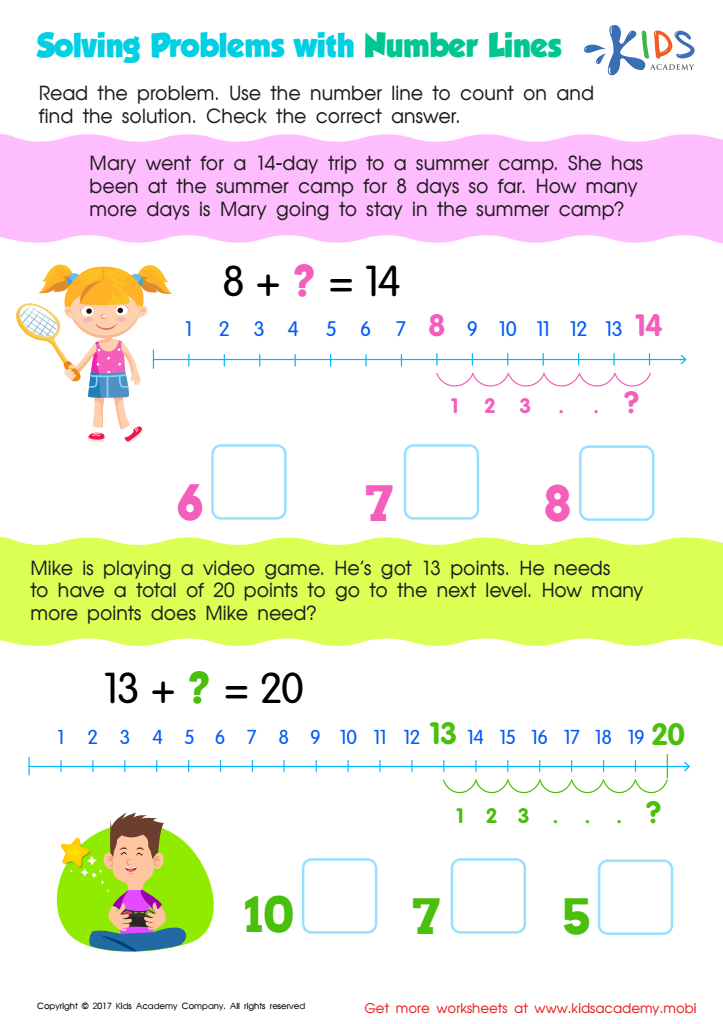
Solving Problems: Number Lines Worksheet
 Assign to My Students
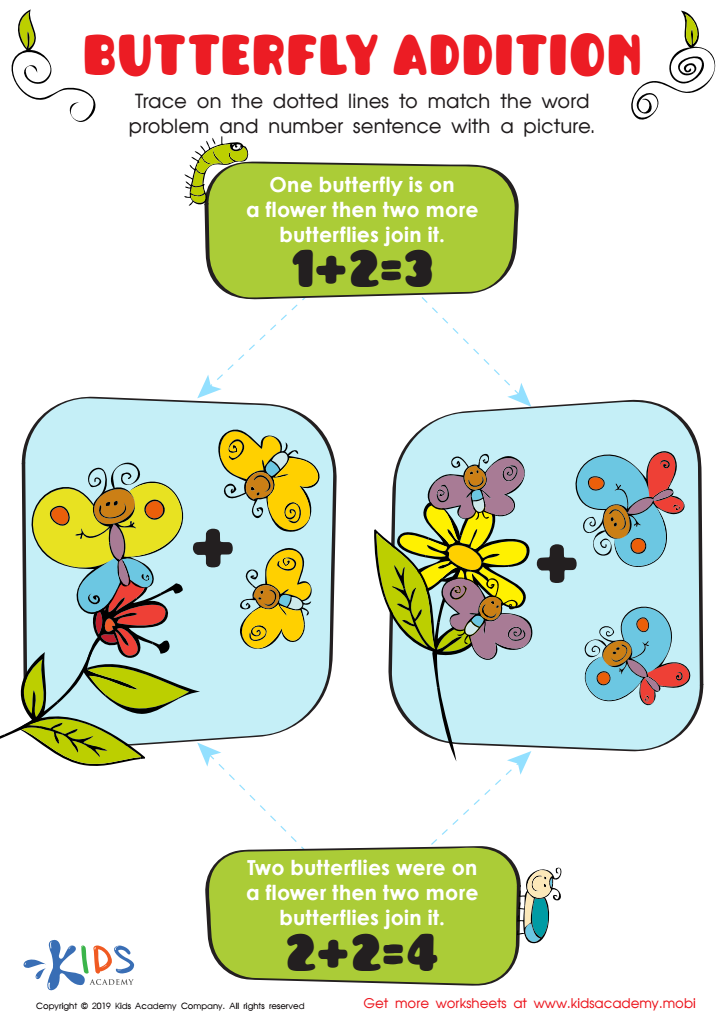
Butterfly Addition Worksheet
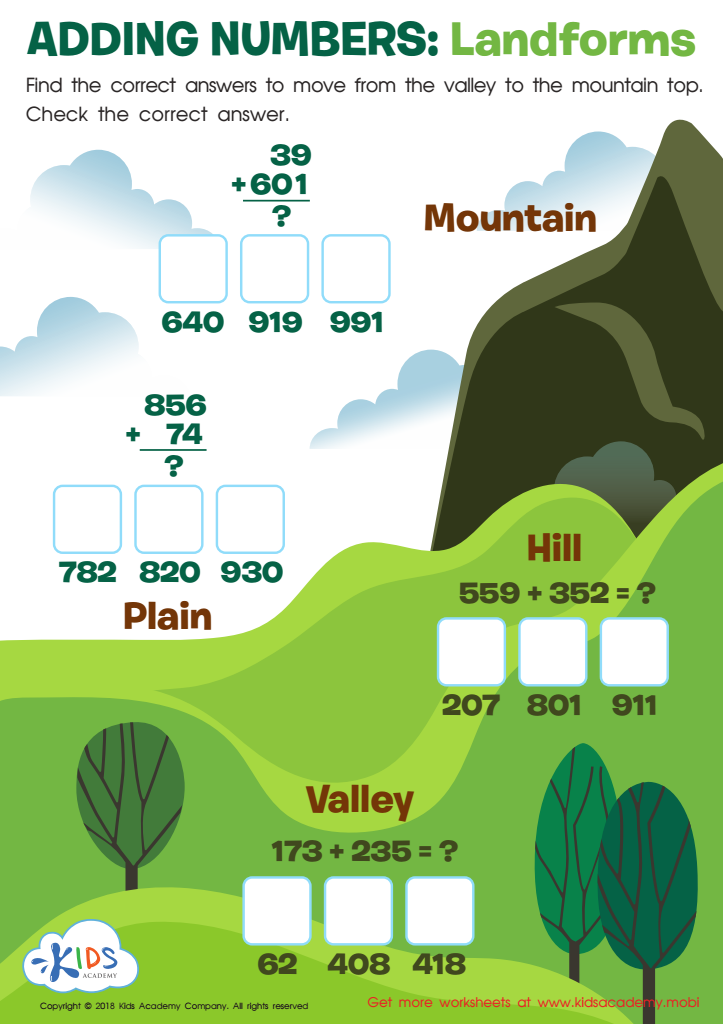
Adding Numbers: Landforms Worksheet
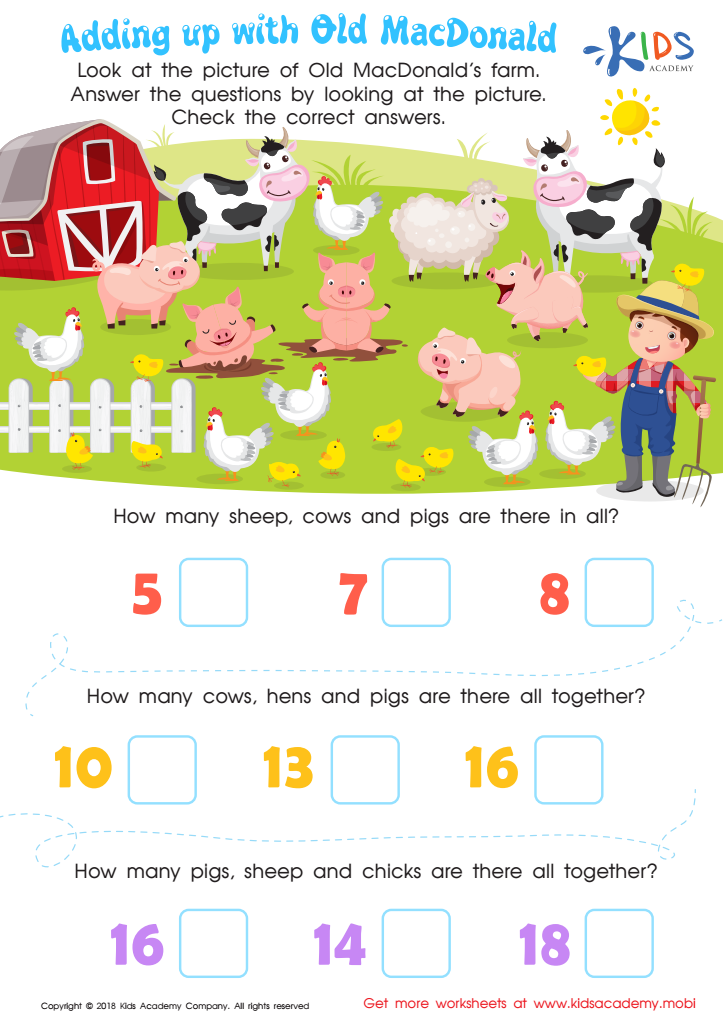
Adding Up with Old MacDonald Worksheet
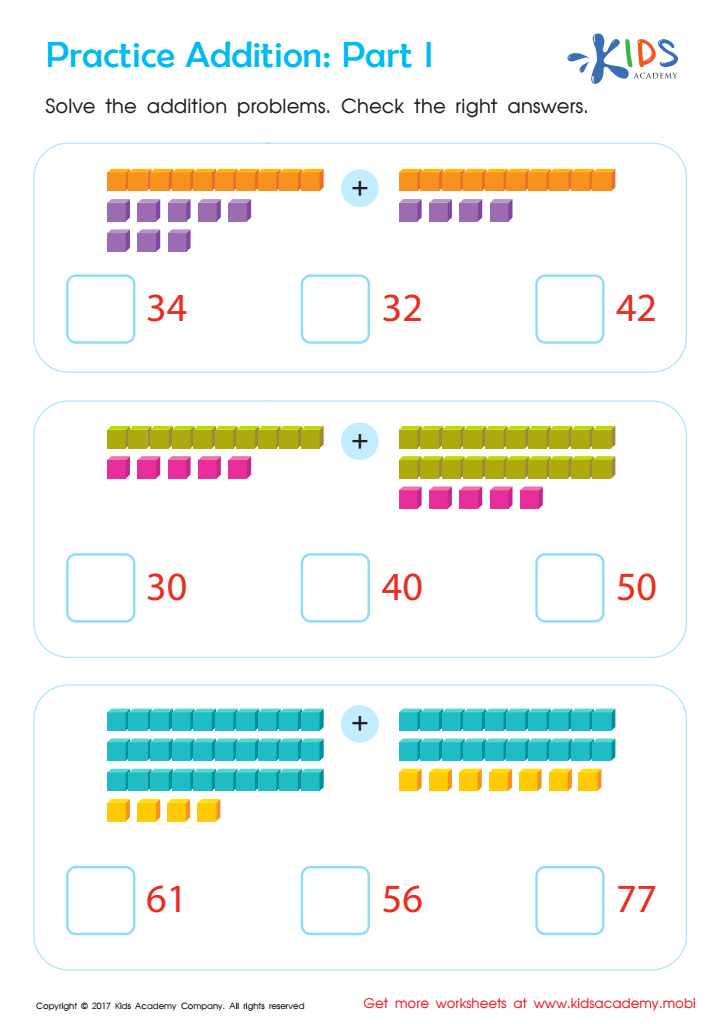
Practice Addition: Part 1 Worksheet
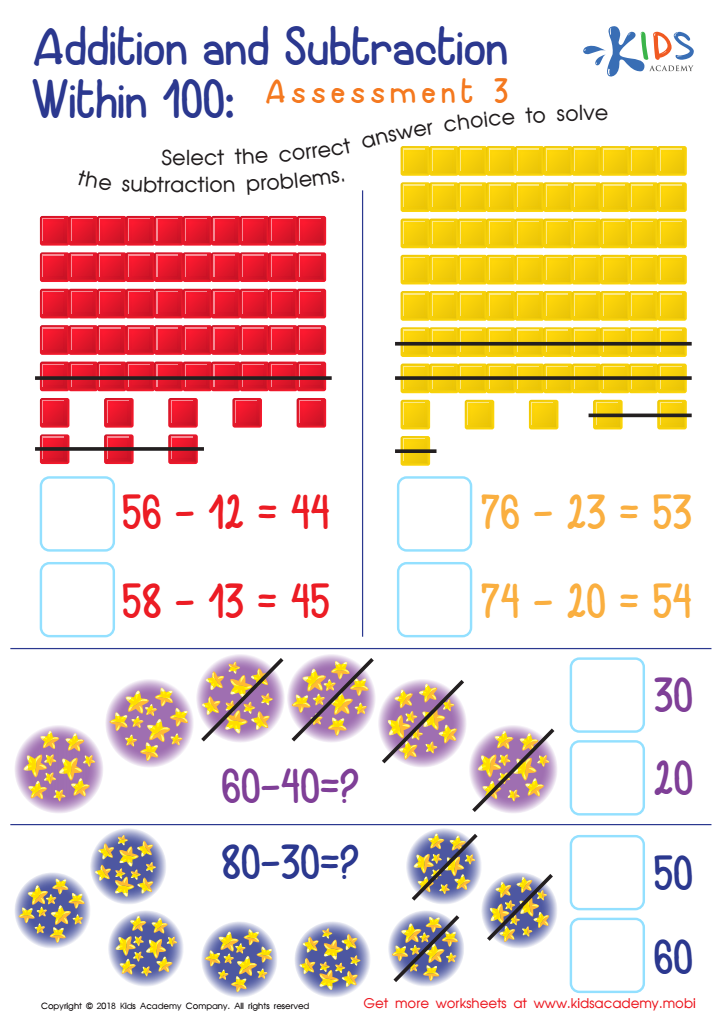
Addition and Subtraction Within 1: Assessment 3 Worksheet








Parents and teachers should prioritize the development of addition and subtraction skills in children ages 7-9 for several critical reasons. At this developmental stage, children are building a strong mathematical foundation that will support their future learning. Mastery of these basic operations enhances their ability to tackle more complex concepts, such as multiplication and division.
Additionally, strong addition and subtraction skills contribute to improved problem-solving abilities in real-life situations, ranging from budgeting pocket money to solving puzzles. Proficiency in these foundational skills also fosters greater confidence in children's mathematical abilities, which can positively affect their overall attitude toward learning and school.
Moreover, these skills promote cognitive development, enhancing children's logical thinking and analytical skills, both important not only in math but across all academic areas. Engaging children in fun and interactive learning experiences helps to solidify these concepts, making math enjoyable instead of intimidating.
Collaboratively, parents and teachers can encourage practice through games and practical applications, reinforcing these skills and preparing children for future academic challenges. Fostering strong addition and subtraction capabilities also helps in differentiating instruction to meet varying student needs, ensuring that all children achieve competency by the end of third grade.








