Understanding patterns Easy Basic Times Tables up to 12 Worksheets for Ages 7-9
3 filtered results
-
From - To
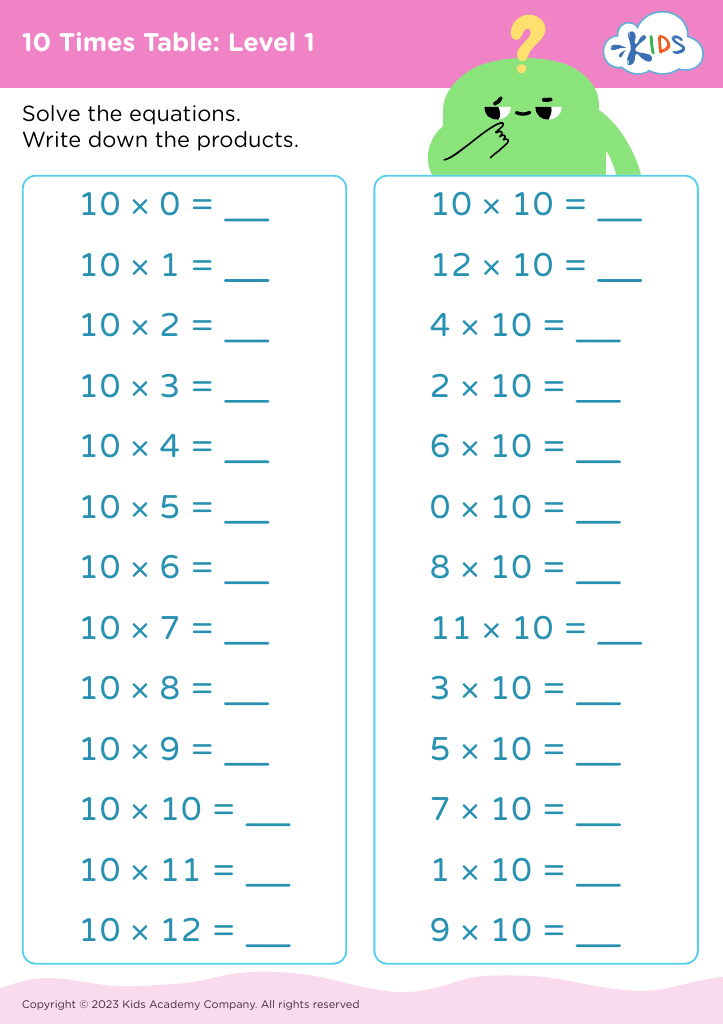
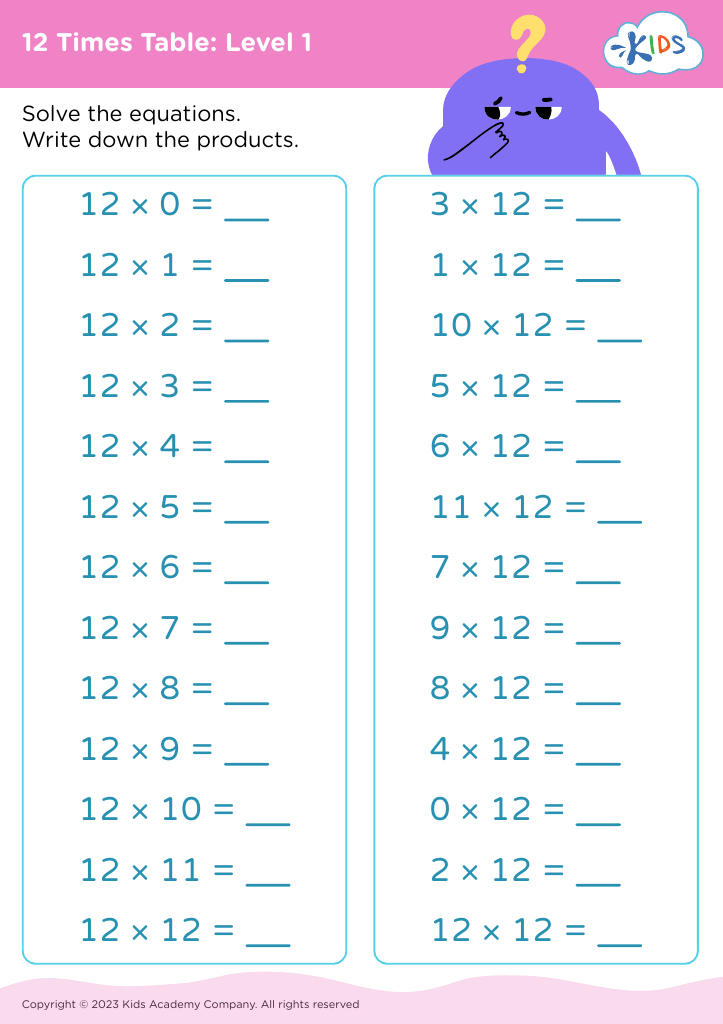
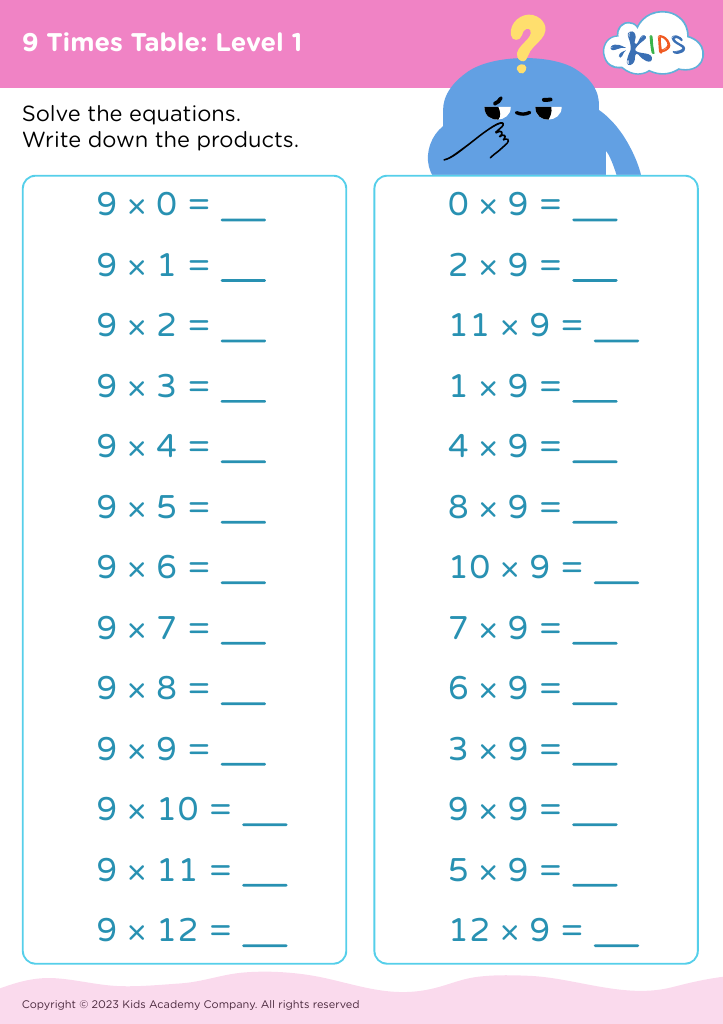
"Understanding Patterns: Easy Basic Times Tables up to 12 Worksheets for Ages 7-9" offers an engaging approach to mastering multiplication tables for young learners. Our thoughtfully designed worksheets help children aged 7-9 identify and understand numerical patterns, paving the way for confident math skills. Perfect for classroom or homeschool use, these resources feature vibrant visuals and interactive exercises that make learning enjoyable. Students will explore times tables up to 12, reinforcing their understanding through repetition and pattern recognition. With our worksheets, math mastery becomes achievable and fun, laying a solid foundation for future success in mathematics.


Understanding basic times tables up to 12 for ages 7-9 is crucial for several reasons. First, mastering multiplication tables provides a strong foundation for math skills. At this age, children's brains are highly receptive to learning patterns, and recognizing these patterns helps them grasp the concept of multiplication more quickly and deeply. This makes future math concepts, such as division, fractions, and algebra, much easier to understand.
Second, knowing times tables improves problem-solving skills. When children can quickly recall multiplication facts, they spend less time on basic calculations, freeing cognitive resources for higher-order thinking. This efficiency enhances their overall math fluency and confidence, allowing them to tackle more complex problems with ease.
Additionally, math is a part of everyday life. From managing money to measuring ingredients in a recipe, a solid grasp of multiplication is practical and beneficial. By ensuring that children learn and understand their times tables, we're equipping them with essential life skills.
Finally, early success in math can boost a child's confidence and foster a positive attitude toward learning. With consistent practice and encouragement from parents and teachers, children are more likely to enjoy math and approach it with curiosity rather than anxiety, setting the stage for lifelong learning and success.








