Easy Geometry Worksheets for Ages 7-9 - Page 3
50 filtered results
-
From - To
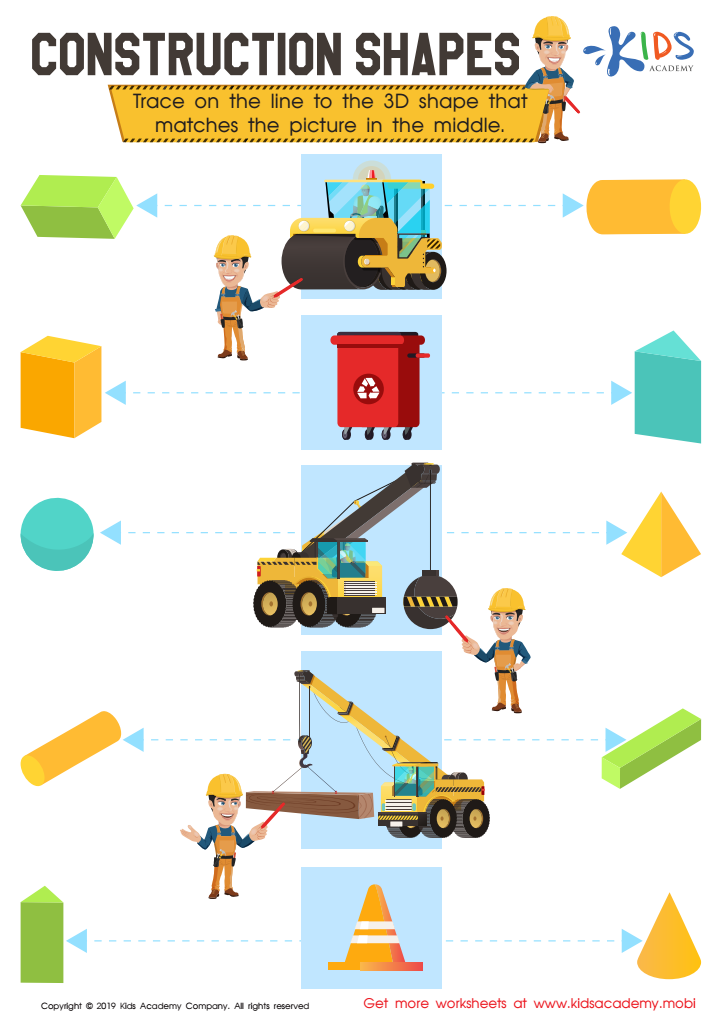
Construction Shapes Worksheet
 Assign to My Students











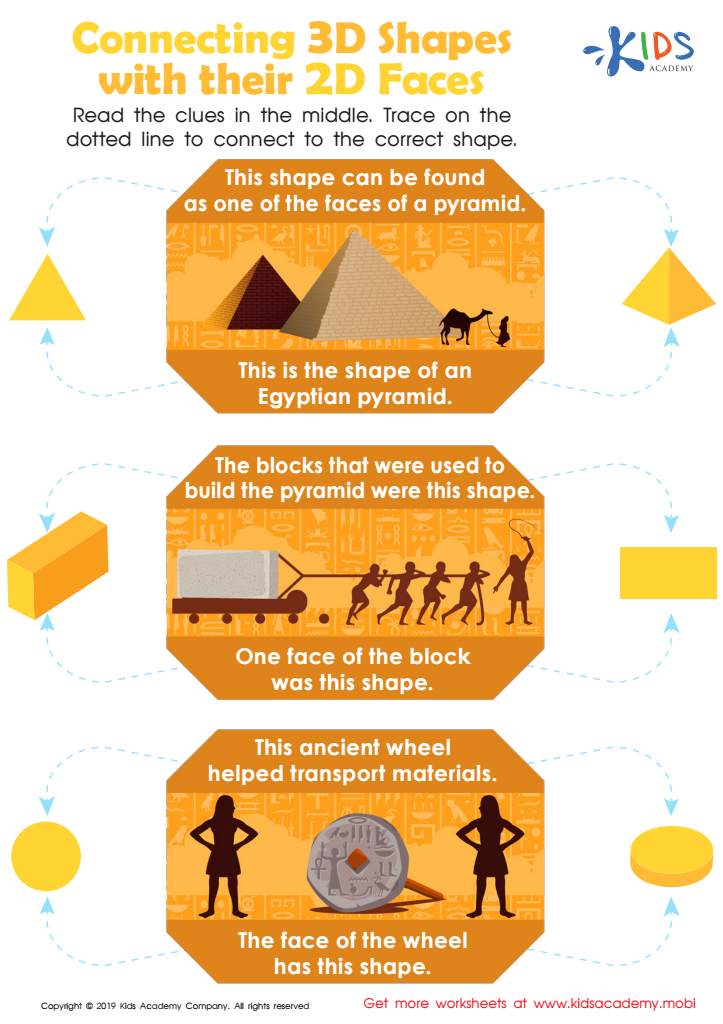
Connecting 3D Shapes with Their 2d Faces Worksheet








Parents and teachers should prioritize Easy Geometry for Ages 7-9 because early engagement in geometric concepts lays a strong foundation for critical thinking and problem-solving skills. At this age, children are naturally curious, and geometry introduces them to the world of shapes, sizes, and spatial understanding in a fun and interactive way.
Understanding basic geometric principles helps children develop essential skills, such as visualizing and manipulating objects, which are crucial for subjects like mathematics, engineering, and art. Moreover, geometry enhances logical reasoning; children learn to identify patterns, categorize shapes, and understand relationships between different dimensions.
Incorporating Easy Geometry can also foster creativity and innovation as children learn to design and construct shapes, promoting hands-on learning and exploration. Additionally, mastering these foundational concepts instills confidence in their abilities, paving the way for more advanced mathematical topics in later years.
Lastly, geometry is everywhere in our world – from architecture to technology. By nurturing an early appreciation for geometry, parents and teachers equip children with key skills that will serve them not only in academia but in everyday life, inspiring them to become lifelong learners and problem-solvers.








