Number Recognition Easy Numbers Worksheets for Ages 7-9 - Page 2
26 filtered results
-
From - To
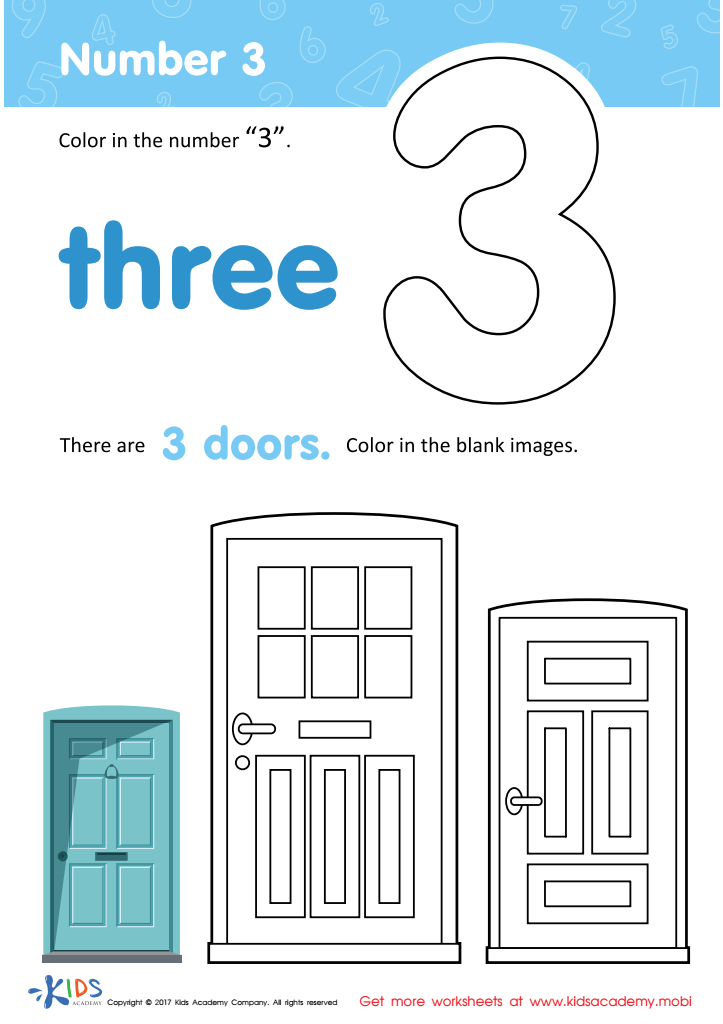
Number 3 Worksheet
 Assign to My Students

Counting on the City Skyline: Dot-to-Dot Worksheet








Parents and teachers should prioritize number recognition for children aged 7-9, as this foundational skill is essential for their overall mathematical development. Mastery of number recognition helps children understand numerical concepts, which is crucial for more complex math operations like addition, subtraction, multiplication, and division. Engaging with numbers boosts problem-solving skills and encourages logical thinking.
At this stage, children also begin to encounter real-world applications of numbers, such as money, time management, and measurements. Familiarity with numbers increases their confidence in handling everyday situations, such as budgeting their allowance or understanding time. Moreover, strong number recognition skills can foster a positive attitude towards math, decreasing anxiety around the subject and encouraging a growth mindset.
Socially, being proficient in number recognition enhances children’s participation in cooperative games and activities that involve counting or scoring, thus building teamwork skills. Also, supporting children in this developmental phase nurtures a collaborative relationship between parents and teachers, promoting an environment of learning and growth. Ultimately, attention to number recognition can lead to higher academic success, laying the groundwork for future learning experiences while fostering essential life skills.








