Filters

7 filtered results

Clear all filters
Favorites
With answer key
Interactive

7 filtered results

Difficulty Level

Grade


Boost your child's cognitive development with our Easy Math Worksheets designed specifically for ages 7-9! These engaging and interactive worksheets focus on enhancing critical thinking, problem-solving, and understanding of mathematical concepts. Tailored to strengthen cognitive skills, they provide a fun and effective way for children to practice addition, subtraction, multiplication, and more. Each worksheet is crafted to challenge young minds while promoting confidence and independence in math learning. Perfect for parents and educators alike, our resources are designed to align with core educational standards. Explore our collection and watch your child's mathematical abilities flourish! Embrace the joy of learning today!

Check out this FREE Trial Lesson on Math for age 7-9!

Addition with Arrays - Part 1

Favorites
With answer key
Interactive
  • 7-9
  • Cognitive Development
  • Math
  • Easy
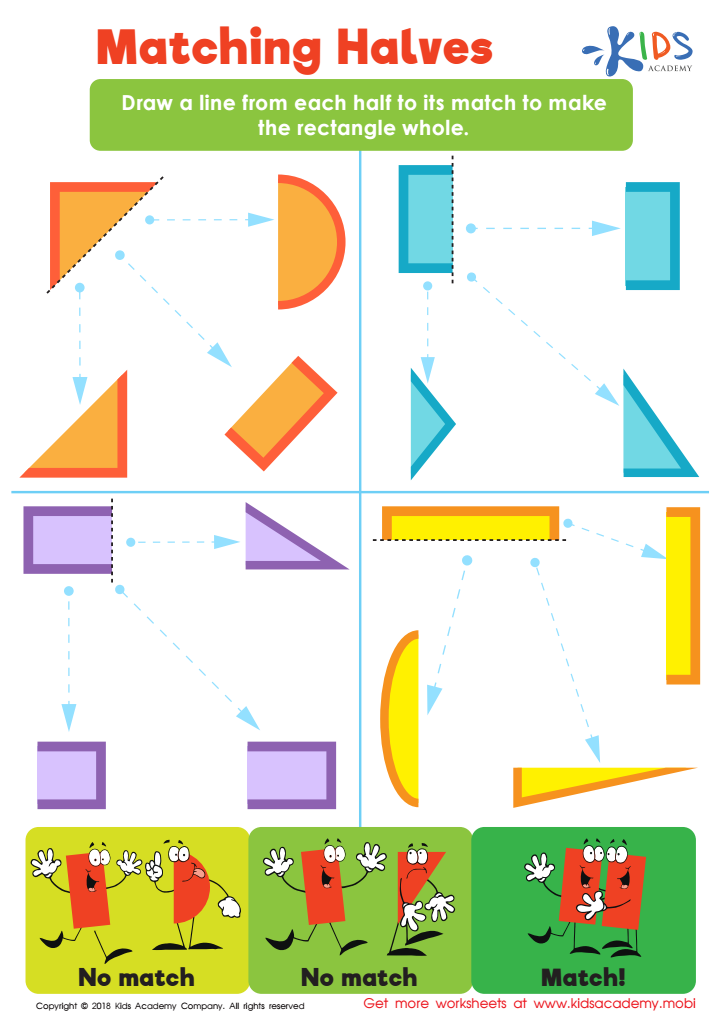
Matching Halves Worksheet

Matching Halves Worksheet

See how your child fares in matching two halves to form a complete rectangle. Provide them with four options, and ask them to draw a line connecting the two correct halves. Put their shape knowledge to the test with this simple worksheet!
Matching Halves Worksheet
Worksheet
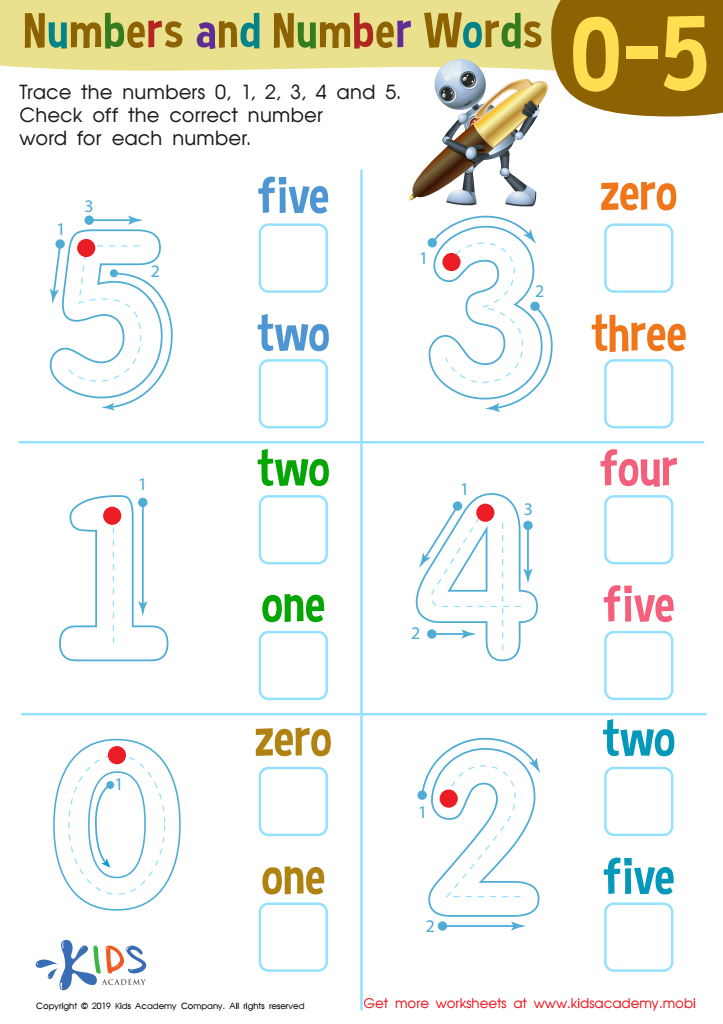
Numbers and Number Words Worksheet

Numbers and Number Words Worksheet

Preschoolers can practice counting and recognizing numbers with this worksheet. Students trace the numbers zero through five and check the boxes next to each number to show the correct number word. Ideal for young kids, this printable helps them learn early math and number words.
Numbers and Number Words Worksheet
Worksheet
Schoolbag Arrays Worksheet
Schoolbag Arrays Worksheet

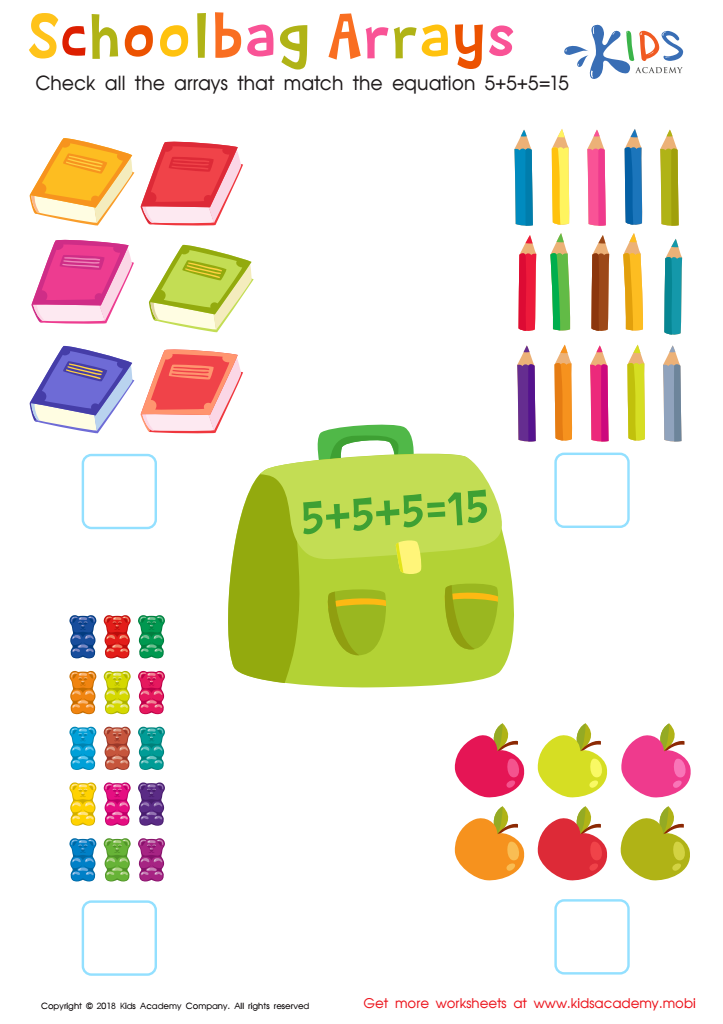
Help your child spot the correct arrays in this worksheet: having them count the items in each and check the boxes for the ones with 15 objects. Ask them to differentiate between rows and columns and explain which ones match the equation 5+5+5=15.
Schoolbag Arrays Worksheet
Worksheet
Counting in the Neighborhood Part1 Worksheet

Counting in the Neighborhood Part1 Worksheet

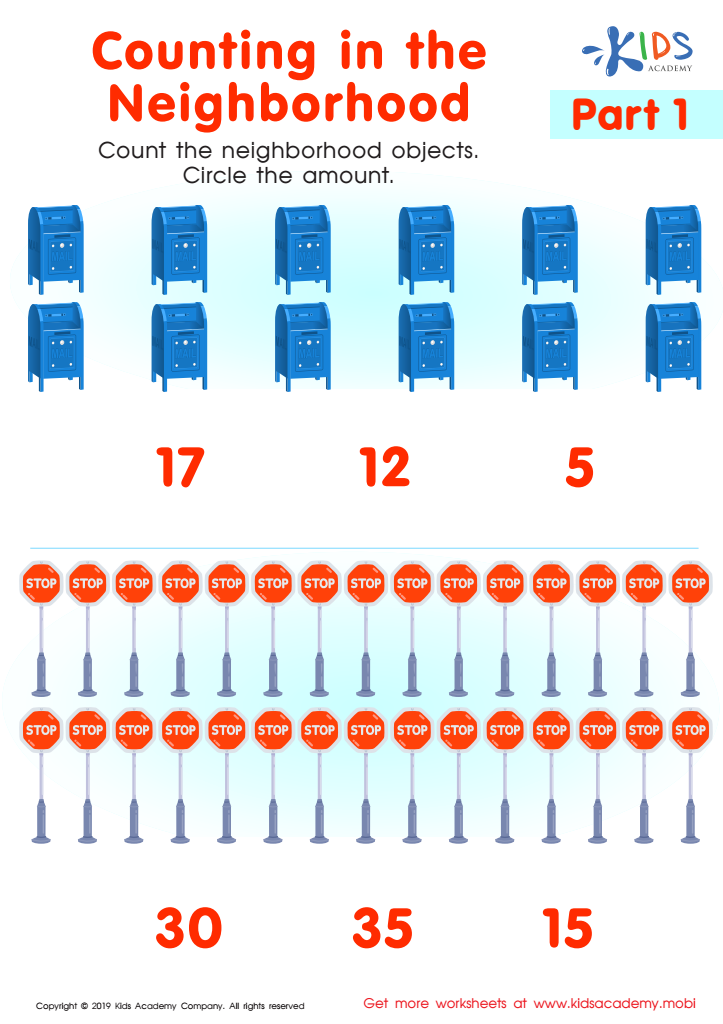
Counting using one-to-one representation is a great way to develop a child's number sense. Use objects, pictures and images to help counting beyond the fingers. This worksheet uses everyday objects to practice counting. It encourages children to find the correct number and count forward. Give it a try!
Counting in the Neighborhood Part1 Worksheet
Worksheet
Colorful Arrays Bingo Worksheet

Colorful Arrays Bingo Worksheet

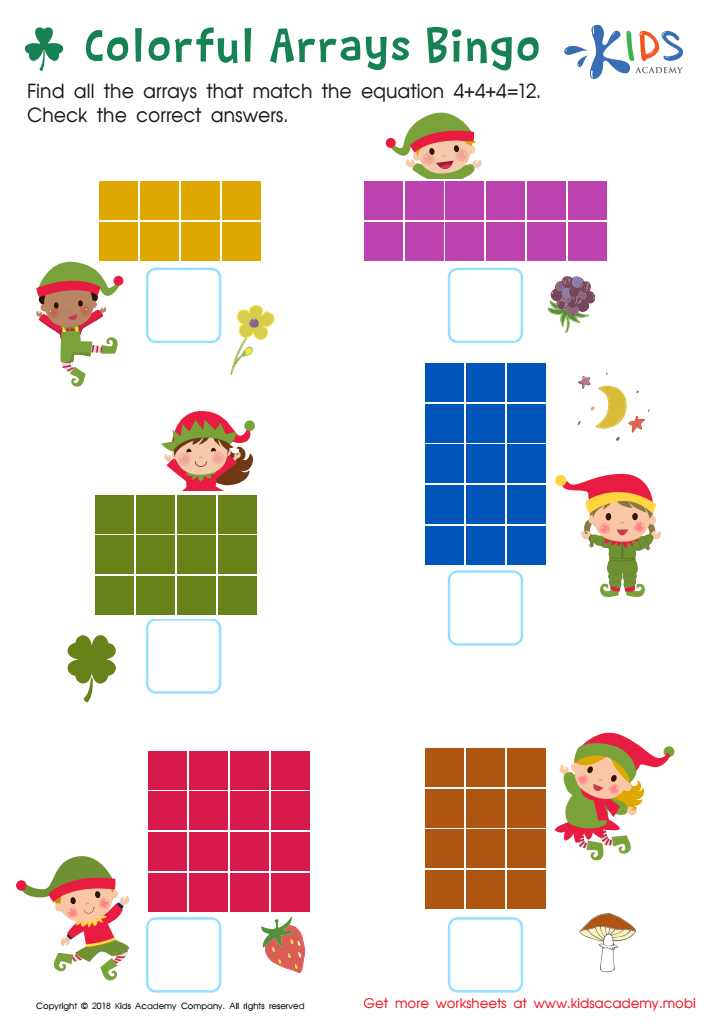
This worksheet stimulates thinking about arrays and how to represent them. Instruct students to count the 6 arrays and find which ones sum up to 12. Ask them to check the answers for accuracy.
Colorful Arrays Bingo Worksheet
Worksheet
Australian Animal Subtraction Worksheet

Australian Animal Subtraction Worksheet

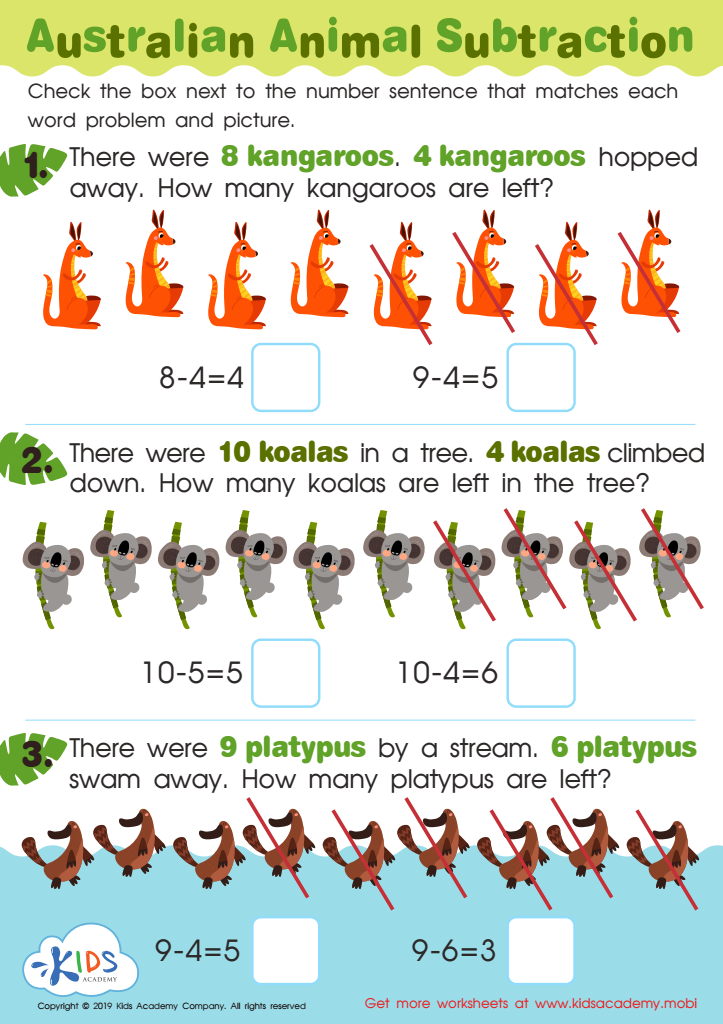
Test your child's wildlife knowledge. Ask them to name animals indigenous to Australia or other countries. Show them the animals in this worksheet and have them match each word problem and picture with the correct number sentence.
Australian Animal Subtraction Worksheet
Worksheet
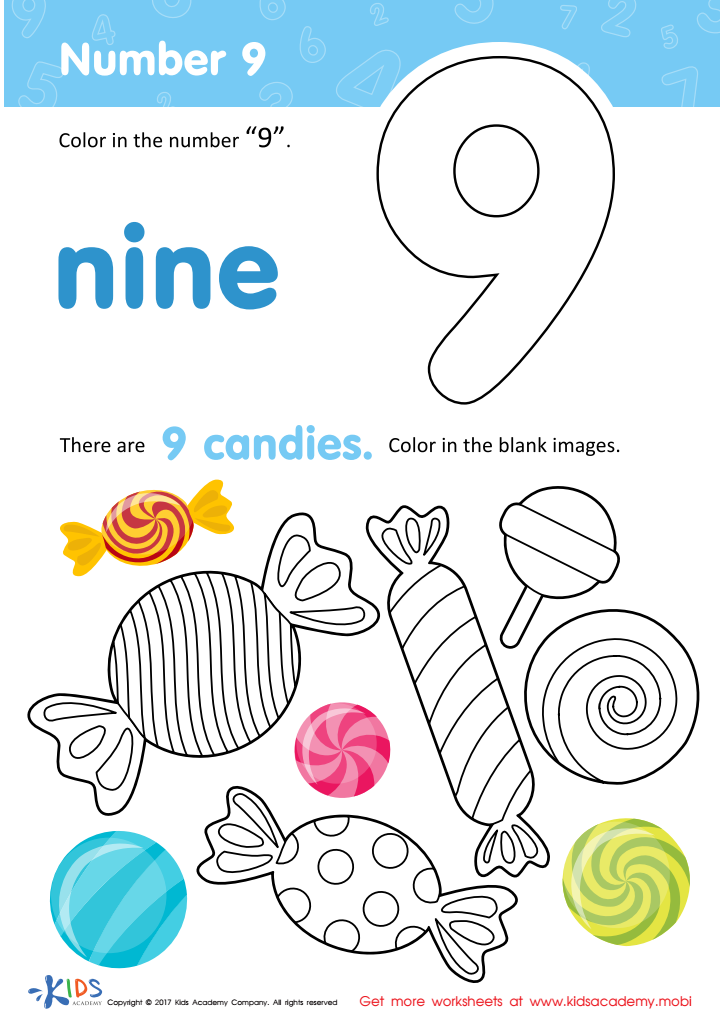
Coloring Page: Number 9

Number 9 Printable

Let your child hone their reading and counting skills with this fun coloring page! With the number 9 candies, your child can decorate their own favorite treats. Make learning a sweet experience and let their mouth water! Help them count and recognize the numbers while having fun.
Download (PDF)
Assign to My Students
Number 9 Printable
Worksheet


Cognitive development during ages 7-9 is critical as children transition from intuitive thinking to more logical reasoning. During this stage, children are forming the mental frameworks that will aid in understanding more complex mathematical concepts later on. Easy math concepts, such as addition, subtraction, patterns, and basic geometry, serve as the building blocks for advanced problem-solving skills. As parents and teachers, fostering this development is vital for several reasons.

First, a strong foundation in math boosts confidence and encourages positive attitudes toward learning. Children who feel competent in math are more likely to embrace challenges and persist in problem-solving tasks. Second, these basic skills enhance critical thinking abilities, which are invaluable throughout educational journeys and in everyday life.

Moreover, incorporating easy math activities into daily routines nurtures a child's curiosity and encourages active participation in learning. Engaging parents or caregivers in this process creates a supportive environment, making the experience enjoyable. By prioritizing cognitive development in early math education, parents and teachers not only help build essential skills but also instill a lifelong love and appreciation for learning, which can significantly influence a child's academic success in various domains.