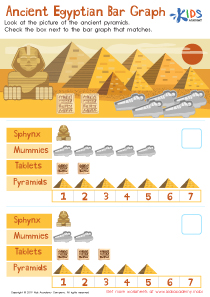
Comparing lengths Easy Math Worksheets for Ages 7-9
6 filtered results
-
From - To
Discover the joy of learning with our "Comparing Lengths Easy Math Worksheets" designed specifically for children ages 7-9. These engaging worksheets are perfect for nurturing young minds as they develop essential measurement skills. Students will explore the concept of comparing lengths through fun and interactive activities that foster critical thinking. Our clearly structured exercises help build confidence as kids practice measuring, comparing, and ordering lengths using both standard and non-standard units of measurement. Ideal for classroom use or home practice, these worksheets encourage hands-on learning and help kids become proficient in understanding and comparing lengths in a delightful way!
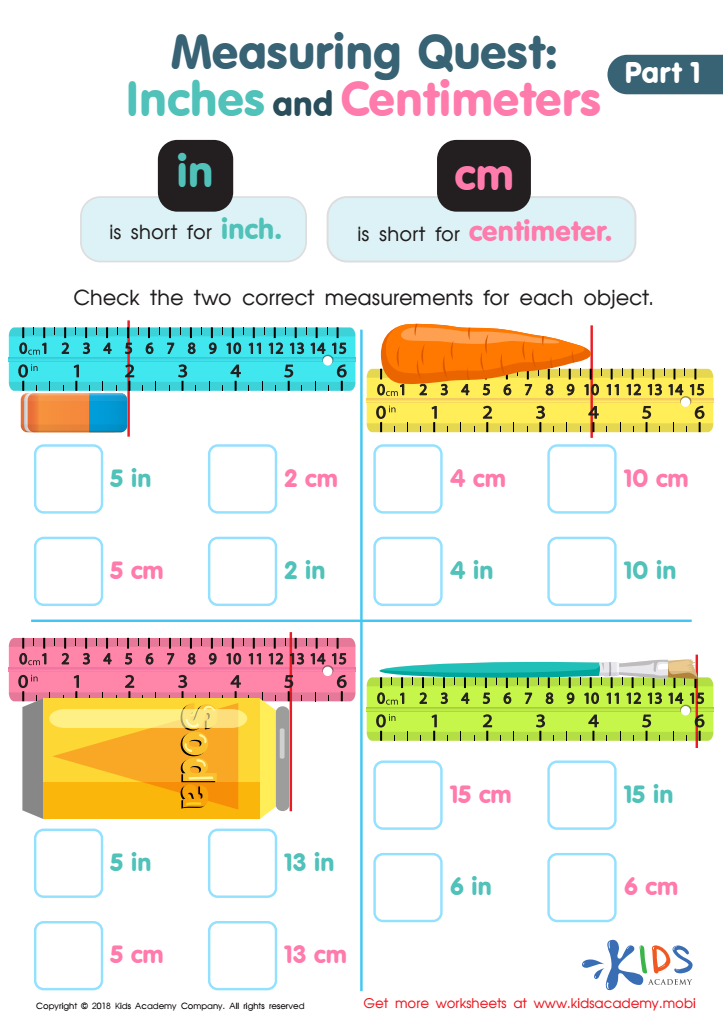
Measuring Quest: Inches and Centimeters Worksheet
 Assign to My Students
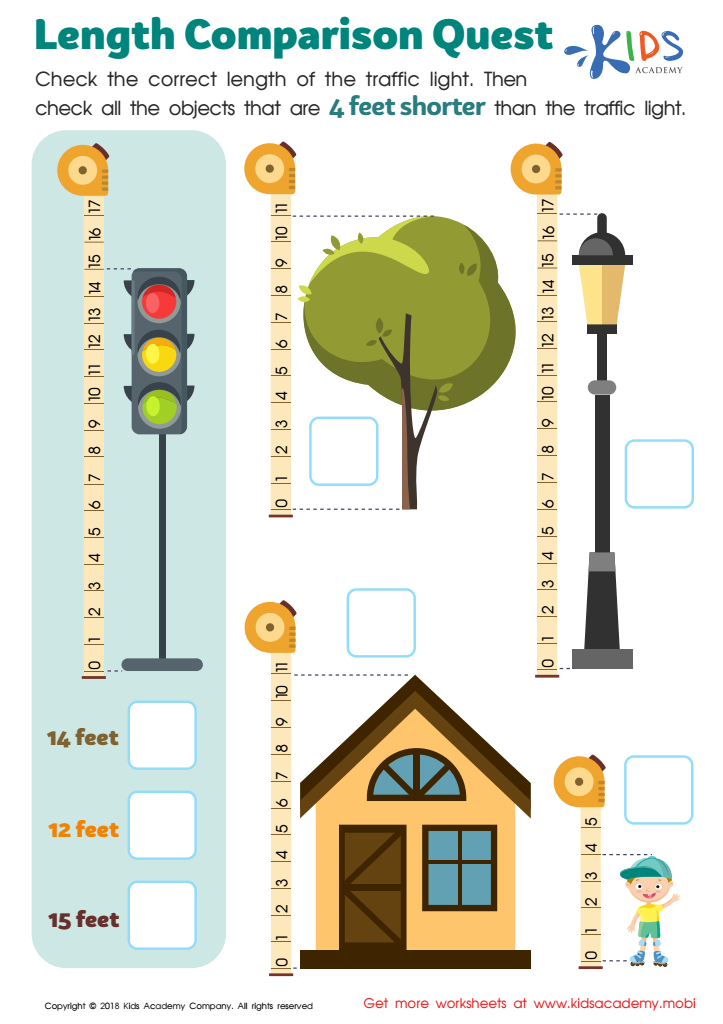
Length Comparison Quest Worksheet
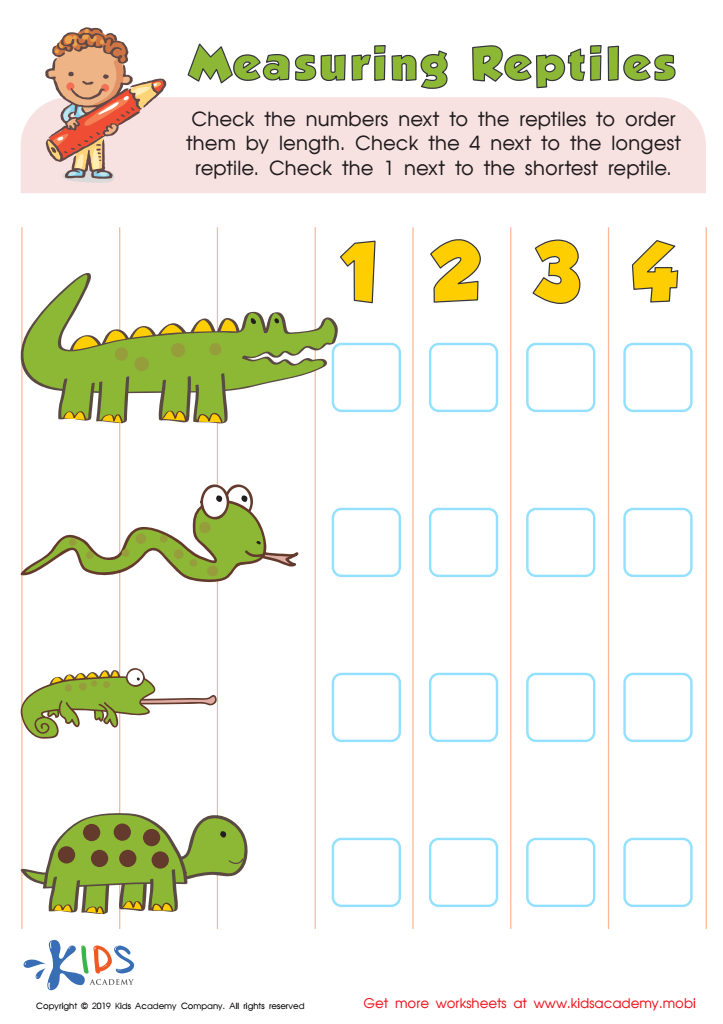
Measuring Reptiles Worksheet
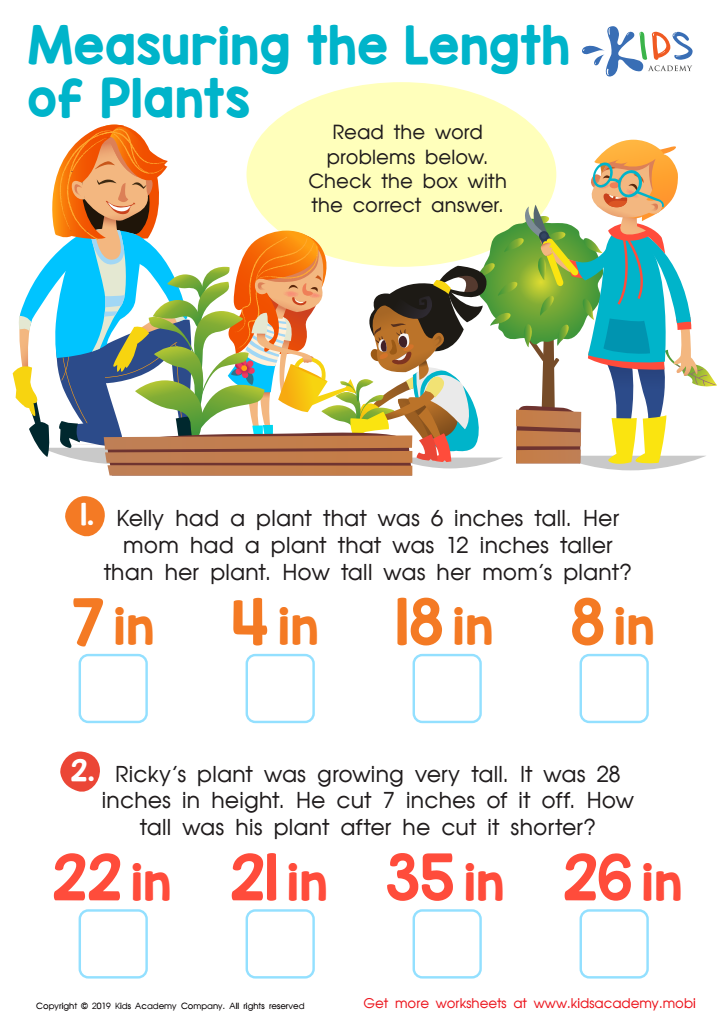
Measuring the Length of Plants Worksheet
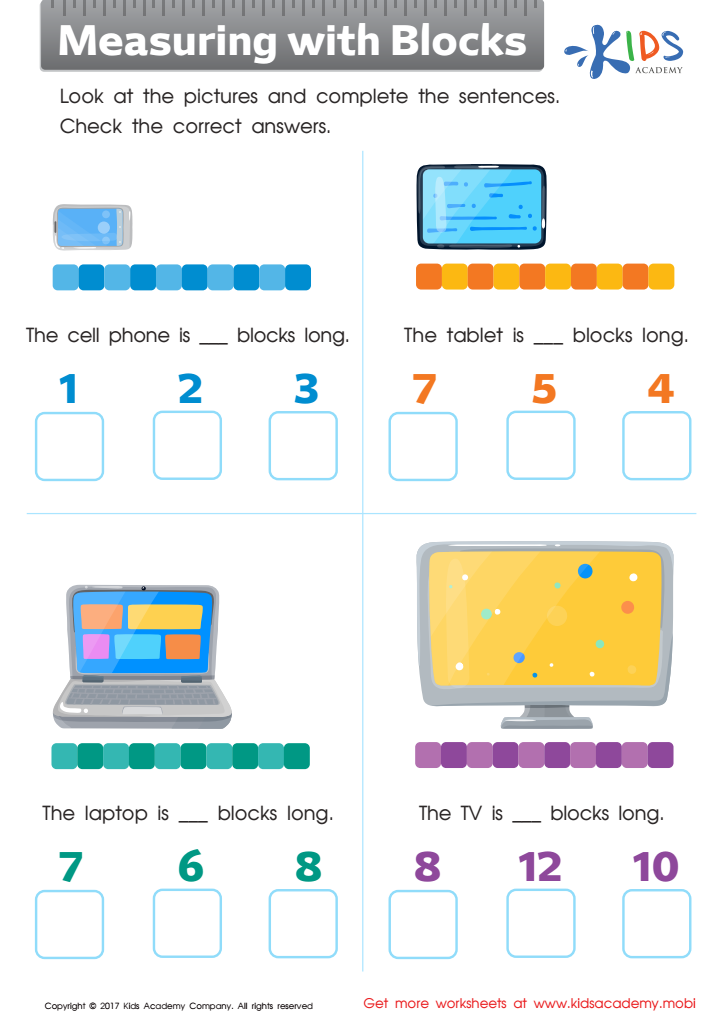
Measuring with Blocks Worksheet
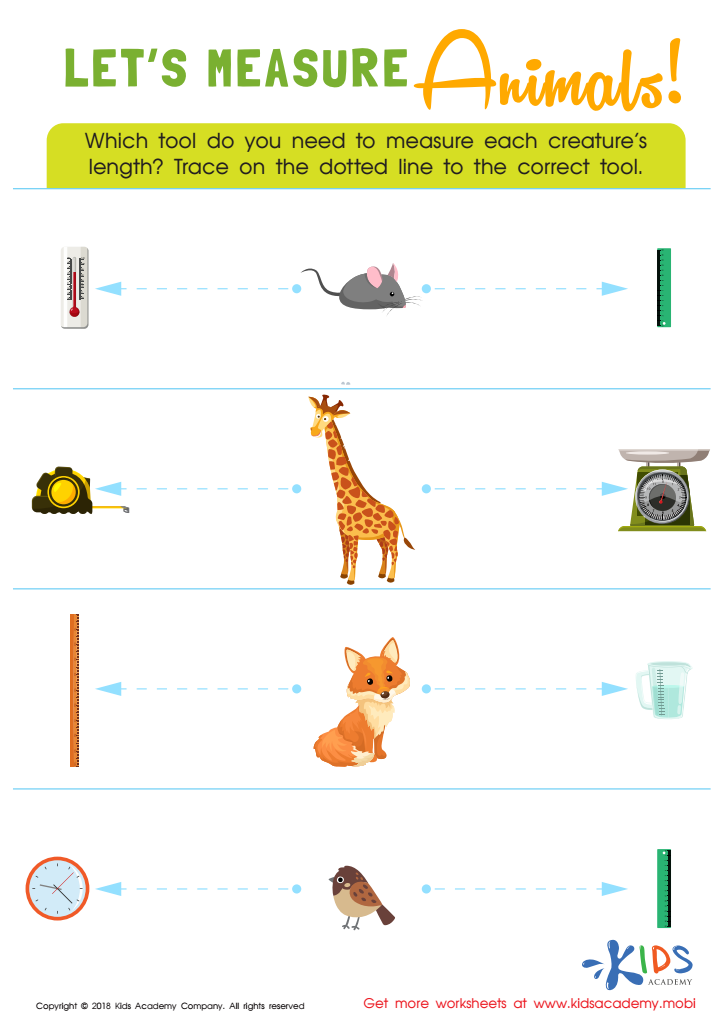
Let's Measure Animals! Worksheet


.jpg)



Comparing lengths is a fundamental math skill for children ages 7-9 that lays the groundwork for more advanced mathematical concepts and everyday problem-solving. Understanding and applying the concept of length comparison helps children develop critical thinking and logical reasoning skills. When students learn to compare lengths, they begin to engage in measurable comparisons, fostering a deeper comprehension of measurement and spatial awareness.
For parents and teachers, nurturing this skill means providing students with a benchmark for understanding their environment. It promotes practical skills where children can determine which objects are longer or shorter, assisting them in tasks such as organizing their belongings, planning their tasks efficiently, and even cooking. Furthermore, the ability to compare lengths is crucial for realistic applications, such as gauging distances during play or measure lengths in activities like arts and crafts.
Incorporating these lessons into home and school settings makes learning fun—through games or interactive activities. It encourages teamwork, communication, and helps children build confidence in their math abilities. By emphasizing the importance of comparing lengths, parents and teachers prepare children for future learning while making everyday experiences more meaningful. Ultimately, fostering this foundational skill smoothens their educational journey and enhances their everyday problem-solving capabilities.