Counting skills Easy Measurement Worksheets for Ages 7-9
5 filtered results
-
From - To
Boost your child's math proficiency with our Counting Skills Easy Measurement Worksheets designed for ages 7-9. These engaging and educational worksheets provide students with fun and interactive activities that sharpen their counting and measuring abilities. Each worksheet aligns with age-appropriate learning standards, ensuring your child practices addition and subtraction, understands units of measure, and enhances problem-solving skills. With vibrant visuals and clear instructions, these printable resources are perfect for classroom use, homework assignments, or extra practice at home. Help your child build a solid mathematical foundation while having fun with these expertly crafted worksheets!
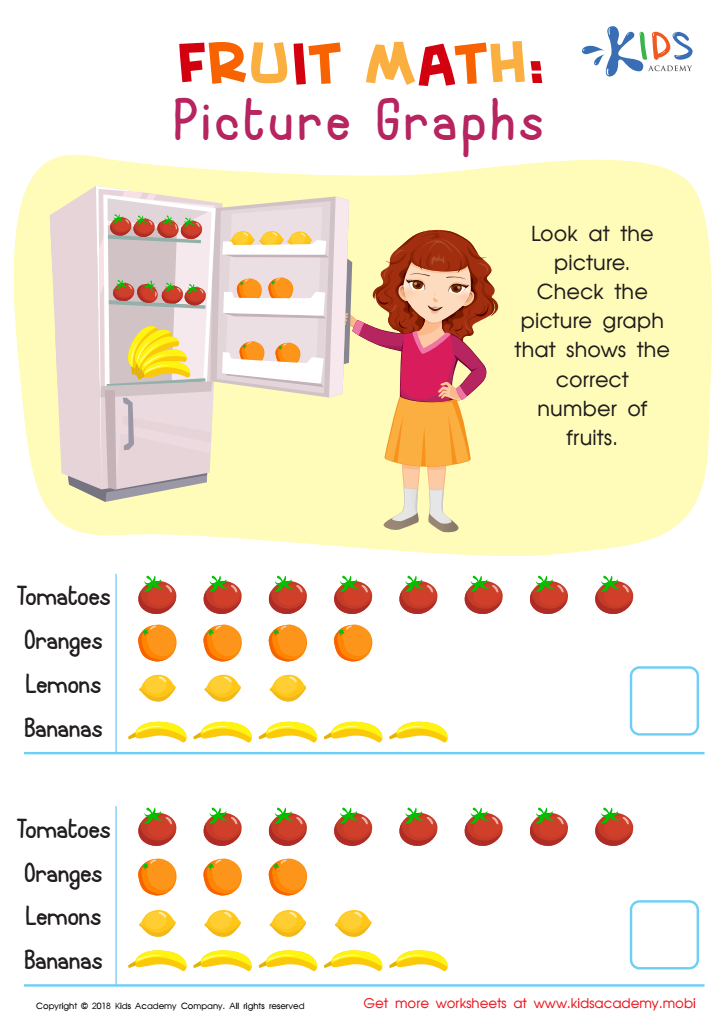
Fruit Math: Picture Graphs Worksheet
 Assign to My Students
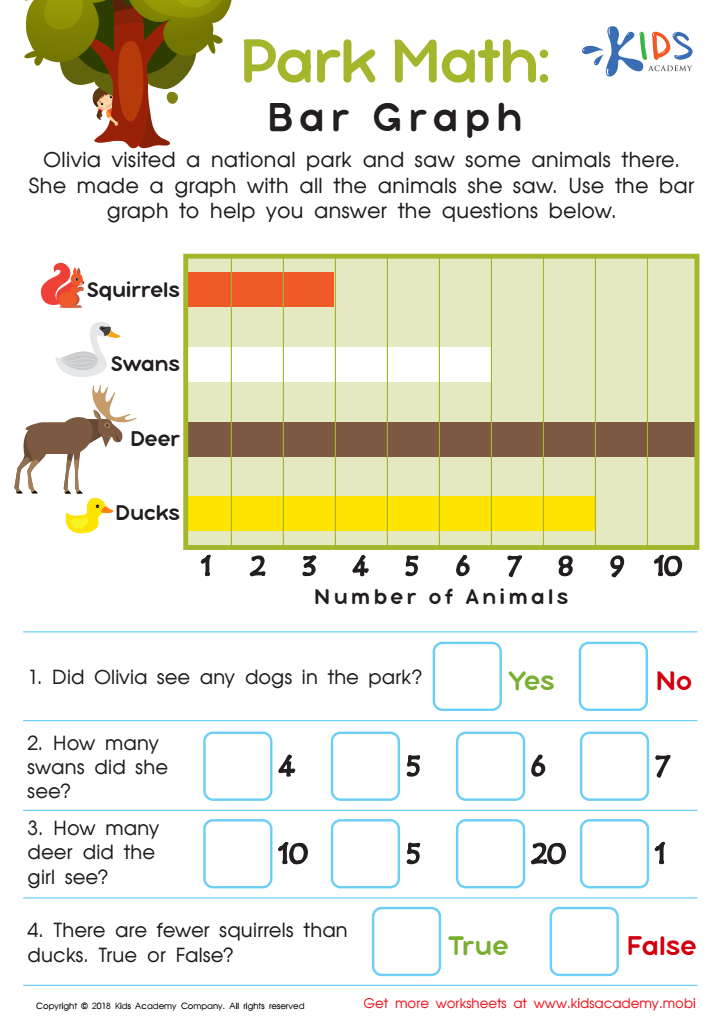
Park Math: Bar Graph Worksheet
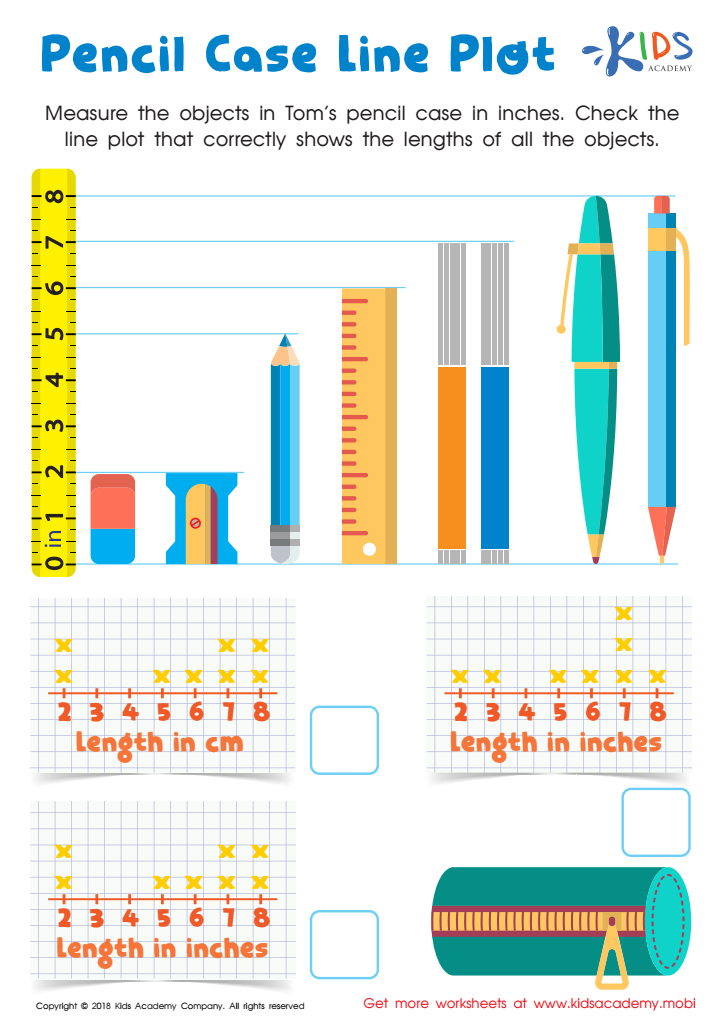
Pencil Case Line Plot Worksheet
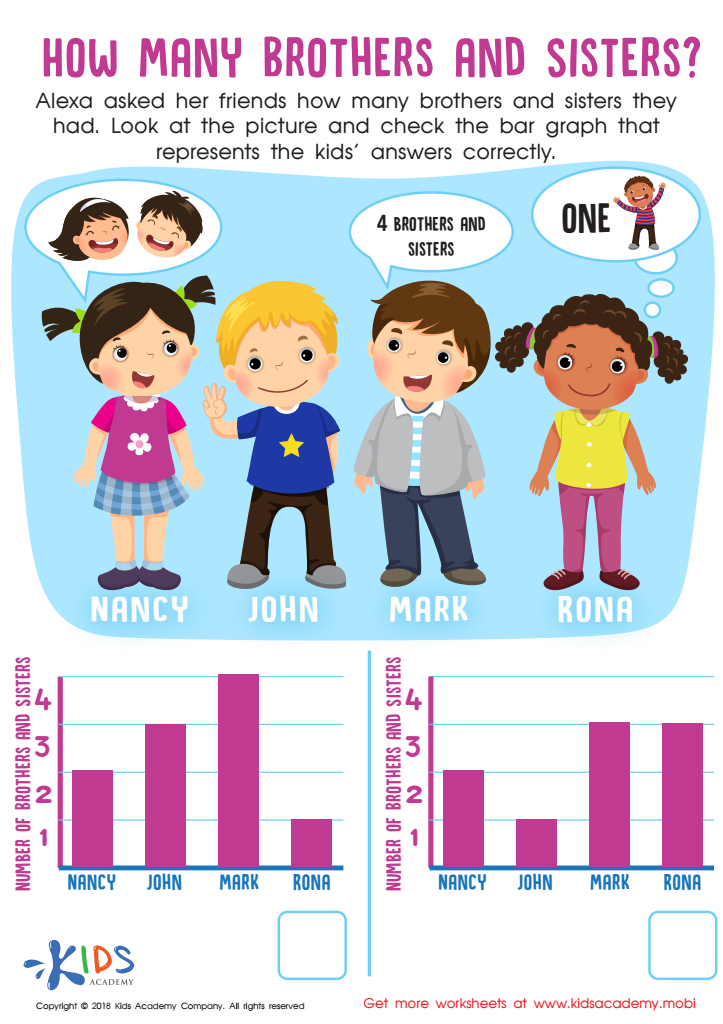
How Many Brothers and Sisters? Worksheet
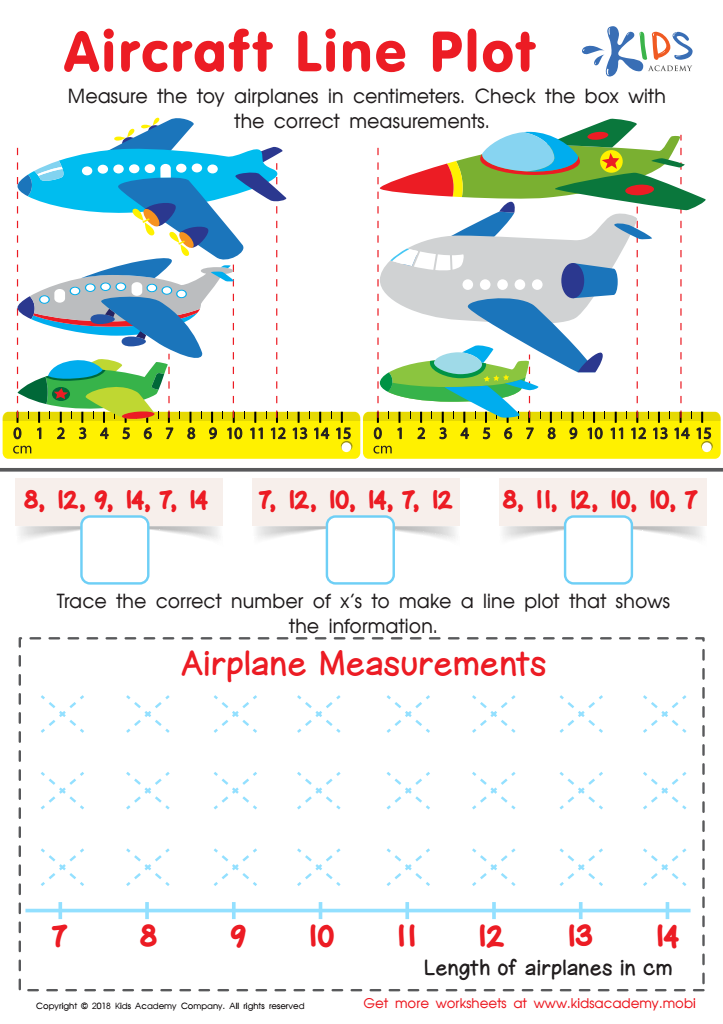
Aircraft Line Plot Worksheet








Counting skills and early measurement concepts form the foundational building blocks of a child's mathematical understanding. For children aged 7-9, mastering these skills is crucial as they transition from simple mathematics to more complex topics like multiplication, division, fractions, and geometry.
First, counting skills enhance a child's ability to understand numbers, patterns, and sequences, which are essential for problem-solving. It also supports the development of place value understanding, enabling children to grasp more challenging math concepts with ease.
Early measurement concepts, such as length, weight, and volume, are equally important. They provide practical knowledge that children use in real-life situations, like cooking, shopping, and even playing sports. Learning measurement helps develop spatial awareness and the ability to make comparisons and estimations.
Furthermore, these skills promote cognitive development by fostering logical thinking and reasoning abilities. Hands-on activities with rulers, scales, and measuring cups make learning interactive and fun, thereby increasing engagement and retention of information.
Parents and teachers who prioritize these skills give children a strong mathematical foundation that encourages a positive attitude toward learning and reduces future anxiety about math-related tasks. Ultimately, this careful nurturing of early math skills fosters confidence, curiosity, and a lifelong love of learning.








