Understanding life cycles Easy Reading Comprehension Worksheets for Ages 7-9
3 filtered results
-
From - To
Explore our "Understanding Life Cycles" Easy Reading Comprehension Worksheets, designed specifically for children aged 7-9! These engaging activities help young learners grasp the fascinating concepts of different life cycles, from plants to animals. Each worksheet combines captivating stories and illustrations to reinforce critical reading skills while promoting scientific understanding. Perfect for classroom use or at-home learning, these worksheets encourage curiosity about the natural world and enhance comprehension through guided questions. Ideal for developing literacy and science skills simultaneously, our resources make learning enjoyable and informative. Start your child’s journey of discovery today and watch their knowledge grow!
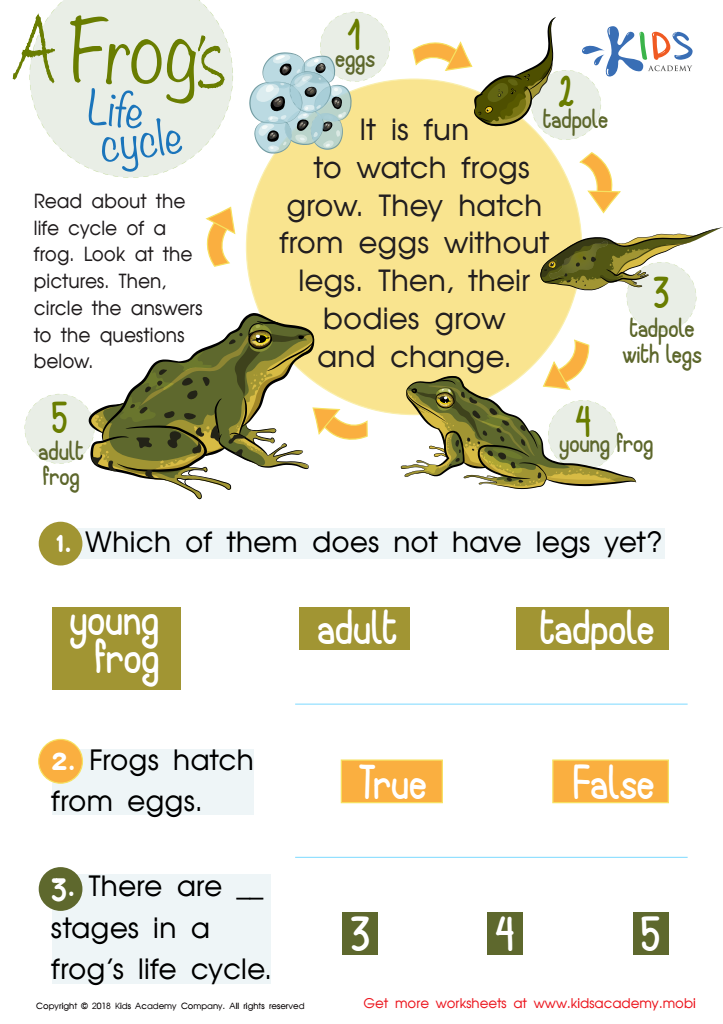
A Frog’s Life Cycle Worksheet
 Assign to My Students
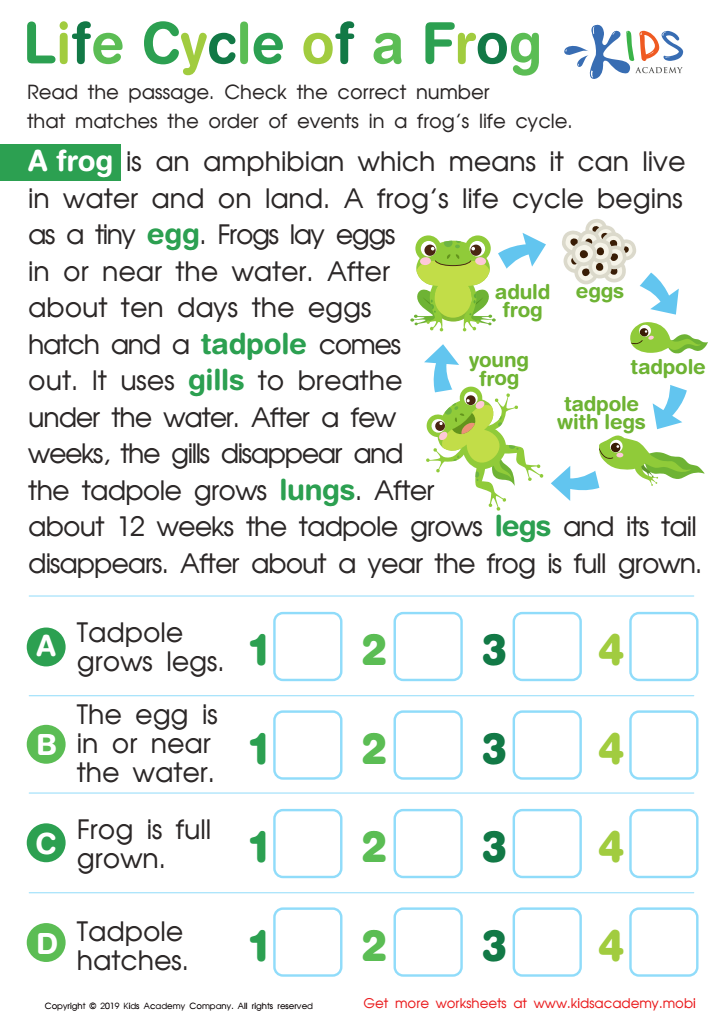
Life Cycle of a Frog Worksheet
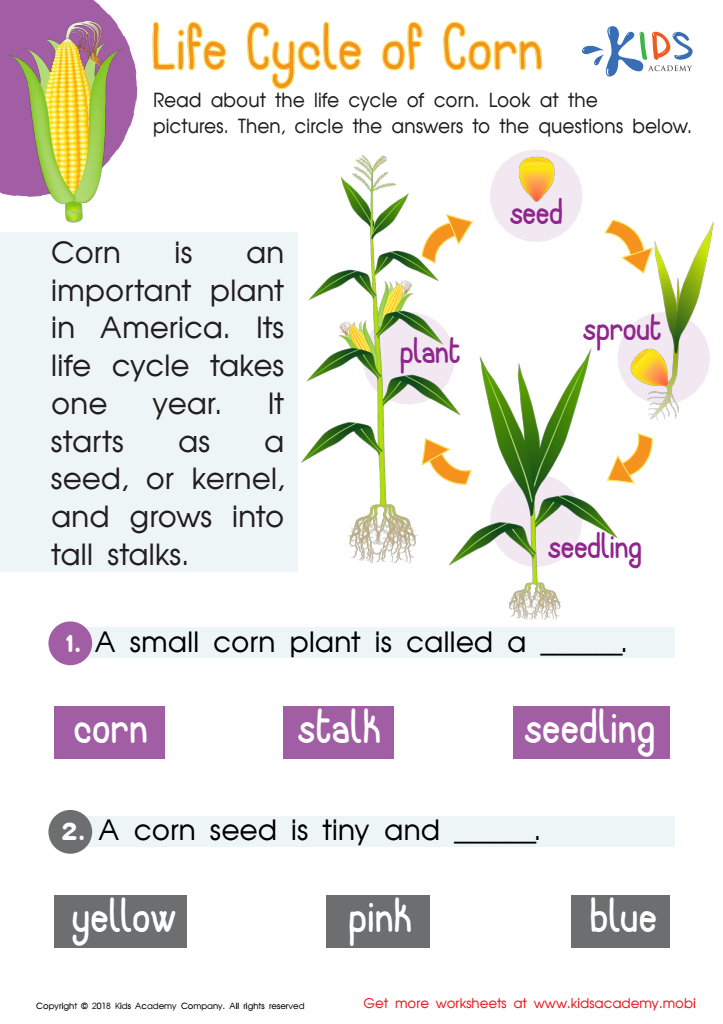
Life Cycle of Corn Worksheet



.jpg)



Understanding life cycles is crucial for children aged 7-9 as it fosters a deeper appreciation for nature and the interconnectedness of all living things. For parents and teachers, teaching this concept enhances critical thinking and observation skills. When children learn about the life cycles of plants, animals, and even humans, they begin to understand growth, change, and the importance of each stage in the process.
This knowledge can spark curiosity and lead to discussions about ecosystems, biodiversity, and sustainability, nurturing an early interest in science. Engaging with easy reading comprehension materials makes learning fun and accessible, reinforcing vocabulary and comprehension skills essential for overall literacy development.
Parents and teachers can use life cycles to instill lessons on responsibility and care, as children witness the nurturing of living things from birth to maturity. It empowers children to think about the world around them and their place within it. Furthermore, discussing life cycles can introduce topics like conservation and the impact of human activity on nature, encouraging young minds to think critically about the future. Ultimately, understanding life cycles provides a foundation for informed, responsible, and caring individuals.