Critical Thinking Easy Reading Fiction Worksheets for Ages 7-9
4 filtered results
-
From - To
Our "Critical Thinking Easy Reading Fiction Worksheets for Ages 7-9" are designed to inspire young minds through engaging stories that promote analytical thinking skills. These captivating worksheets help children aged 7-9 to not only enjoy reading but also to think deeply about the texts. Through fun and interactive exercises, kids learn to draw inferences, make predictions, and understand character motivations, fostering critical thinking skills essential for their academic growth. Perfect for classroom or at-home learning, these worksheets build a strong foundation in reading comprehension and critical analysis for your growing reader. Explore now for better thinkers tomorrow!
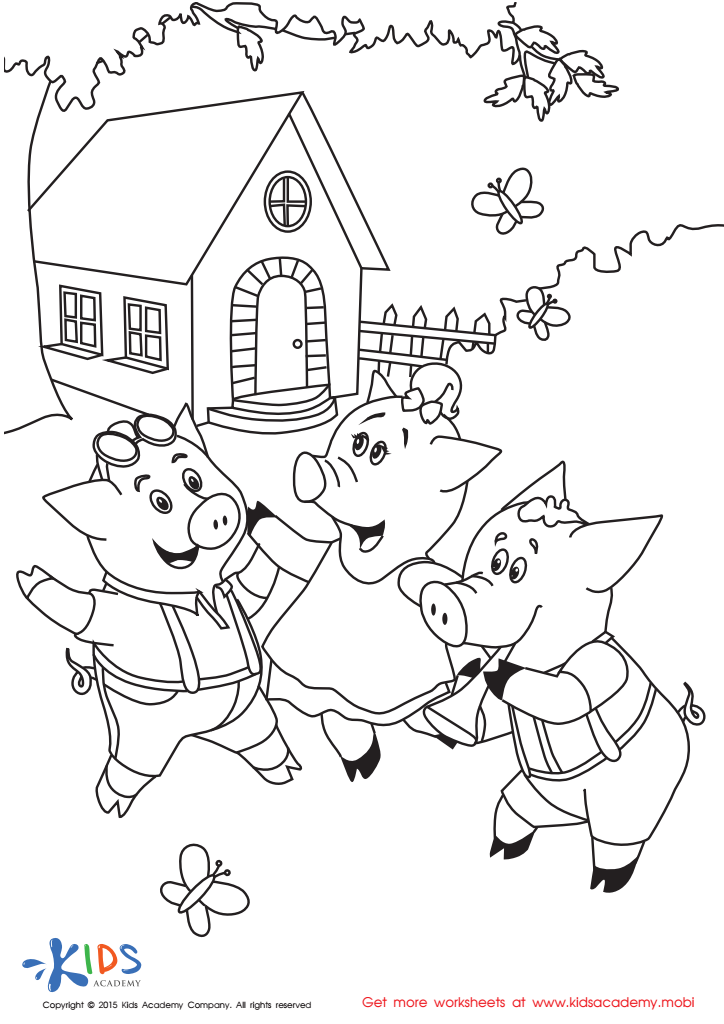
Folktales Printable PDF Worksheet: The 3 Little Pigs
 Assign to My Students
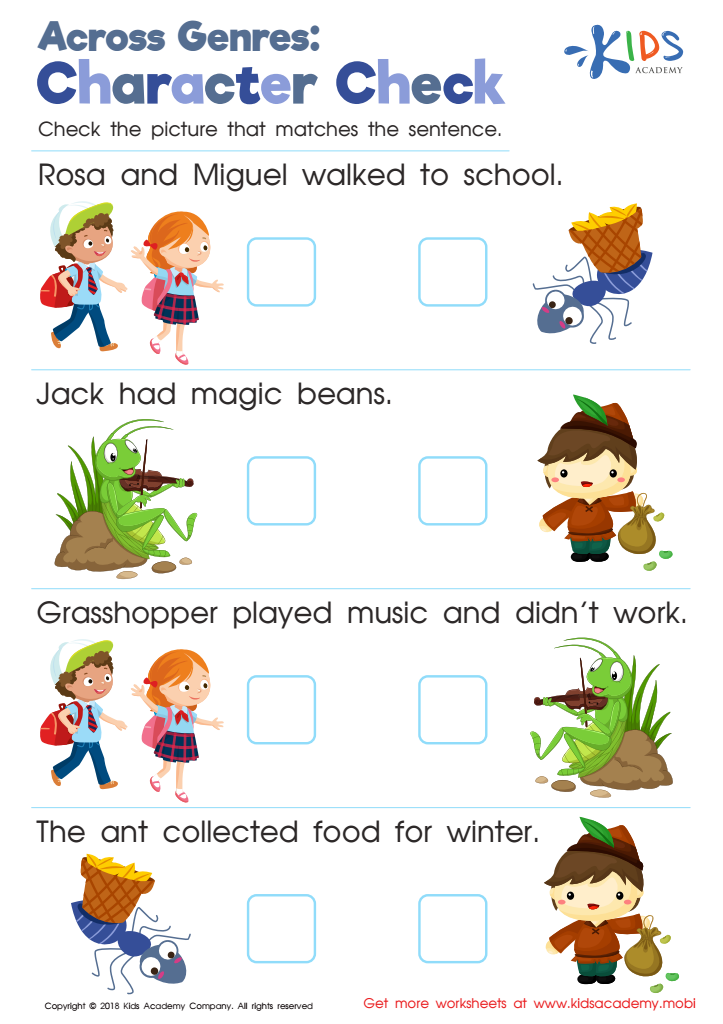
Across Genres: Character Check Worksheet
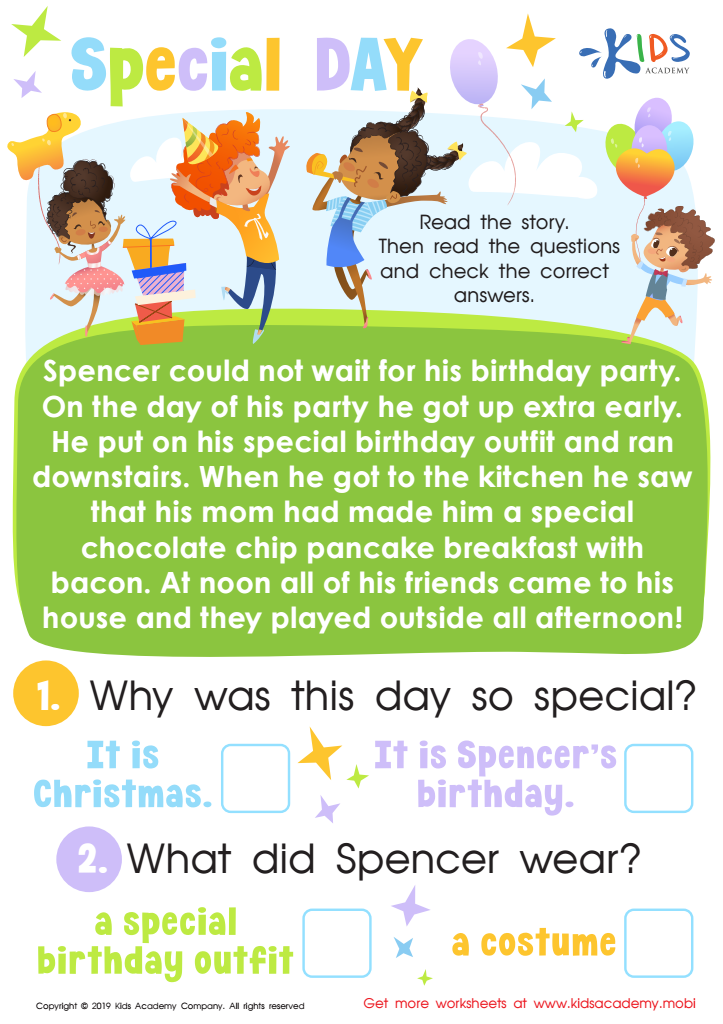
Special Day Worksheet
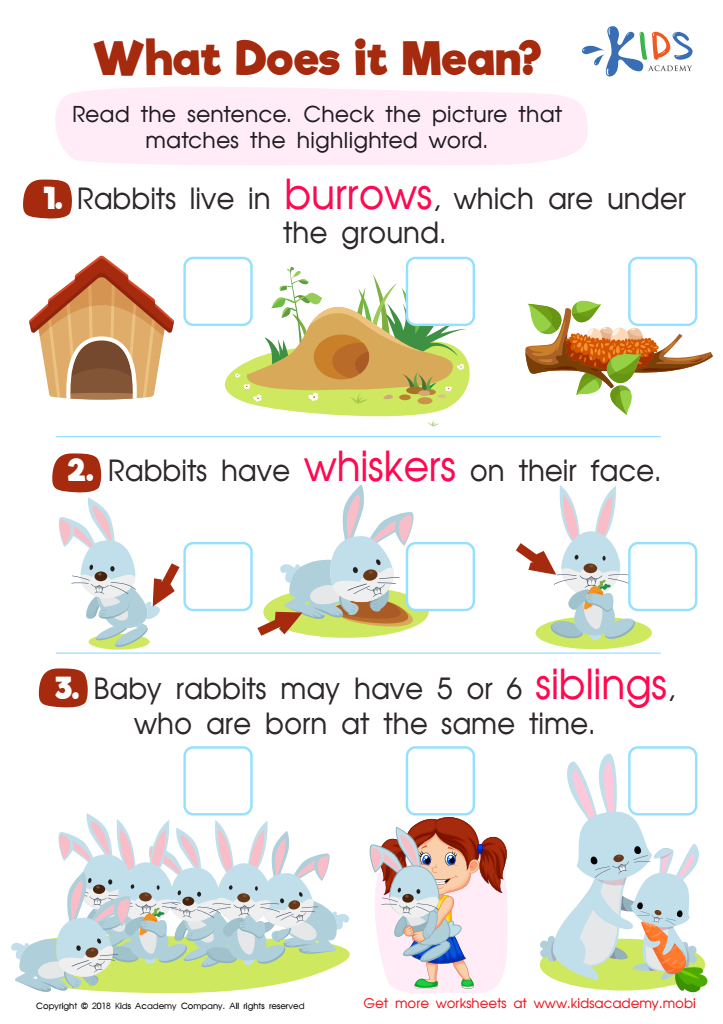
What Does It Mean? Worksheet


.jpg)




Parents and teachers should care about including Critical Thinking Easy Reading Fiction for ages 7-9 in their educational toolkit because it helps young readers develop essential cognitive and analytical skills early on. At this impressionable age, children are curious, imaginative, and beginning to understand more complex concepts, making it the perfect time to nurture critical thinking.
-
Cognitive Development: Critical thinking stories typically present scenarios that require children to analyze, infer, and draw conclusions. This not only strengthens their reasoning skills but also enhances their ability to solve problems, which is vital for academic success across subjects.
-
Reading Comprehension: Easy reading fiction tailored for this age group helps children improve their reading skills while making the experience enjoyable and engaging. This dual benefit makes it easier for kids to grasp various narrative elements like plot, character development, and themes.
-
Empathy and Perspective-Taking: Through fiction, children explore diverse perspectives and moral dilemmas, fostering empathy and social understanding. This is crucial for developing emotional intelligence and healthy interpersonal relationships.
-
Lifelong Learning: Encouraging critical thinking from a young age sets the foundation for a lifetime of question-driven learning. Children who are taught to think critically are more likely to become inquisitive, independent learners who can adapt to new information and think creatively.
Integrating critical thinking in children’s fiction helps build well-rounded, thoughtful individuals equipped with skills that go far beyond the classroom.