Critical Thinking Easy Science Worksheets for Ages 7-9
4 filtered results
Difficulty Level
Grade
Age
-
From - To
Subject
Activity
Standards
Unlock your child's potential with our "Critical Thinking Easy Science Worksheets for Ages 7-9." These engaging worksheets are designed to enhance critical thinking skills through interactive and fun activities. Perfect for young learners, each worksheet encourages exploration and inquiry, helping children develop essential problem-solving abilities. Topics covered range from basic scientific concepts to real-world applications, making learning enjoyable and effective. Parents and educators will find these resources invaluable for promoting analytical thinking in a playful, age-appropriate manner. Empower your child to think creatively and critically while enjoying science! Discover the joy of learning with our thoughtfully designed worksheets today.
Favorites
With answer key
Interactive
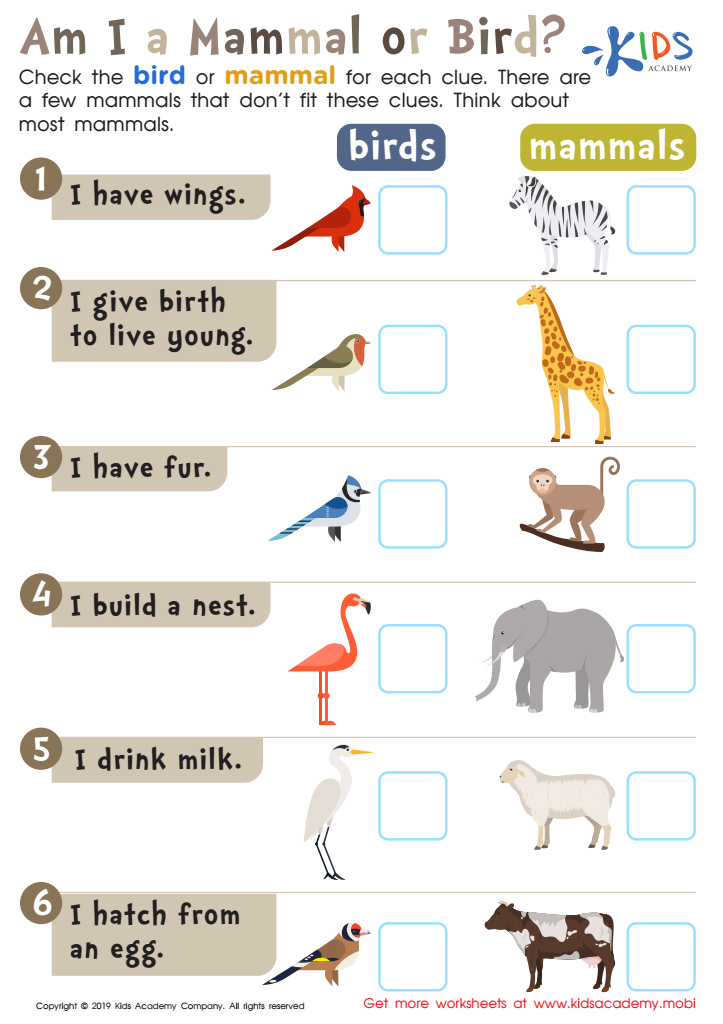
Am I a Mammal or Bird? Worksheet
We categorize animals into groups such as mammals, birds, reptiles, etc. This worksheet helps kids understand the difference between birds and mammals. Read through the clues and think about each one. Then decide if it describes a bird or mammal, check the box and complete!
 Assign to My Students
Am I a Mammal or Bird? Worksheet
Worksheet
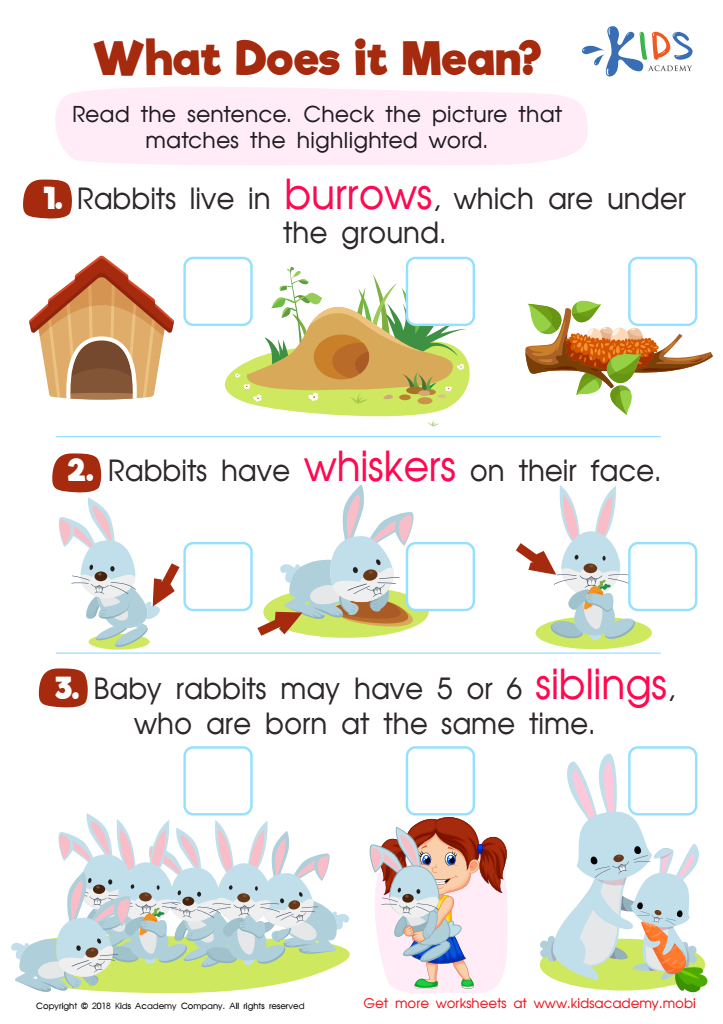
What Does It Mean? Worksheet
Teach your child to use context clues with this engaging Kids Academy worksheet. Read the sentences and find the pink-highlighted word. Use the other words in the sentence to figure out the meaning, then check the box next to the picture that represents it.
What Does It Mean? Worksheet
Worksheet
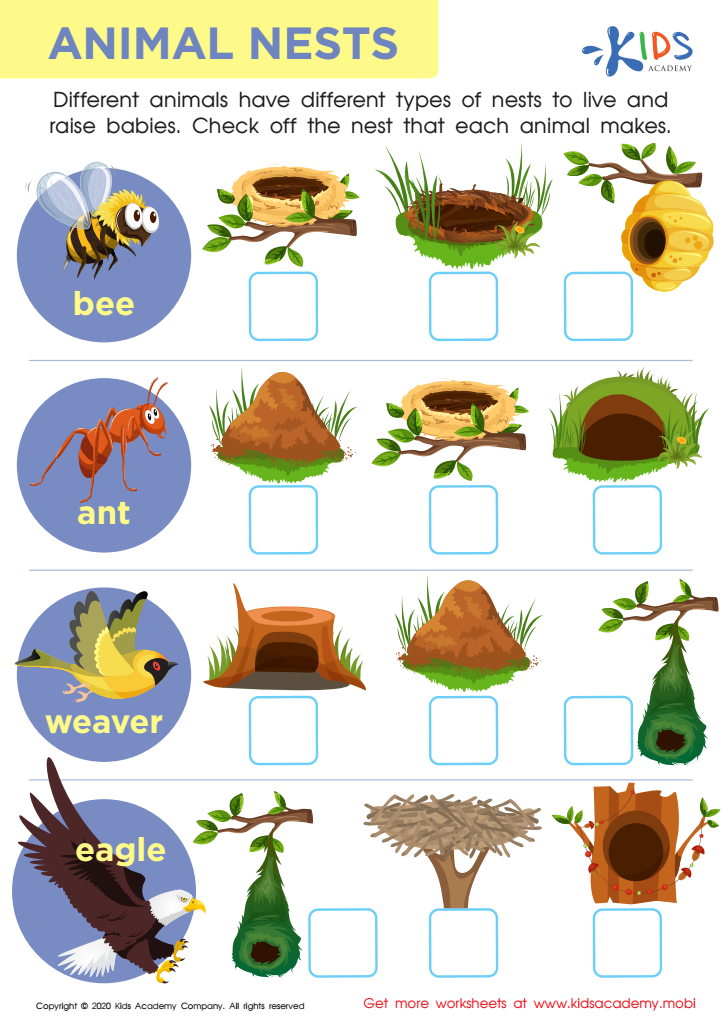
Animal Nests Worksheet
Animals need homes to sleep and stay safe. Look at the animal on the left and examine the nests and hives to the right. Check off the correct one for each animal to complete the worksheet! From birds to bees, it's a great way to show different types of homes animals make!
Animal Nests Worksheet
Worksheet
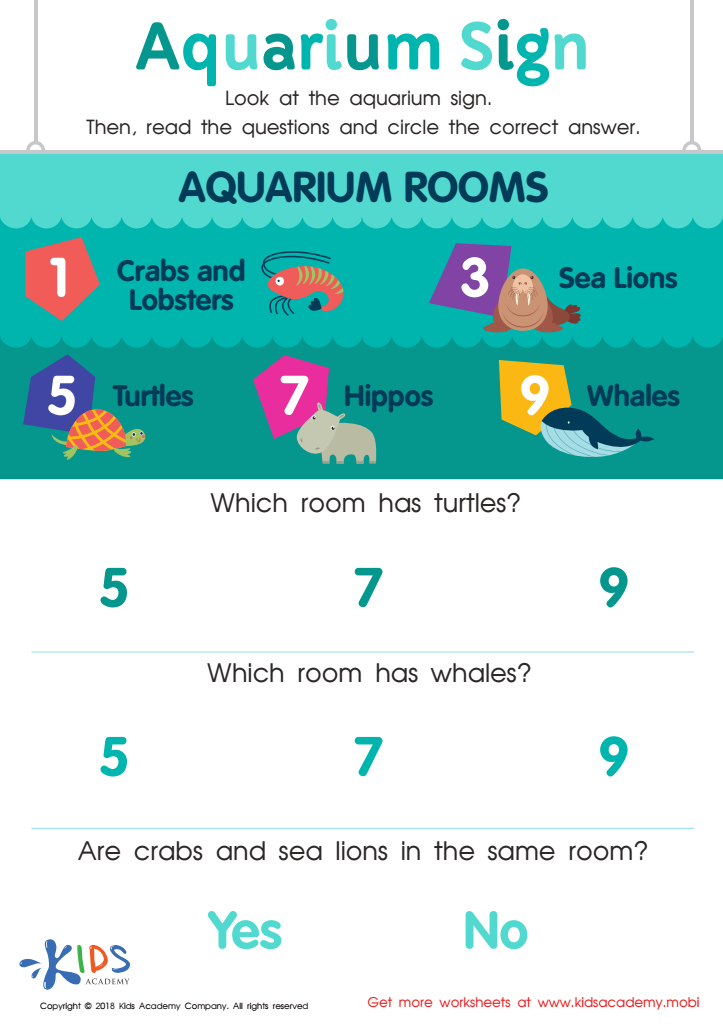
Assessment: Aquarium Sign Worksheet
Take your kids to an aquarium and marvel at the sea creatures! Help them identify the animals they see, and ask them which one is their favorite. Look at the aquarium sign and point to each creature. Ask your kids the questions and help them circle the right answer.
Assessment: Aquarium Sign Worksheet
Worksheet
Join Kids Academy for Free
Who is primarily going to use this learning content?








Critical thinking is a crucial skill that empowers children to analyze, evaluate, and synthesize information effectively. For students aged 7-9, incorporating critical thinking exercises into science education fosters curiosity and encourages a deeper understanding of the world around them. Parents and teachers should prioritize this approach for several reasons.
Firstly, critical thinking helps children develop problem-solving skills. It equips them to approach scientific inquiries methodically, form hypotheses, conduct experiments, and draw conclusions based on evidence. This process not only enhances their engagement with science but also nurtures persistence and resilience.
Secondly, teaching critical thinking in science cultivates creativity and innovation. Children learn to ask open-ended questions, brainstorm multiple solutions, and think outside the box. These skills are vital as they prepare for future academic challenges and lifelong learning.
Lastly, a strong foundation in critical thinking prepares children for informed citizenship. It encourages them to evaluate information critically, helping them navigate the complexities of modern life, from understanding science news to making decisions about health and the environment.
In summary, fostering critical thinking in science for young learners is essential. It equips them with vital skills, boosts their engagement, nurtures creativity, and helps them become informed, responsible individuals.