Fraction comparison Easy Worksheets for Ages 8-9
3 filtered results
-
From - To
Discover fun and engaging Fraction Comparison Easy Worksheets for ages 8-9 at Kids Academy. These worksheets offer a simple and interactive way for children to grasp the basics of comparing fractions. Designed to enhance learning skills, they provide practical exercises that make understanding fractions fun and effective. Perfect for classroom or home learning, each worksheet builds foundational math skills through visual aids and straightforward problems. Ideal for young learners, these printables boost confidence and sharpen their ability to compare fractions, fostering strong mathematical comprehension. Don’t miss out on this free resource to make math exciting and accessible for your child!
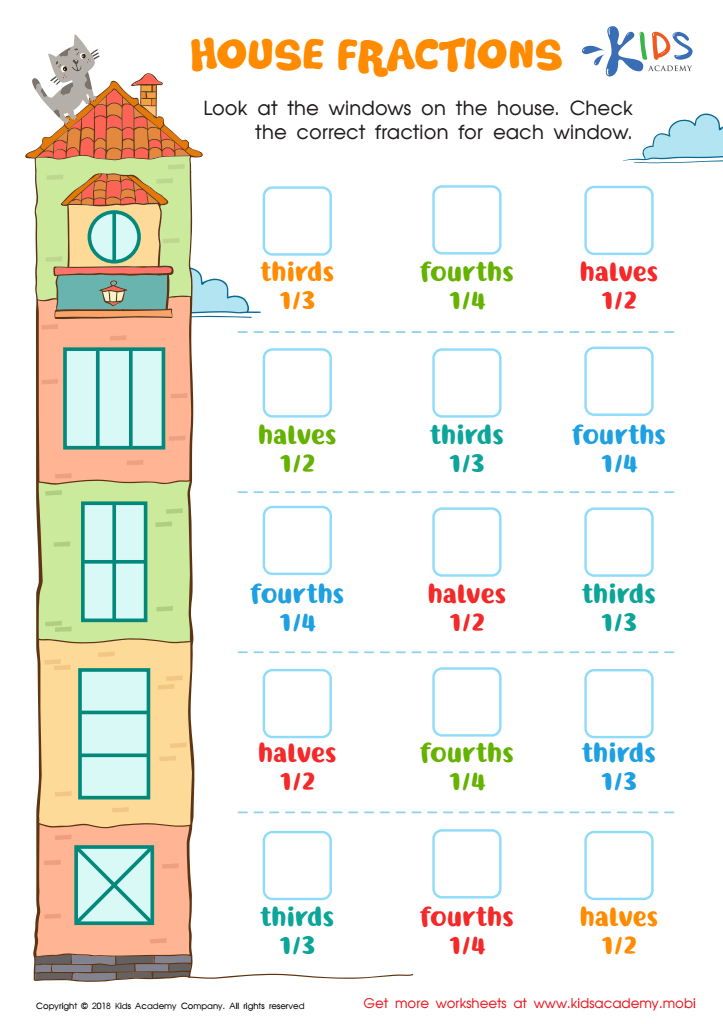
House Fractions Worksheet
 Assign to My Students
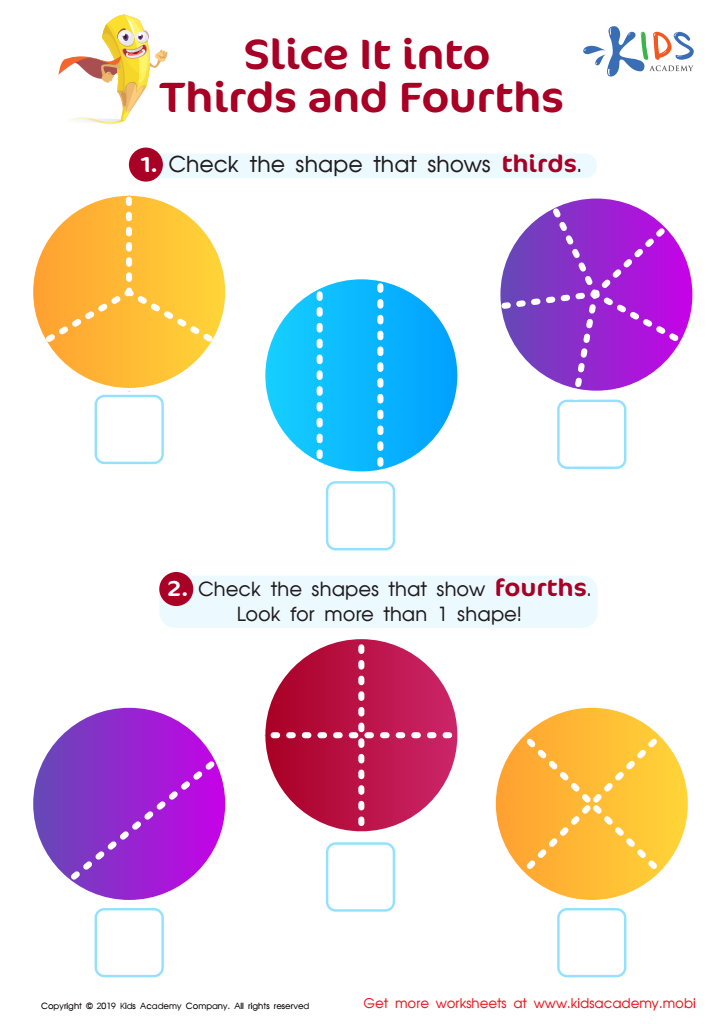
Slice in Thirds Fourths Worksheet
Homework Blues Worksheet






.jpg)
Parents and teachers should care about teaching fraction comparison to children aged 8-9 because it's foundational for mathematical understanding and critical thinking. At this age, children are developing the skills necessary to comprehend more complex math concepts. Understanding how to compare fractions allows them to grasp proportions, ratios, and ultimately, algebra.
Fraction comparison helps improve numerical literacy by letting children recognize equivalent fractions and understand part-whole relationships. This comprehension is not limited to math; it extends to real-life situations, such as dividing a pizza among friends or understanding the significance of different food portions in cooking.
Additionally, early mastery of fraction comparison boosts confidence in math, influences positive attitudes towards the subject, and reduces math anxiety by fostering early success. It also sharpens logical thinking and problem-solving skills—abilities crucial in all academic areas and everyday problem scenarios.
Making fraction comparison easy and fun for children encourages engagement and aids retention. Using visual aids, interactive games, and relatable examples makes the concept more approachable. By prioritizing fraction comparison in early education, parents and teachers lay a robust groundwork for children’s future academic success and decision-making capabilities in various aspects of life.








