Understanding fractions Easy Geometry Worksheets for Ages 8-9
13 filtered results
-
From - To
Welcome to our "Understanding Fractions" Easy Geometry Worksheets for Ages 8-9! Designed to help young learners grasp the fundamentals of fractions, our worksheets provide engaging, hands-on activities that make math fun. Through colorful illustrations and interactive problems, students will explore concepts such as whole numbers, numerator and denominator relationships, and how to visually represent fractions using shapes. These resources aim to build a solid foundation in fraction concepts, promoting critical thinking and problem-solving skills. Perfect for home or classroom use, our materials are tailored to suit budding mathematicians, ensuring an enjoyable learning experience. Dive into the world of fractions with us!
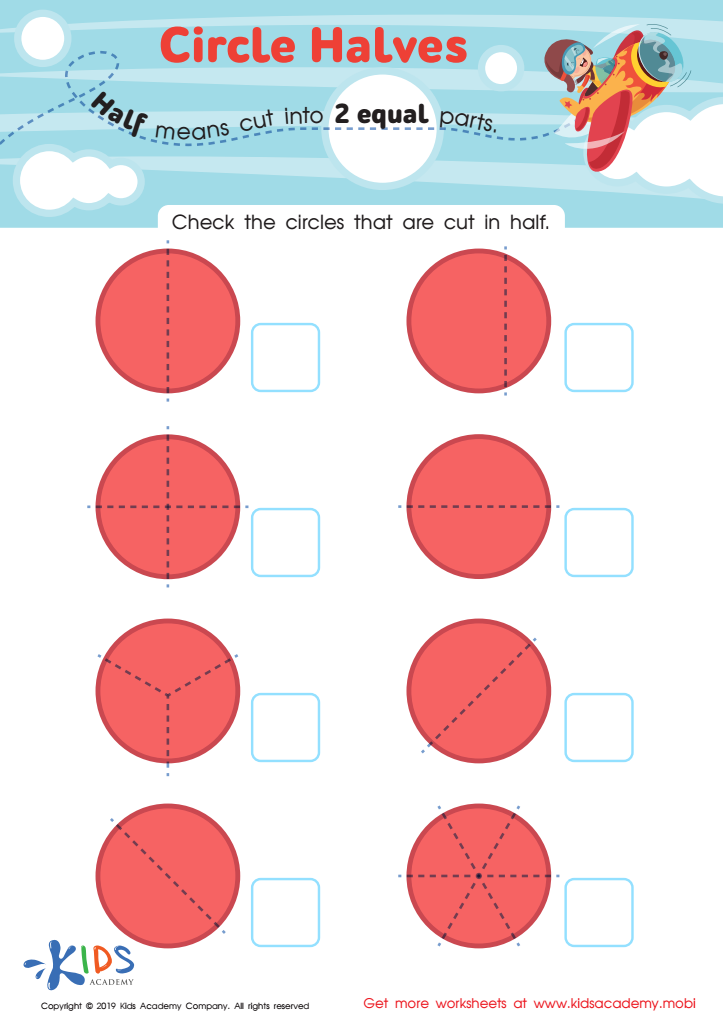
Circle Halves Worksheet
 Assign to My Students











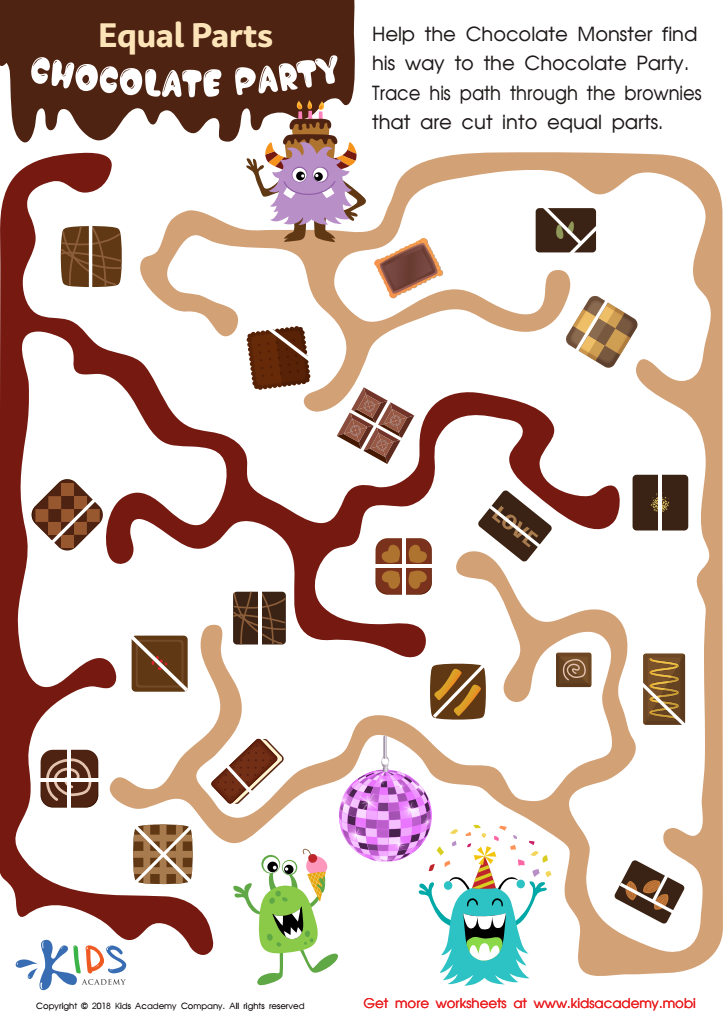
Equal Parts: Chocolate Party Worksheet
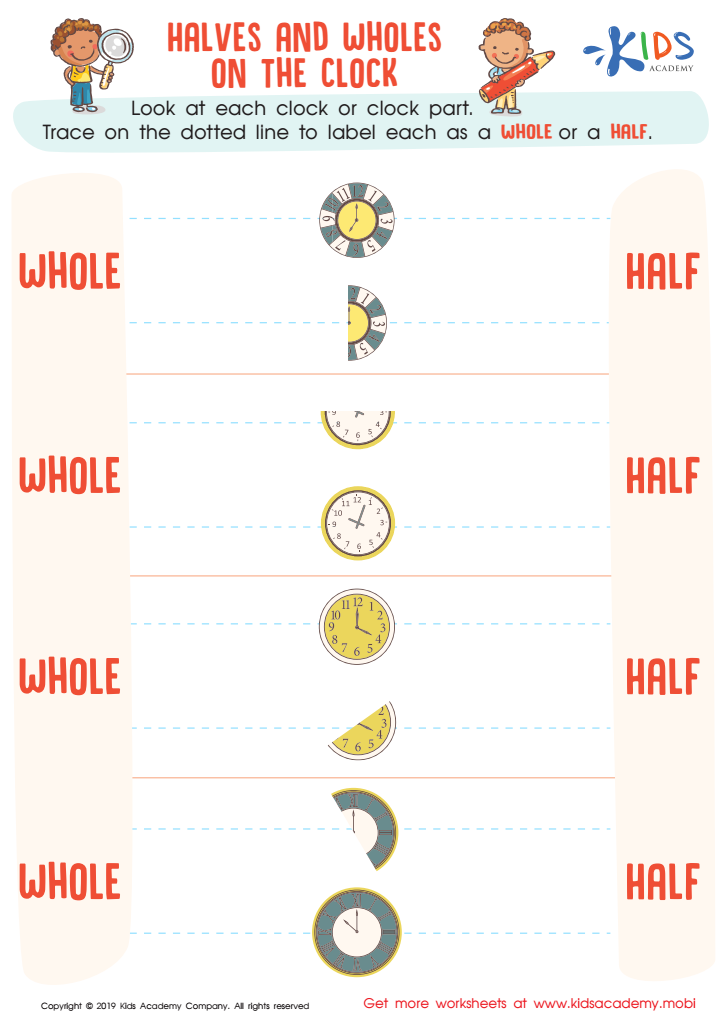
Halves and Wholes on the Clock Worksheet
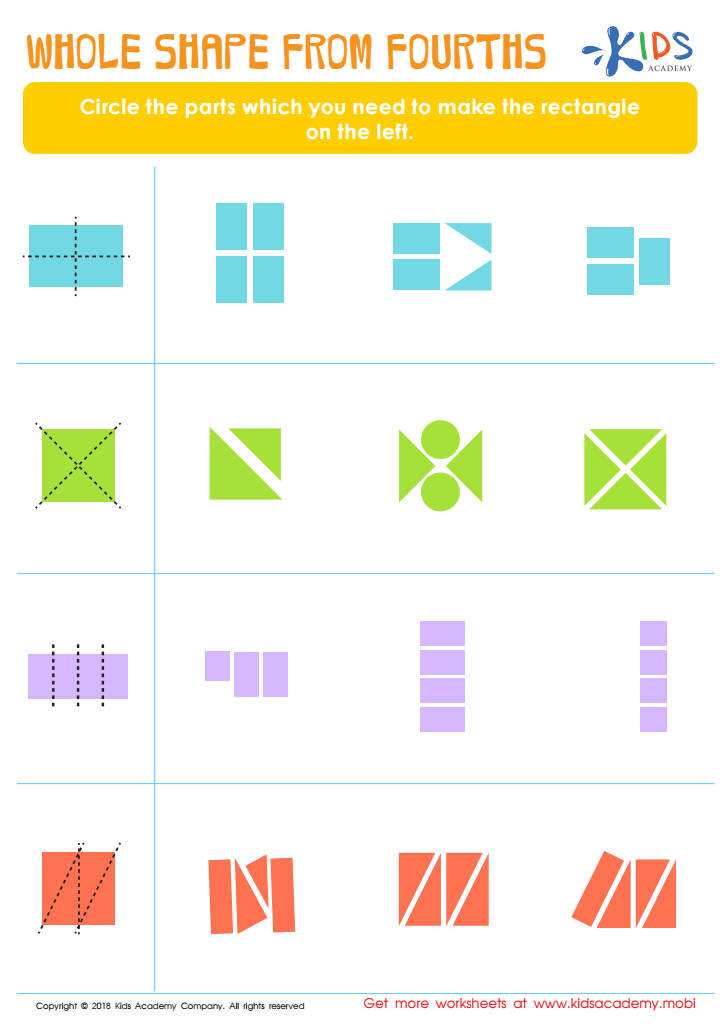
Whole Shape from Fourths Worksheet
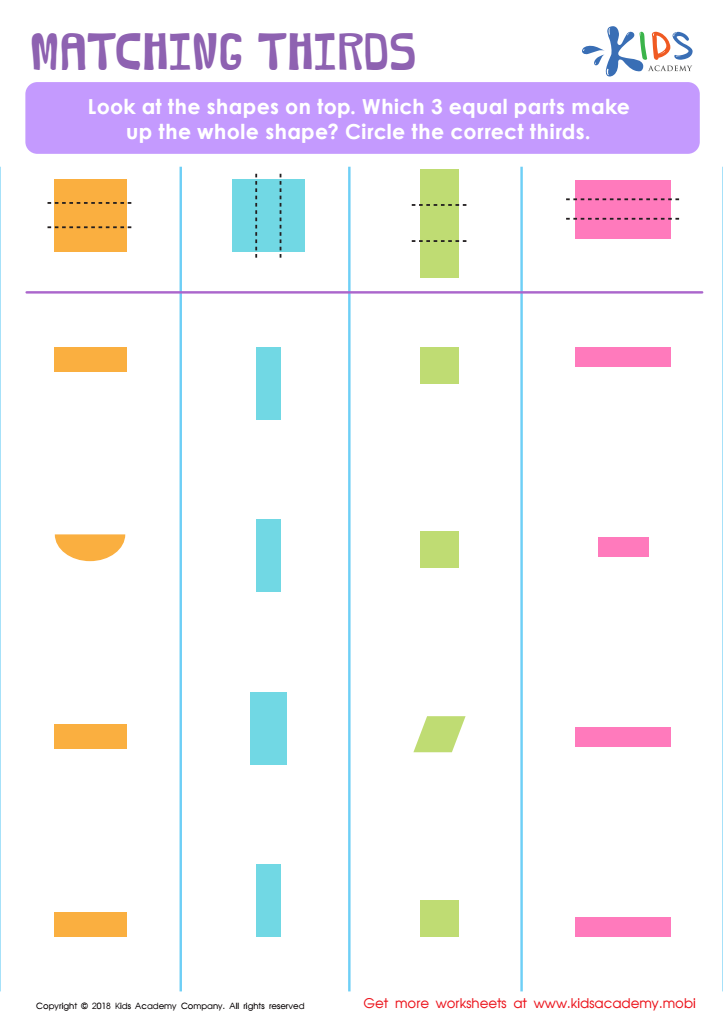
Matching Thirds Worksheet
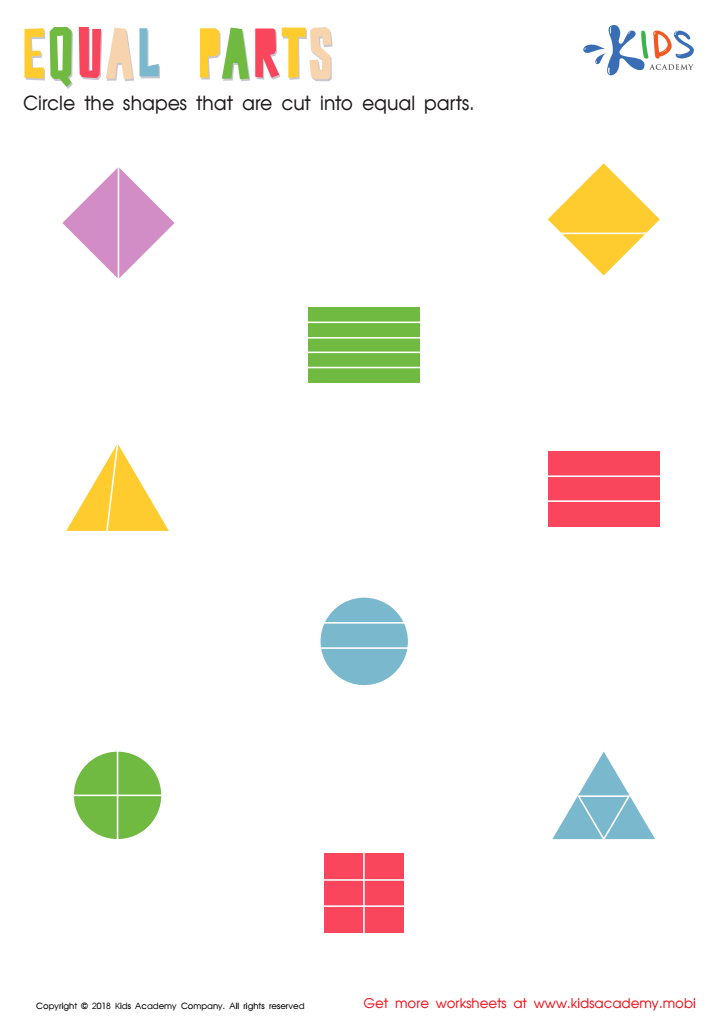
Equal Parts: Shapes Worksheet
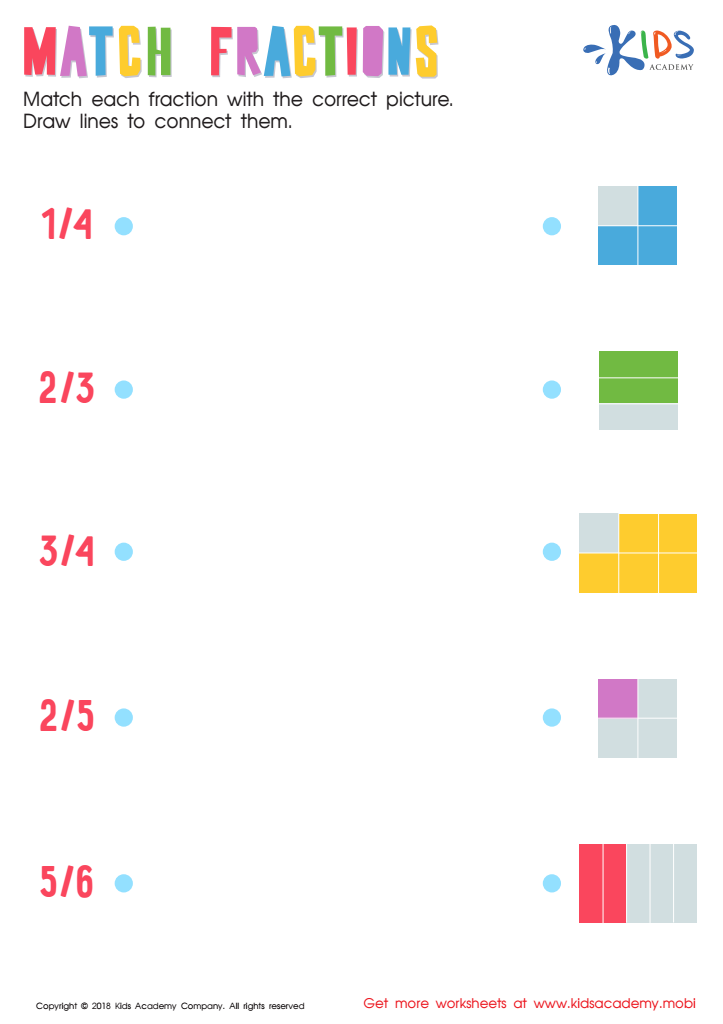
Match Fractions Worksheet
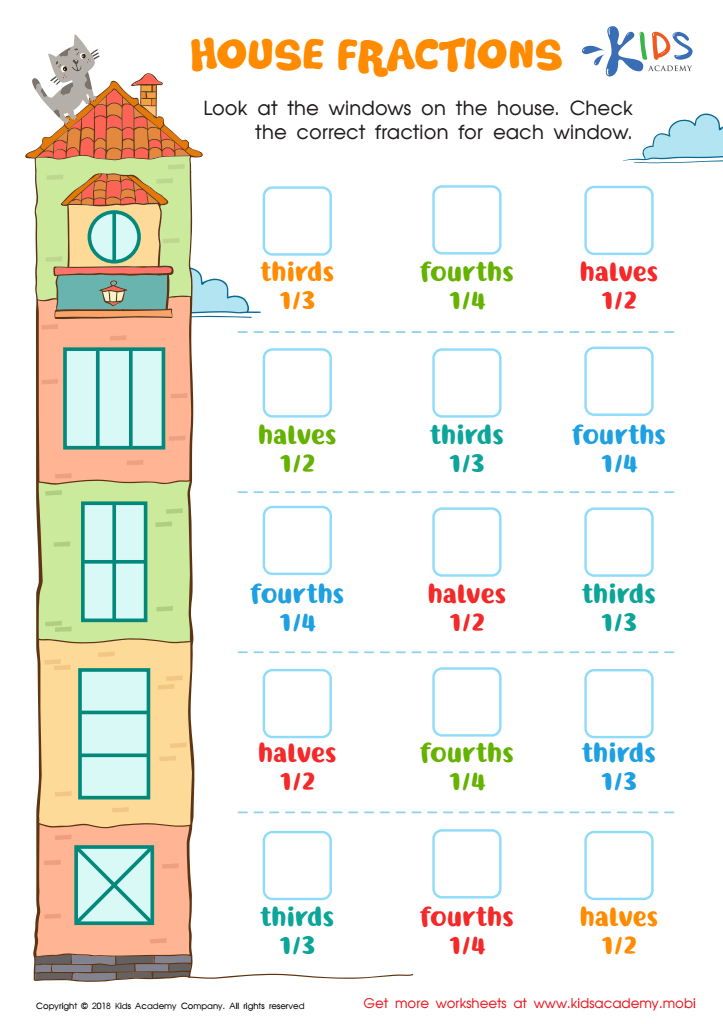
House Fractions Worksheet
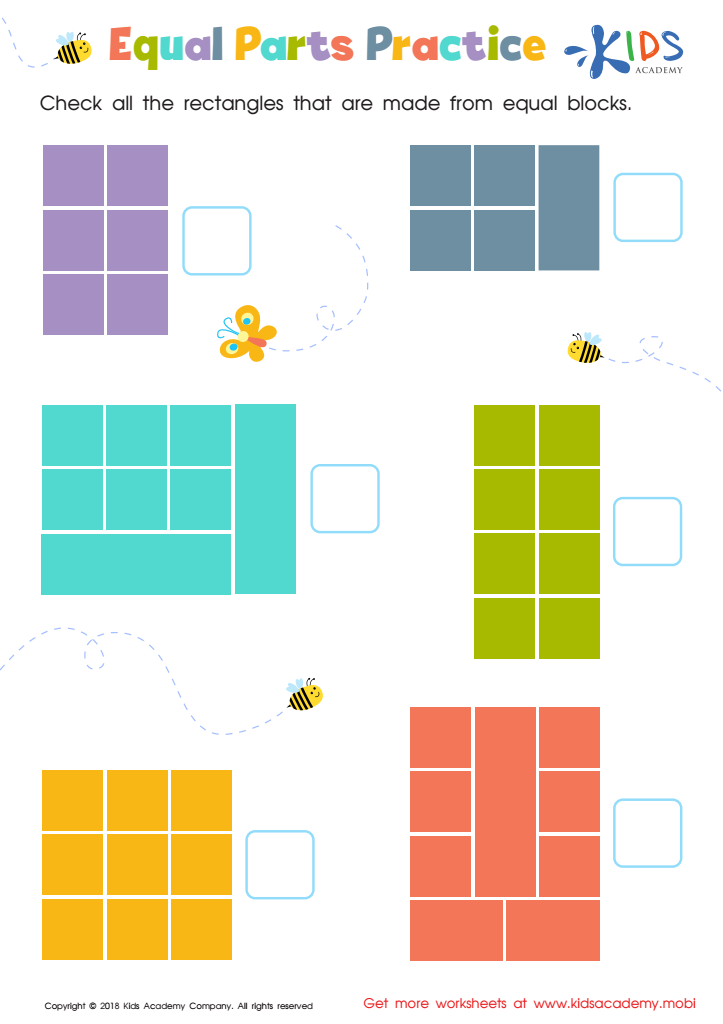
Equal Parts Practice Worksheet
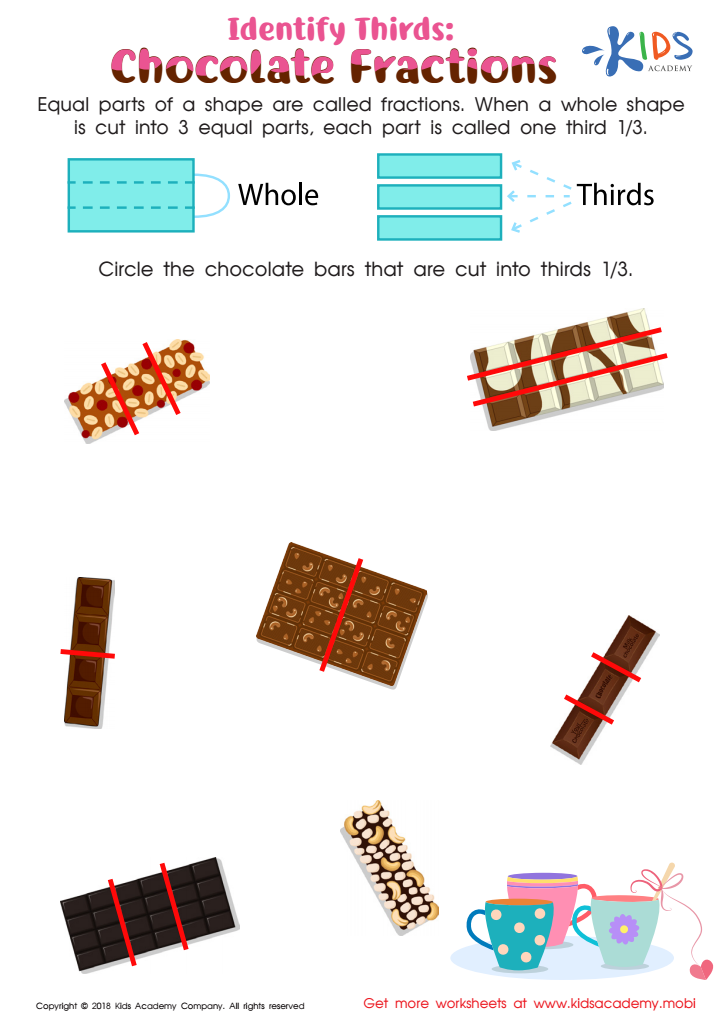
Identify Thirds: Chocolate Fractions Worksheet
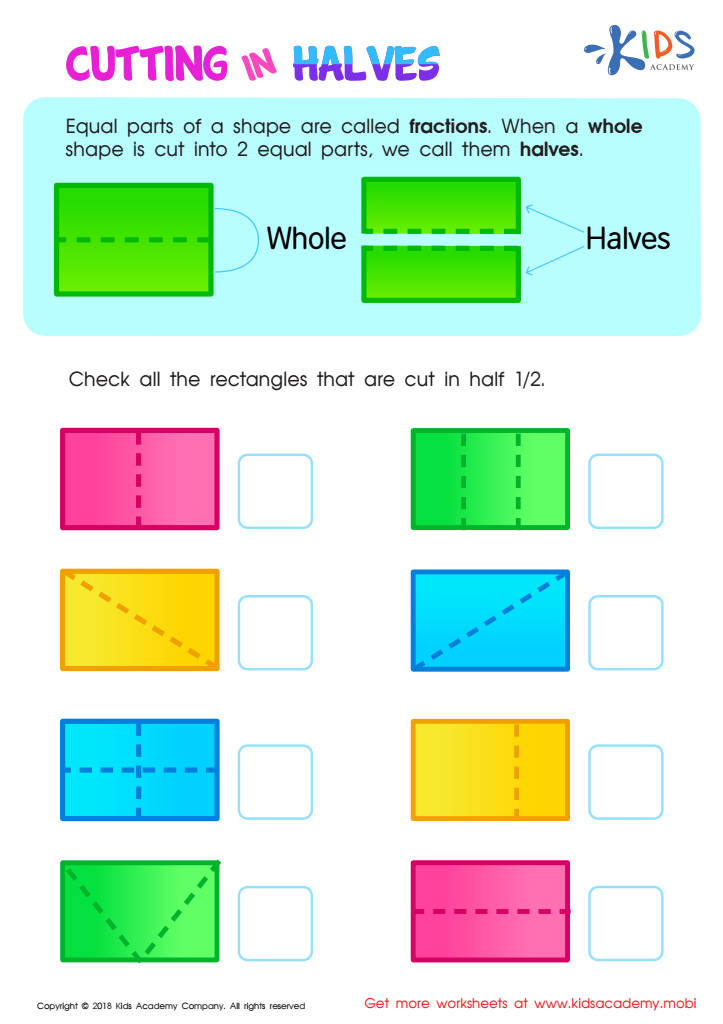
Cutting in Halves Worksheet
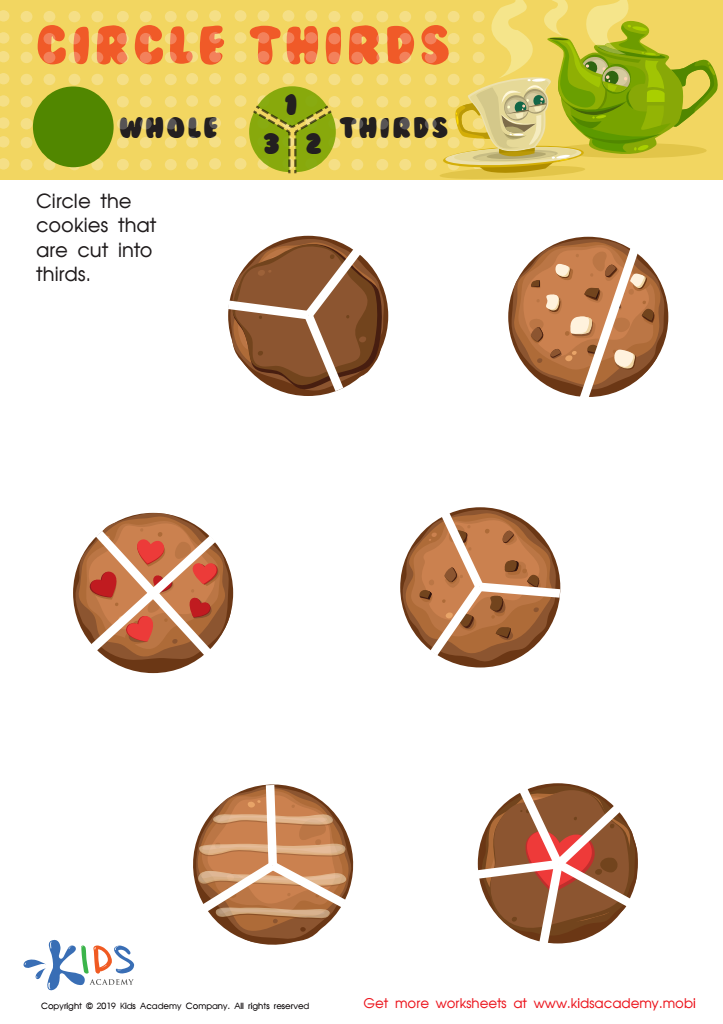
Circle Thirds Worksheet
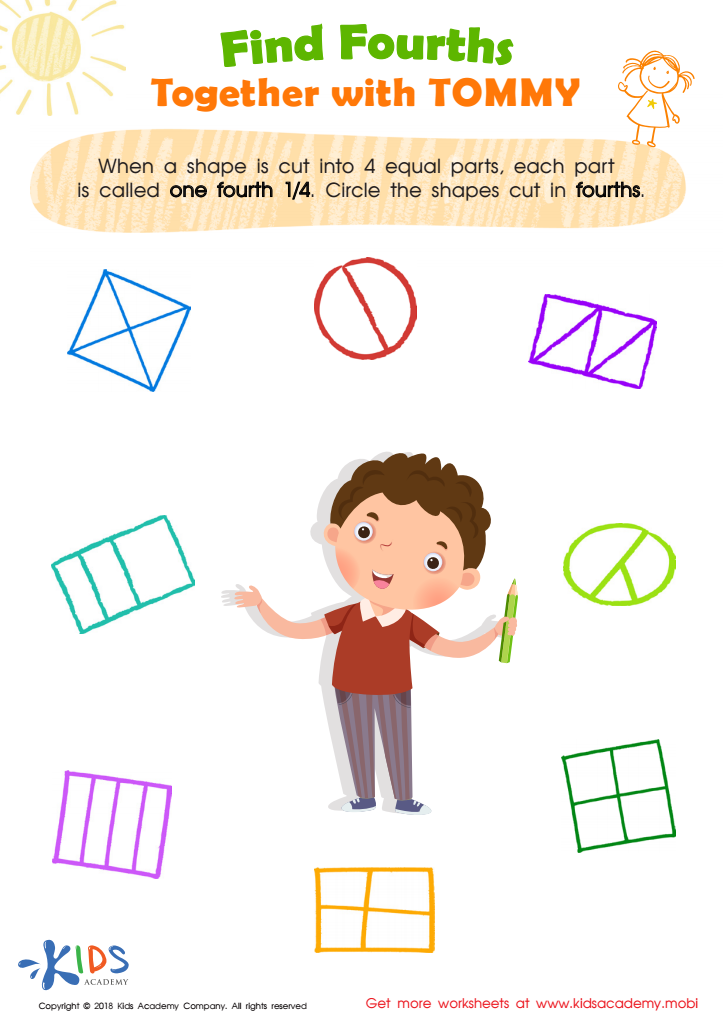
Find Fourths Together with Tommy Worksheet








Understanding fractions and basic geometry at the ages of 8-9 is crucial for children's mathematical development and overall cognitive growth. During this stage, children are building a foundational understanding of numbers and shapes, which influences their future learning in mathematics.
Fractions introduce essential concepts of parts and wholes, helping children understand relationships between numbers and quantities. This understanding fosters critical thinking and problem-solving skills, essential not only in mathematics but in daily life situations, such as cooking, sharing, and measuring.
Geometry, on the other hand, enhances spatial awareness and visualization skills. Recognizing shapes, understanding properties, and grasping concepts like symmetry and area prepares children for more complex mathematical ideas in the future. Furthermore, geometry encourages creativity, as children often engage in activities like drawing and modeling shapes.
Both subjects promote collaboration and communication skills. Working with peers on problems and projects can boost confidence and improve social skills. In essence, a strong grasp of fractions and geometry prepares children not only for academic success but also equips them with practical life skills, making it crucial for parents and teachers to prioritize these subjects in their learning activities.








