Multiplication practice Easy Science Worksheets for Ages 8-9
5 filtered results
-
From - To
Discover our "Multiplication Practice Easy Science Worksheets" tailored for kids ages 8-9! These engaging worksheets seamlessly integrate science and math, providing a fun way for your child to enhance their multiplication skills. With a variety of exercises, including visual aids and real-world applications, children will grasp multiplication concepts while exploring scientific topics. Our resource is perfect for reinforcing classroom learning or as a standalone study tool at home. Encourage a love for learning in your child and watch them gain confidence in their math abilities! Visit us today to access and download a collection of worksheets that make learning enjoyable!
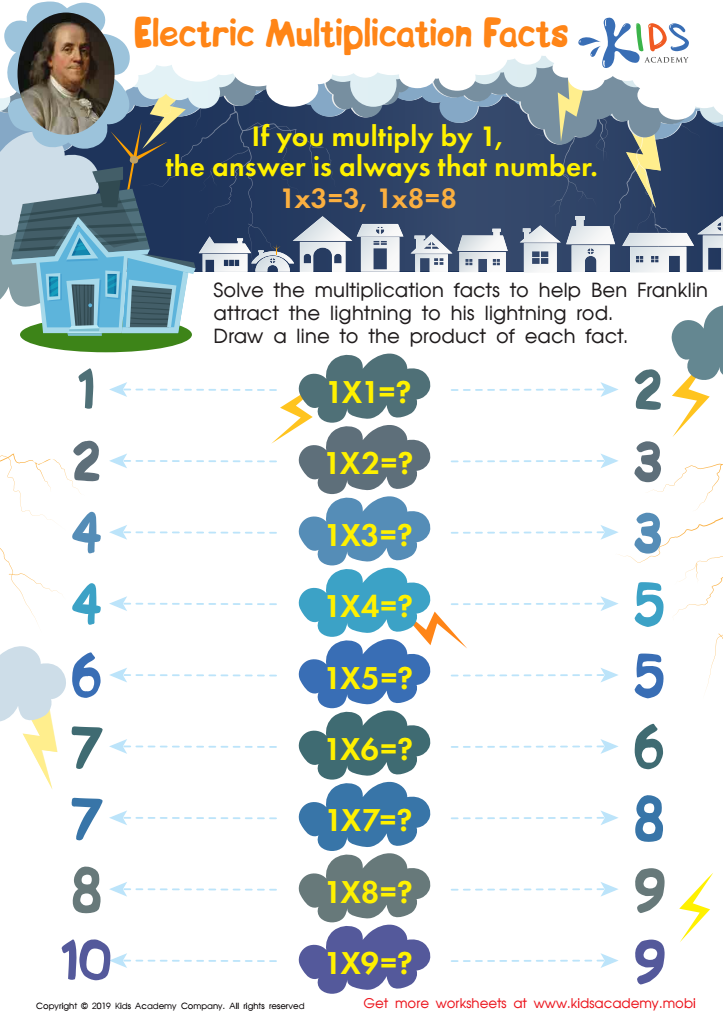
Electric Multiplication Facts Worksheet
 Assign to My Students
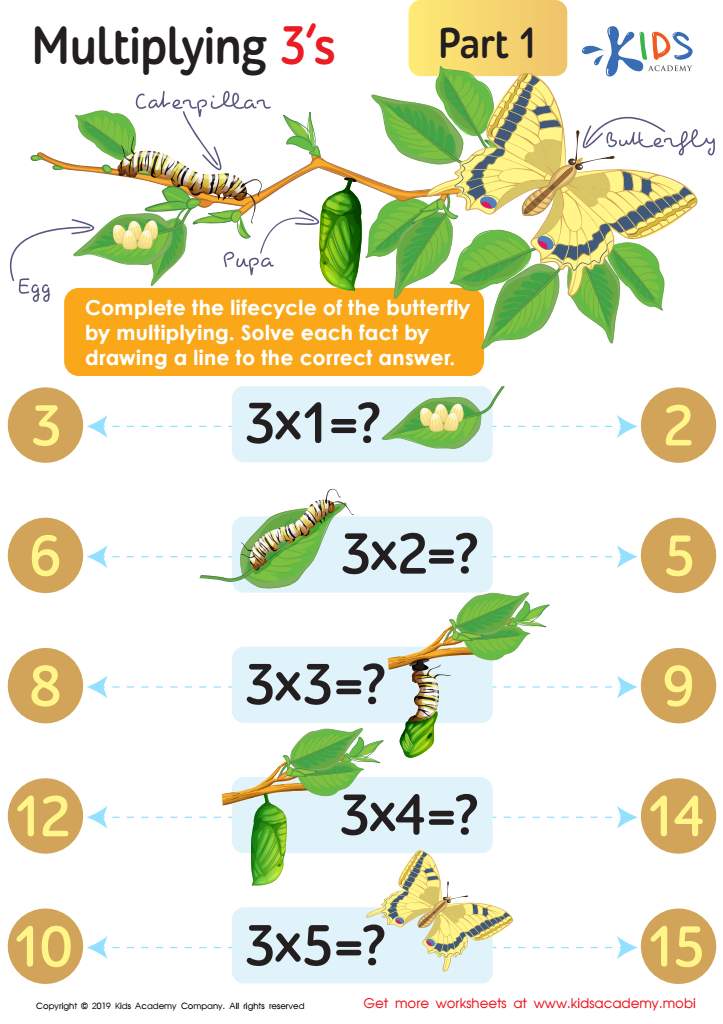
Multiplying 3’s Part 1 Worksheet
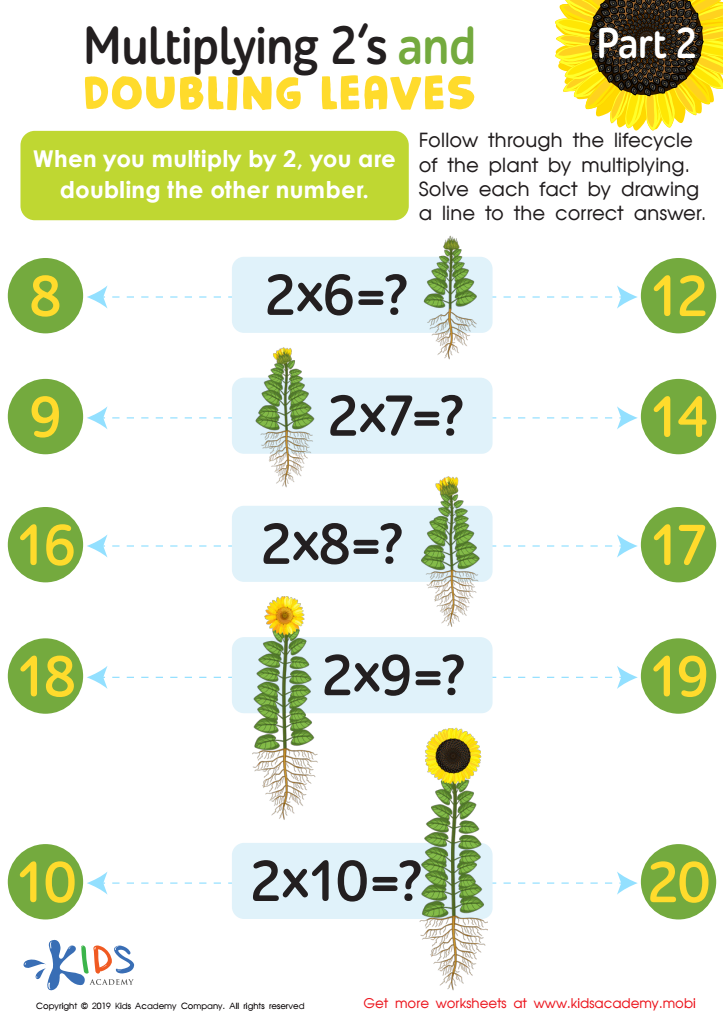
Multiplying 2’s and Doubling Leaves Part 2 Worksheet
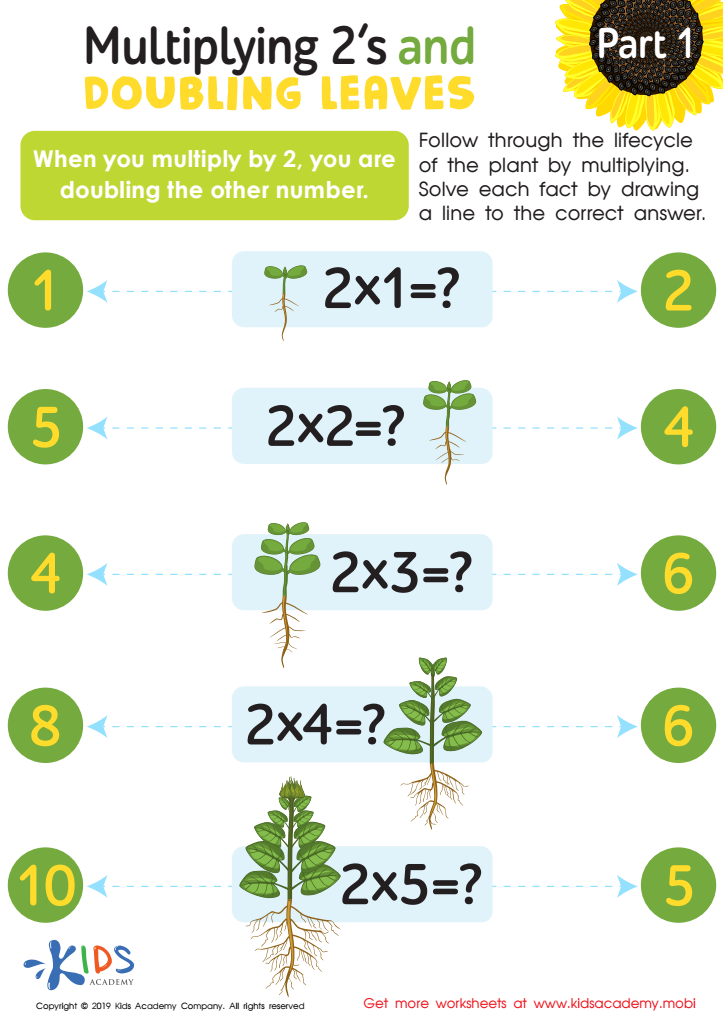
Multiplying 2’s and Doubling Leaves Part 1 Worksheet
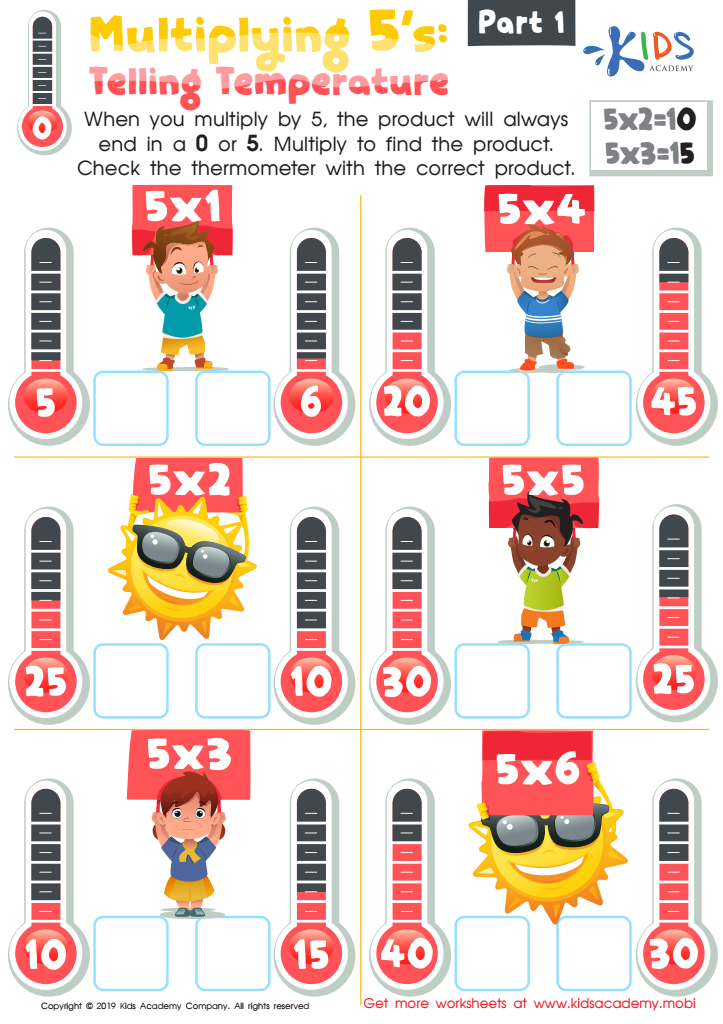
Multiplying 5’s: Telling Temperature Worksheet








Parents and teachers should prioritize multiplication practice in the curriculum for children aged 8-9 because it lays the foundation for essential mathematical skills and critical thinking. At this age, students transition from basic arithmetic to more complex operations, making multiplication a cornerstone of their math education. Mastery of multiplication tables enhances fluency in math, enabling children to tackle division, fractions, and even higher-level concepts, significantly improving their overall problem-solving skills.
Furthermore, integrating multiplication practice with easy science concepts can make learning more engaging and relatable. For instance, managing small experiments, such as measuring ingredients or counting outcomes, reinforces multiplication skills while fostering scientific inquiry. Children learn to apply math in real-life contexts, boosting their confidence and interest in both subjects.
Additionally, early mastery of multiplication promotes academic success, which affects a child's attitude towards learning. Children who struggle with these fundamentals may develop math anxiety, leading to disengagement from future math-related tasks.
By emphasizing multiplication practice through enjoyable methods, parents and teachers can support children’s cognitive development, build perseverance, and cultivate a positive attitude toward both mathematics and the sciences, making it vital to their educational journey.