Alphabet Recognition Easy Worksheets for 8-Year-Olds
6 filtered results
-
From - To
Welcome to our Alphabet Recognition Easy Worksheets for 8-Year-Olds! These engaging, print-friendly activities are designed to strengthen your child's letter recognition skills through fun exercises. With a variety of appealing worksheets, young learners will enjoy identifying letters, matching uppercase and lowercase forms, and practicing writing skills. Our resources are crafted to build confidence and enhance literacy development, ensuring that each activity is age-appropriate and enjoyable. Perfect for home learning or classroom use, these worksheets provide a structured, yet flexible, approach to mastering the alphabet. Foster a love for learning with our interactive and educational materials!
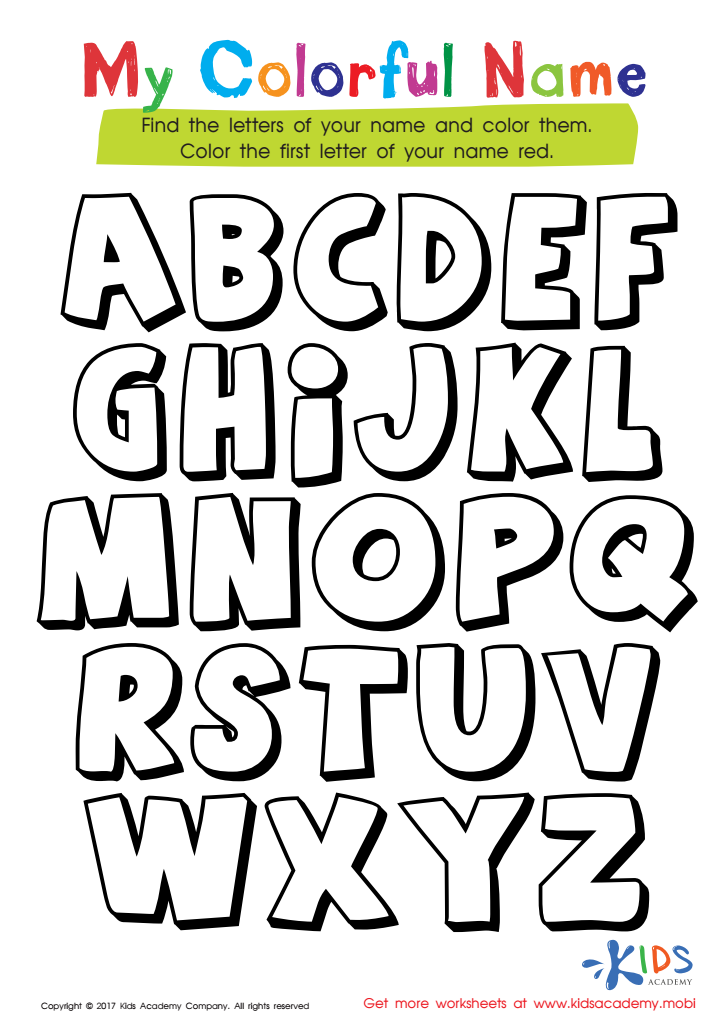
My Colorful Name Worksheet
 Assign to My Students
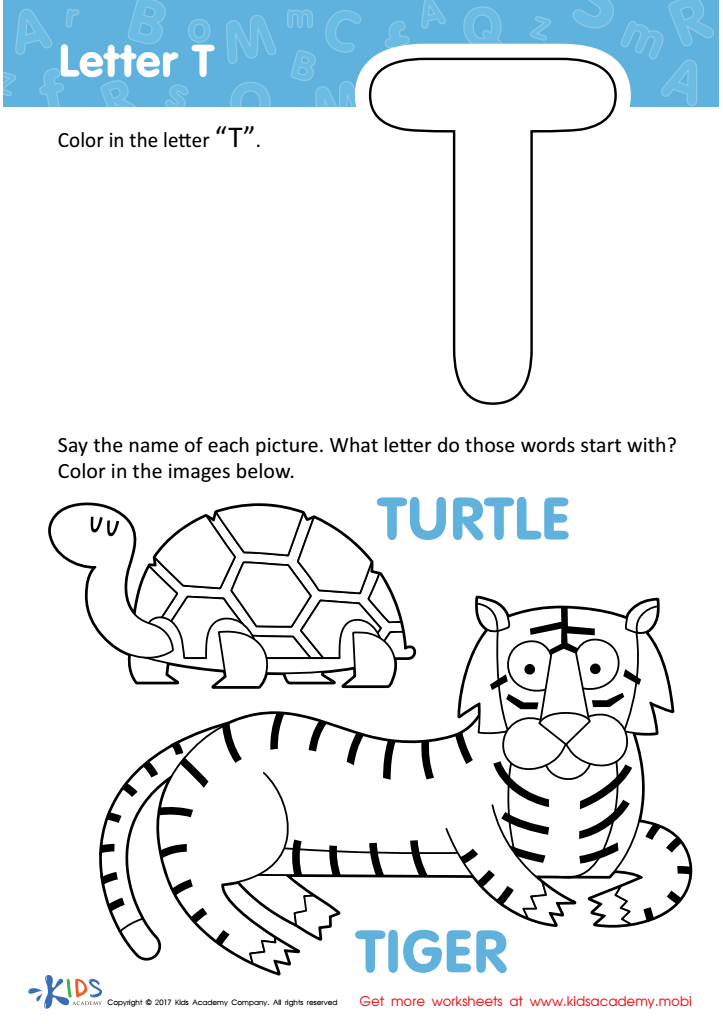
Letter T Coloring Sheet
Assign to My Students
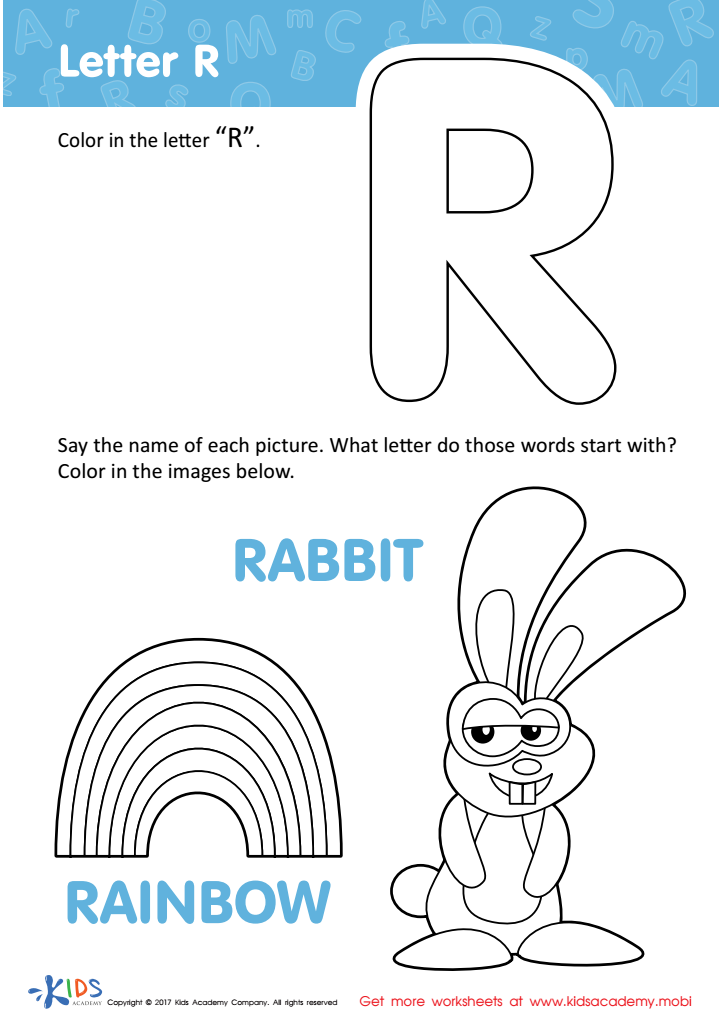
Letter R Coloring Sheet
Assign to My Students
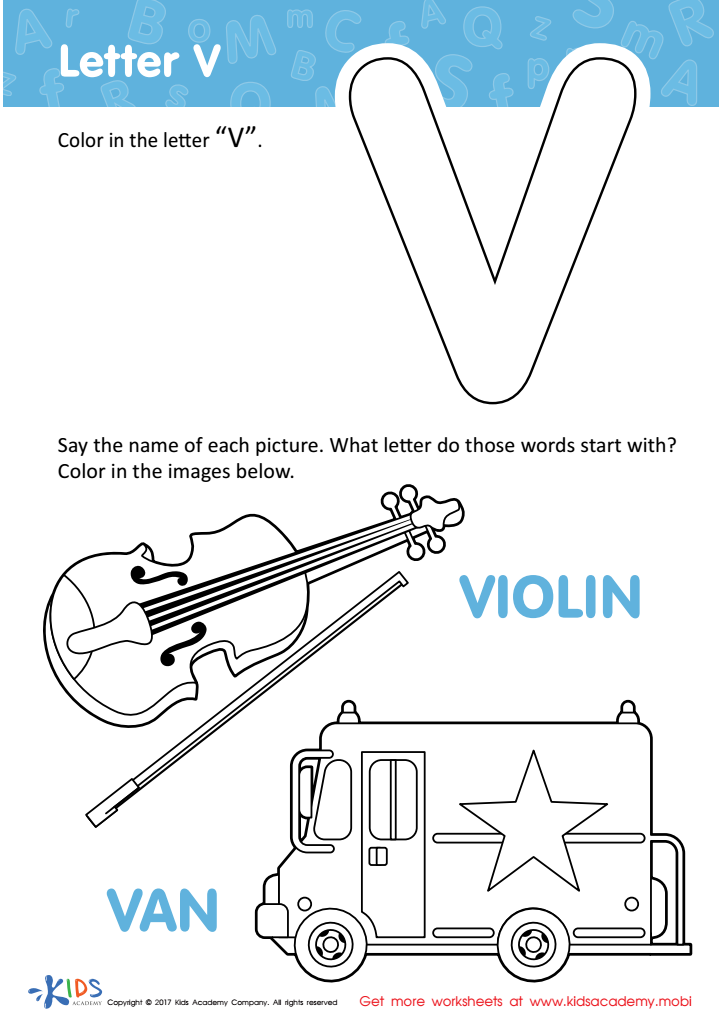
Letter V Coloring Sheet
Assign to My Students
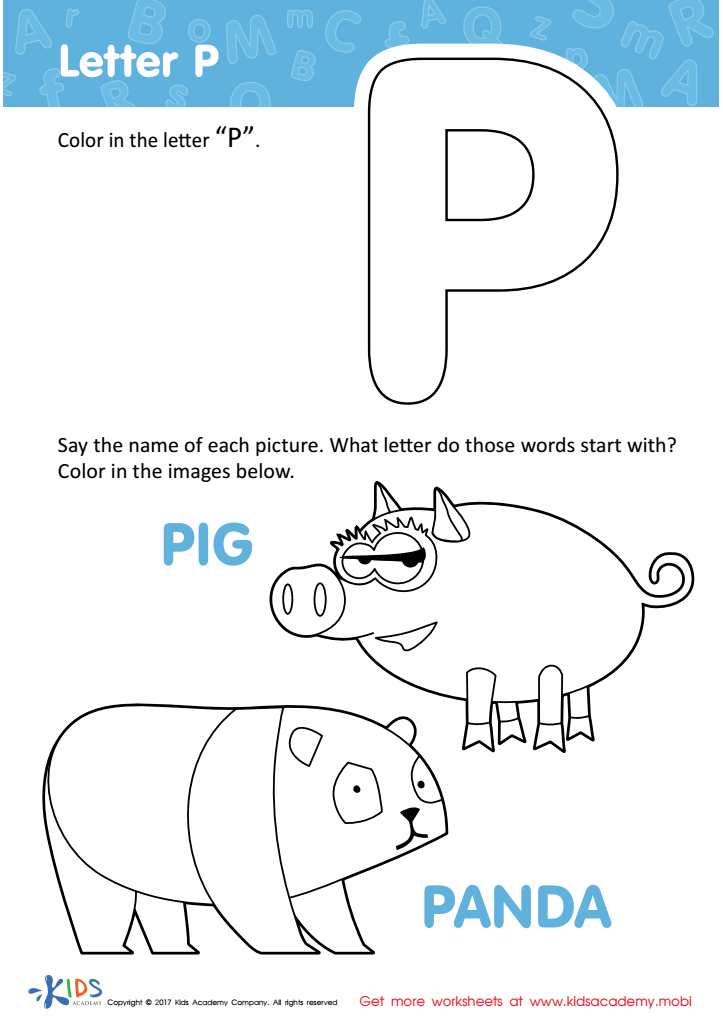
Letter P Coloring Sheet
Assign to My Students
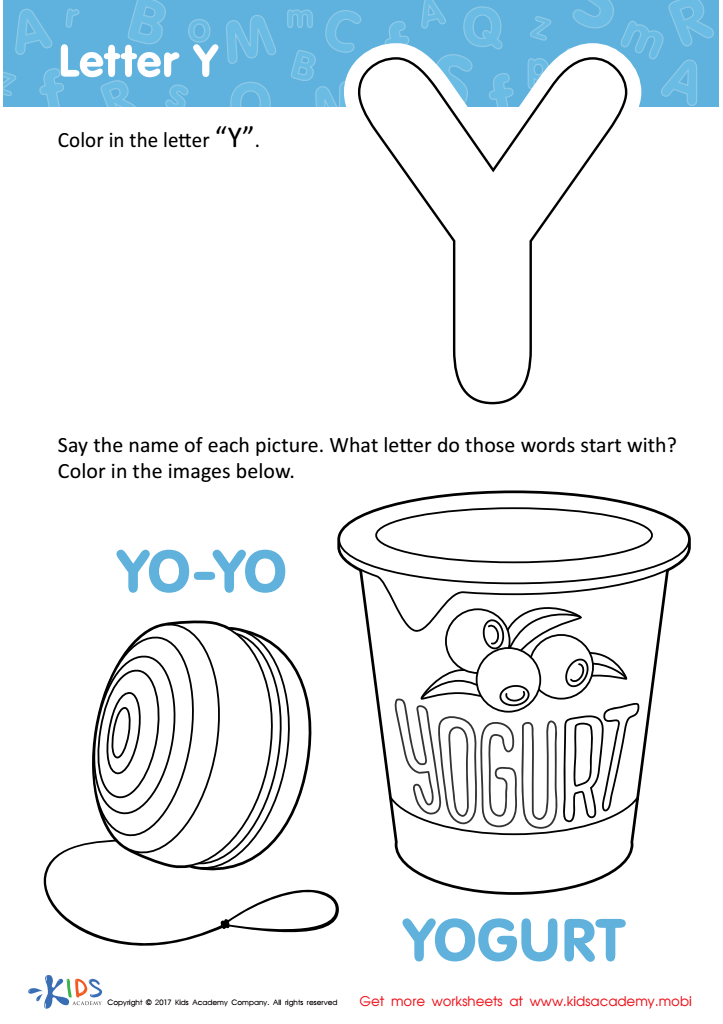
Letter Y Coloring Sheet
Assign to My Students








Alphabet recognition is a fundamental skill for young learners, including 8-year-olds, as it serves as the building block for their literacy development. At this age, children are transitioning from decoding individual sounds to reading more complex texts. Mastery of the alphabet enhances their ability to recognize words, which is crucial for fluent reading and comprehension.
Parents and teachers should prioritize alphabet recognition because it fosters cognitive development, critical thinking, and vocabulary acquisition. When children can easily recognize letters and their associated sounds, they gain confidence in their reading abilities, which motivates them to engage with books and other learning materials. This engagement not only enhances literacy skills but also nurtures a lifelong love of reading.
Moreover, strong alphabet recognition can lead to improved academic performance across various subjects, as literacy is tied to success in math, science, and social studies. Lastly, recognizing letters helps children understand written communication, which is essential in our increasingly text-driven world. By supporting children in mastering this skill, both parents and teachers contribute to a solid educational foundation that prepares children for future academic and personal success.








