Multiplication practice Easy Plants and Animals Worksheets for 8-Year-Olds
3 filtered results
Difficulty Level
Grade
Age
-
From - To
Subject
Activity
Standards
Introduce your 8-year-olds to the enchanting world of plants and animals with our multiplication practice worksheets! Specially designed for young learners, our easy worksheets blend science and math, making it a dynamic, enjoyable learning experience. Kids will reinforce their multiplication skills while exploring diverse flora and fauna. Each worksheet is crafted to captivate their curiosity and enhance their knowledge, featuring vibrant images and engaging activities. Help your child master multiplication in an entertaining way, fostering a love for learning, nature, and arithmetic! Perfect for home or classroom use, these worksheets are a wonderful educational resource.
Favorites
With answer key
Interactive
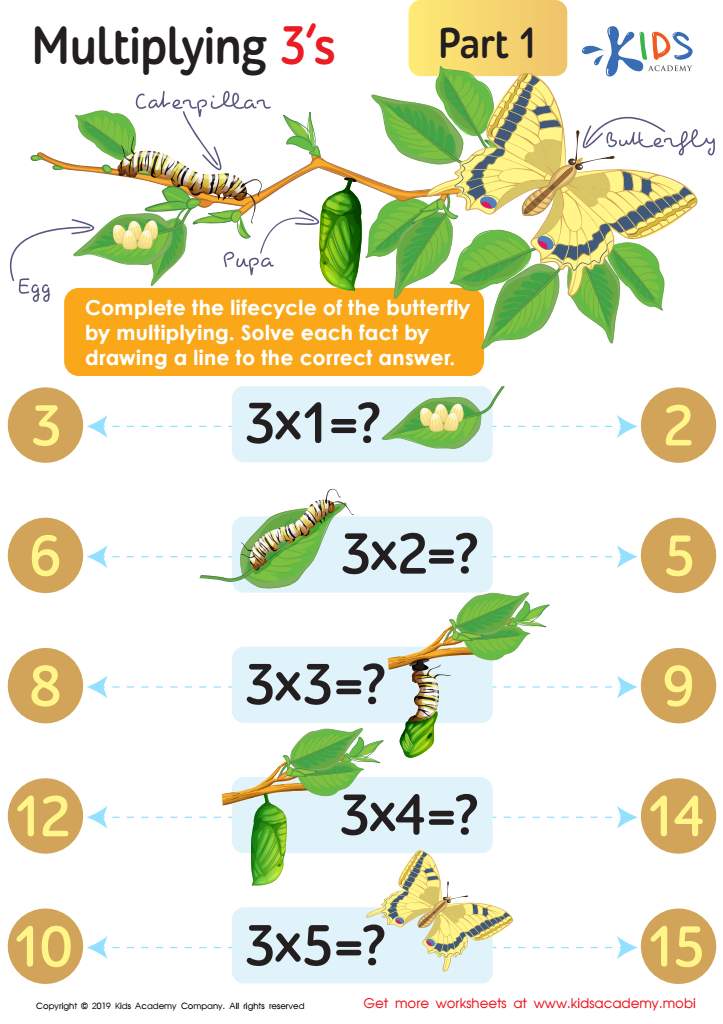
Multiplying 3’s Part 1 Worksheet
Once an egg, then a caterpillar, then a cocoon, then a beautiful butterfly: the lifecycle of the butterfly! Complete the worksheet with your kids and help them draw the lines to get the correct answers for each fact. Let them explore the fascinating transformation of this creature!
 Assign to My Students
Multiplying 3’s Part 1 Worksheet
Worksheet











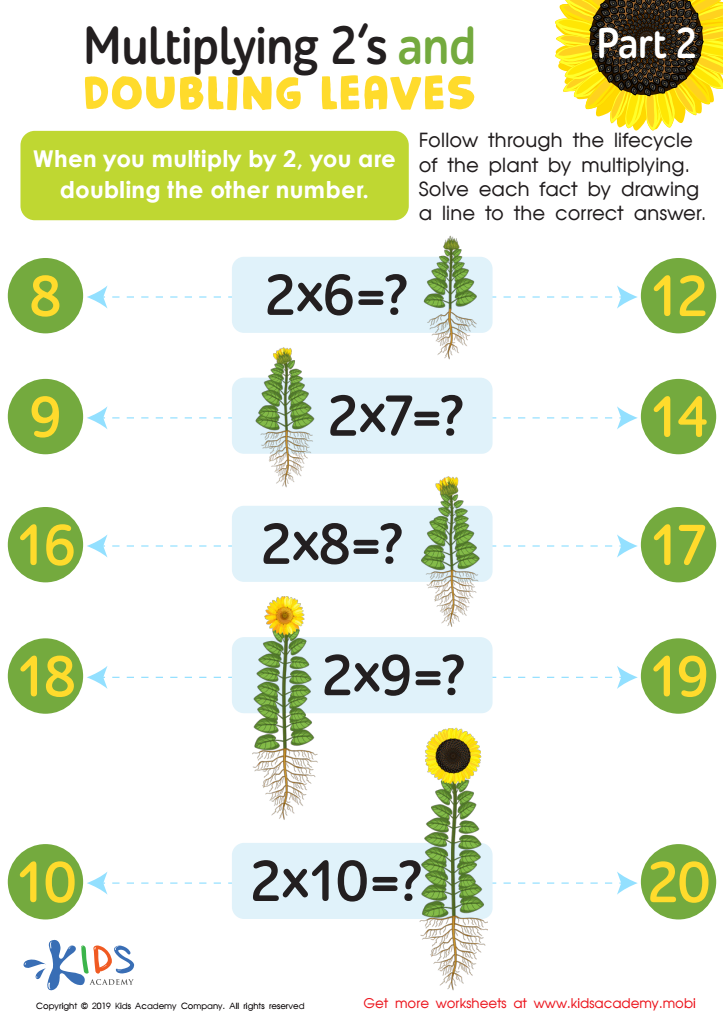
Multiplying 2’s and Doubling Leaves Part 2 Worksheet
Help your students master multiplication with these simple tips. Double the number for multiplying by 2 and use this interactive tracing sheet for solving each fact. Plus, it's colorful making it fun for your students to learn.
Multiplying 2’s and Doubling Leaves Part 2 Worksheet
Worksheet
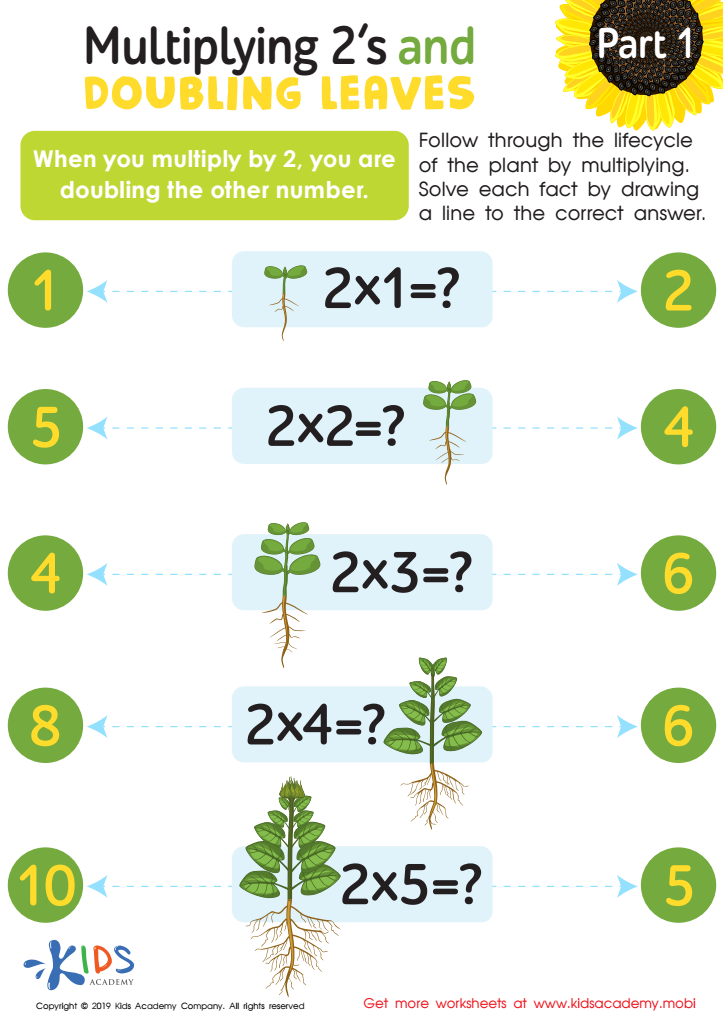
Multiplying 2’s and Doubling Leaves Part 1 Worksheet
If your students still struggle with multiplication, use this worksheet to help them master it. For multiplying by 2, double the original number. Give them this tracing sheet; they'll solve each fact by drawing a line to the right answer. This worksheet will help them learn multiplication tricks and tips.
Multiplying 2’s and Doubling Leaves Part 1 Worksheet
Worksheet
Join Kids Academy for Free
Who is primarily going to use this learning content?








Parents and teachers should care about multiplication practice related to plants and animals for 8-year-olds because it presents a unique inter-disciplinary approach that enhances both mathematical and scientific understanding. At this age, children are naturally curious about the world around them, and integrating multiplication exercises with engaging topics like plants and animals can spark interest while reinforcing key academic skills.
Using plants and animals in multiplication problems can make math feel more relevant and fun. For example, a problem might ask, "If one tree has 5 birds, how many birds are in 3 trees?" This type of question makes abstract numbers tangible and allows children to visualize the problem, fostering a deeper comprehension of multiplication concepts.
Additionally, the use of real-world examples helps kids make connections between their math lessons and science classes. Learning about the number of petals on different flowers or the legs of various animals while practicing multiplication can simultaneously enrich their knowledge in biology and improve their arithmetic skills.
Finally, this approach supports diverse learning styles. Visual learners can benefit from seeing pictures of plants and animals, while kinesthetic learners may enjoy acting out the scenarios. By making multiplication practice lively and context-rich, parents and teachers can effectively support academic growth and a love for learning.