Comparing lengths Easy Worksheets
6 filtered results
-
From - To
Our "Comparing Lengths Easy Worksheets" are perfect for young learners to develop essential math skills. Designed specifically for early grade students, these engaging worksheets provide fun, interactive challenges that help kids learn to compare and contrast different lengths. Through playful illustrations and intuitive exercises, children will grasp the fundamental concept of length measurement. These worksheets aim to build confidence and foundational understanding in a joyful way, making early math learning enjoyable and effective. Great for both classroom use and at-home practice, these activities pave the way for future math success while keeping learning light and delightful.
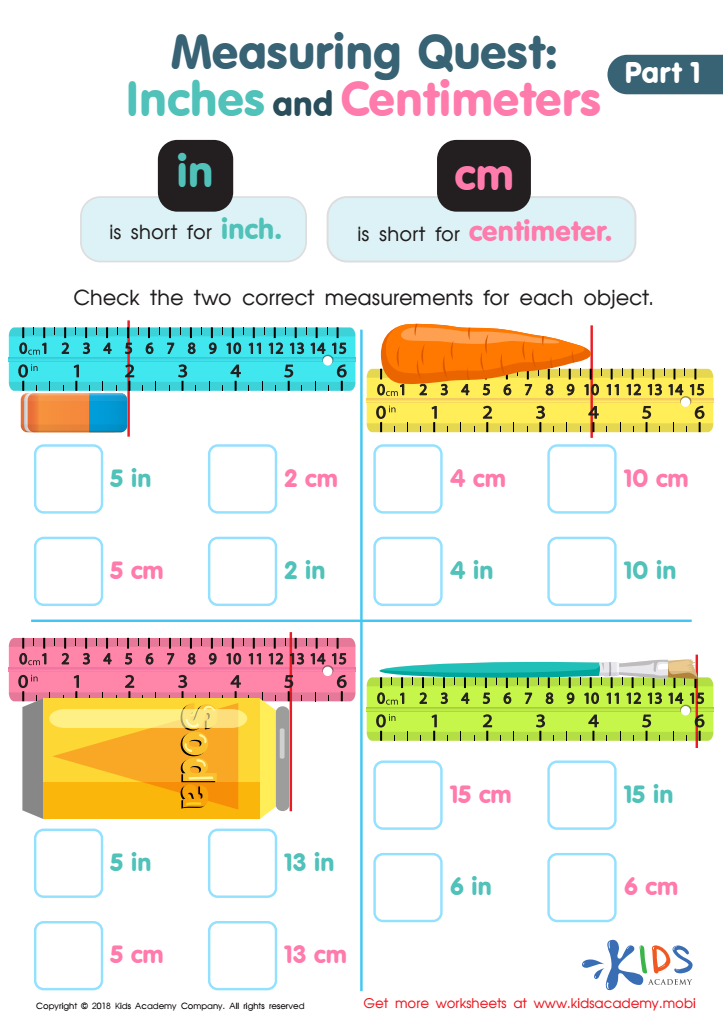
Measuring Quest: Inches and Centimeters Worksheet
 Assign to My Students
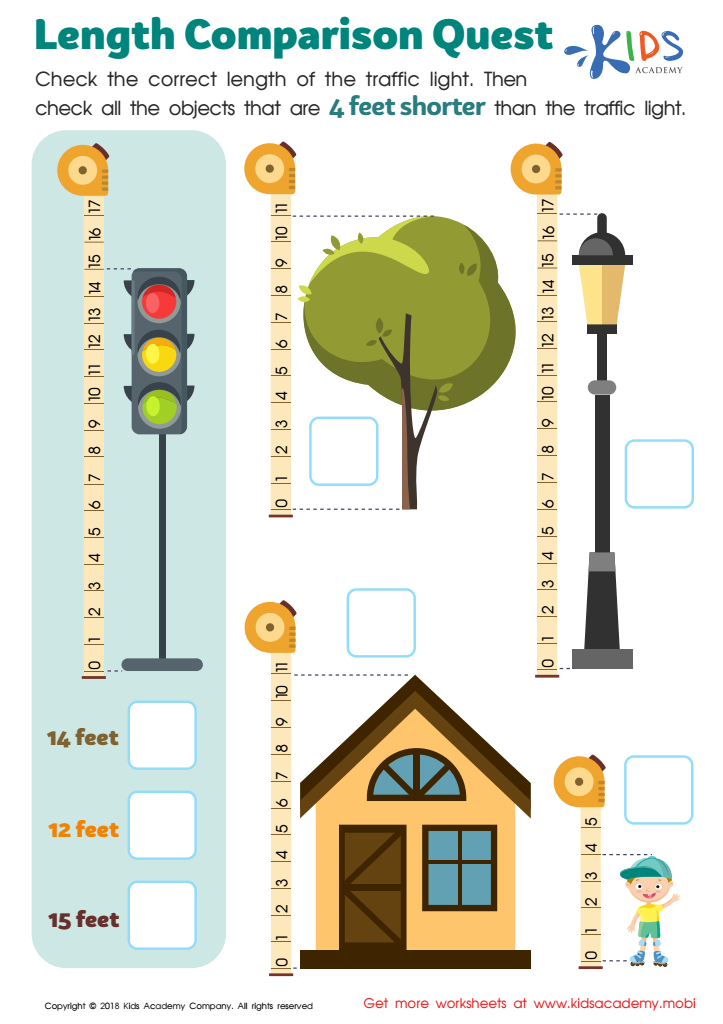
Length Comparison Quest Worksheet
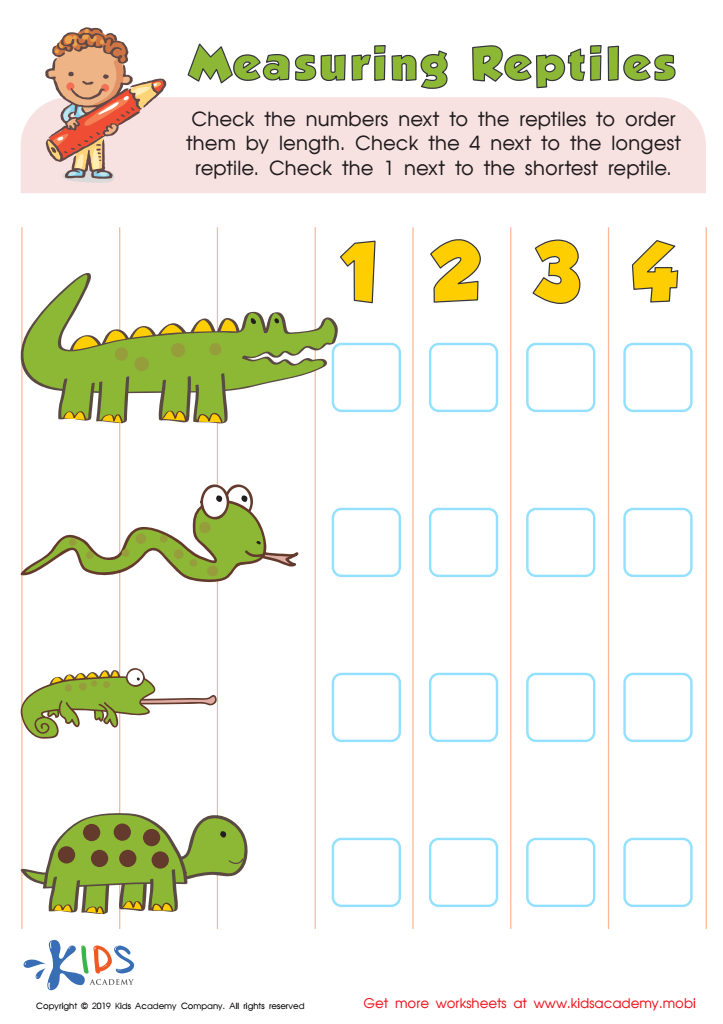
Measuring Reptiles Worksheet
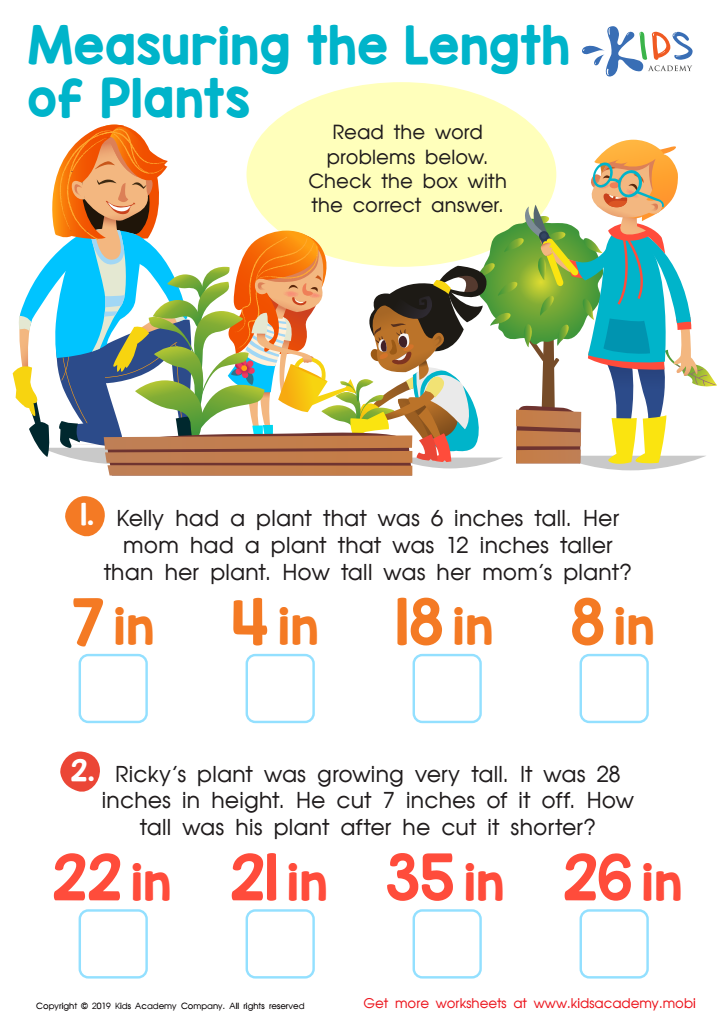
Measuring the Length of Plants Worksheet
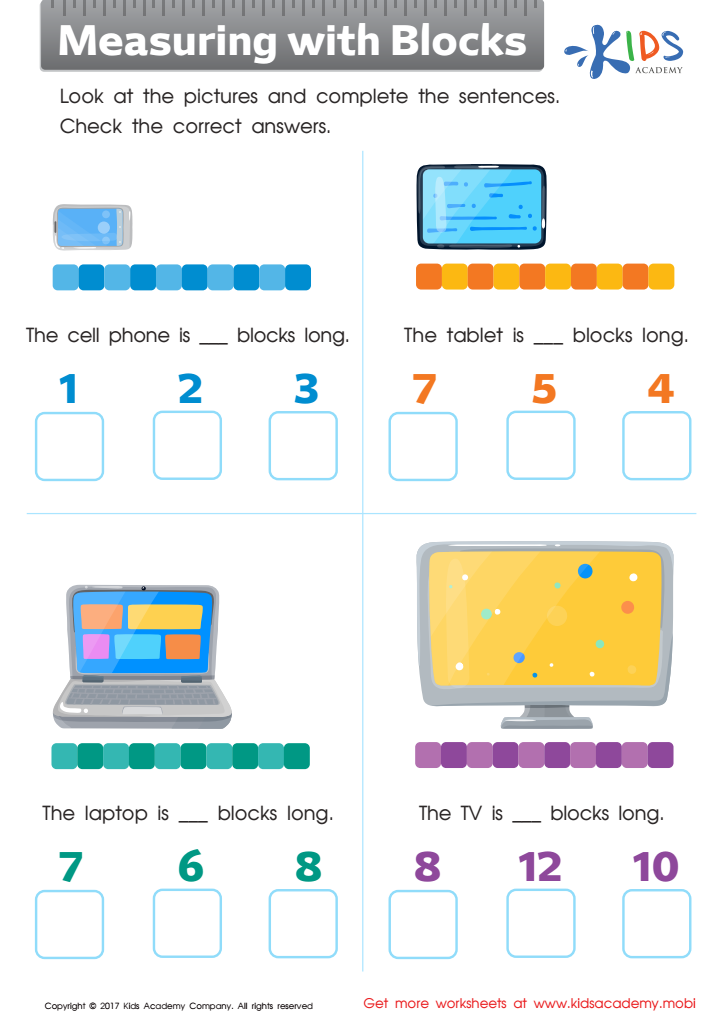
Measuring with Blocks Worksheet
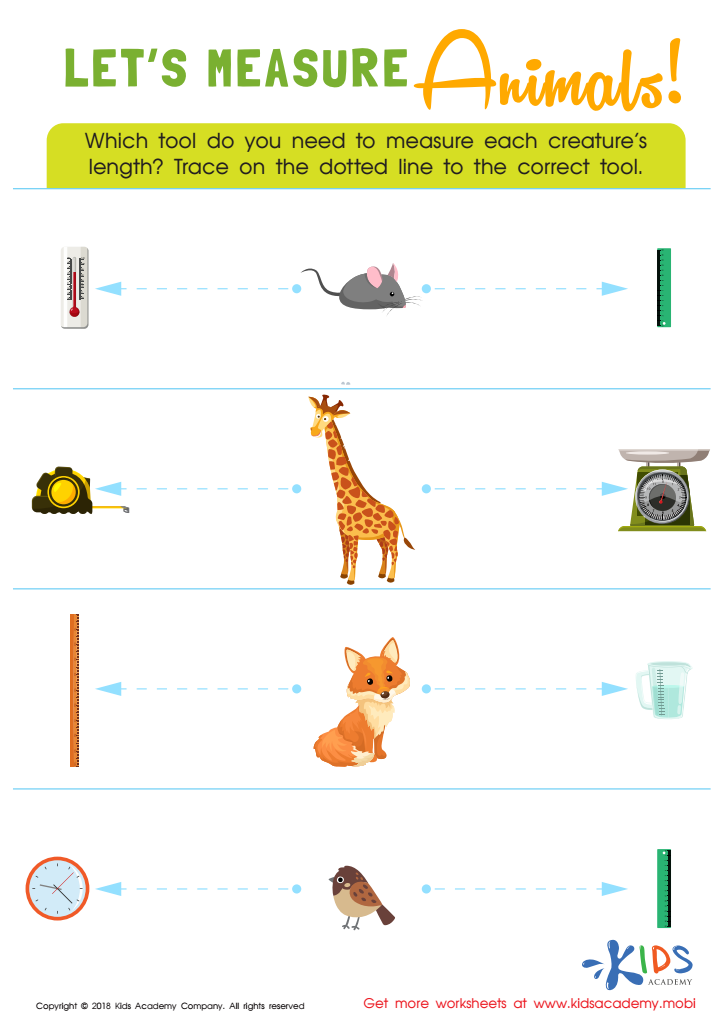
Let's Measure Animals! Worksheet







Comparing lengths is a fundamental skill that serves as a foundation for more complex mathematical concepts and real-world problem-solving. For both parents and teachers, instilling the ability to compare lengths at an early age is crucial for several reasons. Firstly, it enhances children's spatial awareness and critical thinking skills, enabling them to make sense of the world around them. When children compare lengths, they learn to observe, analyze, and make decisions based on their observations.
Moreover, this skill is directly linked to other key areas of mathematics, including measurement, geometry, and eventually, more advanced topics like algebra and physics. Understanding longer and shorter, taller and shorter, helps to develop an intrinsic sense of measurement and size, which is essential for everyday tasks, such as organizing objects, estimating distances, and even time management.
Additionally, engaging activities that involve comparing lengths encourage children to interact with their environment, build their vocabulary, and improve their descriptive language skills. It provides opportunities for hands-on learning, which can be both enjoyable and educational. Providing children with strong foundational skills in comparing lengths can help them develop confidence in their mathematical abilities, ultimately fostering a positive attitude towards learning and exploration.
In summary, comparing lengths is easy yet essential, aiding cognitive development and preparing children for more complex skills and real-world applications, making it a critical area of focus for parents and teachers alike.








