Comparison Skills Easy Worksheets
3 filtered results
-
From - To
Introduce young learners to the world of comparison with our "Comparison Skills Easy Worksheets." Perfect for early grade students, these worksheets help children develop essential skills through fun and engaging activities. From sizes and lengths to quantities and shapes, each worksheet is designed to strengthen critical thinking by challenging students to observe, analyze, and determine differences and similarities. With bright, interactive images and simple instructions, children boost their comparing abilities naturally while building foundational math and cognitive skills. Discover the fun and educational benefits of our easy comparison worksheets today!
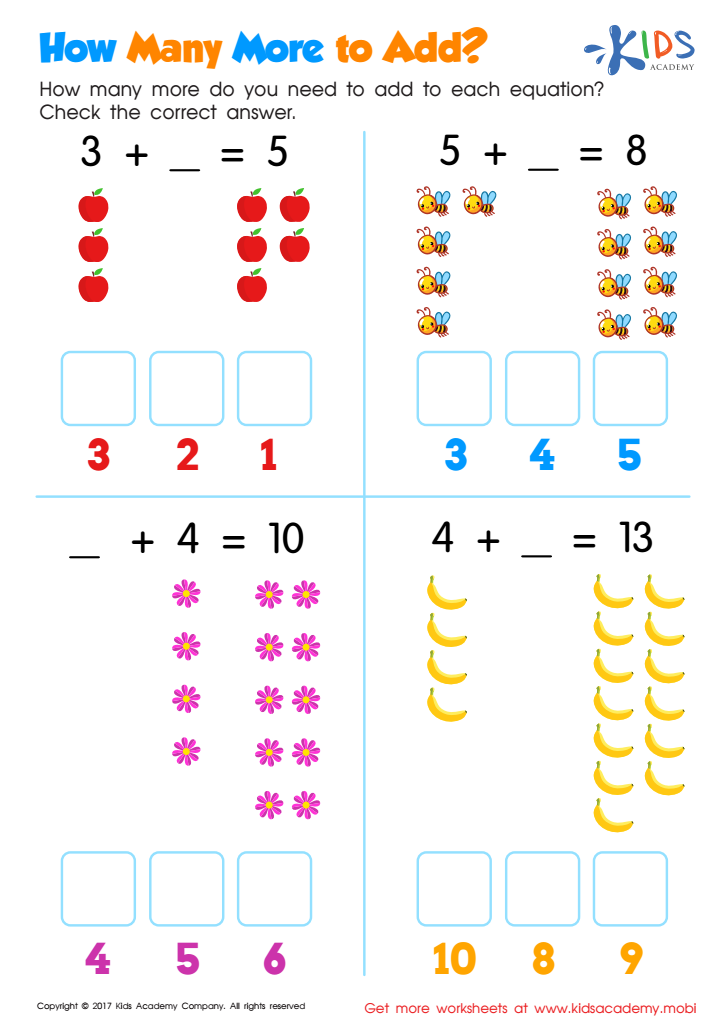
How Many More to Add Worksheet
 Assign to My Students
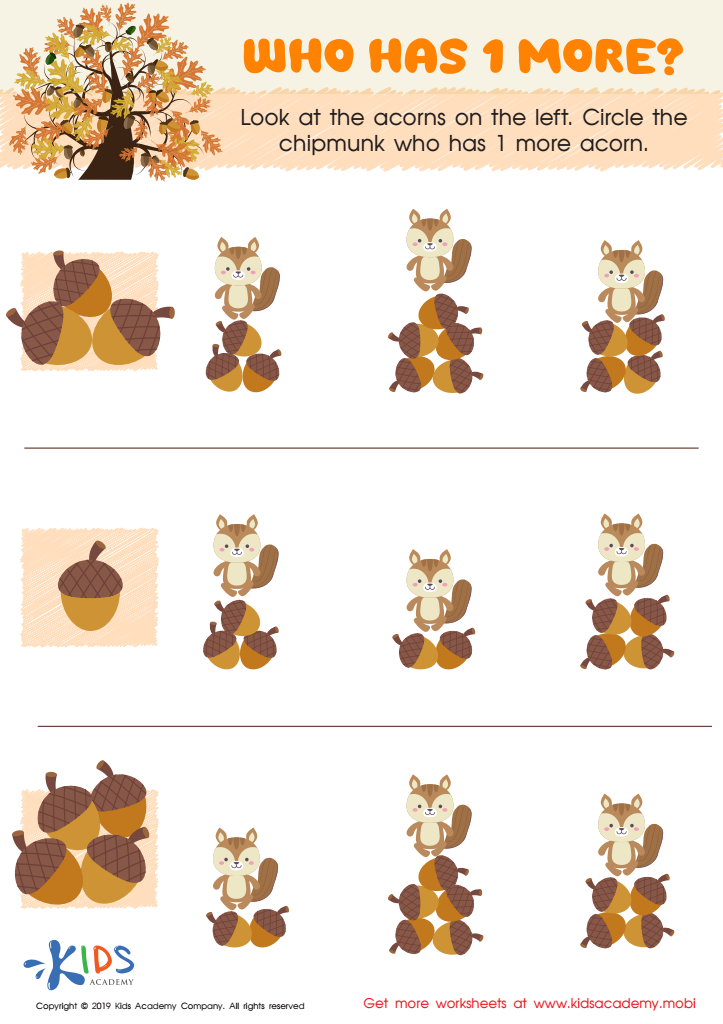
Who Has 1 More? Worksheet
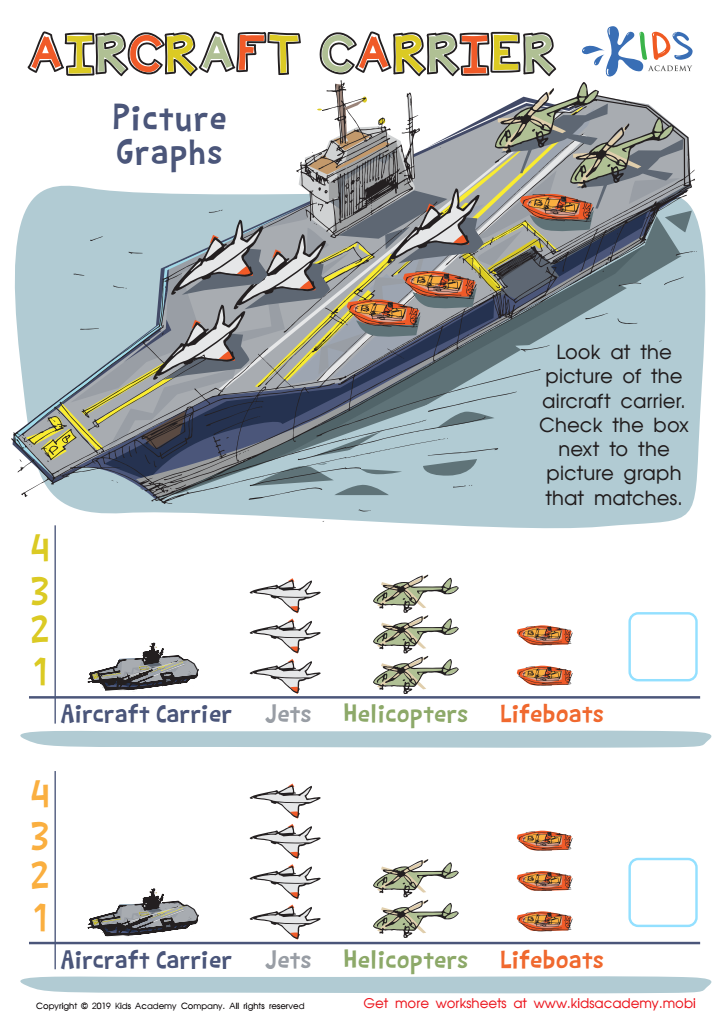
Aircraft Carrier Picture Graphs Worksheet








Comparison skills are fundamental building blocks in a child’s cognitive development and critical thinking. Early nurturing of these skills facilitates a broader understanding of the world, encouraging the ability to identify similarities and differences effectively. This is essential not only in academic settings but also in everyday life.
For parents, fostering comparison skills helps children make sense of various situations and choices they encounter. Whether it’s choosing which toy to play with or determining which snack is healthier, the ability to compare and contrast cultivates independent thinking and decision-making. Moreover, enhanced comparison skills contribute to better communication. Children learn to articulate their thoughts and opinions by explaining why they prefer one item over another, building confidence and social interaction capabilities.
For teachers, emphasizing comparison skills aligns with curriculum goals in subjects like mathematics, science, and language arts. In math, comparing quantities aids in understanding numerical relationships and measurements. Science often involves comparing different data points or experimental outcomes, fostering analytical skills. Language arts benefit, too, as children compare characters, settings, and plots in stories, enhancing comprehension and critical engagement.
In essence, fostering comparison skills at an early age equips children with analytical abilities, essential reasoning, and practical knowledge application—paving the way for lifelong learning and problem-solving.








