
Understanding Sequences Easy Worksheets
5 filtered results
Difficulty Level
Grade
Age
-
From - To
Subject
Activity
Standards
Welcome to our "Understanding Sequences Easy Worksheets" page! Here, you'll find engaging, printed worksheets designed to help young learners grasp the concept of sequences effortlessly. Our materials cater to various skill levels, featuring colorful visuals and relatable scenarios that keep children excited about learning. These worksheets focus on identifying patterns, sorting items, and arranging events in the correct order, promoting critical thinking and problem-solving skills. Whether used in the classroom or at home, our easy-to-understand sequences worksheets provide valuable practice that reinforces foundational math and cognitive skills. Download, print, and watch your child thrive as they explore the fascinating world of sequences!
Favorites
With answer key
Interactive
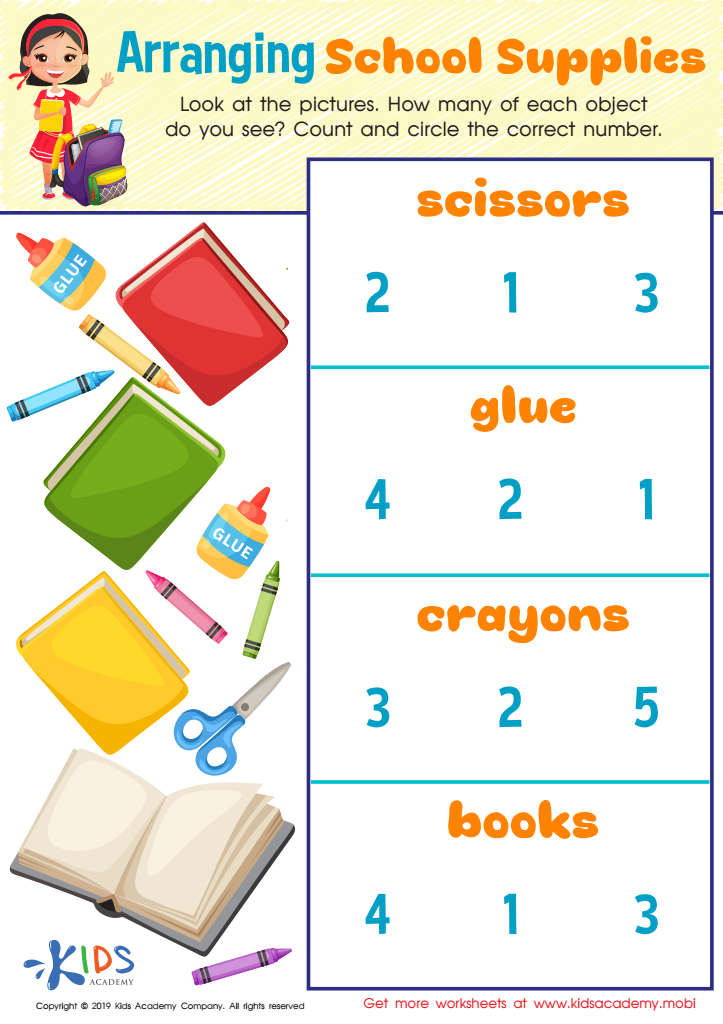
Arranging School Supplies Worksheet
Help your kids identify and count the school supplies in this colorful printout. Ask them to circle the correct number from the options provided. This is an easy and fun way for your child to practice their counting skills and recognize everyday objects.
 Assign to My Students
Arranging School Supplies Worksheet
Worksheet
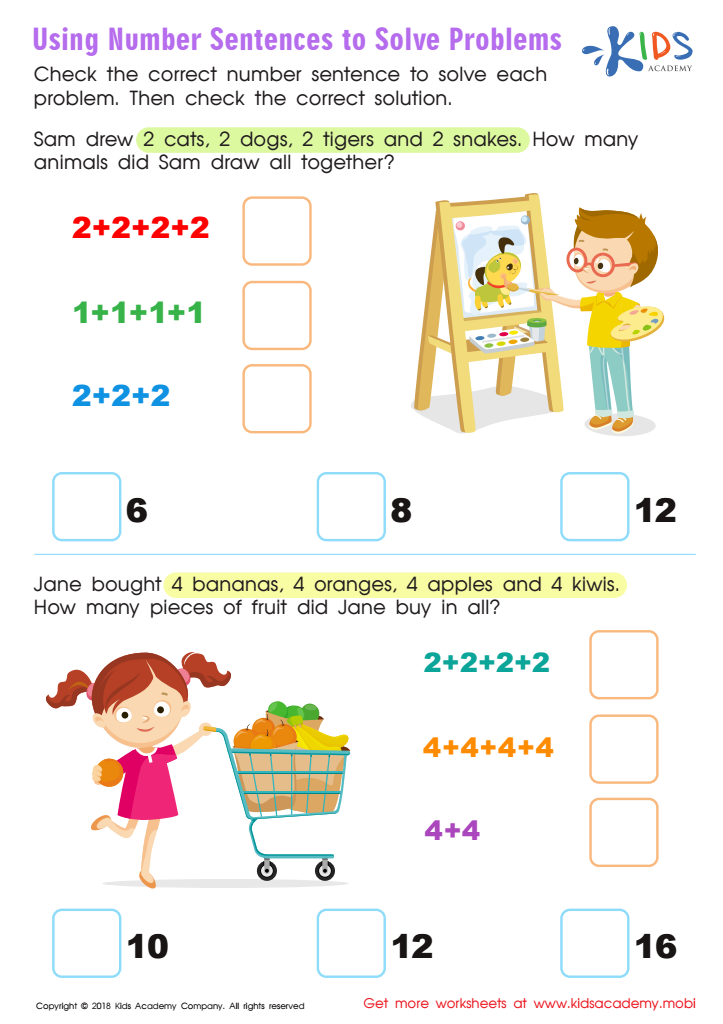
Using Number Sentences to Solve Problems Worksheet
Solving math problems requires an efficient strategy. Picture representation can help young mathematicians with basic addition problems, especially when it involves repeated addends. As they gain confidence, they'll be able to apply their number sentence solving abilities to more complex equations.
Using Number Sentences to Solve Problems Worksheet
Worksheet
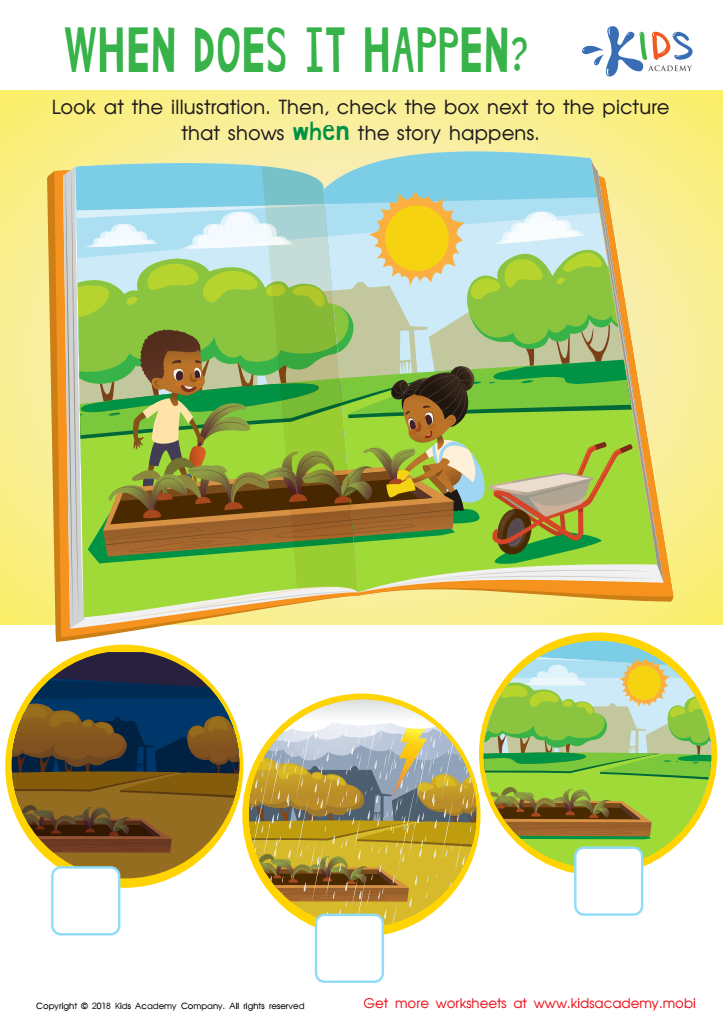
When Does It Happen? Worksheet
Help your kids learn about the different times of day and when events occur using this worksheet. Ask them to look at the pictures and determine which box shows when the story happened. Then, discuss how they can use this knowledge to better describe events that occur.
When Does It Happen? Worksheet
Worksheet
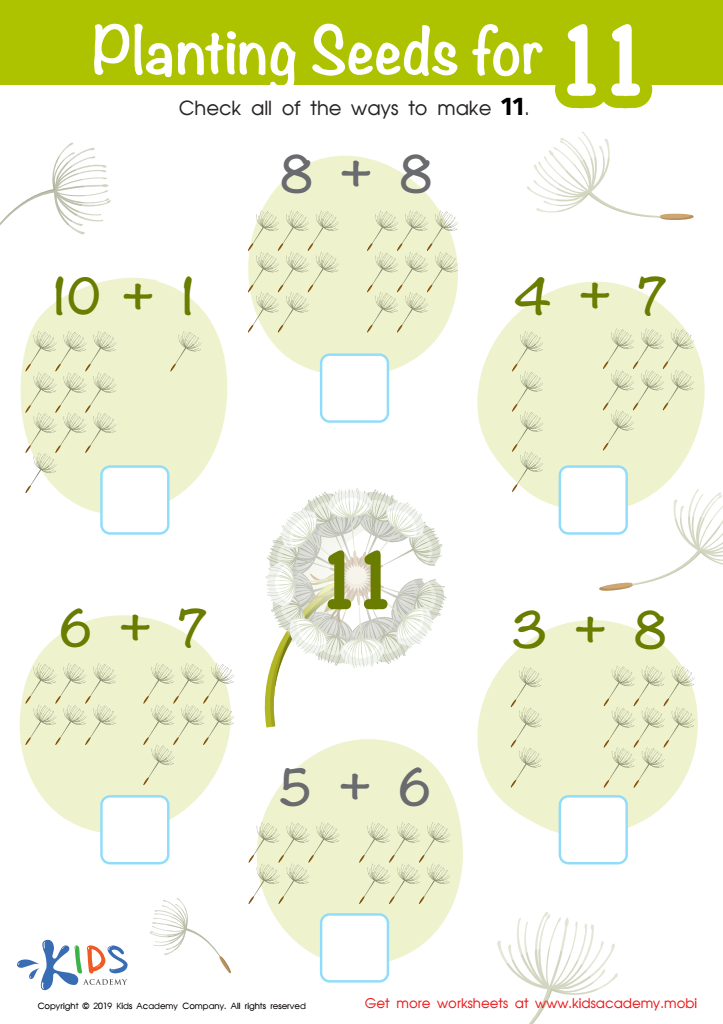
Planting Seeds for 11 Worksheet
Before starting, ask your students to count as high as they can. Explain that different numbers can add up to the same total. Give examples like 2+2 =4 and 3+1 =4. Ask if they can think of other examples. Then have them work through the equations in the printout and circle all that add up to 11.
Planting Seeds for 11 Worksheet
Worksheet
Haystack Steps Worksheet
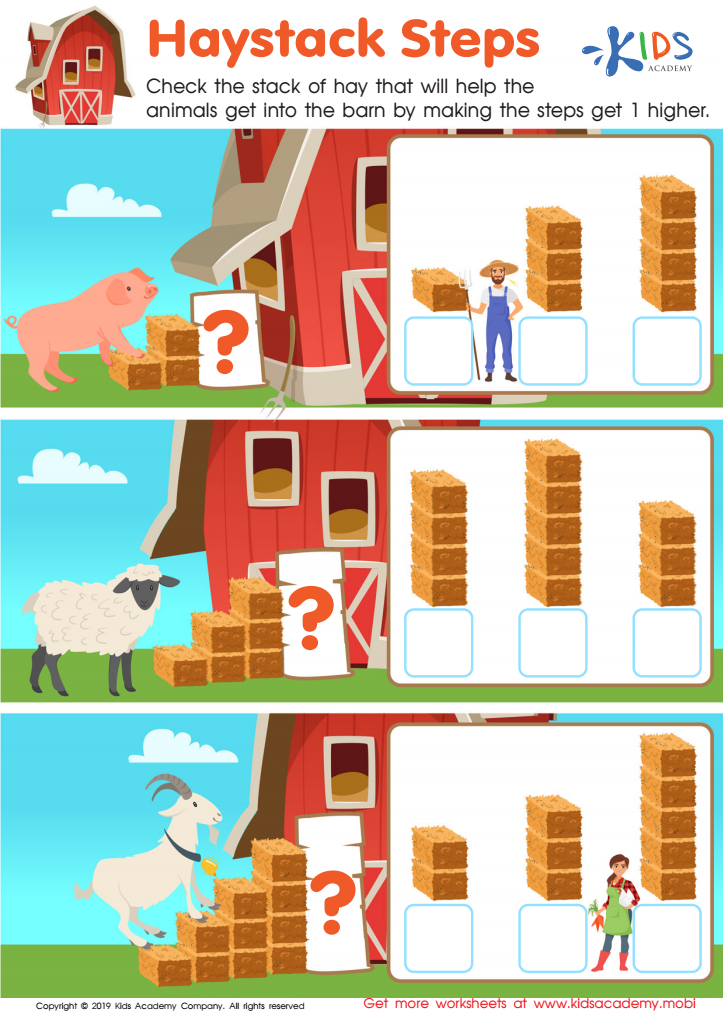
Have your kids ever visited a farm? What activities and sights did they enjoy? Farmers are essential to our lives, growing food and providing us with dairy and eggs. In this worksheet, a farmer has made a haystack for his animals to climb into the barn. Ask your kids to add an extra layer to the stack to make the climb easier.
Haystack Steps Worksheet
Worksheet
Join Kids Academy for Free
Who is primarily going to use this learning content?








Understanding sequences is fundamental for children's cognitive development and problem-solving skills. For parents and teachers, grasping this concept enables them to facilitate a child's ability to identify patterns, make logical predictions, and develop critical thinking skills. Sequences are everywhere—in numbers, events, and daily routines—providing a relatable way for children to engage with mathematics and logical reasoning.
By teaching children how to recognize and create sequences, educators help build a strong mathematical foundation that supports later learning in areas such as algebra and science. This understanding can enhance a child's ability to comprehend complex ideas by breaking them down into manageable, sequential steps.
Furthermore, comprehending sequences fosters discipline and patience in children. By working through a series of steps to achieve a goal, they learn the value of persistence and structured thinking.
For parents, emphasizing sequence understanding can reinforce daily learning at home, making math fun and interactive. Activities such as organizing books, following recipes, or planning chores can become opportunities to practice recognizing and creating sequences, enriching both their learning and familial bonds. In essence, prioritizing understanding sequences creates a significant pathway for children's educational success and confidence.








