
Understanding time Easy Worksheets
3 filtered results
Difficulty Level
Grade
Age
-
From - To
Subject
Activity
Standards
Welcome to our "Understanding Time Easy Worksheets" page, where learning about time becomes fun and engaging! Our carefully designed worksheets help young learners grasp the concept of time in a simple and interactive way. From reading clocks to understanding schedules, these activities cater to various learning styles, ensuring every child can master this essential life skill. With colorful illustrations and clear instructions, students will enjoy practicing what they'd learned. Perfect for teachers and parents, our worksheets support early education in a playful environment. Start your journey to temporal mastery today, and watch your child confidently navigate their daily schedules!
Favorites
With answer key
Interactive
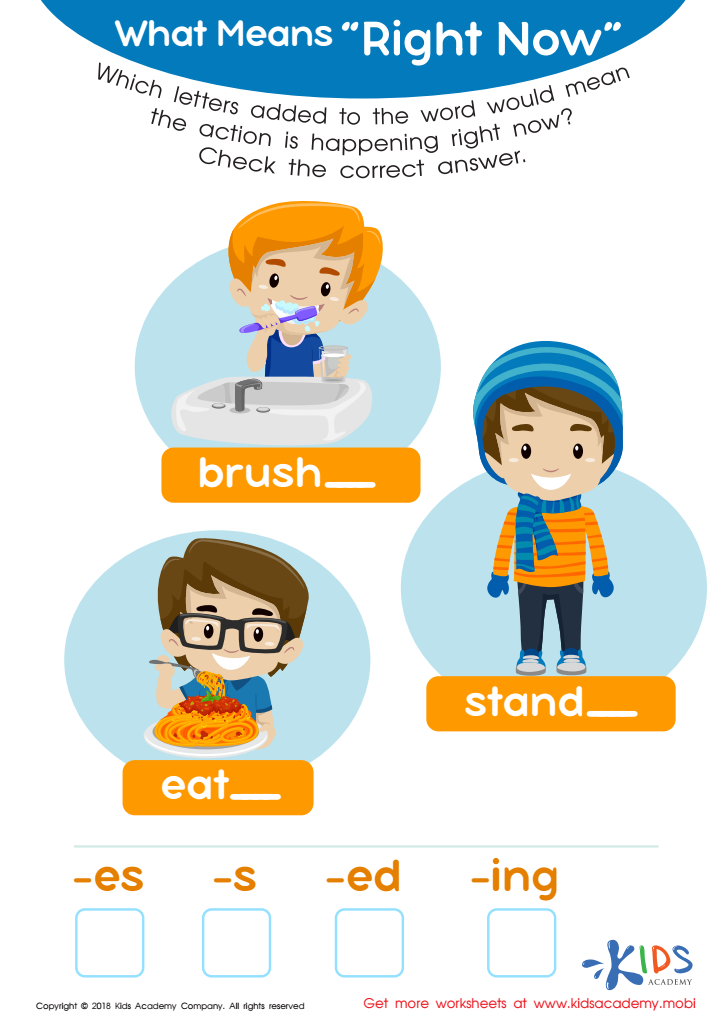
What Means "Right Now" Worksheet
Explain present/past tense verbs to your kids, giving them simple examples. Ask which letters make a verb present tense; read the words aloud and help them check the correct answers.
 Assign to My Students
What Means "Right Now" Worksheet
Worksheet
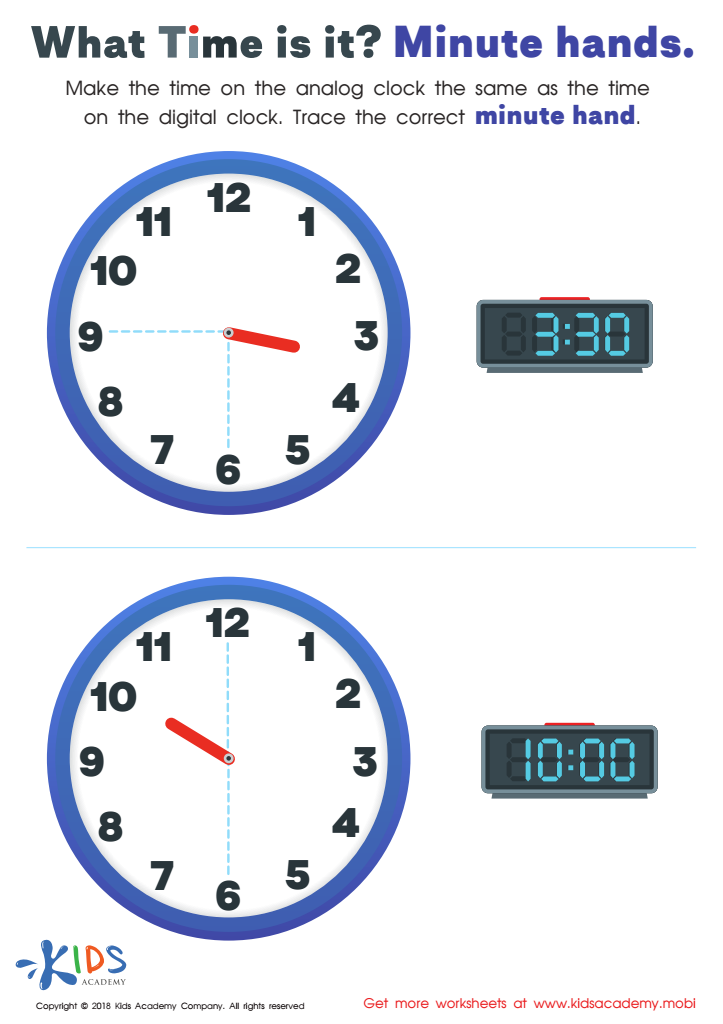
What Time Is it? Minute Hands Worksheet
Help your kids telling time with the minute hand correctly with this tracing sheet. Trace the correct minute hand to make the time on the analog clock the same as the time on the digital clock. Give them a pictured demonstration of how to do it and you'll be all set!
What Time Is it? Minute Hands Worksheet
Worksheet
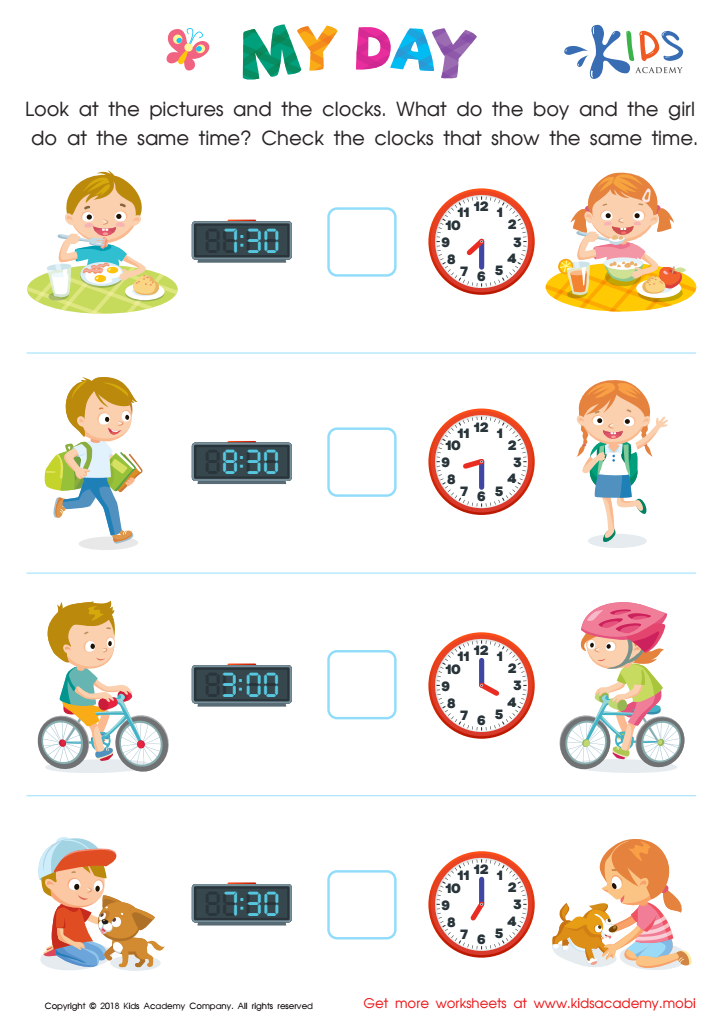
My Day Worksheet
Show your students the pictures and clocks in the colorful worksheet. Ask what the boy and girl are doing in each, then what time the clocks show. Finally, ask what activities they both do at the same time. Help them check the clocks showing the same time in both pictures.
My Day Worksheet
Worksheet
Join Kids Academy for Free
Who is primarily going to use this learning content?






.jpg)
Parents and teachers should care about helping children understand time because it is a fundamental skill that impacts many areas of a child's life. Firstly, an understanding of time fosters a sense of responsibility and self-management. Children who grasp concepts such as the sequence of the day, routines, and the importance of punctuality are better equipped to create schedules and meet deadlines, essential for school and later in life.
Moreover, understanding time enhances cognitive development. Time-related activities like scheduling their day, estimating durations, and following timelines stimulate critical thinking and problem-solving skills. It also helps improve memory and attention, as children learn to sequence events and anticipate what comes next.
Additionally, the concept of time is deeply linked to everyday life, from managing playdates to understanding historical events. Being able to read clocks and use calendars teaches planning and organization, empowering children as they learn to navigate their world. Lastly, a solid understanding of time builds confidence, as children feel more in control and independent when they can manage their activities. In summary, helping children grasp the concept of time is vital for their personal growth, academic success, and ability to thrive in a structured environment.








