Visual Learning Easy Addition & Subtraction Worksheets
5 filtered results
-
From - To
Discover our engaging Visual Learning Easy Addition & Subtraction Worksheets, designed to make math fun and accessible for young learners! These worksheets utilize colorful illustrations and intuitive layouts to support visual learners in mastering basic addition and subtraction concepts. By incorporating visual aids, students can better comprehend math problems, making it easier to solve with confidence. Perfect for early grades, our worksheets promote skill retention and critical thinking, encouraging kids to visualize numbers and develop essential math fluency. Explore our collection to empower your child's learning journey and turn math practice into an enjoyable experience! Ideal for home or classroom use!
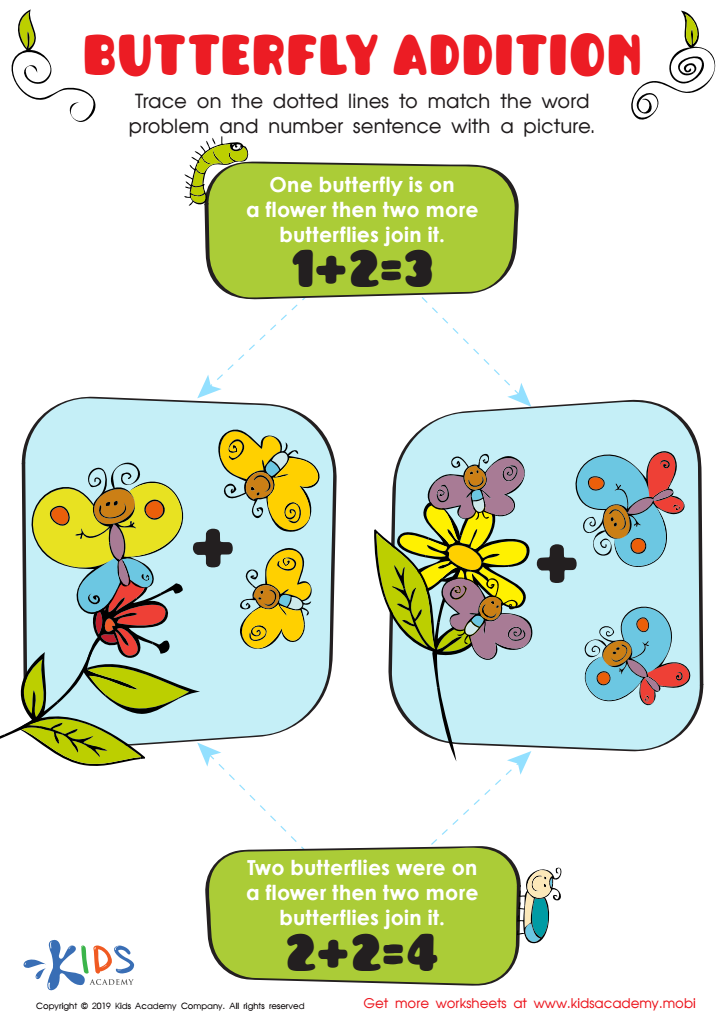
Butterfly Addition Worksheet
 Assign to My Students
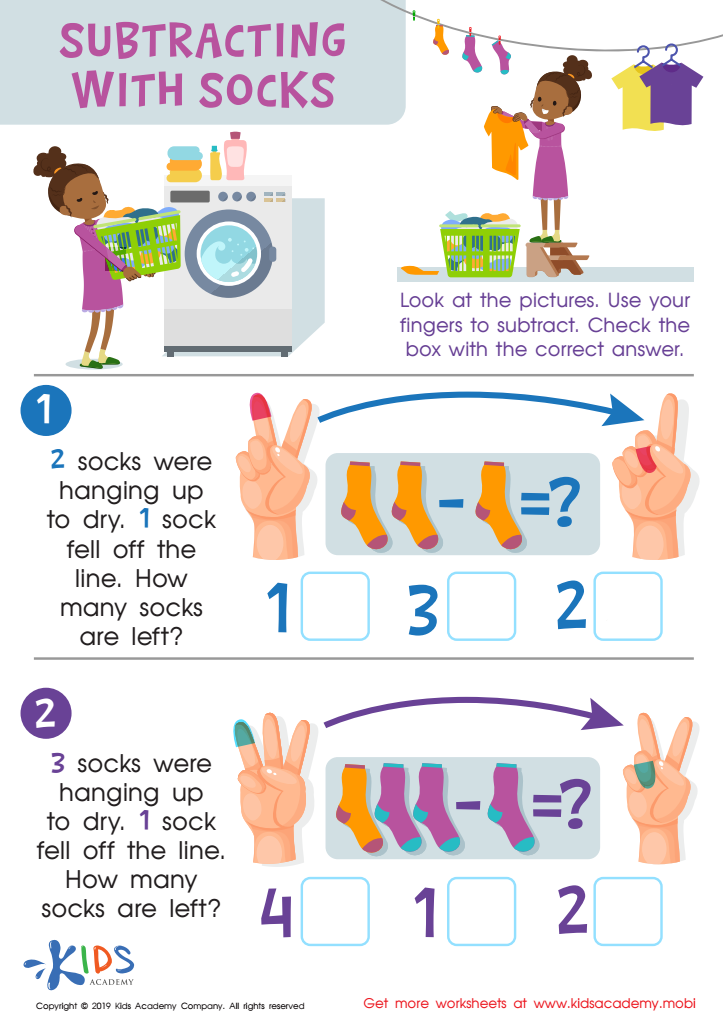
Subtracting Socks Worksheet
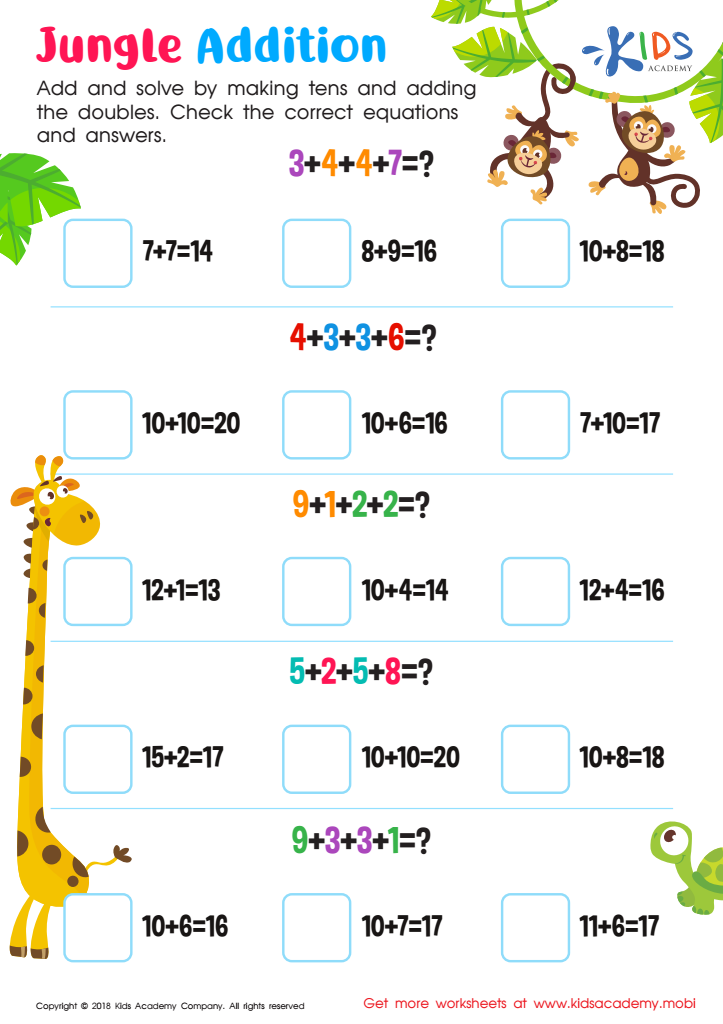
Jungle Addition Worksheet
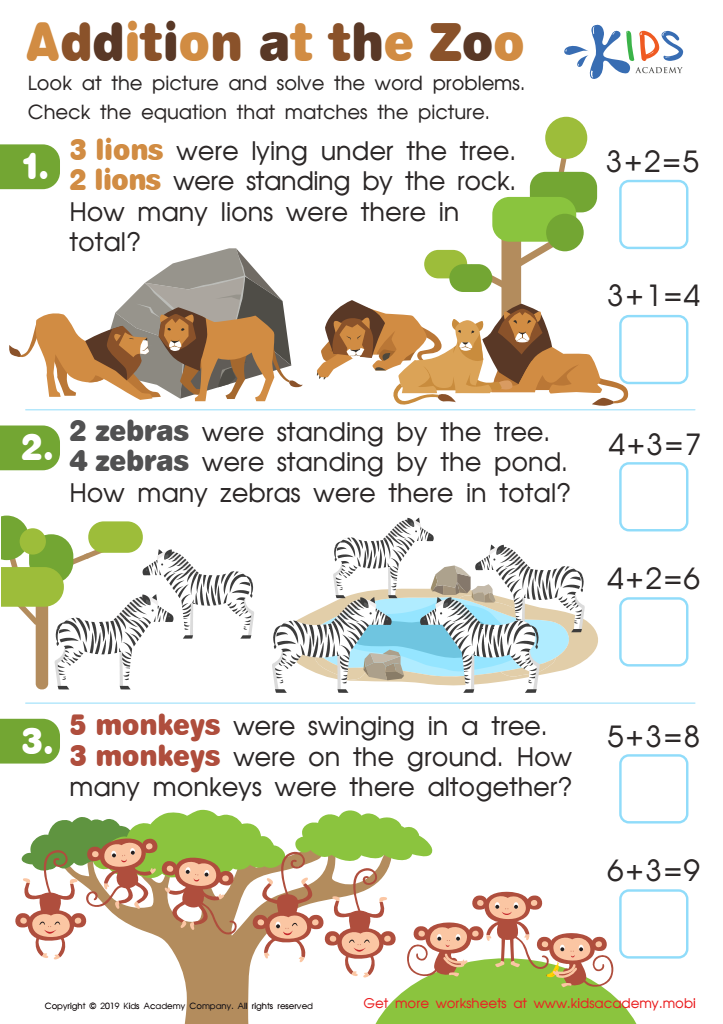
Addition at the Zoo Worksheet
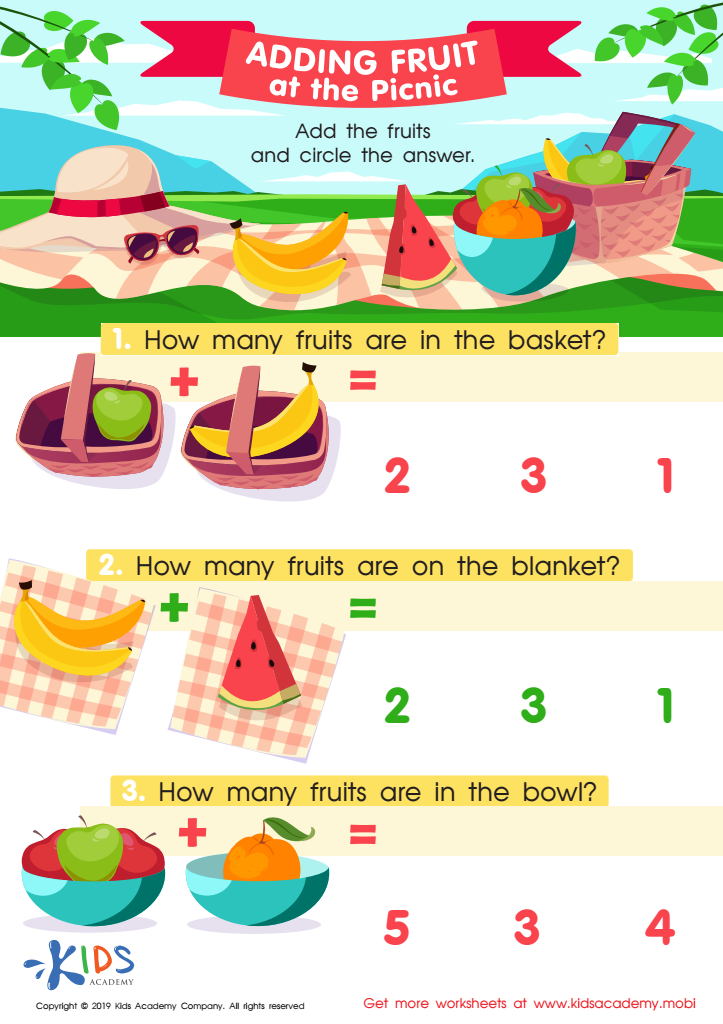
Adding Fruit at the Picnic Worksheet








Parents and teachers should prioritize Visual Learning Easy Addition & Subtraction because it enhances children's mathematical understanding in a tangible way. For young learners, abstract numbers can be challenging, making concepts like addition and subtraction difficult to grasp. Visual learning tools, such as manipulatives, number lines, and graphic representations, bridge the gap between the abstract and the concrete. These tools provide a more intuitive understanding of mathematical operations, making learning engaging and enjoyable.
Moreover, visual learning supports diverse learning styles. Many children are visual learners; relying solely on auditory instruction may hinder their grasp of fundamental concepts. Involving visual aids caters to these learners, ensuring they can visualize problem-solving processes, recognize patterns, and comprehend relationships between numbers.
Additionally, fostering strong foundational skills in addition and subtraction is vital for building confidence in mathematics. When children can see and manipulate numbers, they are more likely to engage in problem-solving strategies, leading to improvements in overall math proficiency. By investing time in visual learning strategies, parents and teachers help cultivate a supportive learning environment that encourages exploration, creativity, and a positive attitude towards math, which will benefit children throughout their academic journeys.








