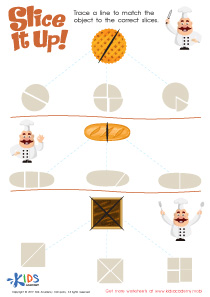
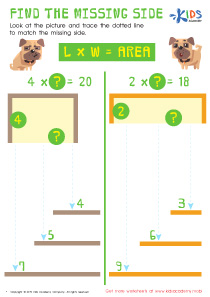
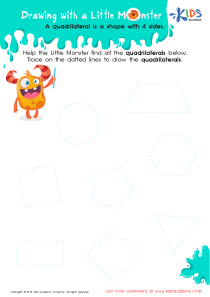
Shape Recognition Easy Fractions of Shapes Worksheets
5 filtered results
-
From - To
Explore our engaging "Shape Recognition Easy Fractions of Shapes Worksheets," designed to help young learners master the basics of shape recognition and fractions! These printable worksheets offer a fun and interactive way for children to identify shapes and understand simple fractions using visual aids. Perfect for early grade classrooms and homeschooling, our resources feature colorful illustrations that draw kids' attention while reinforcing their learning. Encourage your child’s problem-solving skills and boost their confidence in math with these enjoyable exercises. Visit our website today and empower your child to become proficient in recognizing shapes and understanding basic fractions!
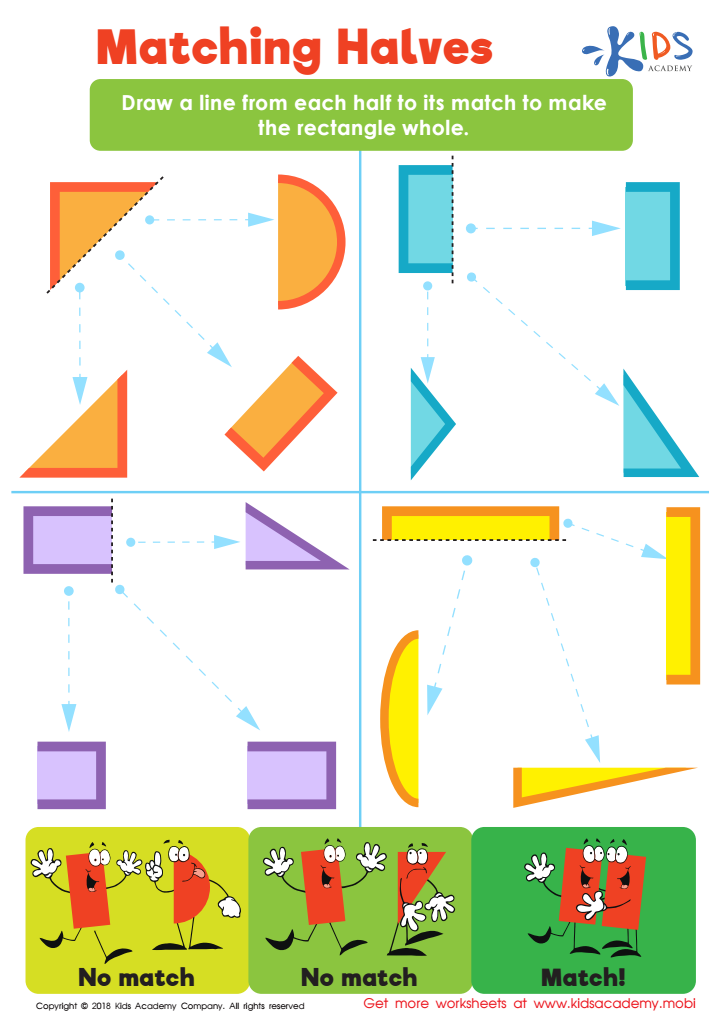
Matching Halves Worksheet
 Assign to My Students
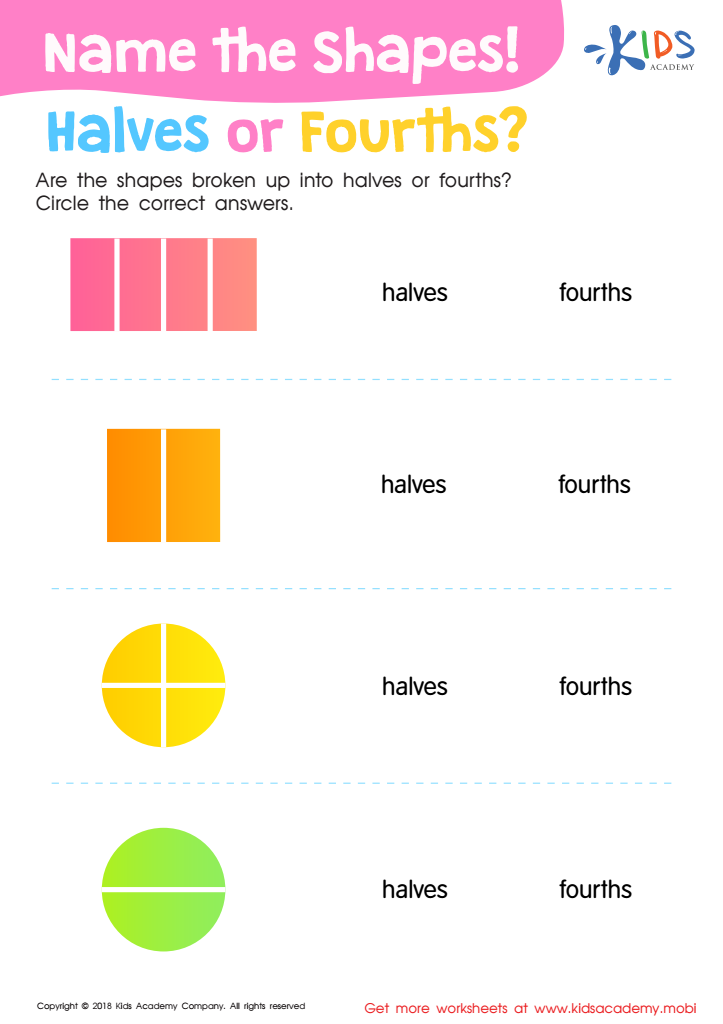
Name the Shapes Halves or Fourths? Worksheet
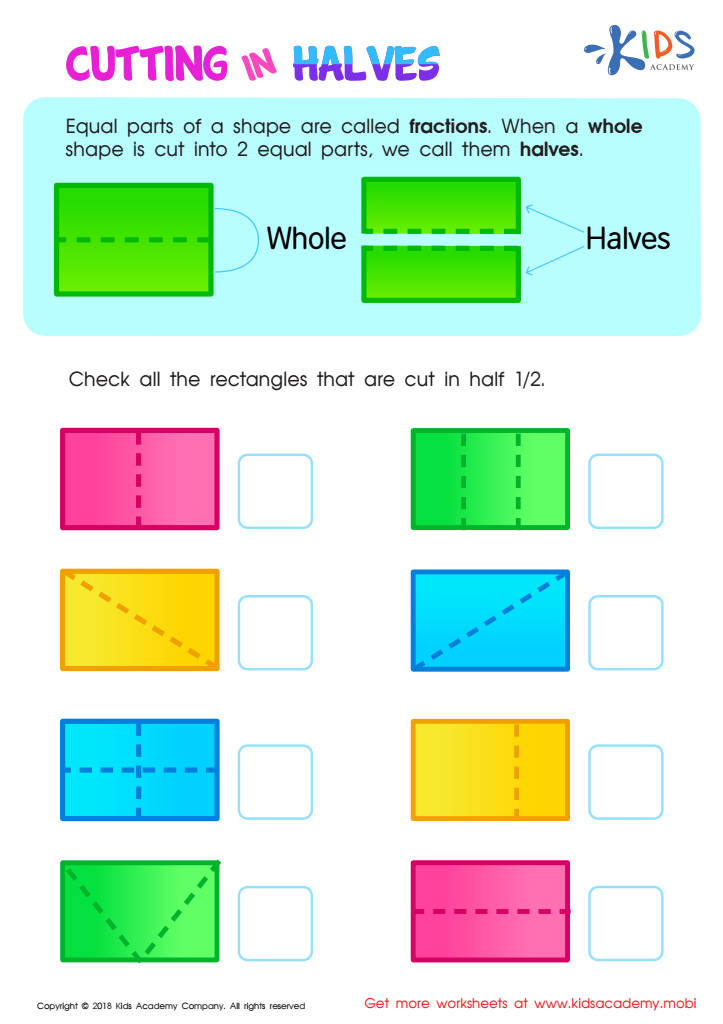
Cutting in Halves Worksheet
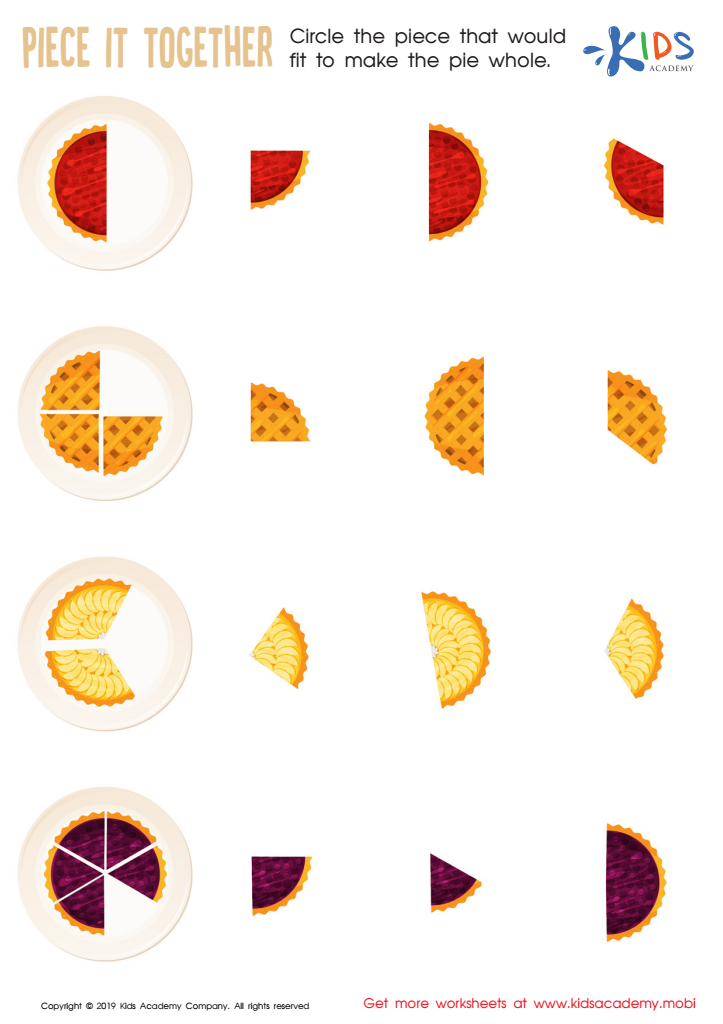
Piece it together Worksheet
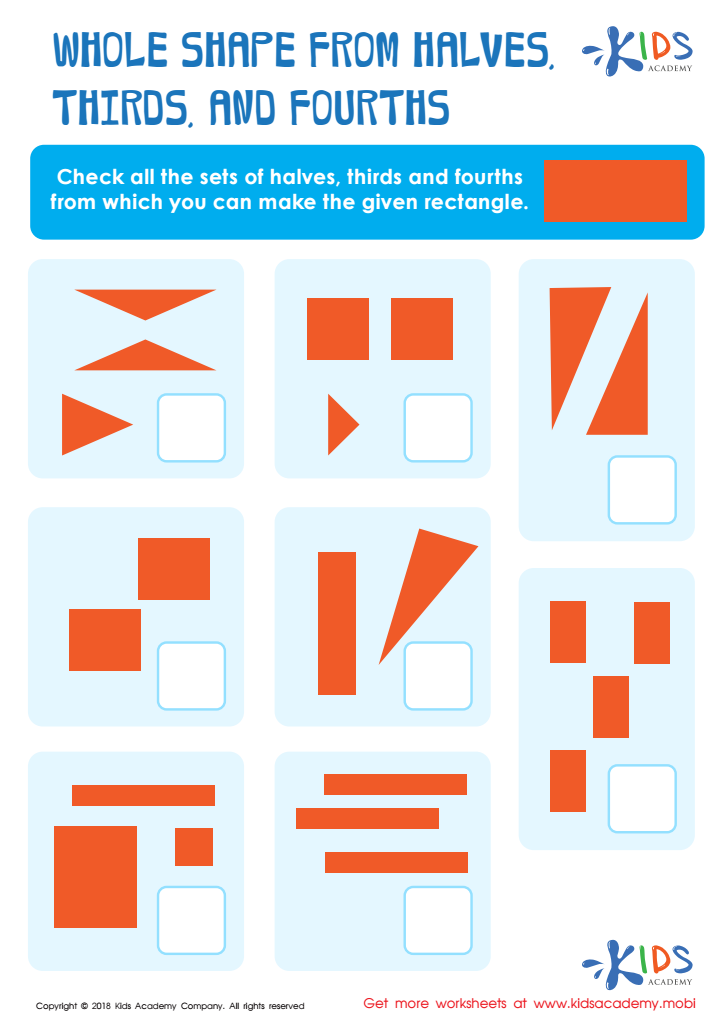
Whole Shape from Halves, Thirds and Fourths Worksheet








Shape recognition and understanding easy fractions of shapes are fundamental skills that significantly contribute to children's mathematical development and cognitive skills. Parents and teachers should care about these concepts because they lay the groundwork for more advanced mathematical reasoning.
Recognizing shapes helps children understand their environment and build spatial awareness. This skill is critical not only for math but also for everyday tasks, such as navigating spaces, art, and problem-solving. When children identify shapes, they start to make connections between different concepts, enhancing their analytical thinking.
Learning about easy fractions of shapes—like understanding that a pizza cut into four equal parts has each piece representing one-fourth—introduces the concept of division and proportional thinking. This foundational knowledge is crucial for later topics in mathematics, such as geometry, ratios, and algebra.
Moreover, mastering shape recognition and fractions can boost a child's confidence in their mathematical abilities. Engaging with these concepts in fun and relatable ways encourages a positive attitude towards math, setting the stage for lifelong learning. Overall, supporting children in these areas fosters a solid foundation that impacts their future academic success and problem-solving abilities.