
Color recognition Easy Math Worksheets
6 filtered results
Difficulty Level
Grade
Age
-
From - To
Subject
Activity
Standards
Discover an engaging collection of Color Recognition Easy Math Worksheets designed to enhance early learning for young children. These worksheets seamlessly blend math and art, helping kids identify colors while practicing essential counting and number skills. Perfect for preschool and kindergarten educators, our printable resources encourage hands-on learning through fun color-related activities. Each worksheet is crafted to stimulate creativity, reinforce color recognition, and aid in the development of mathematical concepts. Ideal for homeschooling or classroom settings, our worksheets cater to diverse learning styles, ensuring that every child can grasp the basics of math while enjoying the vibrant world of colors!
Favorites
With answer key
Interactive
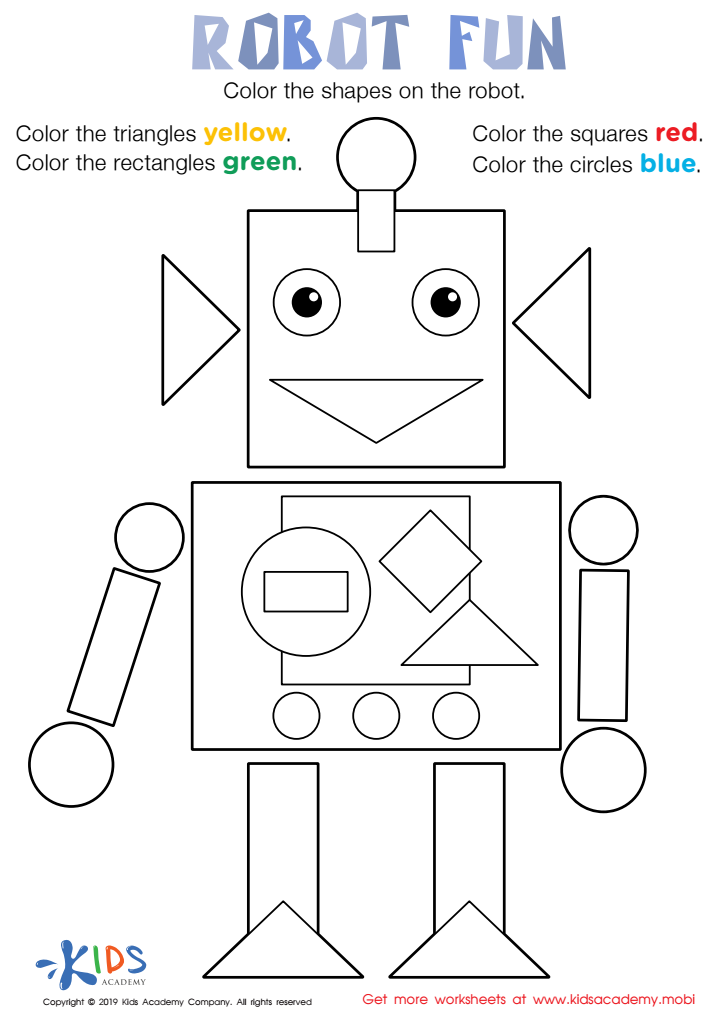
Robot Fun Worksheet
Help your child learn about basic shapes with this fun robot worksheet! Kids practice identifying circles, squares, rectangles and triangles, then color each shape according to directions. Make math practice enjoyable with this coloring page that teaches all four basic shapes - it's an important math skill!
Download (PDF)
 Assign to My Students
Assign to My Students
Robot Fun Worksheet
Worksheet
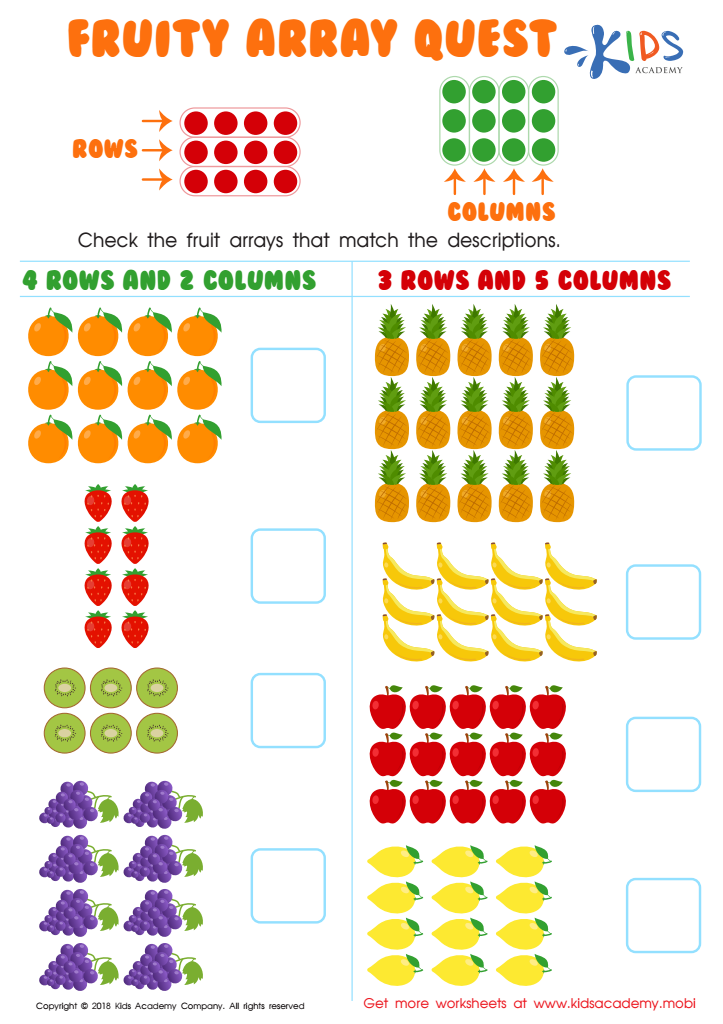
Fruity Array Quest Worksheet
Explain rows (horizontal) and columns (vertical) to your child before starting the worksheet. Show them the picture and the arrows indicating direction. Your child should be able to answer the questions easily after that. Help them match the fruit arrays that match the descriptions.
Fruity Array Quest Worksheet
Worksheet
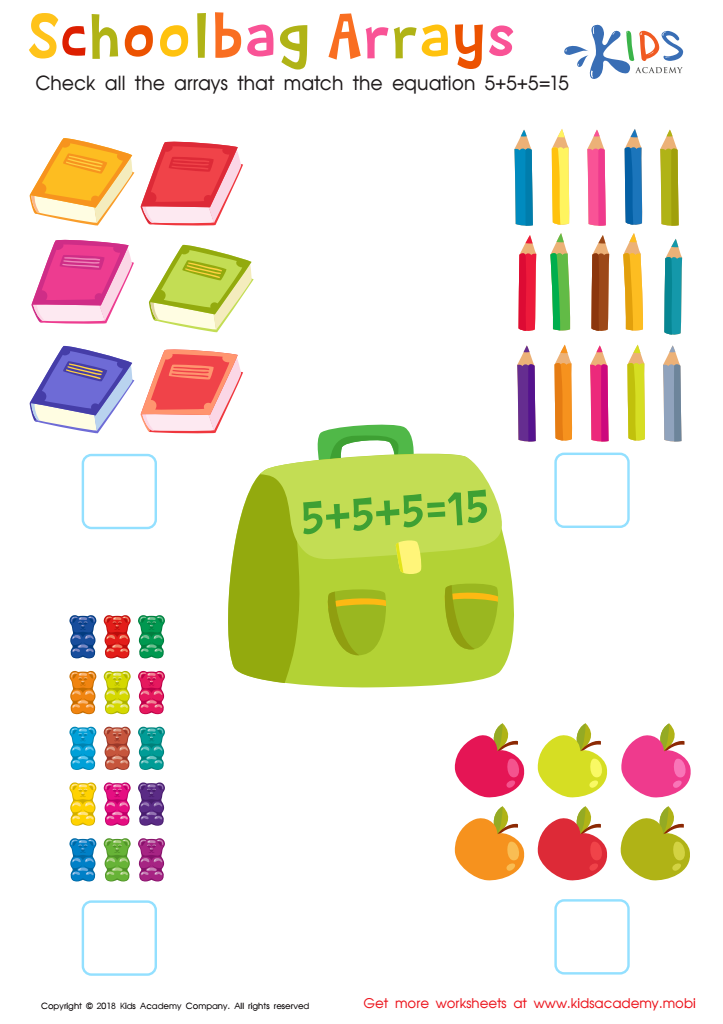
Schoolbag Arrays Worksheet
Help your child spot the correct arrays in this worksheet: having them count the items in each and check the boxes for the ones with 15 objects. Ask them to differentiate between rows and columns and explain which ones match the equation 5+5+5=15.
Schoolbag Arrays Worksheet
Worksheet
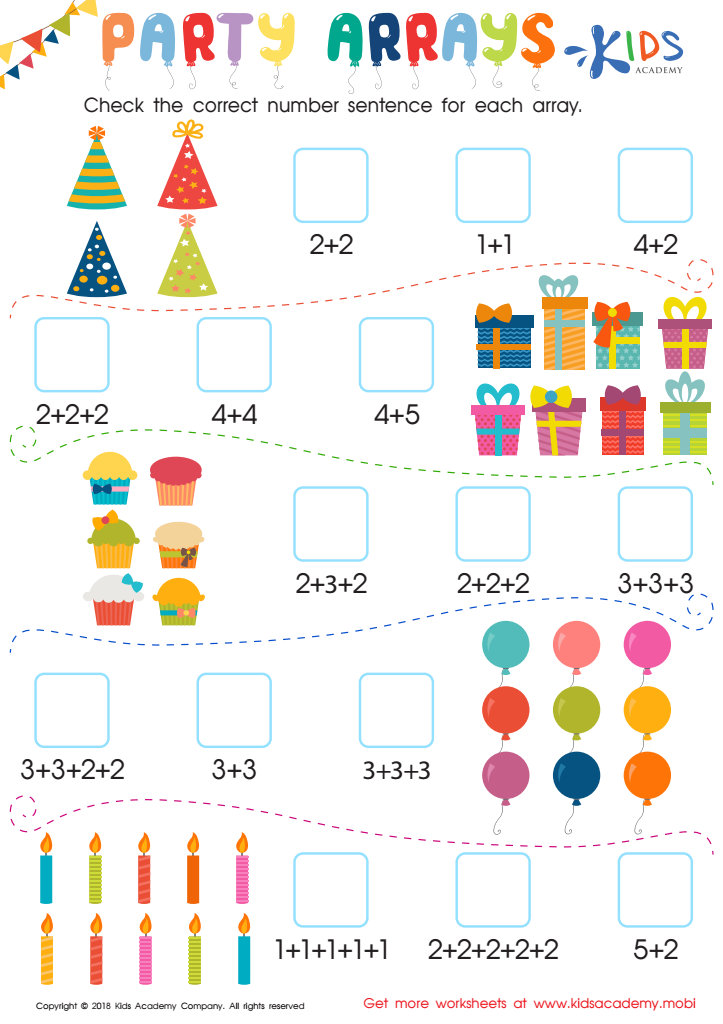
Party Arrays Worksheet
Help your child count the objects in each of the five arrays, then check the correct number sentence for each. This exercise will test their math skills and understanding of number sentences. Guide them to select the appropriate boxes.
Party Arrays Worksheet
Worksheet
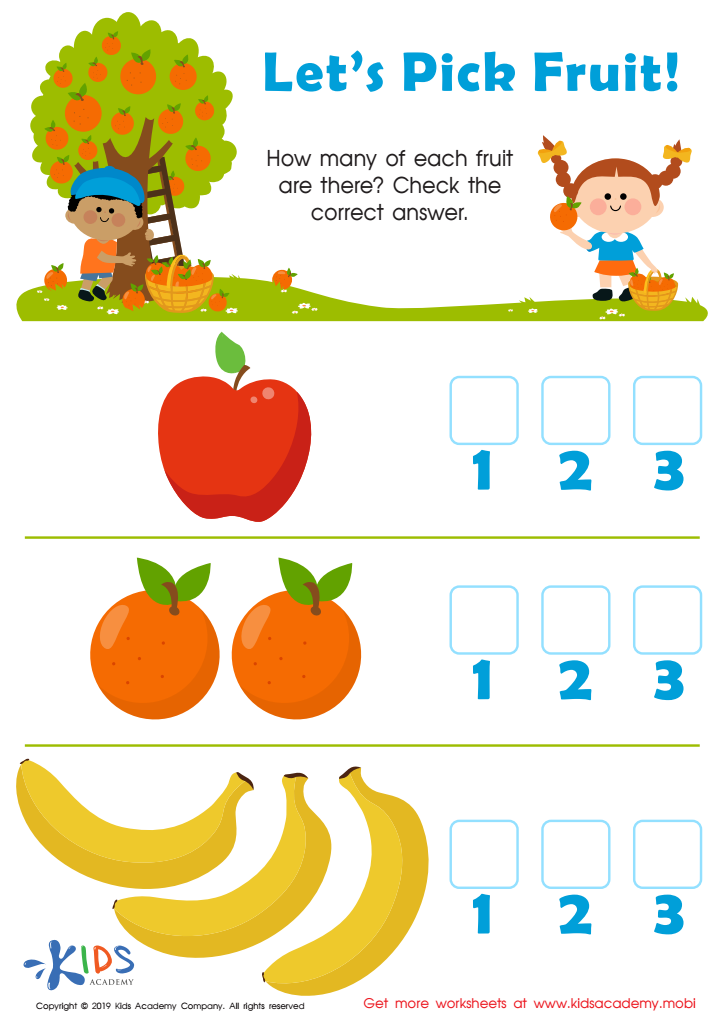
Let's Pick Fruit Worksheet
Picking fruit is fun - and counting it is even better! This free worksheet is perfect for young math learners. They'll use picture representation to count the fruit in each problem and then select the correct answer from the multiple-choice boxes. It's a great way to teach number sense in an easy, fun way!
Let's Pick Fruit Worksheet
Worksheet
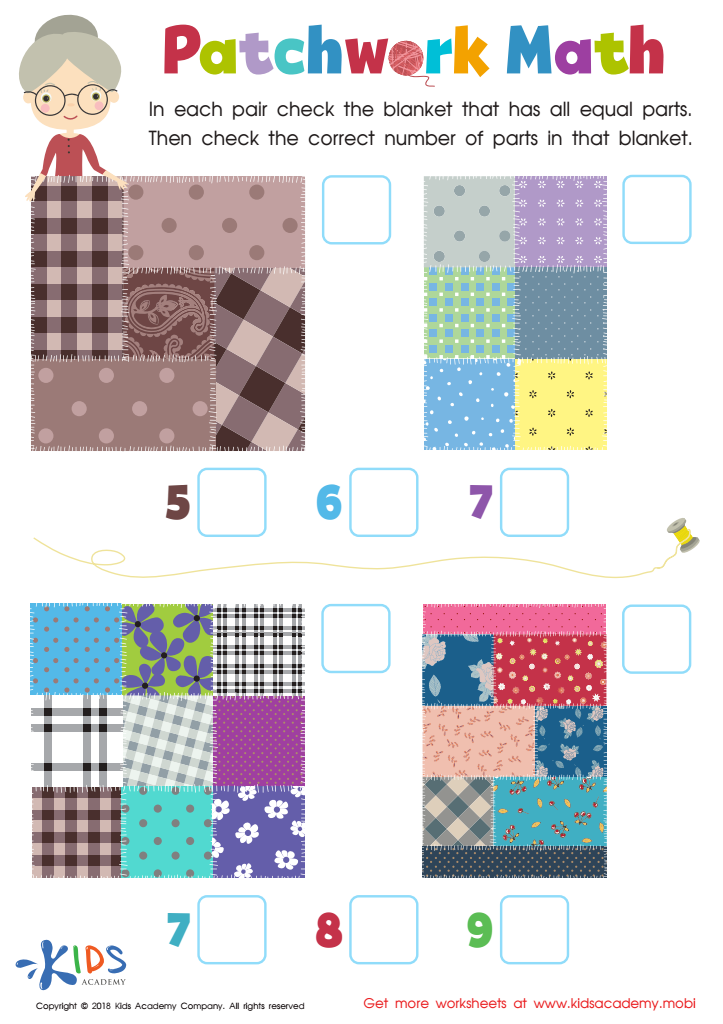
Patchwork Math Worksheet
Test your children's knowledge with this colorful worksheet. They'll need to identify which of the blanket pairs have been cut in equal parts and count the number of parts. Check the provided options to ensure the correct answer.
Patchwork Math Worksheet
Worksheet
Join Kids Academy for Free
Who is primarily going to use this learning content?








Color recognition plays a crucial role in early childhood development and is intricately linked to foundational math skills. Understanding colors helps young learners enhance their cognitive abilities, promoting visual discrimination and critical thinking. When children recognize and name different colors, they build vocabulary and improve their communication skills, which are essential for effective learning.
Moreover, color recognition can facilitate engagement in math activities. For instance, when children sort objects by color or count colorful items, they practice fundamental math concepts like categorization, addition, and subtraction. This hands-on approach makes learning more enjoyable and relatable, helping to create positive associations with math from an early age.
Additionally, familiarizing children with colors can aid in problem-solving skills. Recognizing and utilizing colors in patterns can lay the groundwork for more complex mathematical concepts such as geometry and algebra, promoting a stronger mathematical foundation as they progress in their education.
Incorporating color-based activities in nurturing environments ensures that parents and teachers create a stimulating learning atmosphere. By caring about color recognition alongside math, adults can foster a love for learning that lasts a lifetime, ultimately supporting the holistic development of children.








