Animal recognition Easy Preschool Math Worksheets
6 filtered results
-
From - To
Introduce your preschooler to the delightful world of numbers and creatures with our "Animal Recognition Easy Preschool Math Worksheets." These fun, engaging worksheets seamlessly blend early math skills with animal recognition, keeping learning entertaining and educational. Designed by experts, our resources support children in identifying animals while practicing counting, sorting, and basic math concepts. Perfect for both classroom and at-home learning, these printable worksheets help build foundational skills essential for future math success. Start your child's learning adventure today with our playful and interactive animal recognition math activities, fostering a love for numbers and nature simultaneously.
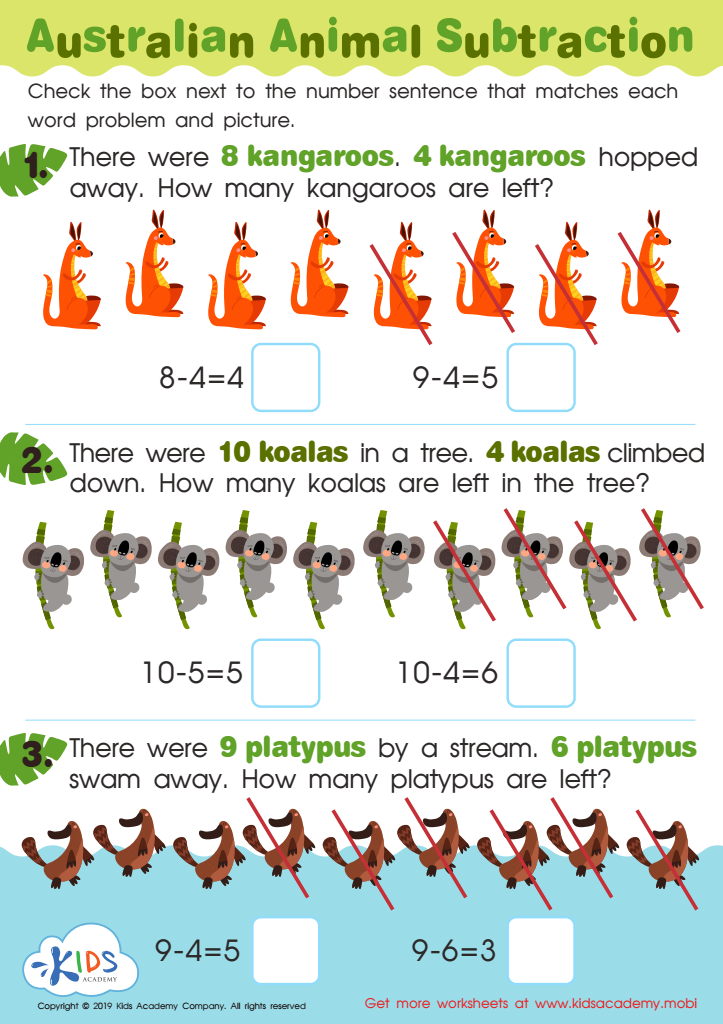
Australian Animal Subtraction Worksheet
 Assign to My Students
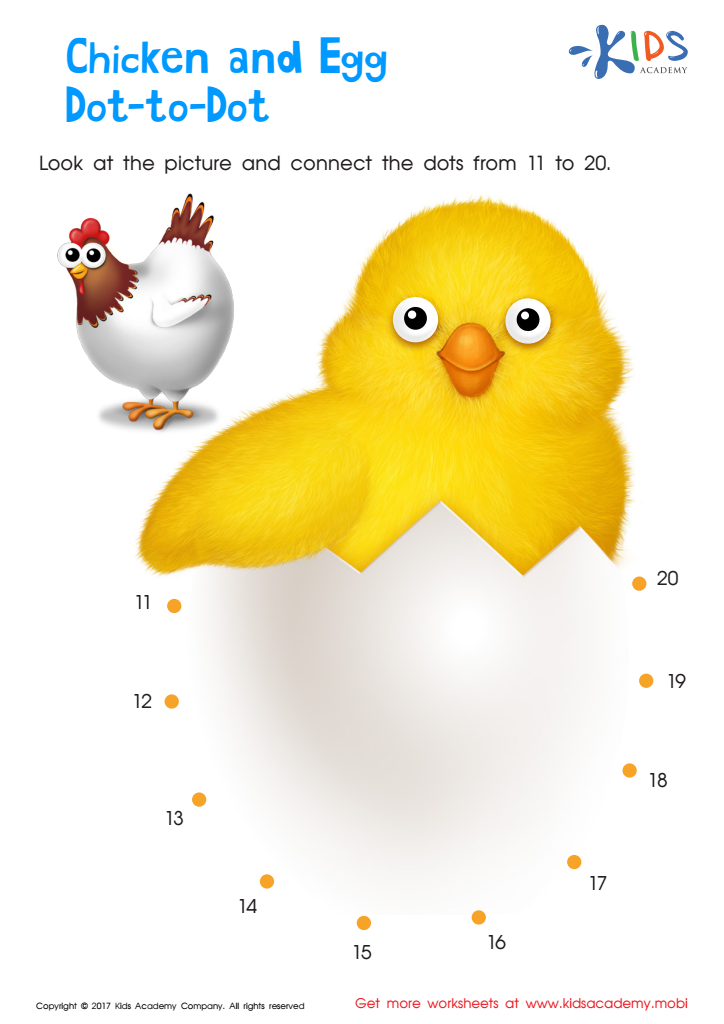
Ordering 11–20: Chicken & Egg Dot–to–dot Worksheet
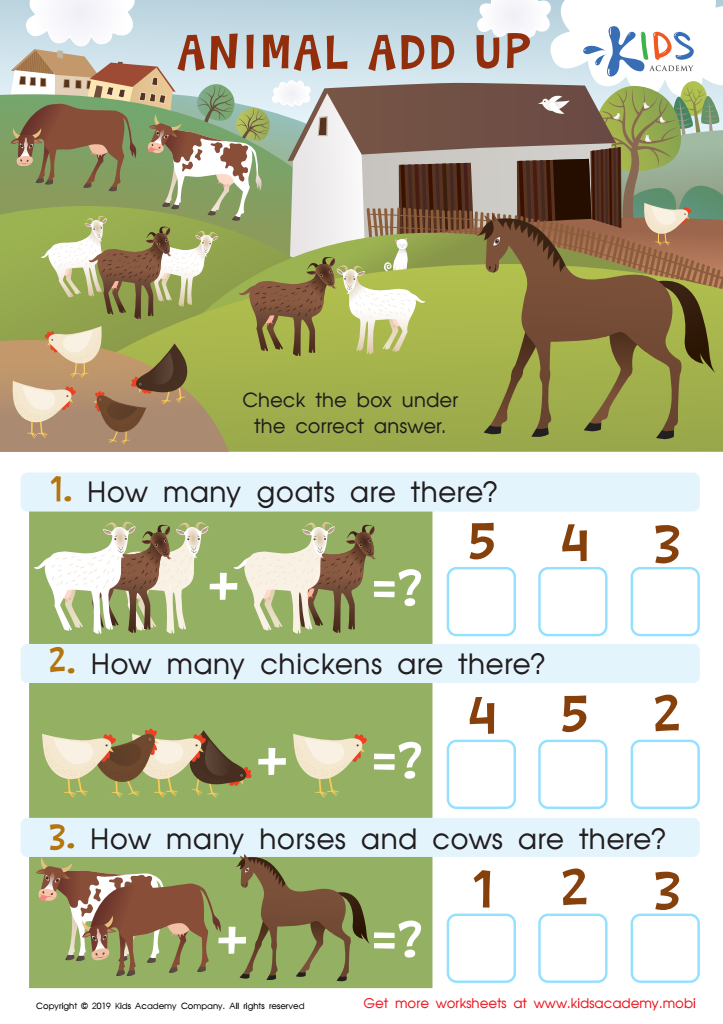
Animal Add Up Worksheet
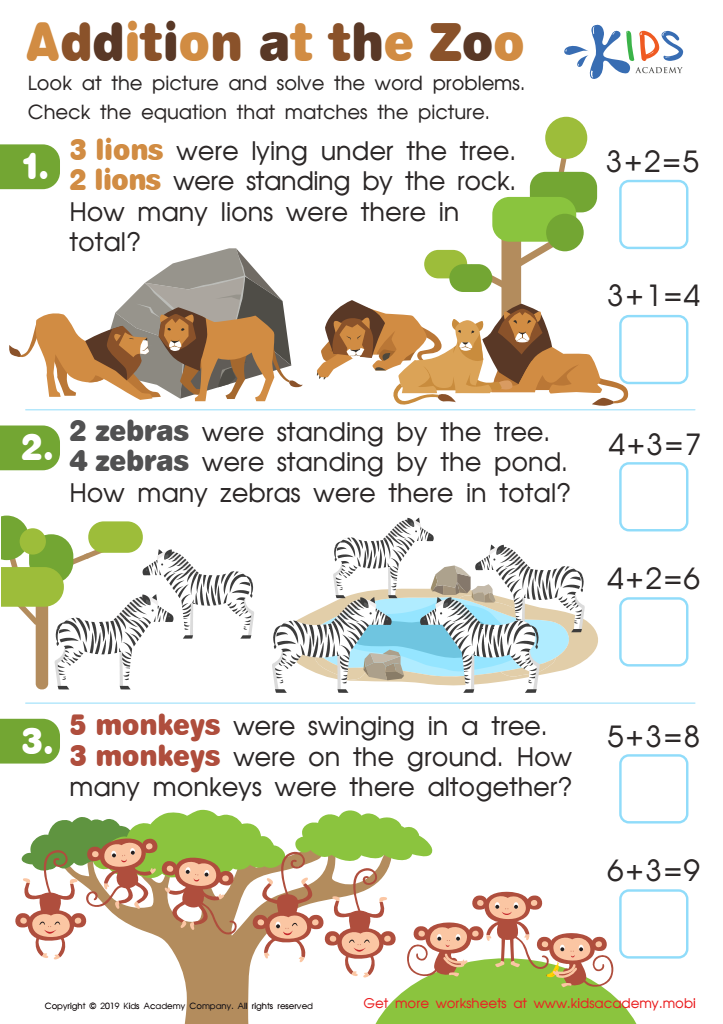
Addition at the Zoo Worksheet
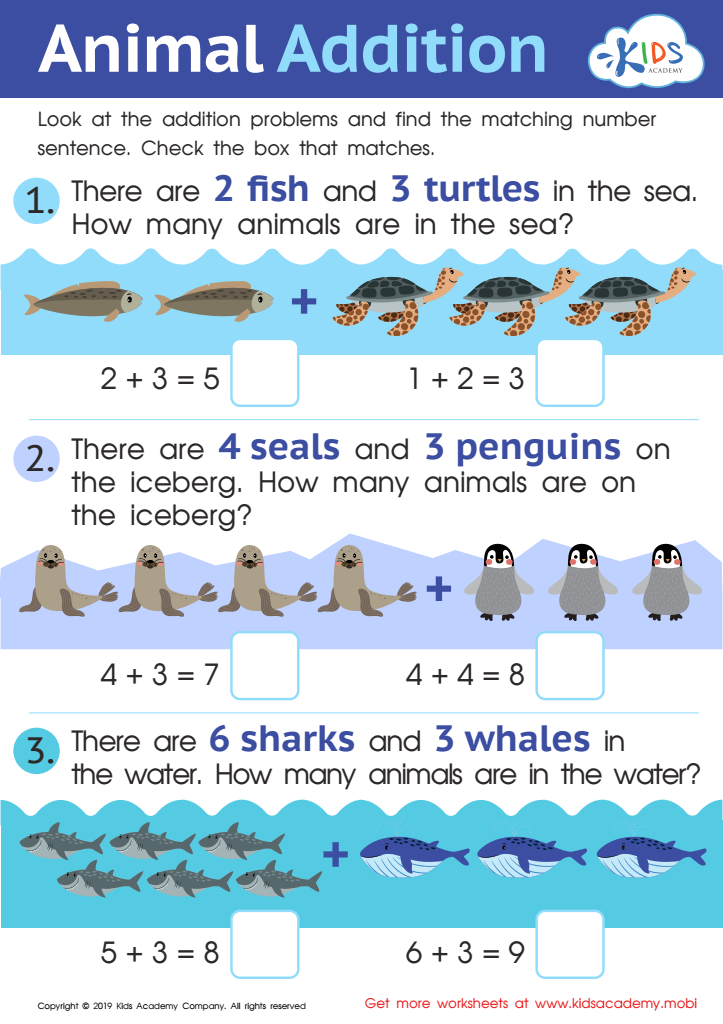
Animal Addition Worksheet
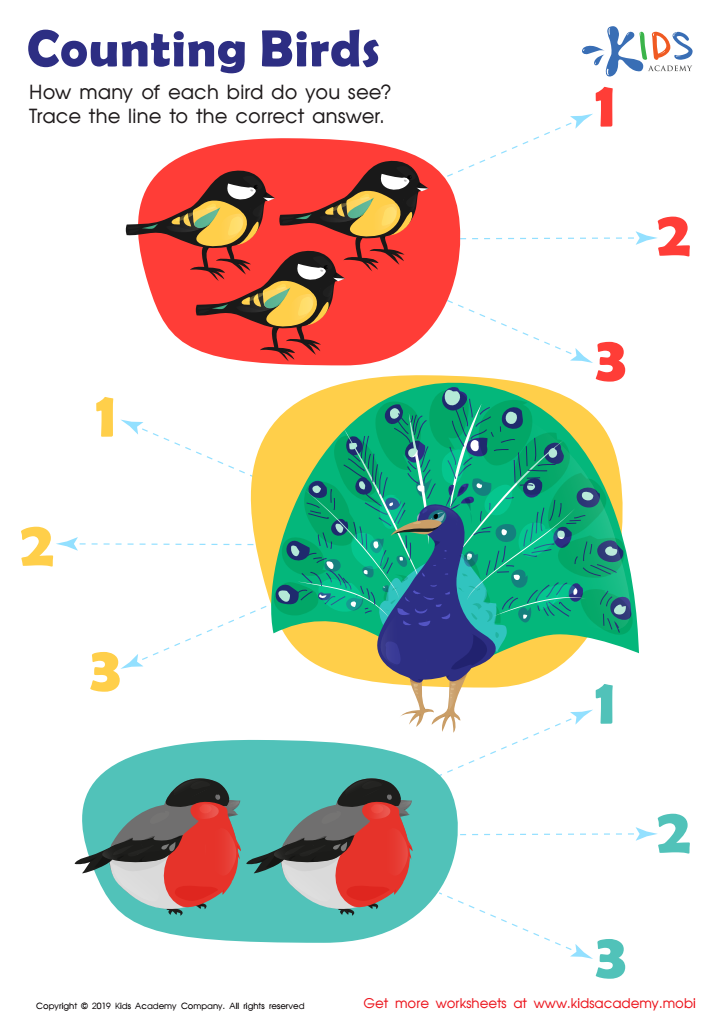
Counting Birds Worksheet







Animal recognition and basic math skills are both crucial components in early childhood education. Integrating animal recognition into preschool math offers a multifaceted approach to learning that fosters numerous developmental benefits. Here’s why parents and teachers should care about it:
Firstly, young children inherently find animals fascinating, making them excellent motivators for learning. Using animals in math activities can capture their attention and make abstract concepts more tangible and relatable. For example, counting animal figures or sorting animals by size or type helps children grasp basic arithmetic and classification skills in a fun and engaging way.
Secondly, animal recognition builds cognitive skills, such as memory and comparison, as children learn to identify and differentiate between various animals. These skills are directly transferable to math, where recognizing patterns and differences is vital.
Moreover, incorporating animals into math encourages language development. Describing animals and their characteristics enhances vocabulary, which is essential for following instructions and comprehending math problems.
Lastly, incorporating animals into math lessons can promote emotional and social development. Collaborative games involving animal-themed activities encourage teamwork and communication among peers.
In summary, combining animal recognition with preschool math aids in capturing children’s interest, reinforcing cognitive skills, enhancing language development, and promoting social interaction—all of which lay a strong educational foundation for future learning.