Comparing lengths Easy Grade 2 Worksheets
4 filtered results
-
From - To
Welcome to our Comparing Lengths Easy Grade 2 Worksheets! Designed specifically for second-grade students, these engaging worksheets help children master the essential skill of comparing lengths. Through a variety of fun activities, students will learn to use comparison words such as longer, shorter, and equal. Our worksheets feature vibrant visuals and relatable examples, making learning enjoyable and effective. Ideal for classroom use or at-home practice, these resources promote critical thinking and enhance measurement skills. Download and print these worksheets to give your child the confidence to succeed in their understanding of lengths while building a solid foundation in math!
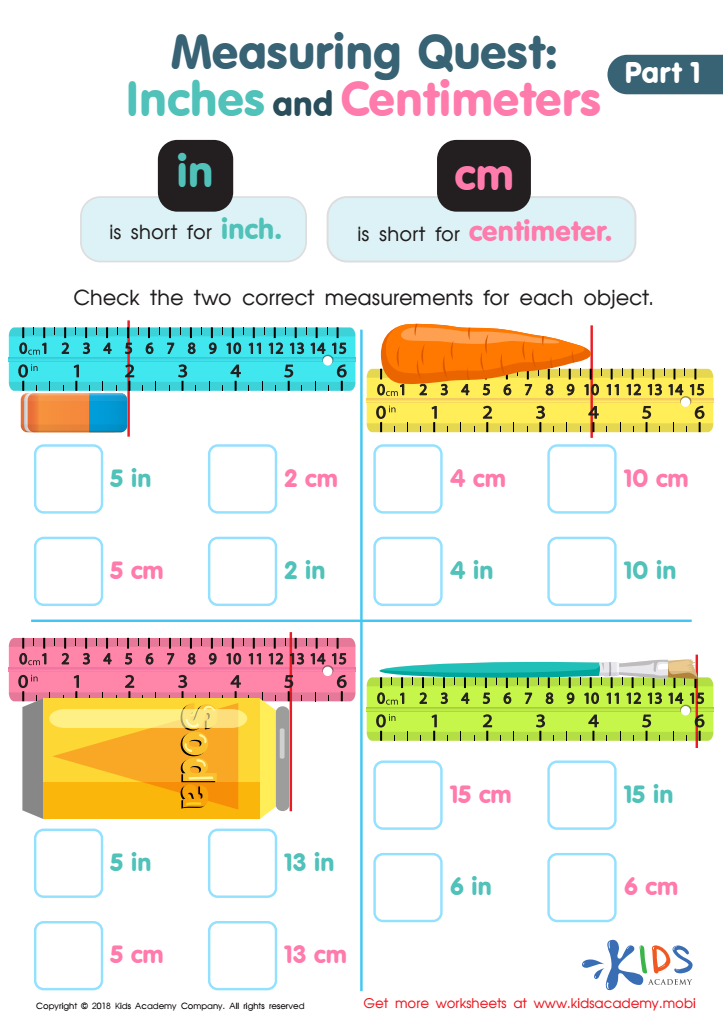
Measuring Quest: Inches and Centimeters Worksheet
 Assign to My Students
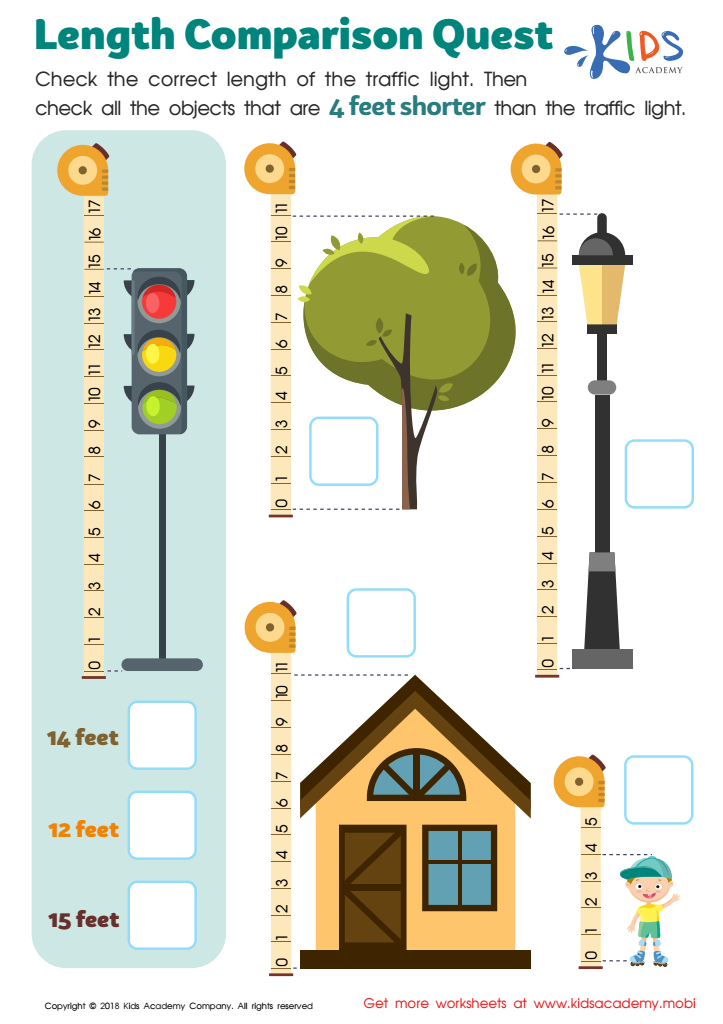
Length Comparison Quest Worksheet
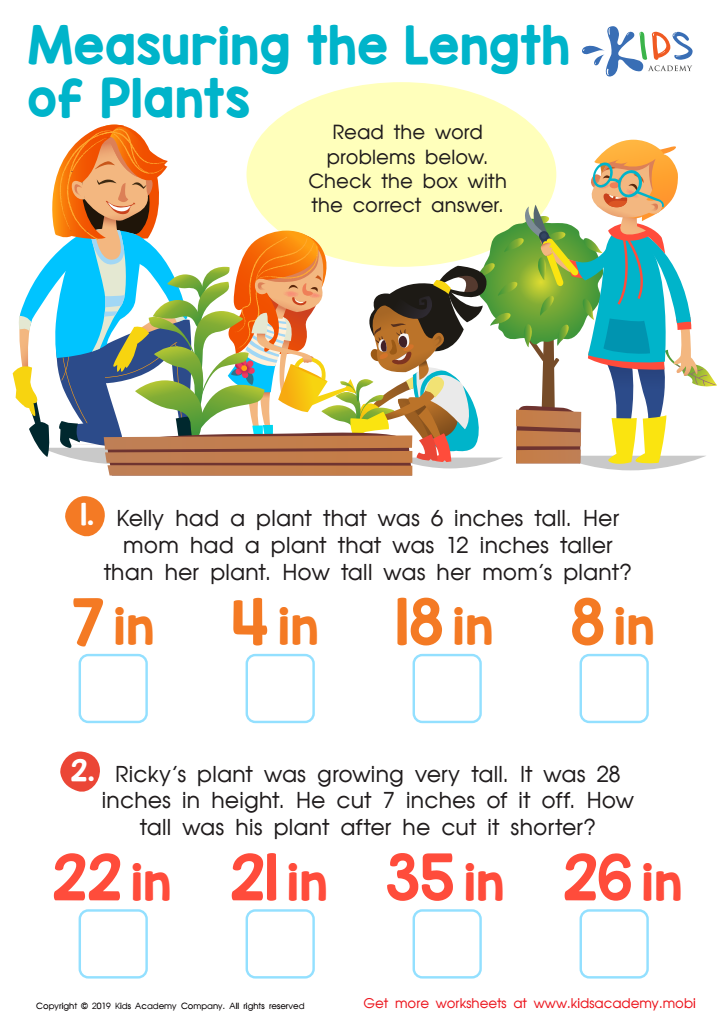
Measuring the Length of Plants Worksheet
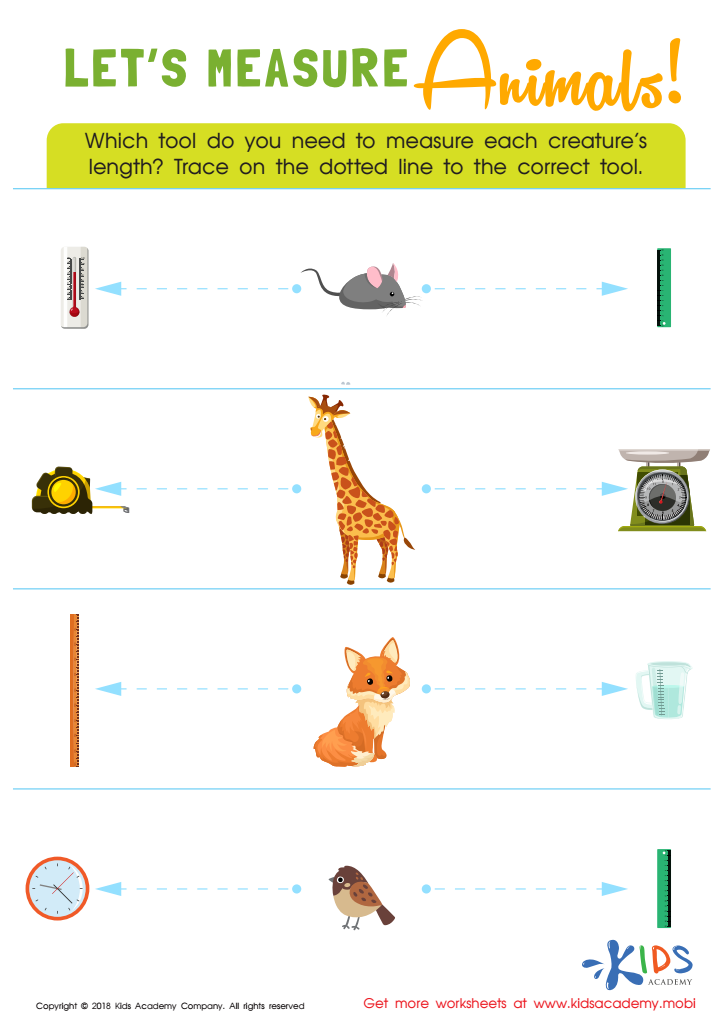
Let's Measure Animals! Worksheet







Comparing lengths is a foundational concept in early mathematics that holds significant importance for Grade 2 students. Understanding measurements not only helps children develop essential math skills but also fosters critical thinking and problem-solving abilities. When children compare lengths, they learn to make connections between different units of measurement, enhancing their spatial awareness and cognitive development.
For parents and teachers, supporting this skill is crucial for several reasons. Firstly, comparing lengths cultivates a sense of measurement in real-life contexts, enabling children to relate math to everyday activities, such as measuring heights, comparing the lengths of objects, or even during sports. This relevance boosts engagement and motivation.
Additionally, mastering comparison skills prepares students for more complex mathematical concepts encountered in higher grades. It builds a solid foundation for understanding everything from geometry to data analysis later on. This foundational skill also enhances vocabulary development as students begin to use terms like "shorter," "longer," "taller," and "smaller," enriching their language skills.
Moreover, by encouraging discussions around comparing lengths, parents and teachers nurture an environment of inquiry and curiosity, essential qualities for lifelong learning. Ultimately, investing attention in this area of math not only assists students academically but also empowers them with practical skills for daily life.