Shape Recognition Easy Grade 2 Worksheets
8 filtered results
Difficulty Level
Grade
Age
-
From - To
Subject
Activity
Standards
Boost your child's shape recognition skills with our engaging and educational Grade 2 worksheets! Designed specifically for second graders, these worksheets offer a fun and interactive way to master geometric shapes. Each activity combines vibrant illustrations with clear instructions, helping young learners identify and differentiate between various shapes. The exercises are focused on promoting critical thinking and visual-spatial intelligence while ensuring your child stays entertained. Perfect for both classroom use and homeschooling, our Shape Recognition Easy Grade 2 Worksheets ensure your child’s math skills are on the right track. Access now and build a strong mathematical foundation!
Favorites
With answer key
Interactive
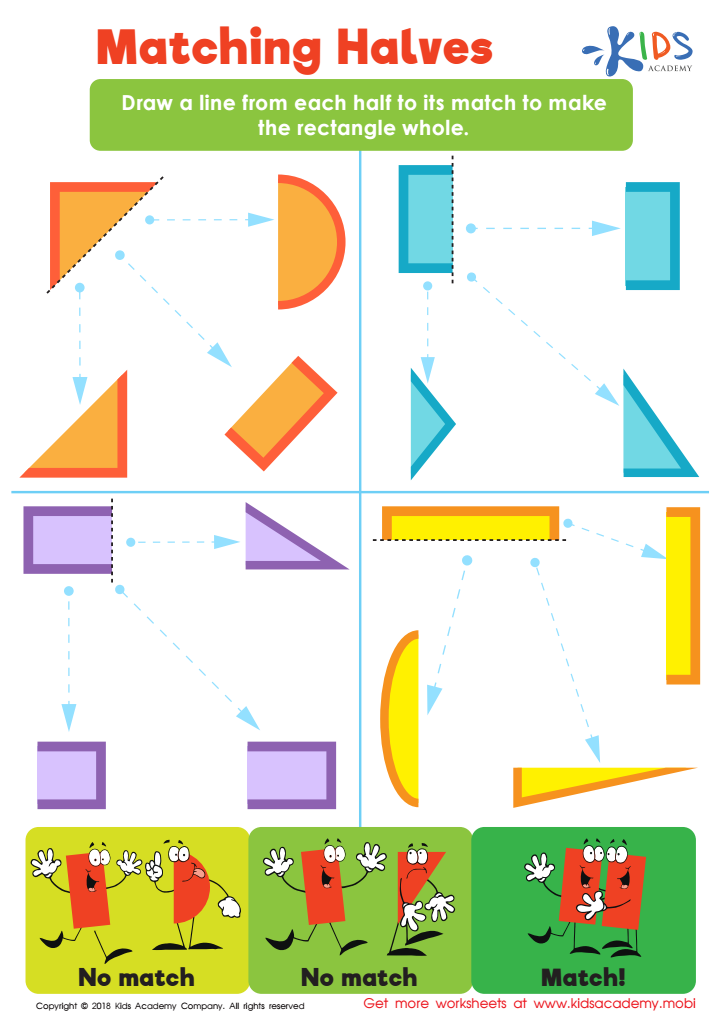
Matching Halves Worksheet
See how your child fares in matching two halves to form a complete rectangle. Provide them with four options, and ask them to draw a line connecting the two correct halves. Put their shape knowledge to the test with this simple worksheet!
Matching Halves Worksheet
Worksheet
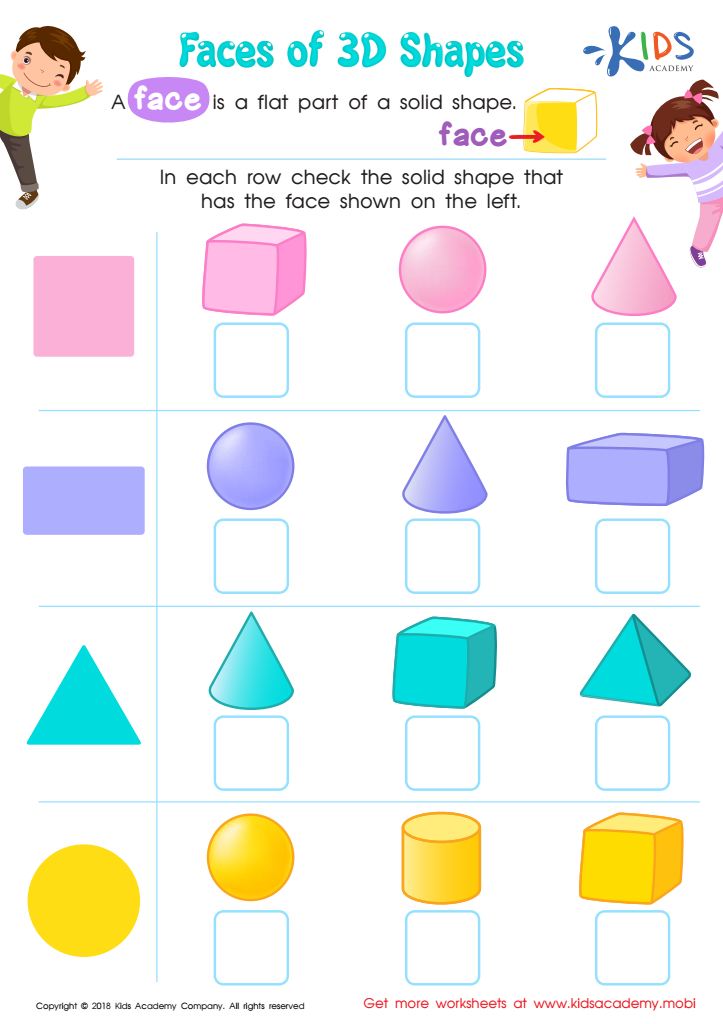
Faces of 3D Shapes Worksheet
Point at random body parts and ask your child to name them. Point to their face and ask them to identify it. Use this worksheet to show how "face" doesn't just refer to body parts - it can also mean the flat surface of a solid shape. Check the picture to find the matching solid shape for each face shown.
Faces of 3D Shapes Worksheet
Worksheet
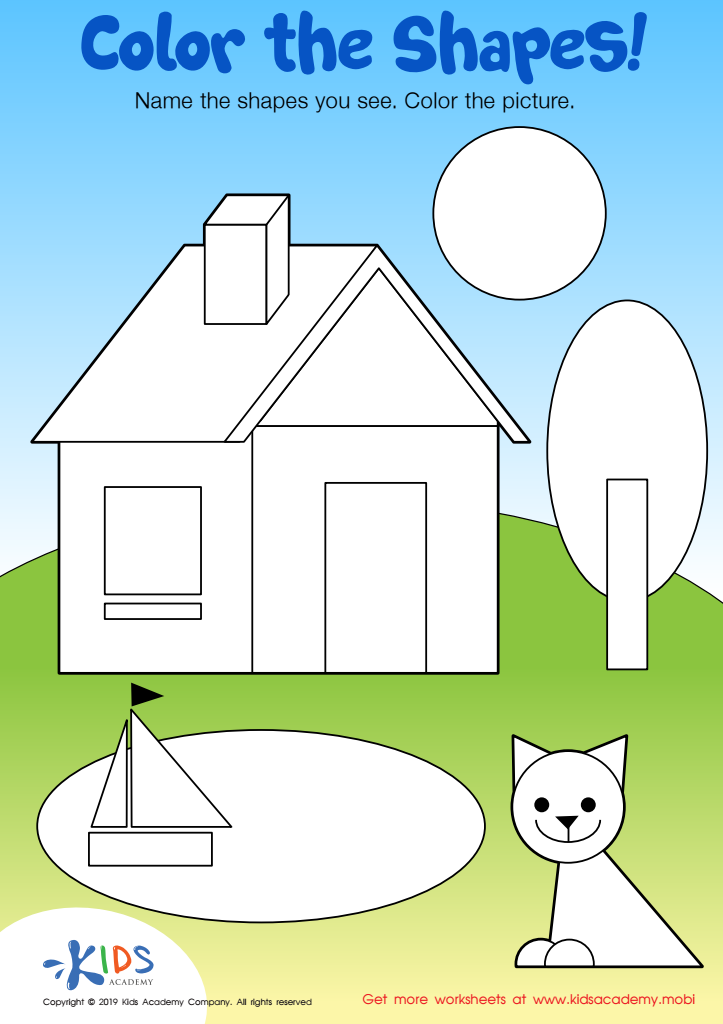
Color the Shapes Worksheet
Help your student master shape identification with this fun worksheet. Ask them to name the shapes in the picture, then color it! Ask questions like "How many squares do you see?" and "How many triangles?" to extend the learning. Identify squares, circles, triangles and rectangles with this enjoyable coloring page.
Download (PDF)
 Assign to My Students
Assign to My Students
Color the Shapes Worksheet
Worksheet
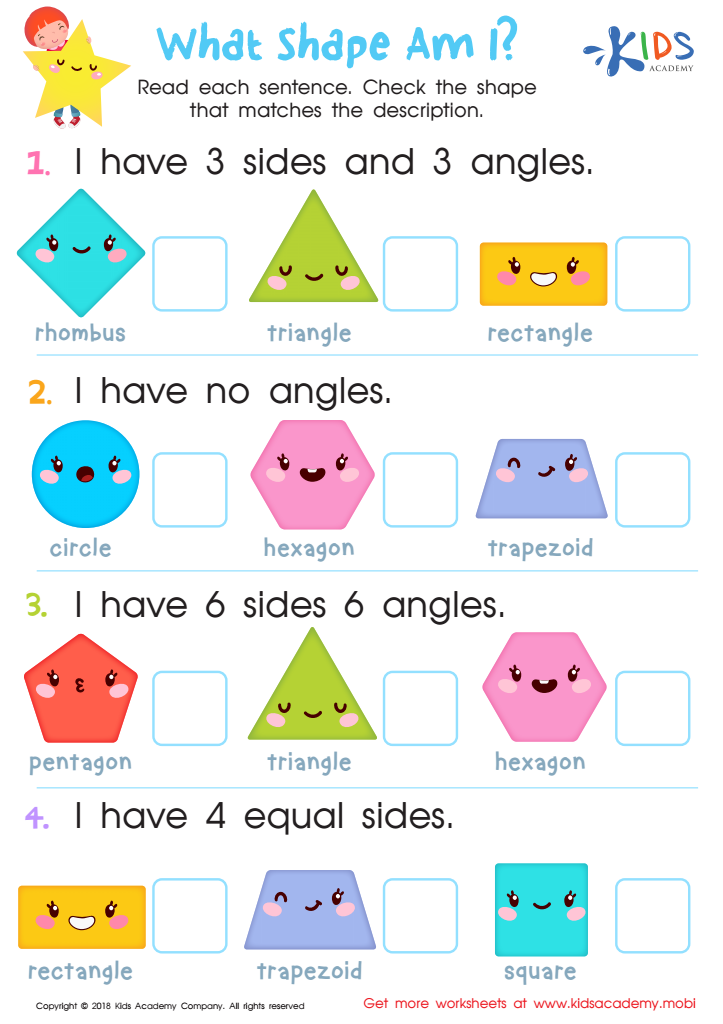
What Shape Am I? Worksheet
Help your child read each sentence in this colorful worksheet. Have them identify the shapes described and check the boxes. To prepare, ask simple questions like "How many sides does a triangle have?" and "Which shape has 4 equal sides?" Your child will become more skilled at shapes by the end of this activity.
What Shape Am I? Worksheet
Worksheet
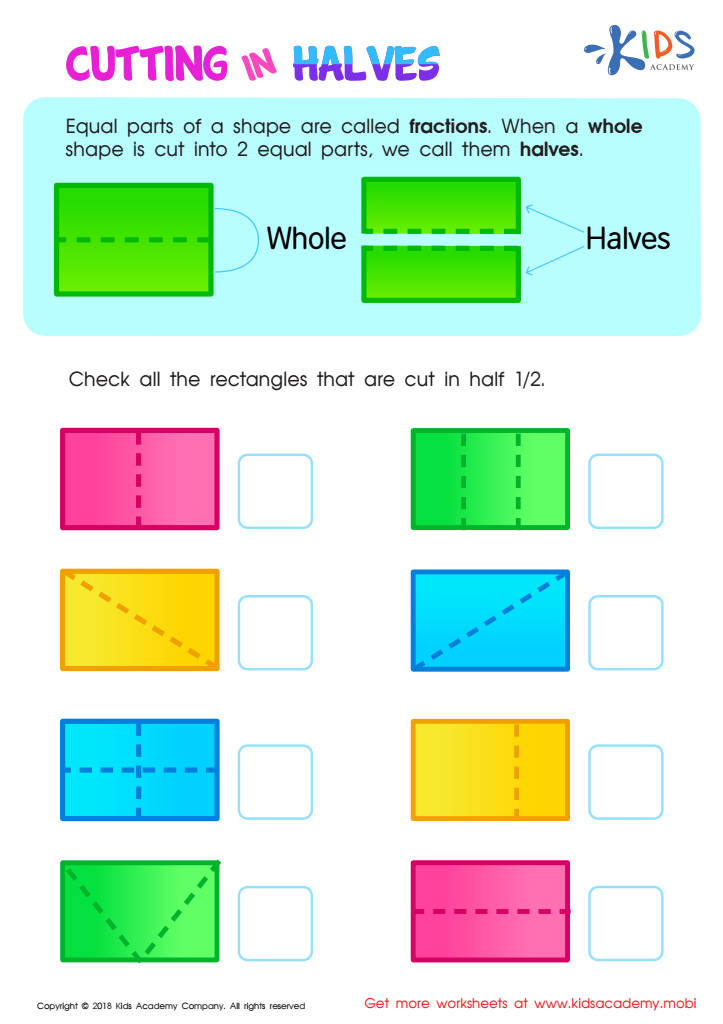
Cutting in Halves Worksheet
Show your child how to divide a whole shape, like a square, into smaller pieces to become fractions. Point out when a shape is divided into two equal parts, it's called a half. Look at the worksheet together, and identify all rectangles that are cut in half (½).
Cutting in Halves Worksheet
Worksheet
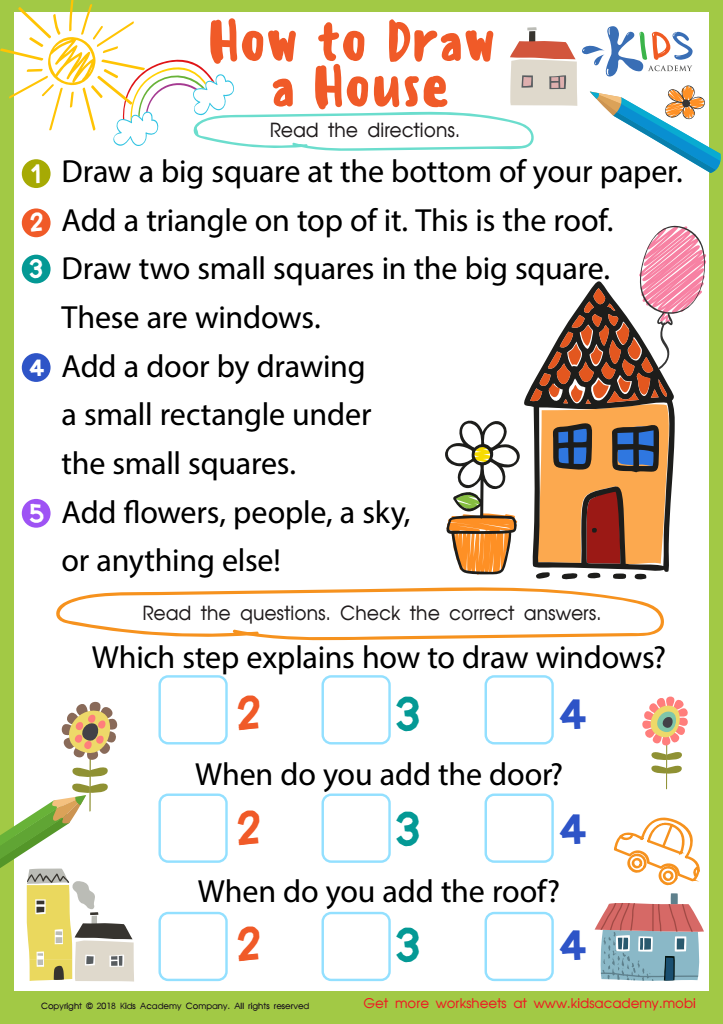
How to Draw House Worksheet
Does your child love to draw? Why not try teaching them some easy tricks? Get them to follow directions on this worksheet and learn how to draw a house. Read the questions at the end and ensure they get the answers right. Your kids will surely love it!
How to Draw House Worksheet
Worksheet
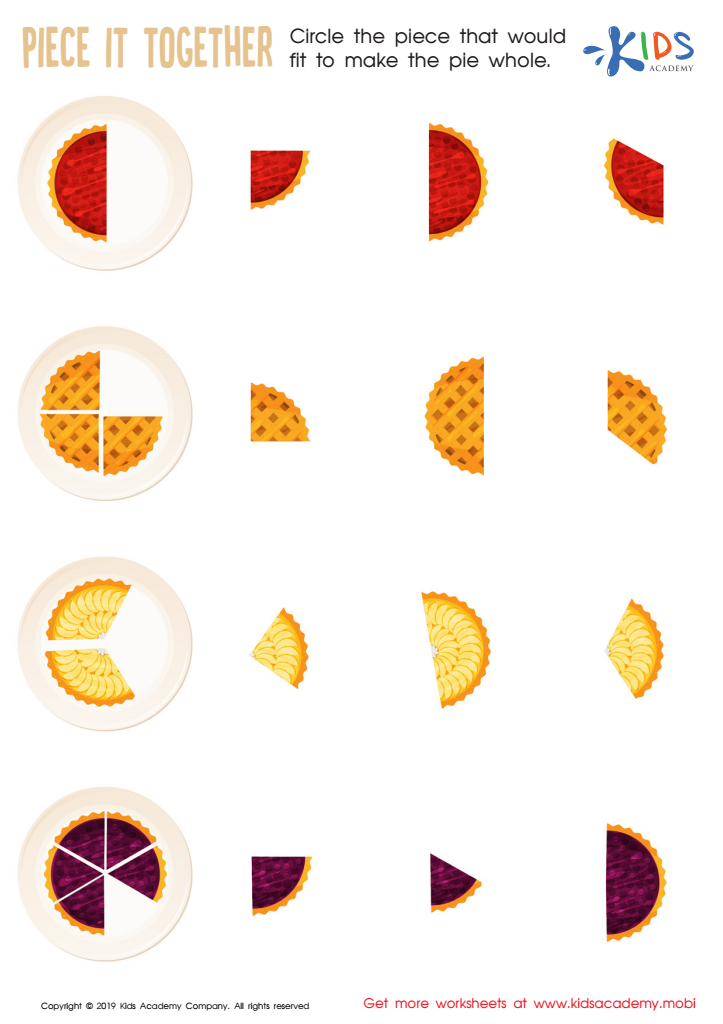
Piece it together Worksheet
Help your kids learn fractions! Even if they're not eager, teach them as they get older. Teachers will provide enough lessons and homework, but you can go a step further. Look at a worksheet with your kids and help them circle the piece that would make the pie whole.
Piece it together Worksheet
Worksheet
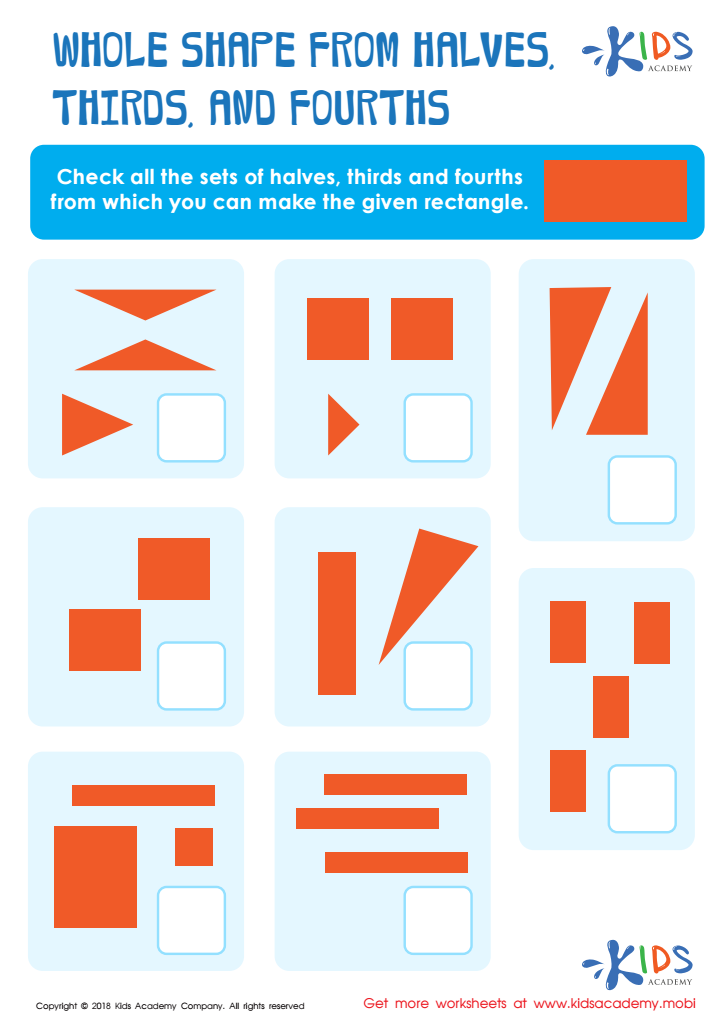
Whole Shape from Halves, Thirds and Fourths Worksheet
Explain to your students that they can make a new shape by combining halves, thirds, and fourths of a shape. Show them the worksheet with the rectangle at the top and ask them to find which sets of halves, thirds, and fourths make it. Have them check all the correct sets.
Whole Shape from Halves, Thirds and Fourths Worksheet
Worksheet
Join Kids Academy for Free
Who is primarily going to use this learning content?







Shape recognition is fundamental for early learning, and it should be a focus for parents and teachers of Grade 2 students. Understanding shapes is not just about knowing different names like circles, squares, and triangles; it's about recognizing patterns and organizing visual information, which are critical cognitive skills.
At a basic level, shape recognition can improve a child’s mathematics skills. Early proficiency in recognizing and differentiating shapes helps children understand complex geometric concepts later on. For example, noticing that a square is also a type of rectangle contributes to grasping properties and relationships in math.
Beyond mathematics, shape recognition informs everyday life skills. Identifying shapes helps children interact safely and effectively with their environment, such as distinguishing street signs or recognizing shapes in nature. It fosters spatial awareness, critical for tasks such as reading, writing, and participating in sports.
Additionally, shape recognition enhances problem-solving and analytical skills. When children create patterns or solve puzzles with shapes, they learn to approach problems methodically.
Overall, integrating shape recognition into Grade 2 curricula provides a multi-faceted foundation for academic success and practical life skills. Parents and teachers who emphasize this area support their children's holistic development, establishing a positive attitude toward learning and confidence in future educational challenges.