Understanding fractions Easy Grade 2 Worksheets
12 filtered results
Difficulty Level
Grade
Age
-
From - To
Subject
Activity
Standards
Welcome to our "Understanding Fractions Easy Grade 2 Worksheets" page! Here, young learners can grasp the essential concepts of fractions through engaging and age-appropriate activities. Our worksheets are designed specifically for second-grade students, making complex ideas accessible and fun. With visually appealing illustrations and straightforward exercises, children will learn to identify, compare, and use fractions in practical situations. Each worksheet encourages active participation and helps build confidence in math skills. Explore our collection and watch your child master fractions with ease and enjoyment, paving the way for future success in mathematics! Perfect for both classroom and home use!
Favorites
With answer key
Interactive
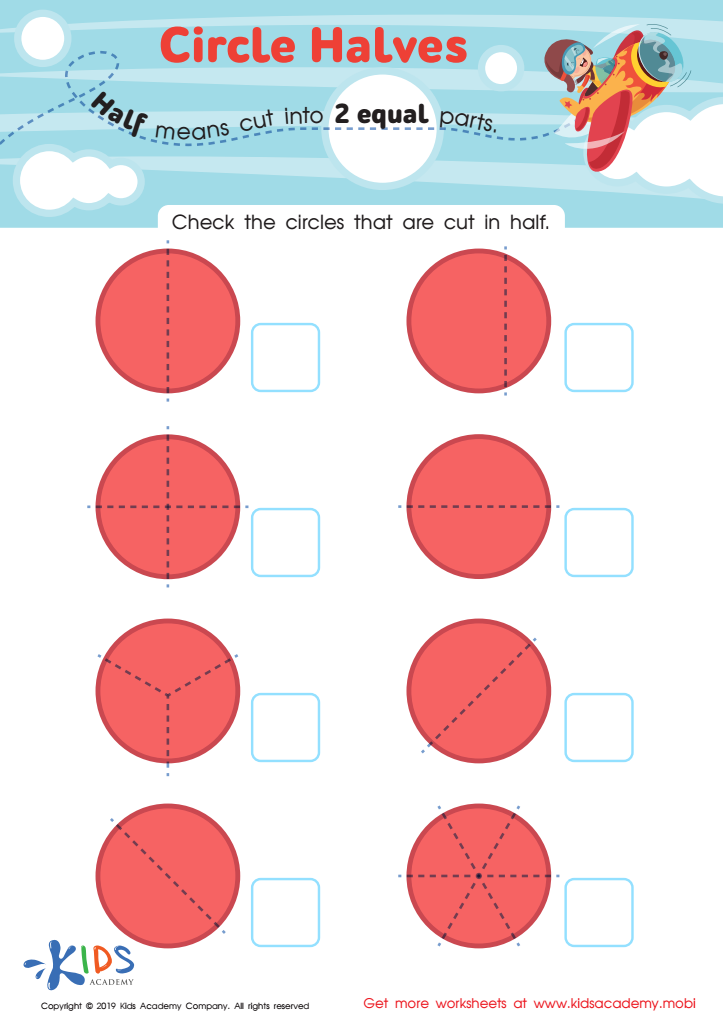
Circle Halves Worksheet
Remind your kindergartners that objects can be divided into halves, thirds and fourths. Now, look at this worksheet with your students and help them check the circles cut in half.
 Assign to My Students
Circle Halves Worksheet
Worksheet
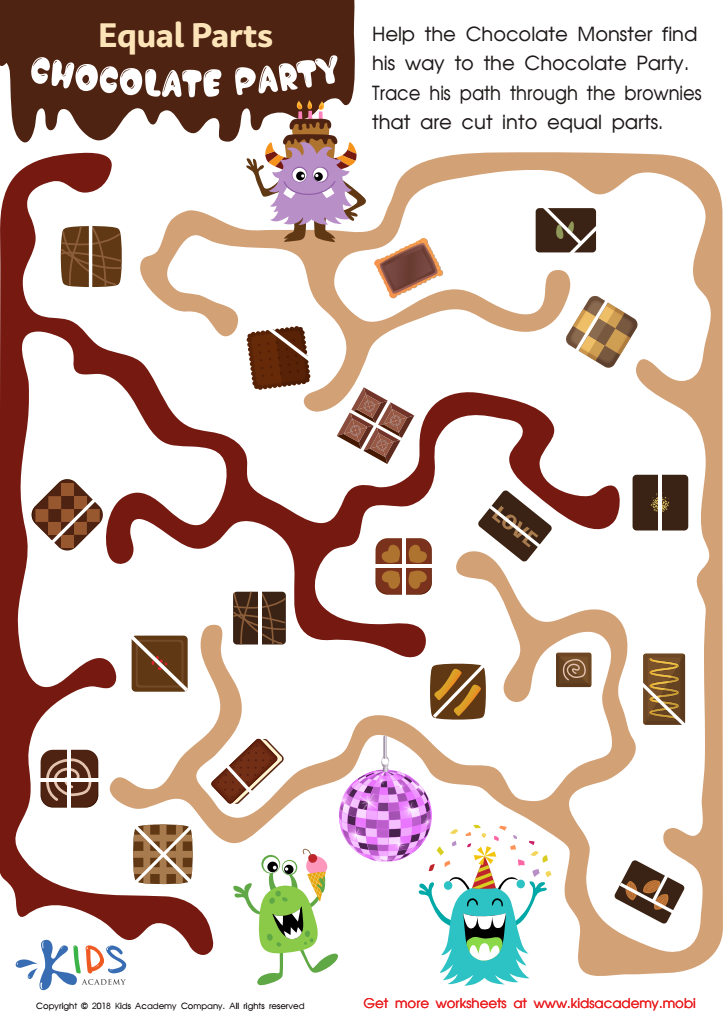
Equal Parts: Chocolate Party Worksheet
Mention "chocolate" and watch your kids' excitement soar! Learning can go hand-in-hand with that sugary treat. This worksheet helps kids guide the Chocolate Monster to the Chocolate Party, following a trail of brownie halves. It's an easy, tasty way to have fun!
Equal Parts: Chocolate Party Worksheet
Worksheet
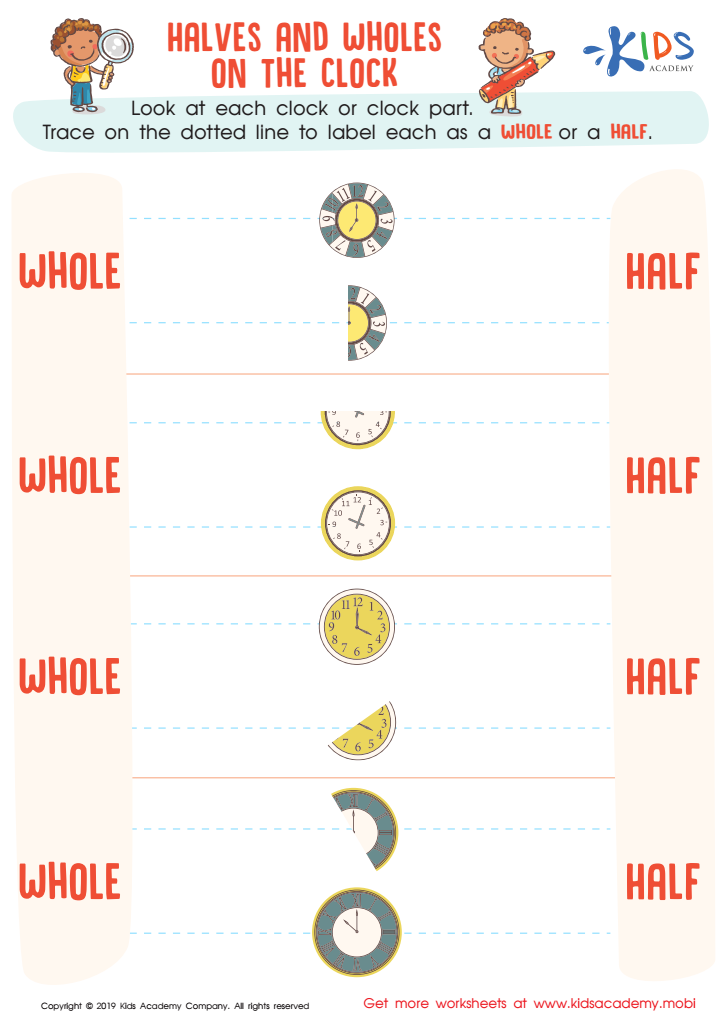
Halves and Wholes on the Clock Worksheet
Ask your kids if they know the difference between a whole and a half. If not, explain it's when a whole is divided into two equal parts. Show them the worksheet with clocks and clock parts, and help them label each shape as a whole or a half by tracing on the dotted line.
Halves and Wholes on the Clock Worksheet
Worksheet
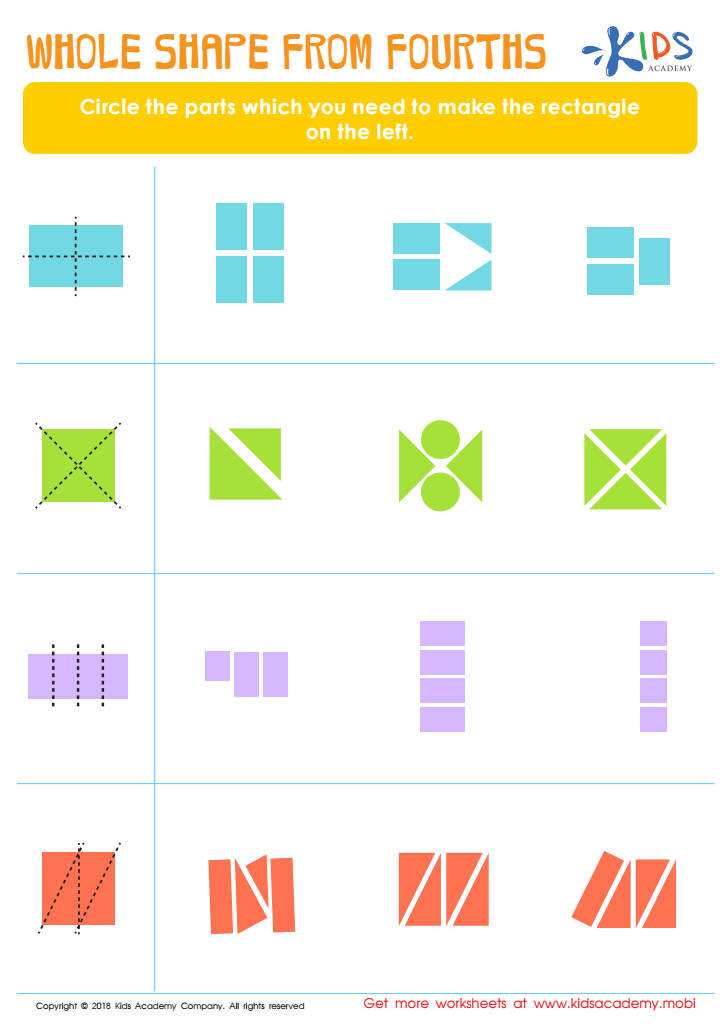
Whole Shape from Fourths Worksheet
Have your kids circle the shapes that'll form the rectangle on the left. It'll test their knowledge of shapes and ability to put them together to make a new one. Ask them to look at the parts on the right and circle the ones that'll form the rectangle.
Whole Shape from Fourths Worksheet
Worksheet
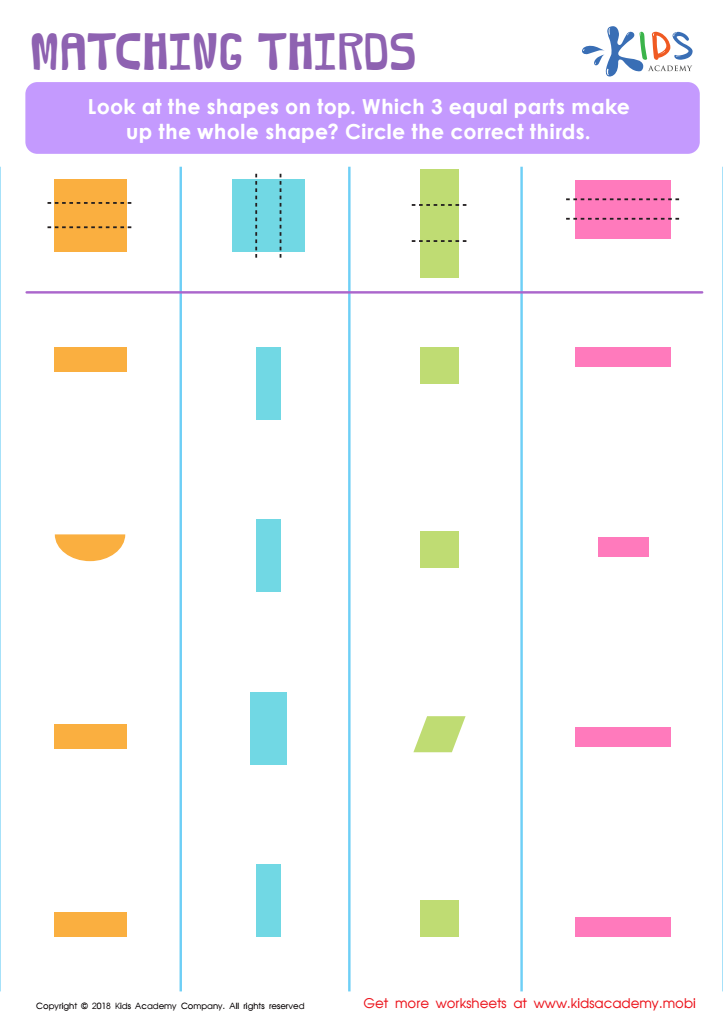
Matching Thirds Worksheet
Have your child examine the shapes on the worksheet. Ask them to identify them and then look at the fractions underneath. Ask them to circle the 3 parts that make up the whole shape. Understanding shapes and fractions is key!
Matching Thirds Worksheet
Worksheet
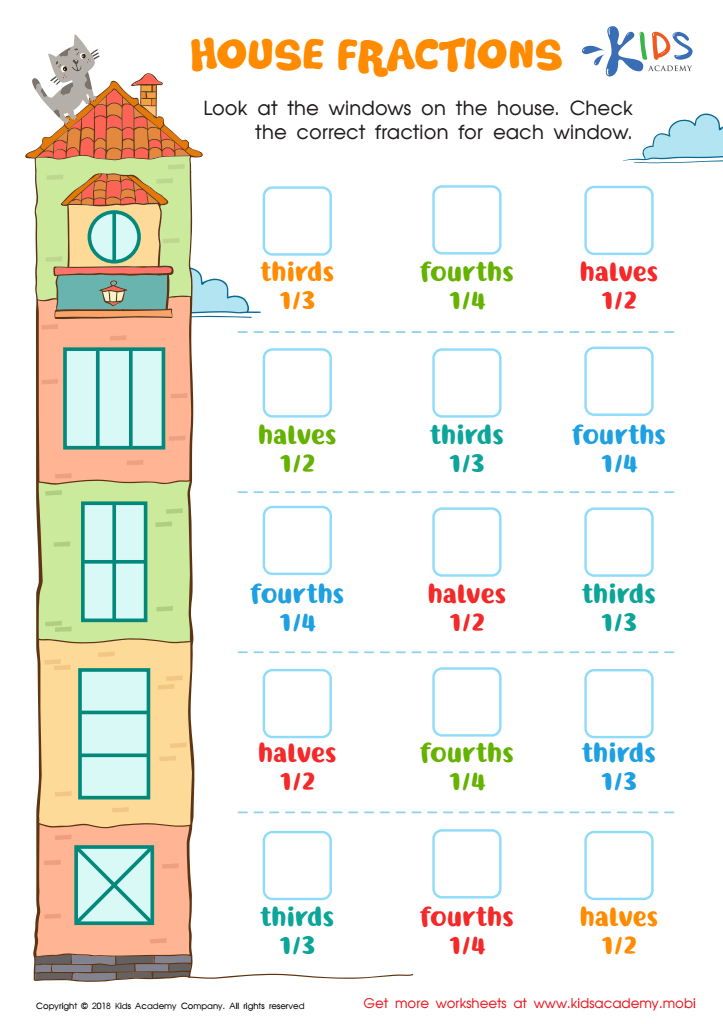
House Fractions Worksheet
Test your child's knowledge of fractions with this worksheet! Have them examine the windows of a house and select the correct fraction from the options given. This is a great way to see how much they understand about wholes, fractions, halves, one thirds, and one fourths.
House Fractions Worksheet
Worksheet
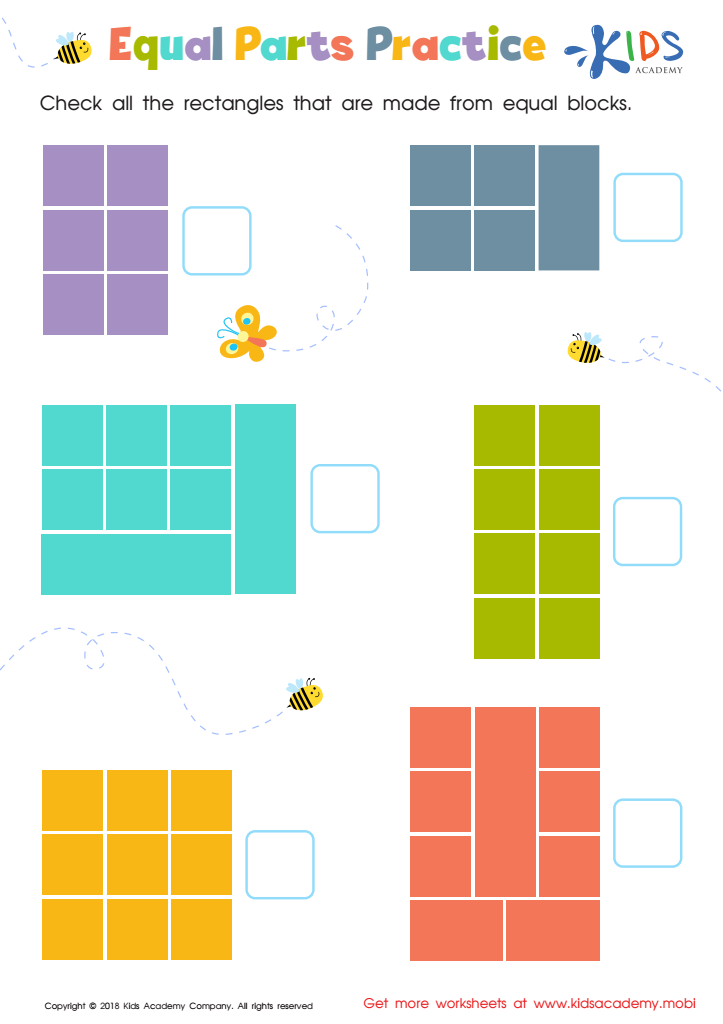
Equal Parts Practice Worksheet
This worksheet checks your child's knowledge of halves and equal pieces. Have them go through the rectangles and check those made up of equal blocks. Your kids should be able to tell which parts are equal and which are not after the exercise.
Equal Parts Practice Worksheet
Worksheet
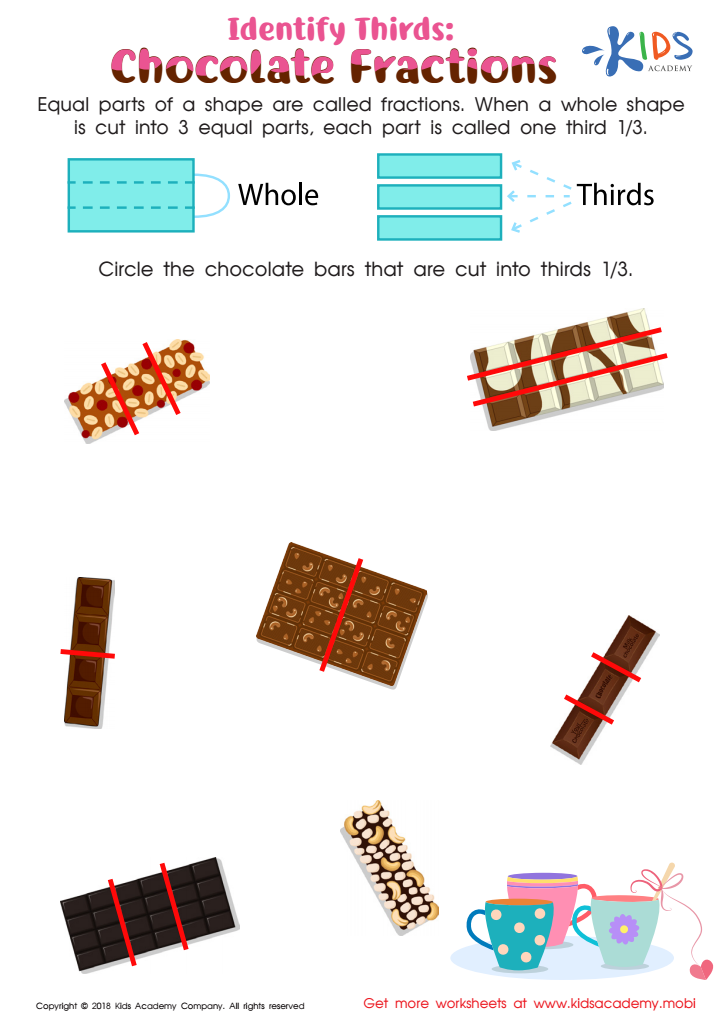
Identify Thirds: Chocolate Fractions Worksheet
Divide shapes into equal parts and explain fractions to your child. Show them a worksheet with pictures of chocolate bars cut into thirds (1/3) and ask them to circle them.
Identify Thirds: Chocolate Fractions Worksheet
Worksheet
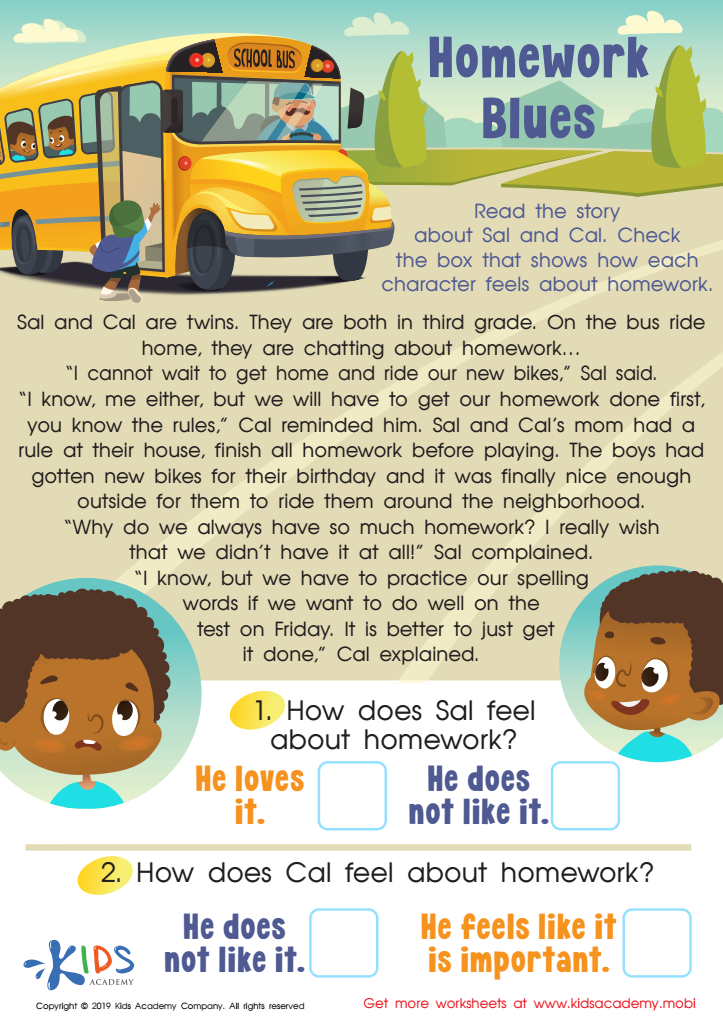
Homework Blues Worksheet
Cal and Sal don't love doing homework, just like your kids. Use this worksheet to help your children understand why homework is important. Read the passage together and then answer the questions at the bottom of the page. It's a fun way to learn together!
Homework Blues Worksheet
Worksheet
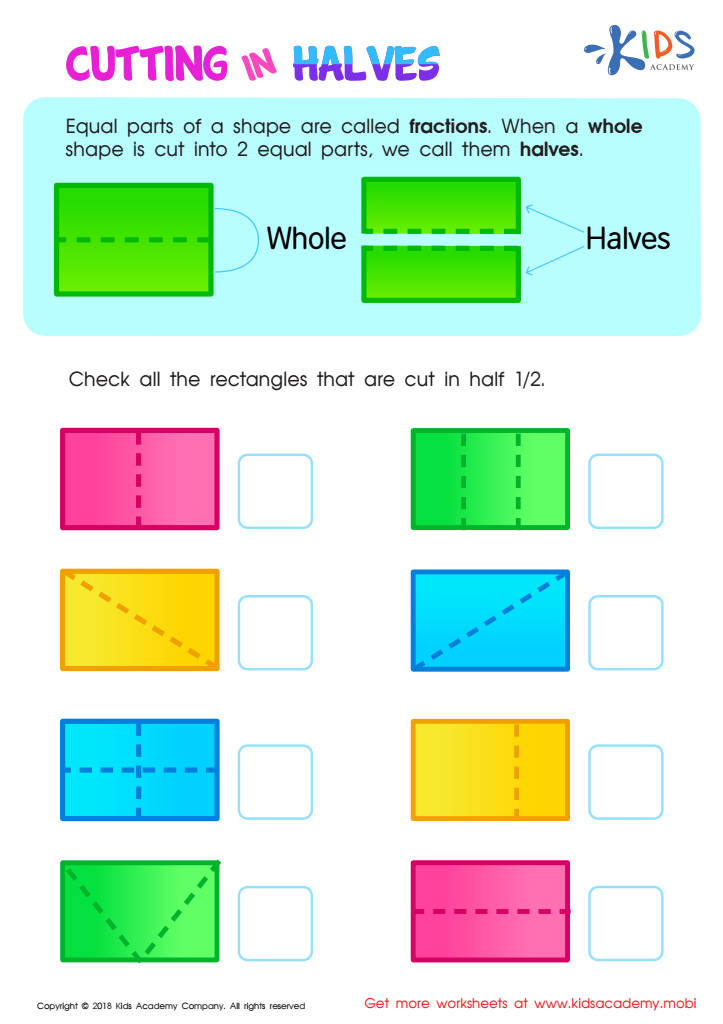
Cutting in Halves Worksheet
Show your child how to divide a whole shape, like a square, into smaller pieces to become fractions. Point out when a shape is divided into two equal parts, it's called a half. Look at the worksheet together, and identify all rectangles that are cut in half (½).
Cutting in Halves Worksheet
Worksheet
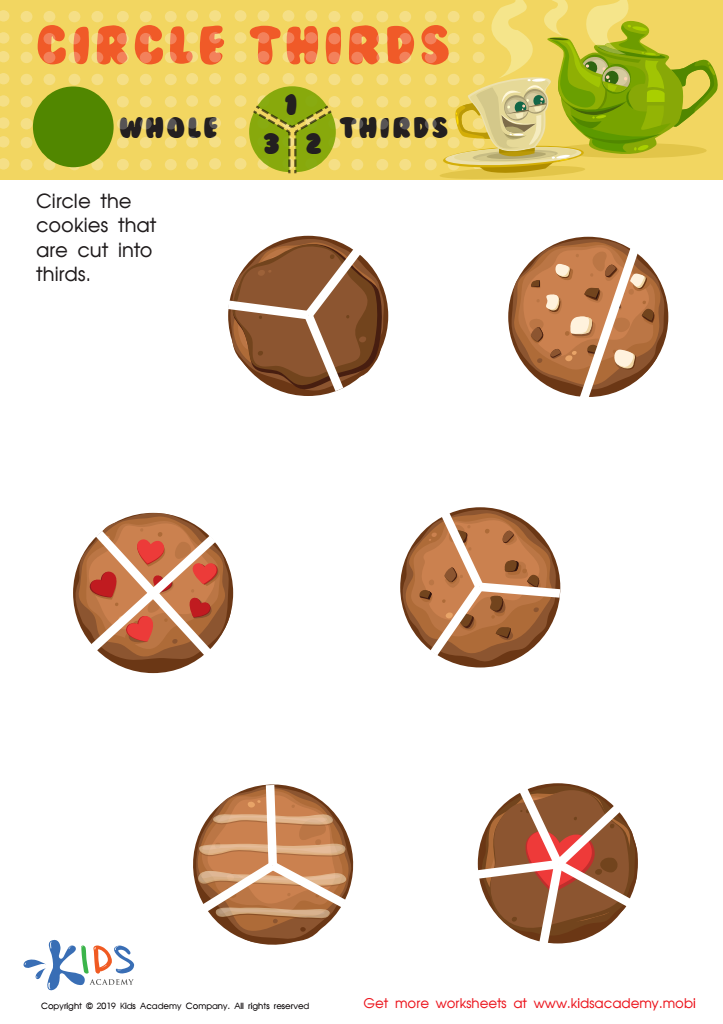
Circle Thirds Worksheet
Remind your kids of the different ways shapes can be divided: wholes, halves, thirds, and fourths. Now, look at the shapes in the worksheet and have them circle the cookies cut into thirds.
Circle Thirds Worksheet
Worksheet
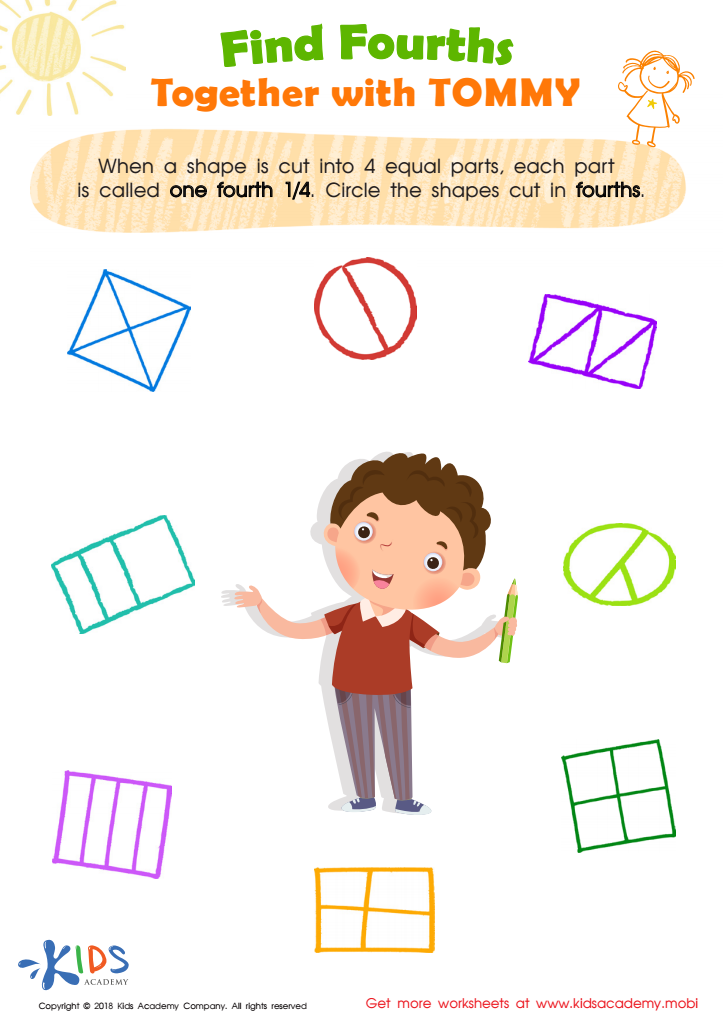
Find Fourths Together with Tommy Worksheet
Teach your kids fractions with this easy and fun worksheet! They should already know that two equal parts is a half, and three is a third. Now, help them understand one fourth (¼) by asking them to circle shapes that are divided into four parts. Make fractions learning stress-free for you and your children!
Find Fourths Together with Tommy Worksheet
Worksheet
Join Kids Academy for Free
Who is primarily going to use this learning content?







Understanding fractions is essential for Grade 2 students as it lays the foundation for their future mathematical skills. At this age, children begin to grasp more complex concepts, and fractions introduce them to division, ratios, and part-whole relationships—all vital for advanced math later on.
For parents and teachers, recognizing the importance of understanding fractions can transform a child’s learning experience. By learning fractions, students develop critical thinking and problem-solving abilities. It helps them see relationships between numbers, which fosters a deeper understanding of not just math but also real-world applications, like measuring ingredients for a recipe or sharing items fairly among friends.
Additionally, emphasizing fractions promotes collaboration and communication skills. Group activities involving fractions encourage children to discuss their thought processes, enhancing their social skills as they work with peers.
By nurturing an early understanding of fractions, parents and teachers instill confidence in students, making them more receptive to learning complex mathematical concepts in later grades. Ultimately, caring about a child’s grasp of fractions supports their overall academic growth and sets them up for long-term success. A strong foundation in fractions can spark a lasting interest in math, benefiting their emotional and intellectual development.