Basic Addition Easy Grade 2 Math Worksheets
6 filtered results
Difficulty Level
Grade
Age
-
From - To
Subject
Activity
Standards
Unlock the potential in every child with our Basic Addition Easy Grade 2 Math Worksheets! Tailored specifically for second graders, these fun and engaging worksheets help reinforce essential addition skills. With a variety of colorful and creative problems, young learners build confidence as they practice single and double-digit addition. Each worksheet is designed to make learning enjoyable and intuitive, providing the perfect blend of challenge and support. Ideal for both classroom and home use, these resources prepare kids for more advanced math concepts while ensuring they master the basics. Start your child's math adventure today!
Favorites
With answer key
Interactive
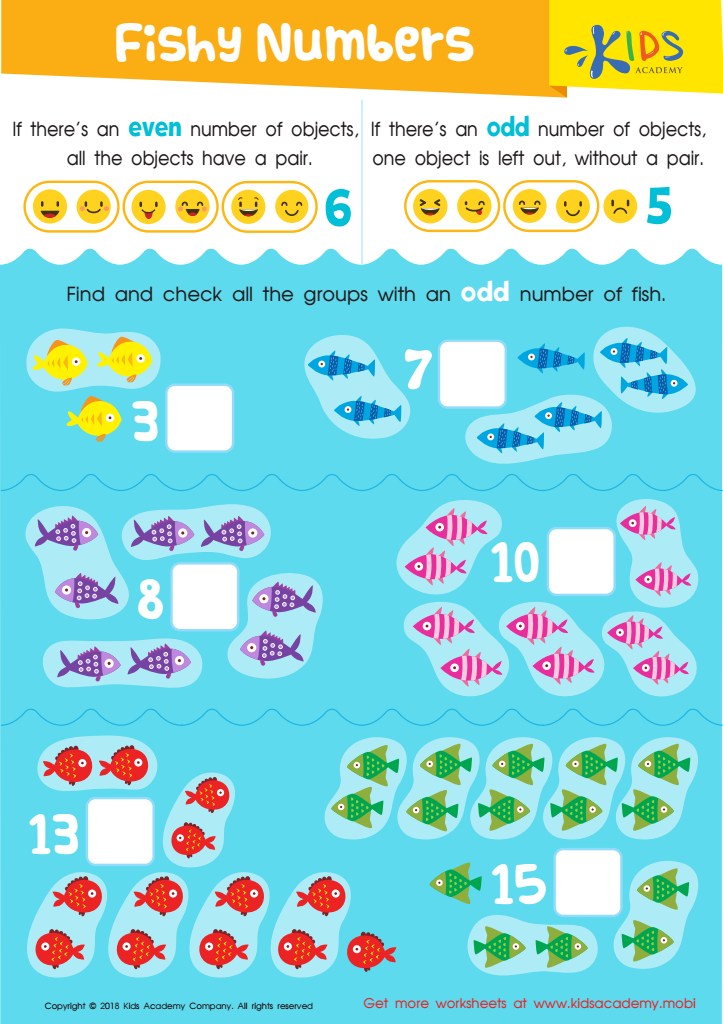
Fishy Numbers Worksheet
Explain to your kids even and odd numbers using this worksheet. All objects in a group of even numbers can be paired in twos, while an odd number leaves one object unpaired. Ask your students to find and check the groups with an odd number of fish, counting and figuring out which ones are odd.
 Assign to My Students
Fishy Numbers Worksheet
Worksheet
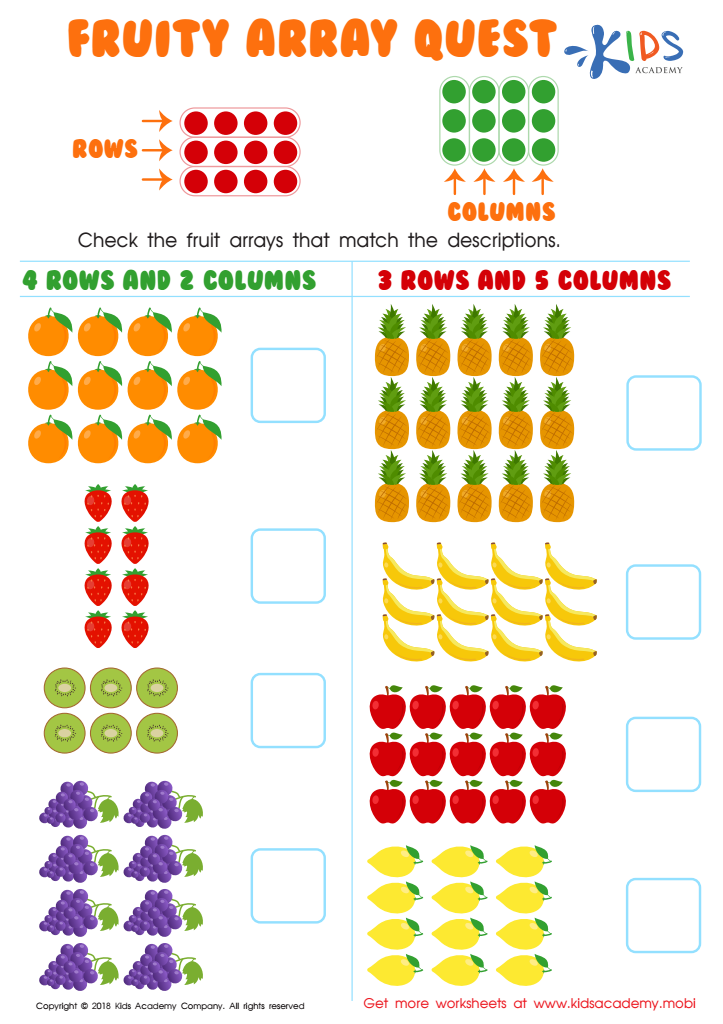
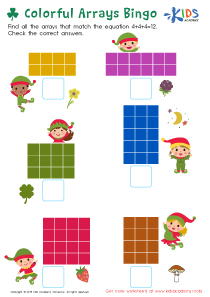
Fruity Array Quest Worksheet
Explain rows (horizontal) and columns (vertical) to your child before starting the worksheet. Show them the picture and the arrows indicating direction. Your child should be able to answer the questions easily after that. Help them match the fruit arrays that match the descriptions.
Fruity Array Quest Worksheet
Worksheet
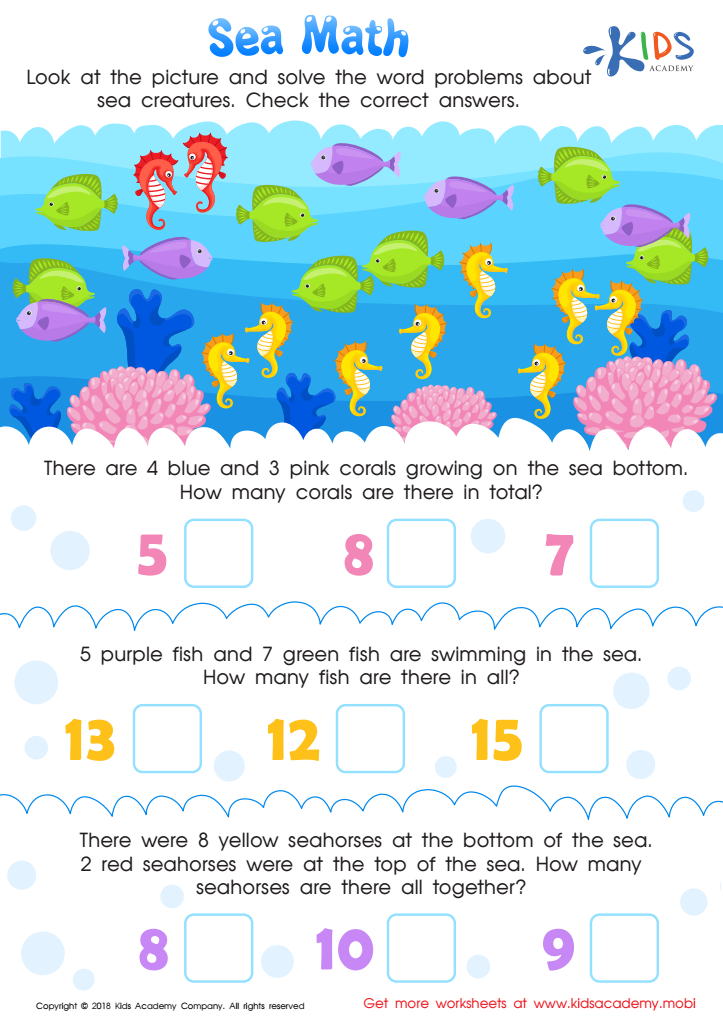
Sea Math Worksheet
Dive into an ocean of addition with this fun math worksheet! Help your little mathematician count and add colorful coral and fish. Point out phrases like "in total" or "all together" as a reminder to use addition. Watch them add to find the answer and check the boxes to finish!
Sea Math Worksheet
Worksheet
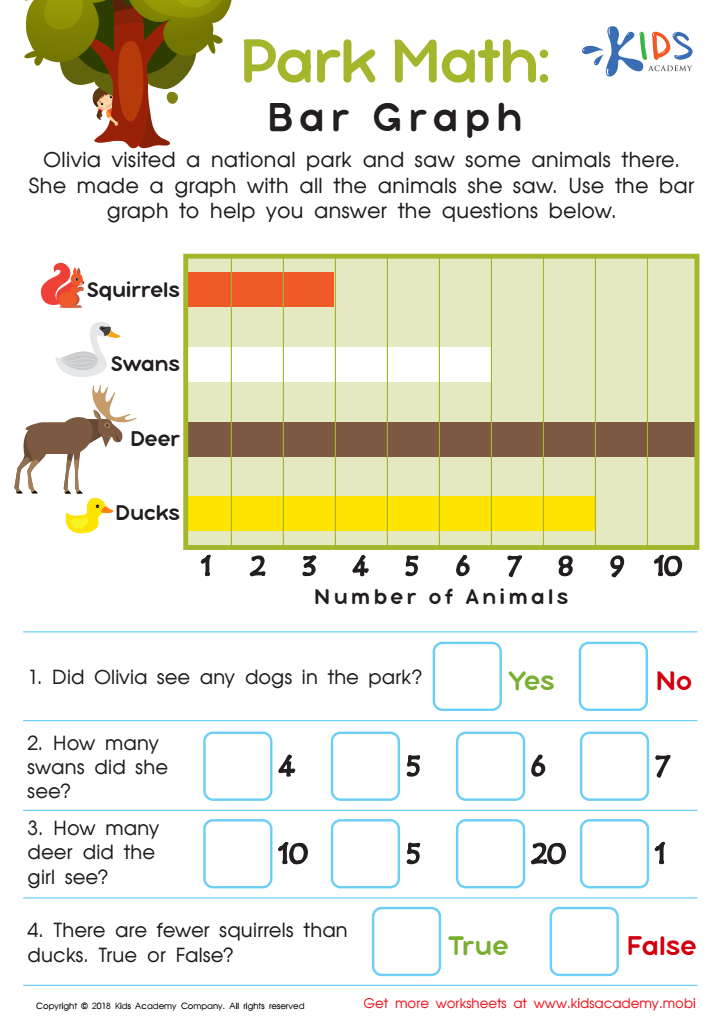
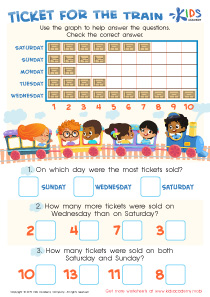
Park Math: Bar Graph Worksheet
Do your children love the park? Ask them to tell you some of their favorite animals. Then, have them look at Olivia's graph. She visited a National Park and recorded all the animals she saw. Use the graph to answer the questions given.
Park Math: Bar Graph Worksheet
Worksheet
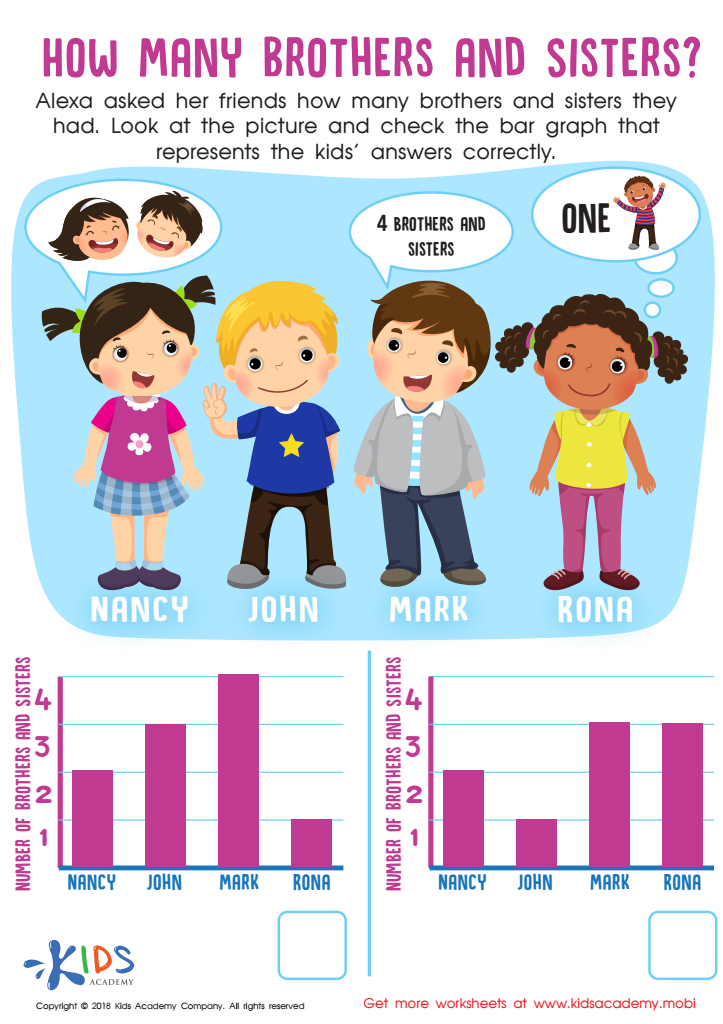
How Many Brothers and Sisters? Worksheet
With this worksheet, Alexa has asked her friends how many siblings they have. Have your child look at the picture and use it to answer the bar graph correctly. Can they tell you how many siblings their friends have? See if they can get it right!
How Many Brothers and Sisters? Worksheet
Worksheet
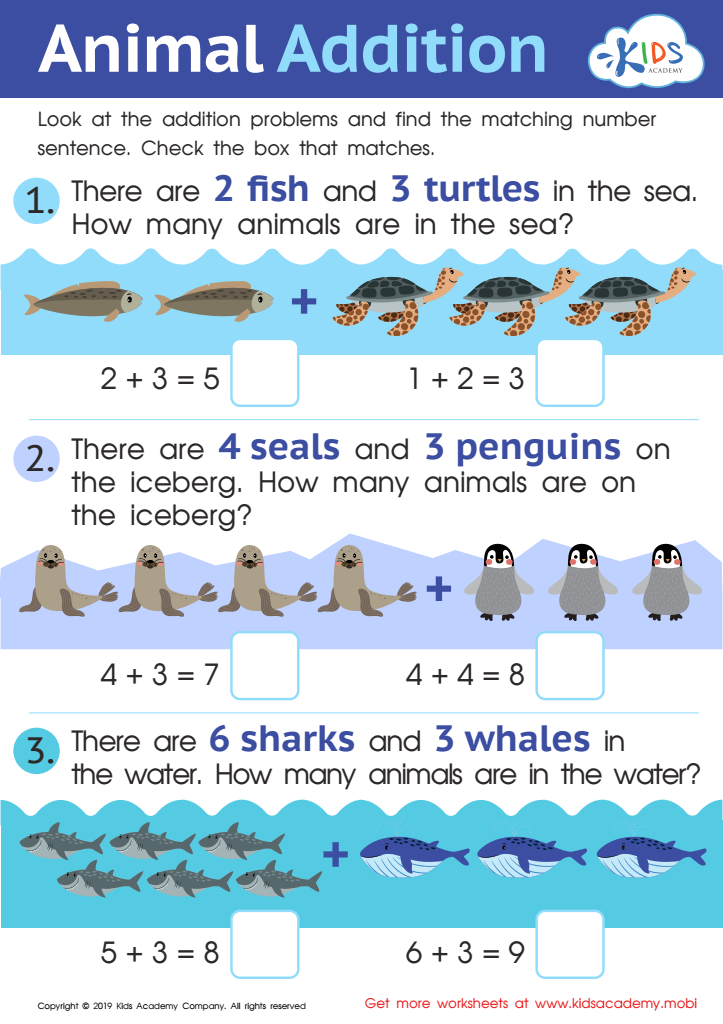
Animal Addition Worksheet
Get your kids learning addition and subtraction with this fun worksheet! Show them that solving equations can be enjoyable and help them match number sentences to the correct boxes. By doing this together, you'll create a positive learning experience that your kids won't forget.
Animal Addition Worksheet
Worksheet
Join Kids Academy for Free
Who is primarily going to use this learning content?








Parents and teachers should care about Basic Addition in Grade 2 because it forms the bedrock of a child's mathematical education. Understanding and mastering addition are critical for developing numeracy skills that kids will build upon in later grades. Basic addition is everywhere – from counting money, telling time, to understanding fractions. It enhances problem-solving abilities and logical thinking, important for everyday life and future academic success. Additionally, practicing addition improves memory and cognitive skills because it requires focus and the ability to manipulate numbers mentally. At a young age, positive experiences with math can boost a child’s confidence and foster a positive attitude toward learning. Moreover, math proficiency in early years is a predictor of later academic achievement, not just in math but across disciplines. Parents and teachers have the unique opportunity to nurture a supportive learning environment that encourages curiosity and persistence. By ensuring that children grasp basic addition thoroughly, adults can help cultivate lifelong learners who are more confident, resourceful, and capable of tackling more complex mathematical concepts in the future. Ultimately, caring about Basic Addition at this stage helps to ensure that kids acquire essential life skills that will help them navigate their world more effectively.